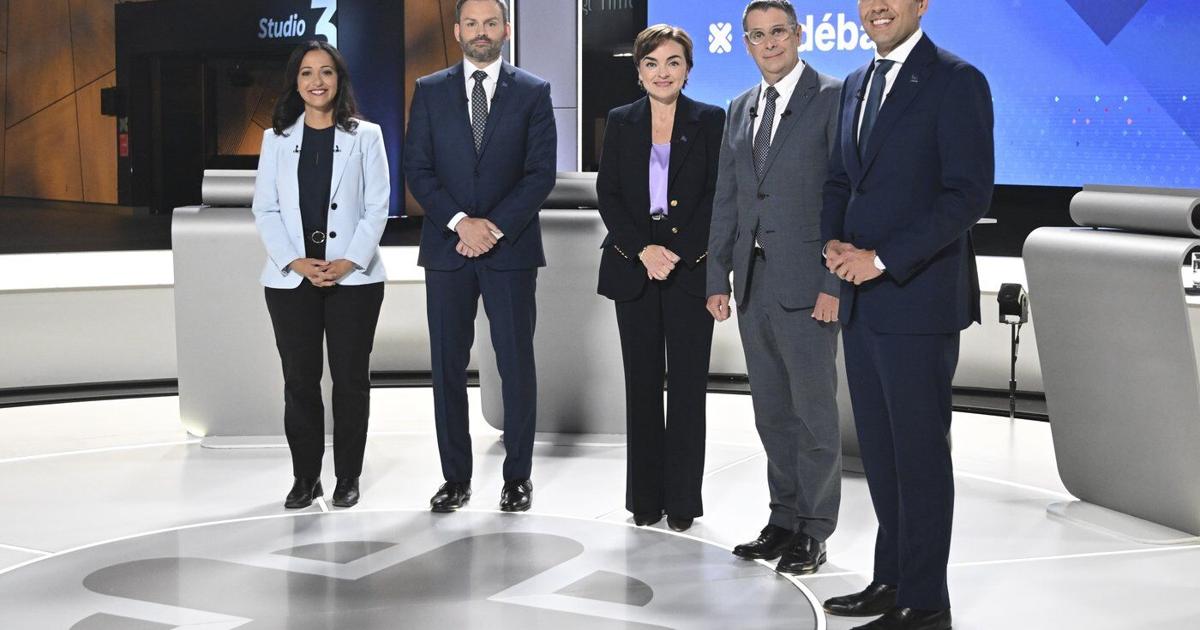
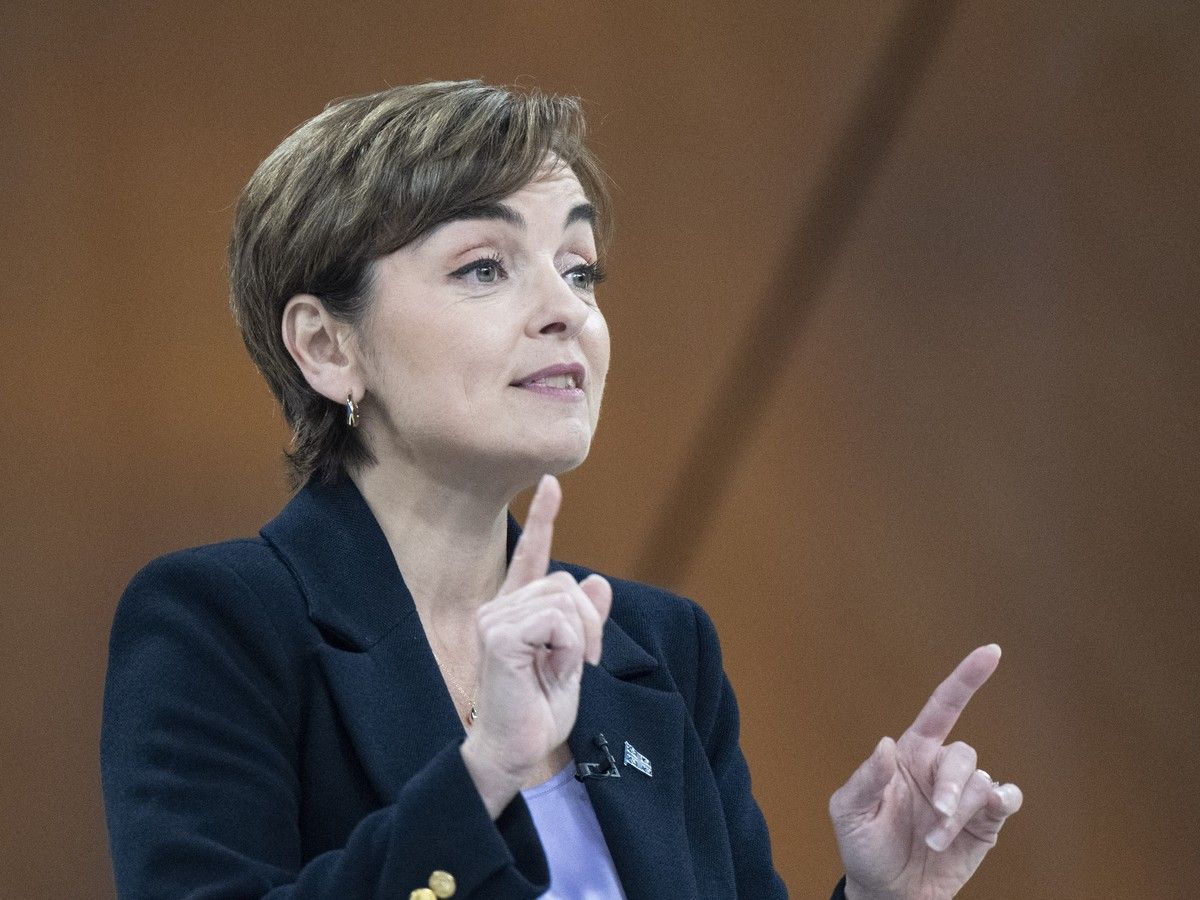
Parti Québecois Leader Paul St-Pierre Plamondon urged Quebecers not to be afraid of a referendum, as the five main party leaders clashed Wednesday on sovereignty, finances and the cost of living in the third and final leaders’ debate of the provincial election campaign.
asserted
leaders → urge → campaign
The moderator, Radio-Canada journalist Patrice Roy, asked the Parti Québécois leader whether he would rethink a promise to hold a sovereignty vote in the next four years if public sentiment remains against it.
asserted
sentiment → ask → it
St-Pierre Plamondon reiterated his promise to hold the vote in a first PQ term, after U.S. President Donald Trump leaves office.
asserted
Trump → reiterate → office
“It’s (former Quebec premier) Jacques Parizeau who said this, but don’t be afraid of your democracy, don’t be afraid of going to the polls, don’t be afraid to think about our future,” St-Paul Plamondon said.
asserted
Plamondon → ’ → future
“I think these are fundamental messages, the liberty of a people and democracy.”
asserted
these → think → people
Conservative Leader Éric Duhaime, who has promised to try to block a sovereignty vote if he’s elected, said St-Pierre Plamondon should listen to the 70 per cent of Quebecers who don’t want a referendum.
asserted
who → promise → referendum
“Why do you want to send Quebec into a wall?” he asked.
asserted
he → want → wall
Liberal Leader Charles Milliard painted himself as the lone federalist on the stage, noting that Duhaime and Coalition Avenir Leader Christine Fréchette voted yes to leaving Canada in the 1995 referendum, and that Québec solidaire is also a sovereigntist party.
“I see you as four shades of yes,” he said.
asserted
he → paint → yes
Québec solidaire co-spokesperson Ruba Ghazal said she is in favour of Quebec independence, but promised to build a consensus that includes Indigenous people, immigrants and anglophones.
asserted
that → say → people
“For me, it’s a fundamentally democratic project, Quebec independence,” she said.
asserted
she → ’ → me
Fréchette fended off criticism about her party’s management of health care services in the opening minutes, as she was challenged by Milliard and St-Pierre Plamondon for what they described as her party’s broken promises over its last eight years in government.
asserted
they → fend → government
Get breaking National news
Milliard said Quebecers had been betrayed by the Coalition Avenir Québec’s promises to reduce emergency room wait times and ensure every Quebecer had a doctor.
asserted
Quebecer → get → doctor
St-Pierre Plamondon agreed, saying the latter promise was “disrespectful of people’s intelligence.”
asserted
promise → agree → intelligence
Fréchette acknowledged there was a lot of work to do but said her party had made improvements, including increasing the number of surgeries performed and signing up hundreds of thousands of Quebecers for groups of family doctors.
asserted
party → acknowledge → doctors
In a segment on the province’s finances, St-Pierre Plamondon was challenged on his promise to cut spending on public sector salaries by 2.5 per cent over three years, or by $1.6 billion per year.
asserted
Plamondon → challenge → year
“Who are these people … who will lose their jobs on Oct. 6?” Milliard asked him.
asserted
Milliard → lose → him
St-Pierre Plamondon, in response, said his party would not cut any jobs that provide services, but would attack what he called the “explosion” of the size of bureaucracy under the Coalition Avenir Québec.
asserted
he → say → Québec
Ghazal said her party was the only one not promising austerity.
asserted
party → say → austerity
“When we look at the financial frameworks of all the other parties, what they want is to cut a little, a lot or very passionately,” she said.
asserted
she → look → little
The two-hour debate, hosted in French by Radio-Canada, opened with Roy asking the five leaders what distinguished them from their rivals.
asserted
what → host → rivals
Fréchette stumbled slightly as the first to answer, listing a few promises to make life more affordable for families, before Roy cut her off for going over her allotted time.
asserted
Roy → stumble → time
Ghazal said she knew voters who were concerned about the crisis provoked by escalating tariffs between the U.S. and Canada, pledging a long-term plan that would address problems beyond the next four years of a mandate.
asserted
that → say → mandate
Duhaime pledged to overhaul bureaucratic waste in government, turning savings into tax cuts.
asserted
Duhaime → pledge → cuts
He also said Quebec needed to make more room for the private sector in the province’s health care system.
asserted
Quebec → say → system
As the leaders arrived for the debate at the CBC/Radio-Canada building, east of downtown Montreal, they were greeted by a raucous crowd of supporters and protesters.
asserted
they → arrive → supporters
The crowd included striking paramedics, pro-Palestinian activists and environmental groups.
asserted
crowd → include → paramedics
The leaders have faced questions in recent days about potential alliances if no party succeeds in forming a majority.
asserted
party → face → majority
Poll aggregator Qc125 suggests the Parti Québécois remains the front-runner but that a minority outcome remains the most likely scenario.
uncertain
outcome → suggest → ?
In the debate’s final question, the leaders said they would collaborate with the other parties after the vote, although Duhaime, Fréchette and Milliard all used their final seconds to speak out against a referendum.
asserted
Duhaime → say → referendum
St-Pierre Plamondon said he didn’t want to presume what voters’ choices would be and suggested Quebecers could still gather around a “stable” government.
uncertain
Quebecers → say → government
Quebec voters go to the polls Oct. 5.
asserted
voters → go → polls
This report by The Canadian Press was first published Sept. 23, 2026.
asserted
report → publish → Press
 The Aporia