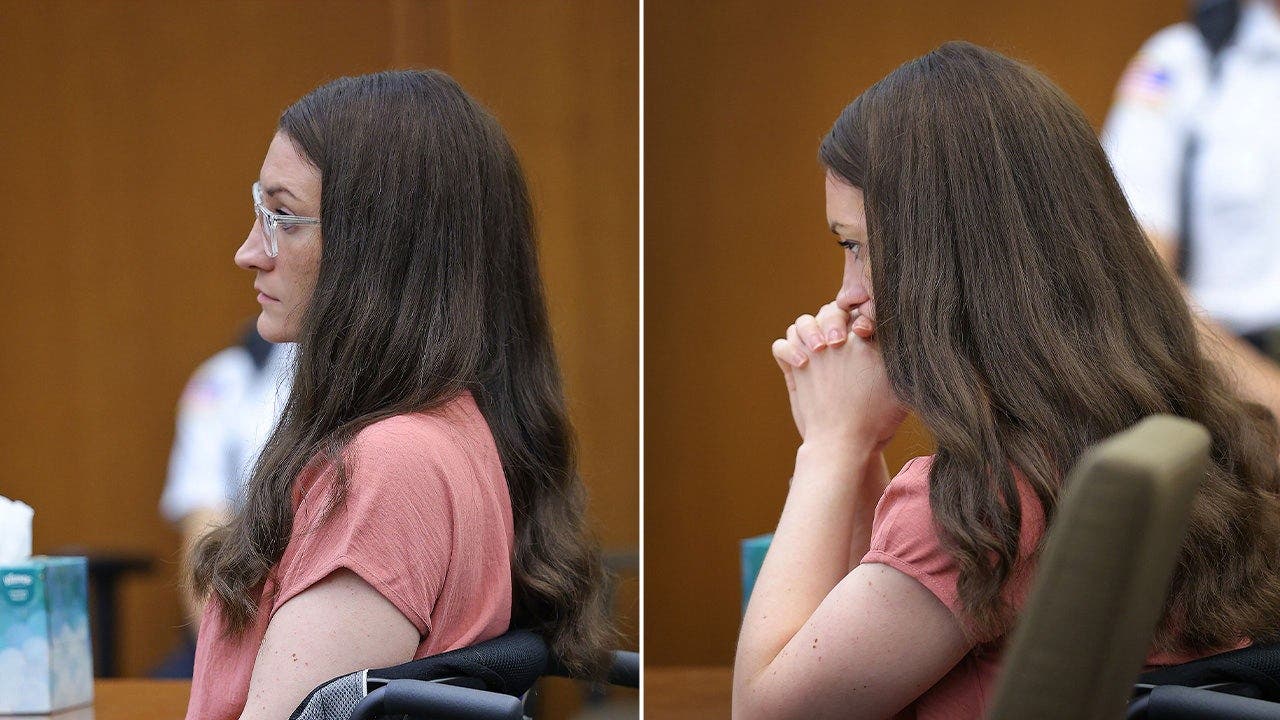
This story discusses suicide.
asserted
story → discuss → suicide
If you or someone you know is having thoughts of suicide, contact the Suicide and Crisis Lifeline at 988 or 1-800-273-TALK (8255).
asserted
you → know → 988
Lindsay Clancy’s attorney sought to blunt prosecutors’ portrayal of the Massachusetts mother as organized and calculating, pressing a hospital psychiatrist to acknowledge that a person can communicate, make plans and carry them out while experiencing psychosis.
asserted
person → seek → psychosis
"People can communicate and plan and act on plans even if they’re in the middle of a psychosis, right?" defense attorney Kevin Reddington asked Dr. Sejal Shah Monday.
asserted
Reddington → communicate → Shah
"Yes," Shah replied.
asserted
Shah → reply → ?
Reddington then asked whether someone must be "drooling and stumbling and unable to walk and talk" to be psychotic.
asserted
someone → ask → ?
Shah said no and agreed that a person in psychosis can still communicate with others.
asserted
person → say → others
Clancy is charged in the deaths of Cora, 5, Dawson, 3, and Callan, 8 months, inside the family’s Duxbury home.
asserted
Clancy → charge → home
Her defense maintains she was suffering from postpartum psychosis.
asserted
she → maintain → psychosis
Prosecutors argue she acted deliberately and understood what she was doing.
asserted
she → argue → what
Seth J. Zuckerman, a celebrity criminal defense attorney, former New York City prosecutor and founder of Zuckerman Legal Group, said the case will turn on Clancy’s mental state at the precise time the children were killed.
asserted
children → say → time
"What was in her mind at the exact time that she killed her children?" Zuckerman told Fox News Digital.
asserted
Zuckerman → kill → Digital
He said prosecutors have focused on Patrick Clancy’s trips to CVS and a local restaurant, along with his communications with his wife, to portray her as lucid during the critical time frame.
asserted
prosecutors → say → frame
Psychiatrist calls Lindsay Clancy an 'honest' patient
asserted
Psychiatrist → call → Clancy
Shah, an associate chief of psychiatry and medicine at Brigham and Women’s Hospital, first evaluated Clancy five days after the killings.
asserted
Shah → evaluate → killings
She testified that Clancy was confused, made mistakes during a cognitive assessment and had experienced visual hallucinations after spinal surgery.
asserted
Clancy → testify → surgery
Shah diagnosed delirium and said possible causes included anesthesia, oxygen problems and an elevated heart rate.
asserted
causes → diagnose → anesthesia
The symptoms resolved by the following day, Shah said.
asserted
Shah → resolve → day
During later evaluations, Clancy appeared calm and cooperative, displayed organized and goal-directed thinking and denied hallucinations and suicidal or homicidal intent.
asserted
Clancy → appear → hallucinations
Reddington used cross-examination to argue those observations did not establish Clancy was free of psychosis at the time of the killings.
asserted
Clancy → use → killings
"Was she, in your opinion and your experience, an honest patient telling you what her symptoms were, if any?" Reddington asked.
asserted
Reddington → tell → you
"Yes," Shah said.
asserted
Shah → say → ?
"She didn’t go off and try to exaggerate to you and say, ‘I’m seeing visions, and I’m hearing voices,’ and suicidal ideation and homicidal ideas," Reddington said.
asserted
Reddington → go → voices
"She didn’t say any of those things to you, did she?
asserted
she → say → you
"Correct," Shah said.
asserted
Shah → say → ?
"So this is not, in your opinion, someone who was trying to exaggerate her conditions for some legal reason, correct?" Reddington asked.
asserted
Reddington → try → reason
"No," Shah replied.
asserted
Shah → reply → ?
Zuckerman called that concession "extremely helpful to the defense," although not decisive.
"
asserted
Zuckerman → call → defense
They want to portray her as someone who wasn’t manipulative, who didn’t have some grand plan," he said.
asserted
he → want → plan
On redirect, prosecutors challenged the defense’s portrayal by focusing on Clancy’s medication history.
asserted
prosecutors → challenge → history
Shah agreed Clancy was not taking every psychiatric medication discussed at the same time and said she had not known some prescriptions were barely used or untouched.
asserted
prescriptions → agree → time
Shah also confirmed that Clancy requested do-not-resuscitate status after surviving her fall from a second-story window.
asserted
Clancy → confirm → window
The hospital did not immediately change her status because of the reported suicide attempt.
asserted
hospital → change → attempt
Shah said Clancy later agreed her mental health should be stabilized before reconsidering the request.
asserted
health → say → request
Zuckerman said Monday’s cross-examination helped the defense by supplying testimony that Clancy could appear lucid at some moments while experiencing severe psychiatric symptoms at others.
uncertain
Clancy → say → others
Still, he said its value will depend on whether the defense can connect those symptoms to the moment the children were killed.
"
asserted
children → say → moment
The burden is on the prosecutors to show that she was criminally responsible at the time of the deaths," Zuckerman said.
asserted
Zuckerman → show → deaths
"That is unique to Massachusetts, and I think it’s beneficial to the defense here."
asserted
it → think → defense
Clancy, a former labor and delivery nurse at Massachusetts General Hospital, has pleaded not guilty to three counts each of murder and strangulation.
asserted
Clancy → plead → murder
Judge William Sullivan told jurors that the Commonwealth must prove beyond a reasonable doubt that Clancy was criminally responsible when the children were killed.
asserted
children → tell → doubt
 The Aporia