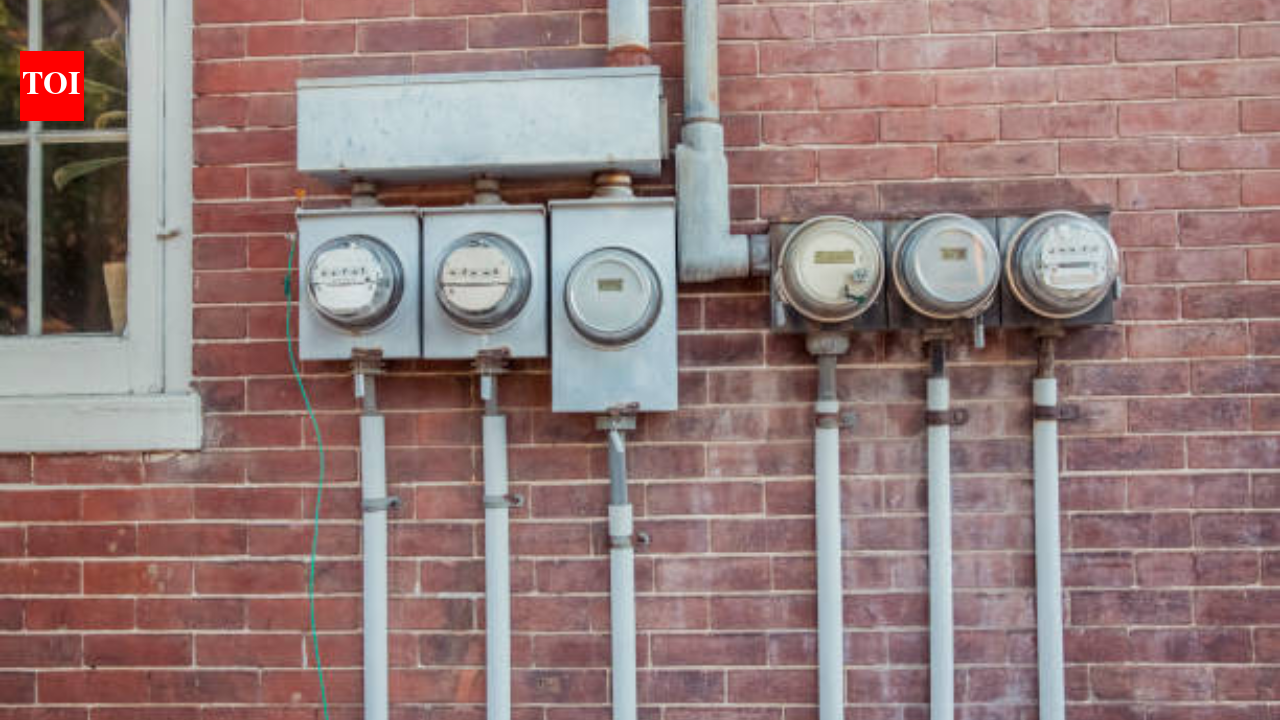
California households get summer electricity credits as state returns $886 million

Read the original at Times of India ↗
Cite

TOI World Desk. (2026, September 24). California households get summer electricity credits as state returns $886 million. Times of India. https://timesofindia.indiatimes.com/world/us/millions-of-california-households-are-getting-electricity-bill-credits-automatically-during-the-expensive-summer-months-the-state-says-886-million-is-being-returned-averaging-about-75-per-household/articleshow/134451670.cms

Dated when The Aporia collected the article, usually within hours of publication. Check the original for its exact date and byline.

Times of India · collected 2026-09-24 · by TOI World Desk

Quick Summary

California households received unexpected electricity bill credits averaging about $75 per household in August and September, totaling $886 million across major utilities Pacific Gas and Electric, Southern California Edison, and San Diego Gas & Electric. Funded by California’s Cap-and-Invest program, these automatic credits are part of Governor Gavin Newsom's relief efforts to help during peak summer usage months. The amounts vary slightly among the three providers but do not depend on household income or electricity consumption levels.
Written locally by qwen2.5:14b on 2026-09-24, using this article's own text rather than the other coverage of the same event (that is the story summary below).

AI analysis runs on qwen2.5:14b, locally

Story summary

In 2025, California households received a significant relief from soaring utility bills through automatic discounts on their statements during August and September. The relief is part of Governor Gavin Newsom's California Climate Credits initiative, which covers eligible residential customers of PG&E, Southern California Edison, and San Diego Gas & Electric, saving subscribers an estimated $886 million collectively. This program is funded by the Cap-and-Invest Program managed by the California Air Resources Board, requiring companies emitting large amounts of pollution to purchase allowances for their emissions. Some proceeds from these penalties are then returned to taxpayers in the form of utility bill credits. Notably, the average price for electricity in California was 27.63 cents per kilowatt-hour (kWh), a 103% increase over the national average of 13.63 cents per kWh. Despite this relief, critics argue that California families still pay more for energy compared to other states, with the average household spending $160.86 monthly on electricity versus the national average of $142.26.


Written for “California Utility Bill Relief” on 2026-10-21, grounded in this article and the 2 other(s) covering the same event.

Story

📰 California Utility Bill Relief
Economy/Business · 3 article(s) covering the same event. Compare every outlet's account →

Compared with similar articles

This article reads unscored and hedges 4% of its claims. Each row says how that neighbour differs.
New York Post
⚖️ Leans left 🔴 12% hedged 1 of 8 📰 publisher trust 66
“Both articles describe the same utility bill relief program for California households, covering the same timeframe (August and September), utilities involved, credit amount ($75 per household), and total relief ($886 million).”
Washington Examiner
⚖️ Leans strongly right 🔴 0% hedged 0 of 28 📰 publisher trust 66
“Both articles discuss Governor Newsom's announcement of $886 million in electricity credits for California households, specifically mentioning the amount per household and the utilities involved.”
How this article was measured signals, leaning charts, publisher record, byline, topics and claims

Signals How these are calculated →

Claims extracted
25
sentences that state something as happening or true
Uncertain
4%
1 of 25 hedged ("reportedly", "may", "according to")
Leaning
not political
takes no side on a contested political question
Publisher signals
59/100
Times of India's corrections and hedging, across everything collected from it. Not a measure of accuracy.
Outlets on this story
3
Economy/Business
Same framing elsewhere
1
articles that frame the event the way this one does
Analyzed 2026-09-24 · how these are computed

How this is being covered How these are calculated →

Article leaning vs. publisher reliability
Source leaning vs. consistency

Publisher

Times of India · 3045 article(s) · 2 correction(s) detected
Running correction rate · 2 correction(s)

Who wrote this

TOI World Desk
1095 article(s) here · 1 carrying a prediction
🔮 The incident happened outside his apartment at 23 Argonne Terrace in Seymour, Connecticut, in May 2024.
🔮 Its final update, published on May 13, 2026, put its total pledge-aligned funding at $158.5 million, covering support approved across the five-year period and reaching 324 organisations.
🔮 Opened in 1949 and closed in 2008, the South Dallas landmark will reopen on November 1 with a community celebration that ends with the ceremonial relighting of its iconic tower and marquee for the first time in more than 50 years.
🔮 Its continued growth reflects the scale of need in the region and the community’s willingness to support families during medical emergencies.
🔮 Residents of two landmark 1960s housing estates in south London may finally be able to remain in their homes after more than 12 years of uncertainty.
🔮 Hody Childress, an Alabama farmer and US Air Force veteran, spent nearly a decade quietly helping people who could not afford their prescription medicines.
🔮 In a world where men are often expected to keep their struggles to themselves, nine people gathered in Halifax in 2016 around an idea that was as ordinary as it was important.
🔮 Its arrow-shaped body was visually striking but could be awkward to play while seated.
🔮 If you are searching for clear answers about the Real American Beer lawsuit, this guide explains who is claiming what, how the brand's story unfolded, what the defendants say in reply, and what the outcome could mean for Hogan's family and legacy.
🔮 In 1935, their collection, comprising more than 400 artworks, was looted by the Nazis and sold at an auction in Berlin on May 31 that year.
Wire or desk byline, not an individual reporter.
Also by TOI World Desk
Nothing else under this byline is closely related to this article, so these are simply their most recent.
All 1095 articles by TOI World Desk →

Topics

CPUC California Pacific Gas and Electric San Diego Gas & Electric Southern California Edison

Subjects

CPUC ORG · 5× California GPE · 3× Southern California Edison ORG · 2× Bear Valley ORG · 1× Gavin Newsom PERSON · 1× PG&E ORG · 1× Pacific Gas and Electric ORG · 1× SDG&E ORG · 1× San Diego Gas & Electric ORG · 1× The California Public Utilities Commission’s ORG · 1×

Narrative

Governor Gavin Newsom's office said on Tuesday that customers of Pacific Gas and Electric, Southern California Edison and San Diego Gas & Electric will receive a combined $886 million in California Climate Credits this year, averaging about $75 per household across the three large utilities.
framing: assertive · carried by 1 article(s) · first seen 2026-09-24
🔮 Governor Gavin Newsom's office said on Tuesday that customers of Pacific Gas and Electric, Southern California Edison and San Diego Gas & Electric will receive a combined $886 million in California Climate Credits this year, averaging about $75 per household across the three large utilities.

Claims (25 extracted, 1 hedged)

Millions of California households received a sweet surprise in their electricity bills for the months of August and September. asserted
Millions → receive → August
Under a new schedule designed to place relief in the hottest, highest-use months, homes received automatic credit. asserted
homes → design → credit
Governor Gavin Newsom's office said on Tuesday that customers of Pacific Gas and Electric, Southern California Edison and San Diego Gas & Electric will receive a combined $886 million in California Climate Credits this year, averaging about $75 per household across the three large utilities. asserted
customers → say → utilities
Interestingly, the credits require no application. asserted
credits → require → application
They appear automatically on eligible residential bills and are funded with proceeds from California’s Cap-and-Invest program, which requires large greenhouse-gas emitters to buy allowances. asserted
which → appear → allowances
A portion of those proceeds is returned directly to utility customers rather than retained for other climate investments. asserted
portion → return → investments
The governor’s announcement distinguishes the $886 million going through the three largest electric utilities from the broader electric-credit program. asserted
announcement → distinguish → program
The exact household amounts vary by provider. asserted
amounts → vary → provider
The California Public Utilities Commission’s 2026 schedule listed two credits of $36.18 for PG&E customers, two credits of $36 for Southern California Edison customers and two credits of $49.36 for SDG&E customers. asserted
schedule → list → customers
Smaller utilities follow a separate schedule: Bear Valley, Liberty and Pacific Power customers receive their 2026 electric credits in April and November. asserted
customers → follow → April
The benefit is not a discount tied to a household’s income or consumption. asserted
benefit → tie → income
Within each utility, eligible residential customers generally receive the same electric-credit amount, so its effect depends on the size of a customer’s bill. asserted
effect → receive → bill
It also does not erase past-due balances or permanently lower a utility’s rates. asserted
It → erase → rates
Instead, it functions as a periodic return of allowance proceeds, visible as a credit line on the monthly statement. asserted
it → function → statement
The CPUC previously distributed the major utilities’ electric credits in spring and fall. asserted
CPUC → distribute → spring
In an April decision announcing the change, the commission said moving them to August and September would better offset peak summer bills. asserted
moving → announce → bills
The agency put total 2026 electric credits across investor-owned utilities and community choice aggregators at $894 million, alongside $520 million in natural-gas credits. asserted
agency → put → credits
Natural-gas customers continue to receive their 2026 credit in April; beginning in 2027, that credit moves to February to align with winter heating demand. asserted
credit → continue → demand
The CPUC also directed utilities to improve bill labelling and customer outreach so recipients can identify the credit. asserted
recipients → direct → credit
The two statewide totals describe different scopes rather than competing calculations: the governor highlighted $886 million for customers of the three large electric utilities, while the CPUC’s $894 million figure includes the wider electric-credit system. asserted
figure → describe → system
The difference matters for customers served by smaller investor-owned utilities, whose credit months and amounts differ from the big-three schedule. asserted
months → matter → schedule
Community choice customers may receive generation service from a local provider while the incumbent utility still delivers electricity and presents the credit on the bill. uncertain
utility → receive → bill
The CPUC said the revised schedule implements provisions of Assembly Bill 1207, enacted in 2025, and directs 5% of electric-utility allowance proceeds to a revolving fund for transmission projects. asserted
schedule → say → projects
A later phase of the CPUC proceeding will consider further changes to the residential credit. asserted
phase → consider → credit
For consumers, the immediate practical point is straightforward: eligible customers should see a line-item credit without enrolling, while the amount and month depend on the utility serving their home. asserted
amount → see → home
💬Give feedback
🕘History 🎫Support