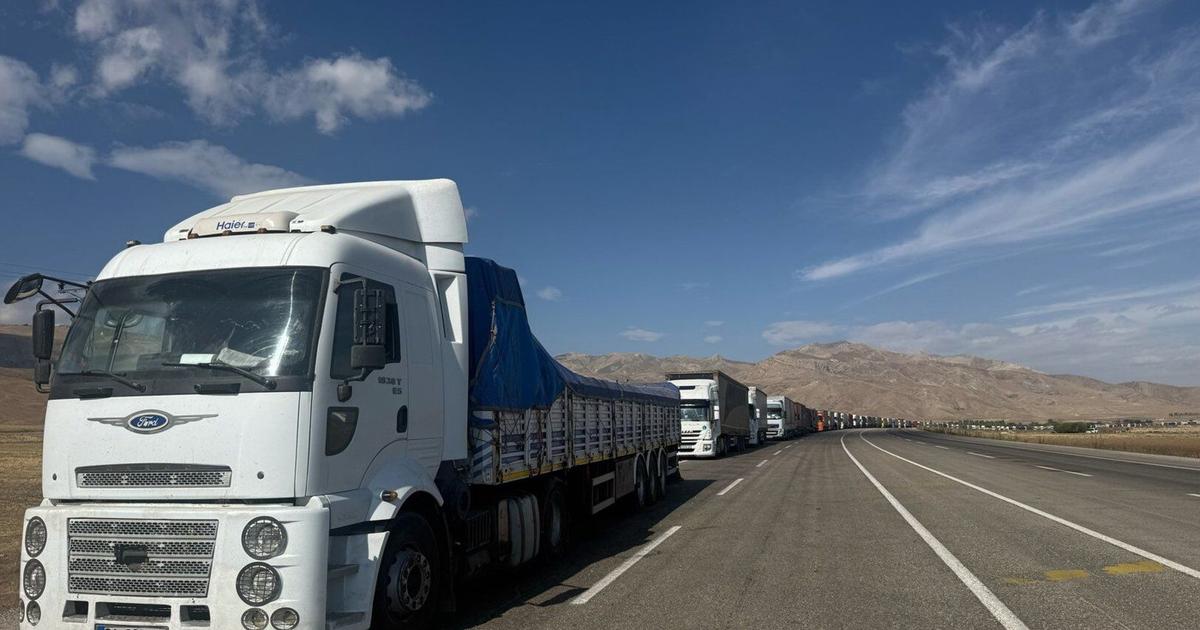
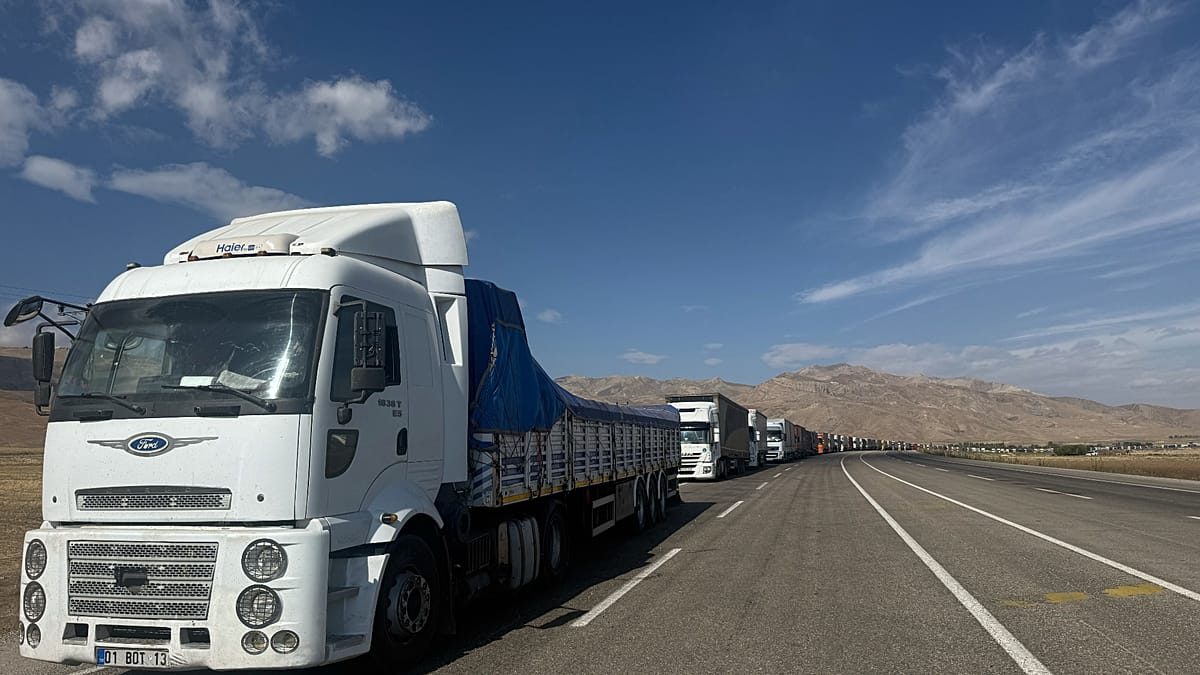
Hundreds of trucks jam Turkey-Iran border crossing as US blockade pushes trade overland

Read the original at Toronto Star ↗
Toronto Star · collected 2026-09-24 · by Serra Yedikardes And Amir-hussein Radjy The Associated Press

Quick Summary

At the Turkey-Iran border crossing at Gürbulak, hundreds of trucks are experiencing severe delays—some waiting up to five days—as Iran shifts its trade overland due to the U.S. naval blockade restricting sea routes. The blockade affects 80% of Iran's trade that previously relied on maritime transport through the Strait of Hormuz. Iranian officials and truck drivers express frustration with the situation, emphasizing the strain on land crossings between Turkey and Iran, which are now critical but overwhelmed by the increased traffic and logistical challenges.
Written locally by qwen2.5:14b on 2026-09-24, using this article's own text rather than the other coverage of the same event (that is the story summary below).

AI analysis runs on qwen2.5:14b, locally

Story summary

Hundreds of trucks are idle along the road into Iran from Turkey's eastern border, stretching for miles at the Gurbulak crossing. The delays have grown due to increased reliance on overland trade following a U.S. naval blockade that limits most imports and exports by sea. Truck drivers, who once waited only three days, now face waits exceeding five days or even weeks. For example, Muhammed Rıza Shiri has been waiting four days to carry his load of rubber into Iran after queuing for seven kilometers. The bottleneck is exacerbated by bureaucratic hurdles; at most, 500 trucks can cross daily from Turkey compared to pre-war volumes needing around 20,000 to match previous seaborne trade levels. This situation underscores the economic pressure on Tehran as it struggles with reduced cargo loads and decreased driver income, highlighting Iran's difficulty in maintaining its economy without maritime routes.

Written for “US Blockade Affects Iran Trade” on 2026-10-05, grounded in this article and the 2 other(s) covering the same event.

Signals How these are calculated →

Claims extracted
51
claim-shaped sentences
Uncertain
6%
3 of 51 hedged
Leaning
Leans strongly left
of the writing, not the subject · beta estimate
Correction & hedging signals
63.3
corrections and hedging in what we collected; not a measure of accuracy
Outlets on this story
3
Politics
Narrative spread
1
articles carrying this framing
Analyzed 2026-09-24 · how these are computed

Story

📰 US Blockade Affects Iran Trade
Politics · 3 article(s) covering the same event. See how they differ ↓

How this is being covered How these are calculated →

Article leaning vs. publisher reliability
Source leaning vs. consistency

Compared with similar articles

This article reads leans strongly left and hedges 6% of its claims. Each row says how that neighbour differs.
Euronews · 0.88 cosine similarity
⚖️ leaning not scored 🔴 0% hedged 0 of 5 📰 publisher trust 60
“Both articles describe hundreds of trucks idling at the Gurbulak border crossing between Turkey and Iran due to delays caused by the U.S. blockade, affecting trade and drivers' incomes.”
New York Post
⚖️ leaning not scored 🔴 23% hedged 7 of 30 📰 publisher trust 64
“The articles describe different aspects of the ongoing economic and military situation involving Iran, with Article A focusing on the truck blockade at the Turkey-Iran border, while Article B discusses Persian Gulf oil exports and the impact of the US naval blockade.”
Al Jazeera
⚖️ leaning not scored 🔴 11% hedged 4 of 36 📰 publisher trust 60
“The articles describe different aspects of the U.S.-Iran tensions, one focusing on overland trade at a border crossing and the other on explosions near the Strait of Hormuz.”
New York Post
⚖️ Leans strongly right further right than this 🔴 3% hedged 1 of 34 📰 publisher trust 64
“While both articles describe similar situations involving blockades and overland trade routes for Iran, they appear to be reporting on different days with distinct details and focus points.”
The Independent
⚖️ Leans left further right than this 🔴 2% hedged 1 of 40 📰 publisher trust 59
“The articles describe different aspects of the broader situation caused by the US blockade, with Article A focusing on Iran's internal petrol crisis and shortage, while Article B reports on the border crossing issues between Turkey and Iran.”

Publisher

Toronto Star · 5200 article(s) · 17 correction(s) detected
Running correction rate · 17 correction(s)
2026-10-03
Tennessee's prisons chief is resigning after failed execution of Christa Pike
2026-09-28
Organizations call for Action to End the Deaths of Indigenous People in Custody
2026-09-27
Police memorial recognizes six officers killed in the line of duty in 2026
2026-09-27
UPDATE: WSP to host Power & Energy-focused investor event virtually only
2026-09-26
News Clarification for Sept. 27
2026-09-26
Former federal public servant seeks better pensions for injured workers
2026-09-25
News Corrections for Sept. 25
2026-09-25
She has not been charged. But the Project South allegations have branded her with a 'scarlet letter'
2026-09-24
Correction
2026-09-23
MULTIMEDIA UPDATE: Smith+Nephew launches the new EVOS™ PELVIC Plating System at the 2026 Orthopedic Trauma Association (OTA) Annual Meeting, expanding the EVOS Plating Platform for pelvic and acetabular fracture management
2026-09-22
Costa Rican man complained of lack of care for diabetes before his death in ICE custody, family says
2026-09-22
Judges' grilling of accused men leads to sex assault and dangerous driving cases being overturned
2026-09-20
Jura Energy Corporation Provides Clarification Regarding Media Reports Concerning Its Petroleum Rights in Pakistan
2026-09-19
New details emerge about Toronto's guns-for-hire and the 'crash-out mission" that sparked the Project South investigation
2026-09-17
UPDATE: Osisko Critical Minerals Corporation Announces C$100 Million Private Placement of Special Warrants
2026-09-17
Alabama set to execute man for pawn shop killings months after his nitrogen gas execution blocked
2026-09-04
Orca Corrects Q3 Quarterly Dividend Announcement

Who wrote this

Serra Yedikardes And Amir-hussein Radjy The Associated Press
1 article(s) here · 1 carrying a prediction
🔮 Iran insists the pressure will not change its stance in negotiations with Washington.
Wire or desk byline, not an individual reporter.
Nothing else under this byline in the corpus.

Topics

Iran Iranian Tehran Turkey U.S.

Subjects

Iran GPE · 11× Turkey GPE · 8× Iranian NORP · 6× U.S. GPE · 4× Masoud Pezeshkian PERSON · 2× Tehran GPE · 2× GURBULAK GPE · 1× Muhammed Rıza Shiri PERSON · 1× The Associated Press ORG · 1× Washington GPE · 1×

Narrative

“With the rising costs, increased maintenance expenses, high prices for tires and parts and, on the other hand, reduced cargo loads and decreased driver income, it has become very difficult for many of us to continue working,” one message read, warning truckers “will not remain silent in the face of this increased pressure on drivers.”
framing: assertive · carried by 1 article(s) · first seen 2026-09-24
🔮 Iran insists the pressure will not change its stance in negotiations with Washington.

Claims (51 extracted, 3 hedged)

Hundreds of trucks idle along the road into Iran from Turkey’s mountainous eastern border. asserted
Hundreds → idle → border
Bustling even in normal times, the countries’ largest crossing is now a make-or-break economic lifeline for Tehran as the U.S. navy blockades its ports. asserted
navy → bustle → ports
Iranian President Masoud Pezeshkian has pressed to accelerate overland trade as the blockade limits the vast majority of imports while cutting off the oil and gas sales that largely keep the economy alive. asserted
that → press → economy
It’s the latest test of Iran’s endurance. asserted
It → ’ → endurance
Frustrated Iranian truck drivers spoke to The Associated Press at the Turkey border crossing, where lines now stretch for miles. asserted
lines → speak → miles
“I’ve been driving through this border gate for 15 years. asserted
I → drive → years
I’ve never had to wait as long as now,” said Muhammed Rıza Shiri, 55, who had waited four days to carry his load of rubber into Iran. asserted
who → have → Iran
“We had to wait at the end of a seven-kilometer (4.3-mile) line. asserted
We → have → line
We used to wait, maximum, for three days here. asserted
We → use → days
Because of the war, the waiting times exceed five days.” asserted
times → exceed → days
Iran accuses the U.S. of trying to weaken the country. asserted
Iran → accuse → country
“They are trying to create difficulties wherever they can, and they are holding nothing back. asserted
they → try → nothing
They are closing off routes, shutting down air routes, blocking land routes and trying to fuel internal divisions,” President Masoud Pezeshkian said Tuesday. asserted
Pezeshkian → close → divisions
Iran insists the pressure will not change its stance in negotiations with Washington. asserted
pressure → insist → Washington
Tehran wants the U.S. blockade to end before it allows commercial shipping to flow again through the Strait of Hormuz, where Iran’s grip has shaken global markets and oil prices. asserted
grip → want → markets
Iran had relied on the gulf for over 80% of its trade Iran has a huge challenge as it tries to shift trade from sea to land. asserted
it → rely → land
Its economy relied on the gulf for over 80% of its trade before the war, according to Iran economist Mohammad Farzanegan. uncertain
economy → rely → Farzanegan
Now Iran’s land crossings with Turkey to the west and Pakistan to the east are crucial in connecting with Europe and Asia. asserted
crossings → connect → Europe
Drivers carry goods that are vital to Iran’s petrochemical and other manufacturing that were badly damaged by U.S. and Israeli strikes. asserted
that → carry → strikes
Regulations, border controls, corruption, all these things would make the transit much more difficult and time-consuming,” Farzanegan said. asserted
Farzanegan → make → ?
Overland trade “would not basically be able to substitute or compensate for the blockade.” asserted
trade → substitute → blockade
At Turkey’s Gürbulak border, truck waiting times have more than quadrupled since the war began, according to data from the International Transporters Association, which represents Turkey’s international logistics sector. uncertain
which → quadruple → sector
One Iranian official said the number of trucks has shot up. asserted
number → say → trucks
“Instead of 200 trucks, there are 1,200 trucks at the border, and the destination country does not have the capacity to accept this number of trucks,” Amir Roshanbakhsh Ghanbari, deputy head for a government agency that promotes Iranian trade, said in an interview with a semiofficial news outlet, ILNA. asserted
that → be → outlet
Ghanbari blamed the border backup in part on neighboring countries: “Destination countries are not willing to develop infrastructure because it is not clear how long this situation will continue. asserted
situation → blame → infrastructure
But an AP reporter visiting the Turkey border crossing on Tuesday saw road work aimed at building extra lanes. asserted
reporter → visit → lanes
Two staffers from a local road authority, who spoke on condition of anonymity as they were not authorized to comment publicly, said Turkey was improving border infrastructure based on a three-year-old plan. asserted
Turkey → speak → plan
Some truckers are protesting the delays A Telegram channel linked with groups representing Iranian truckers and other transportation drivers is flooded with messages protesting conditions. asserted
channel → protest → conditions
Their low-wage work is further squeezed after Iranian authorities raised fuel prices and tightened fuel quotas. asserted
authorities → squeeze → quotas
“With the rising costs, increased maintenance expenses, high prices for tires and parts and, on the other hand, reduced cargo loads and decreased driver income, it has become very difficult for many of us to continue working,” one message read, warning truckers “will not remain silent in the face of this increased pressure on drivers.” asserted
truckers → rise → drivers
Akbar Sadigi, 42, an Iranian truck driver from Tabriz waiting at the crossing, said longer waiting times have cut his twice-monthly trips to once a month. “I make half of what I used to make because of this,” he said. asserted
he → wait → this
Fuel prices for his truck have risen by 25% in Iran since his last trip, he added. asserted
he → rise → trip
“Some Turkish drivers can bribe and get ahead of the line. asserted
drivers → bribe → line
We can’t do that,” Sadigi said. asserted
Sadigi → do → that
Drivers said the customs line is even longer on the Iranian side, with wait times in the past month ranging from 12 to 25 days. asserted
times → say → days
Many blamed longer inspections by Turkish authorities of trucks leaving Iran. asserted
Many → blame → Iran
Akbar Yahyai, an Iranian truck driver who said his loads vary from machinery parts to chemical components, said he had been waiting four days. “ asserted
he → say → components
It’s a shame for us drivers here. asserted
It → ’ → drivers
There is no toilet or shower we can use here while waiting. asserted
we → be → ?
You can see it from how we look and smell,” he said, adding that he barely makes enough money to eat. asserted
he → see → money
…and 11 more, not listed.

💬Give feedback
🕘History 🎫Support