Russia is rattling NATO’s nerves, but how far will Moscow go?

CBC | Top Stories News · collected 2026-08-31 · by Murray Brewster
Read the original at CBC | Top Stories News ↗

Summary

Russia's actions are causing concern among Eastern European countries as it tests NATO's resolve with drone intrusions and missile strikes, including a recent incident where a Russian cruise missile crashed into Poland. According to Polish defense expert Withold Rodkiewicz, the Kremlin is frustrated by its inability to defeat Ukraine and believes that breaking NATO will help achieve victory. Rodkiewicz suggests that an escalation in Russia's actions is likely, possibly as early as September, either before or after the country's parliamentary elections. No consensus exists on whether Russian President Vladimir Putin has decided to start a conventional war with NATO.
Written by the local model on 2026-08-31, using this article's own text rather than the other coverage of the same event (that is the story summary below).

Signals How these are calculated →

Claims extracted
50
claim-shaped sentences
Uncertain
12%
6 of 50 hedged
Leaning
Leans left
of the writing, not the subject
Publisher trust
95.4
red-flag proxy, not a credibility rating
Outlets on this story
1
Politics
Narrative spread
1
articles carrying this framing
Analyzed 2026-08-31 · how these are computed

AI analysis (generated at analysis time, not now)

Story summary

Russia has been testing NATO's resolve with drone intrusions and missile strikes in Eastern Europe, particularly in Poland and the Baltic states, this summer. This has sparked concerns among officials that Moscow may be planning a deliberately ambiguous, limited act of violence to destabilize NATO without triggering a full-scale military response under Article 5. In fact, a Russian cruise missile crashed into Poland's Lublin province in late July after traveling deep into Polish territory during a strike against Ukraine. Additionally, Ukrainian strike drones have repeatedly wandered into NATO airspace, with some instances possibly due to Russian electronic warfare disrupting their navigation. The situation is reminiscent of an incident last spring in Latvia, where a similar incident caused a political crisis that led to the defense minister's job loss and eventually the prime minister's resignation.

Written for “Russia's Aggression in Europe” on 2026-08-31, grounded in this article and the 0 other(s) covering the same event.
Why this leaning score
The article's own words the score was based on. Each is quoted verbatim and was checked against the article text before being stored, so you can find it in the original.
Score -0.35 Confidence medium
Leaning score -0.35 for article 3151 (medium confidence, 2 verified quotes) · logged 2026-08-31

Story

📰 Russia's Aggression in Europe
Politics · 1 article(s) covering the same event. This is the one the site leads with.

How this is being covered How these are calculated →

Article leaning vs. publisher reliability
Source leaning vs. consistency

Compared with similar articles

This article reads leans left and hedges 12% of its claims. Each row says how that neighbour differs.
The Straits Times World News
⚖️ Leans right further right than this 🔴 33% hedged 2 of 6 📰 publisher trust 95
“Article A reports on a potential response by Russia to Ukrainian strikes using British missiles, while Article B discusses incursions and intrusions into NATO countries without mentioning the specific incident of missile strikes using British missiles”
News | Euronews RSS
⚖️ Leans left 🔴 11% hedged 3 of 28 📰 publisher trust 95
“Article A discusses Russia's planned mobilization of troops, while Article B mentions Russian drone intrusions and missile strikes, which are separate events.”
World War 2.5 different event · 100%
The Dispatch
⚖️ Centre further right than this 🔴 0% hedged 0 of 3 📰 publisher trust 96
“Article A mentions a meeting between the CIA director and the Kremlin in August 2026, while Article B refers to a meeting that drove speculation about an incursion, but does not specify when it happened”
The Independent World
⚖️ Leans right further right than this 🔴 36% hedged 8 of 22 📰 publisher trust 95
“Article B mentions drone intrusions and missile strikes in Poland and Romania since spring, whereas Article A only discusses a potential strike by Russia on UK military bases”
NPR Topics: News
⚖️ Leans left 🔴 8% hedged 2 of 25 📰 publisher trust 93
“Article A mentions incursions and missile strikes, while Article B mentions jet-powered drone attacks and aerial bombings”
Home - CBSNews.com
⚖️ Leans right further right than this 🔴 19% hedged 4 of 21 📰 publisher trust 58
“Article A describes a single, secretive trip by CIA Director John Ratcliffe to warn Russia not to attack NATO, while Article B refers to a broader context of Russian actions and potential incursions without specifically mentioning the CIA director's visit”
ABC News: Top Stories
⚖️ Leans right further right than this 🔴 0% hedged 0 of 8 📰 publisher trust 94
“Article A describes a specific meeting in Moscow between the CIA director and Russia, while Article B mentions this trip as part of speculation about potential Russian actions against NATO”
News - South China Morning Post
⚖️ Leans strongly right further right than this 🔴 22% hedged 2 of 9 📰 publisher trust 93
“Article A describes a specific threat made by Russia against the UK, while Article B mentions general Russian intrusions and incursions in Eastern Europe without specifically mentioning any threats to the UK”
The Independent World
⚖️ Leans strongly right further right than this 🔴 39% hedged 15 of 38 📰 publisher trust 95
“Article A describes a meeting between CIA director John Ratcliffe and President Trump, while Article B mentions the CIA director's trip to Moscow without specifying he met with Trump”
CBC | World News
⚖️ leaning not scored 🔴 8% hedged 1 of 13 📰 publisher trust 95
“Article A describes a specific incident on August 28, while Article B mentions ongoing incidents since the spring and does not specify a single date or time for the events described”

Publisher

CBC | Top Stories News · 194 article(s) · 0 correction(s) detected
SignalValueWeight
Correction rate 0.000 0.4
Uncertainty density 0.092 0.25
Assertive mismatch rate 0.000 0.35
No corrections detected for this publisher. That may mean careful reporting, or simply that nothing has been checked.

Who wrote this

Murray Brewster
5 article(s) here · 1 carrying a prediction
🔮 Russia is rattling NATO’s nerves, but how far will Moscow go?
🔮 Push for co-operation among European shipbuilders could have Canadian ripple effect
🔮 Military satellite deal could set stage for new battle over cabinet secrecy Conservatives flag Carney's ties to Telesat CEO, government says precautions taken
🔮 "The only thing I would add cryptically is that the Canadian officials have been involved from the start.
🔮 The department said the closing of operations KOBOLD (Kosovo), SNOWGOOSE (Cyprus), SOPRANO (South Sudan) and CROCODILE (Democratic Republic of Congo) and the reduction to Operation CALUMET (Sinai) will take place over the next two years. -
Also by Murray Brewster
Nothing else under this byline is closely related to this article, so these are simply their most recent.

Topics

Kremlin Moscow NATO Russia Russian

Subjects

NATO ORG · 10× Russian NORP · 8× Poland GPE · 6× Russia GPE · 6× Moscow GPE · 5× Polish NORP · 5× Ukraine GPE · 5× Baltic NORP · 4× Kremlin ORG · 4× Ukrainians GPE · 2×

Narrative

But that scenario becomes more plausible because something very similar happened in Latvia last spring. Ukrainian strike drones have repeatedly wandered into NATO airspace, apparently in some cases because Russian electronic warfare has disrupted their navigation. The incident in Latvia caused a political crisis that cost the defence minister his job, and eventually cost the prime minister her job.
framing: assertive · carried by 1 article(s) · first seen 2026-08-31
🔮 Russia is rattling NATO’s nerves, but how far will Moscow go?
2026-08-31 · CBC | Top Stories News
Russia is rattling NATO’s nerves, but how far will Moscow go? · assertive framing

Claims (50 extracted, 6 hedged)

Russia is rattling NATO’s nerves, but how far will Moscow go? asserted
Moscow → rattle → nerves
Incursions may be aimed at testing Western military alliance's resolve It would be fair to say this summer has been the season of fear and loathing in Eastern Europe, as more signs emerge that Russia could be ready to further test NATO solidarity in the hopes of breaking it. uncertain
Russia → aim → it
Poland and Romania have witnessed a series of Russian drone intrusions and at least one missile strike since the spring. asserted
Poland → witness → spring
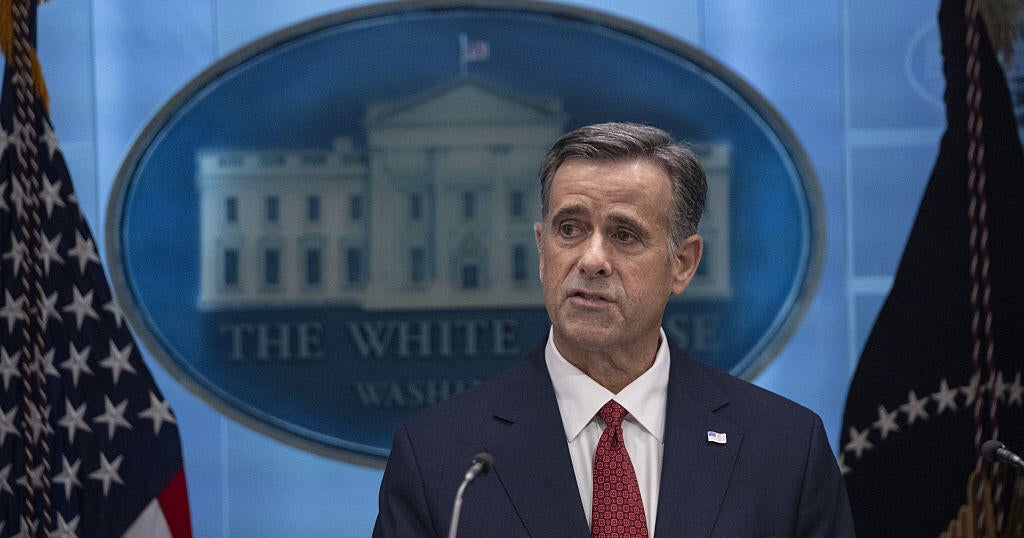
The idea that the Kremlin is preparing some kind of incursion drove speculation surrounding the CIA director's surprise visit to Moscow last week. asserted
Kremlin → prepare → Moscow
What is worrying officials in Poland and the Baltic states is not the prospect of Russian armoured divisions suddenly crossing the frontier. asserted
divisions → worry → frontier
The concern is that Moscow may believe it can carry out a deliberately ambiguous, limited act of violence — large enough to frighten or destabilize NATO, but small and deniable enough to make invoking the Western military alliance's self-defence clause, Article 5, politically difficult. uncertain
invoking → believe → clause
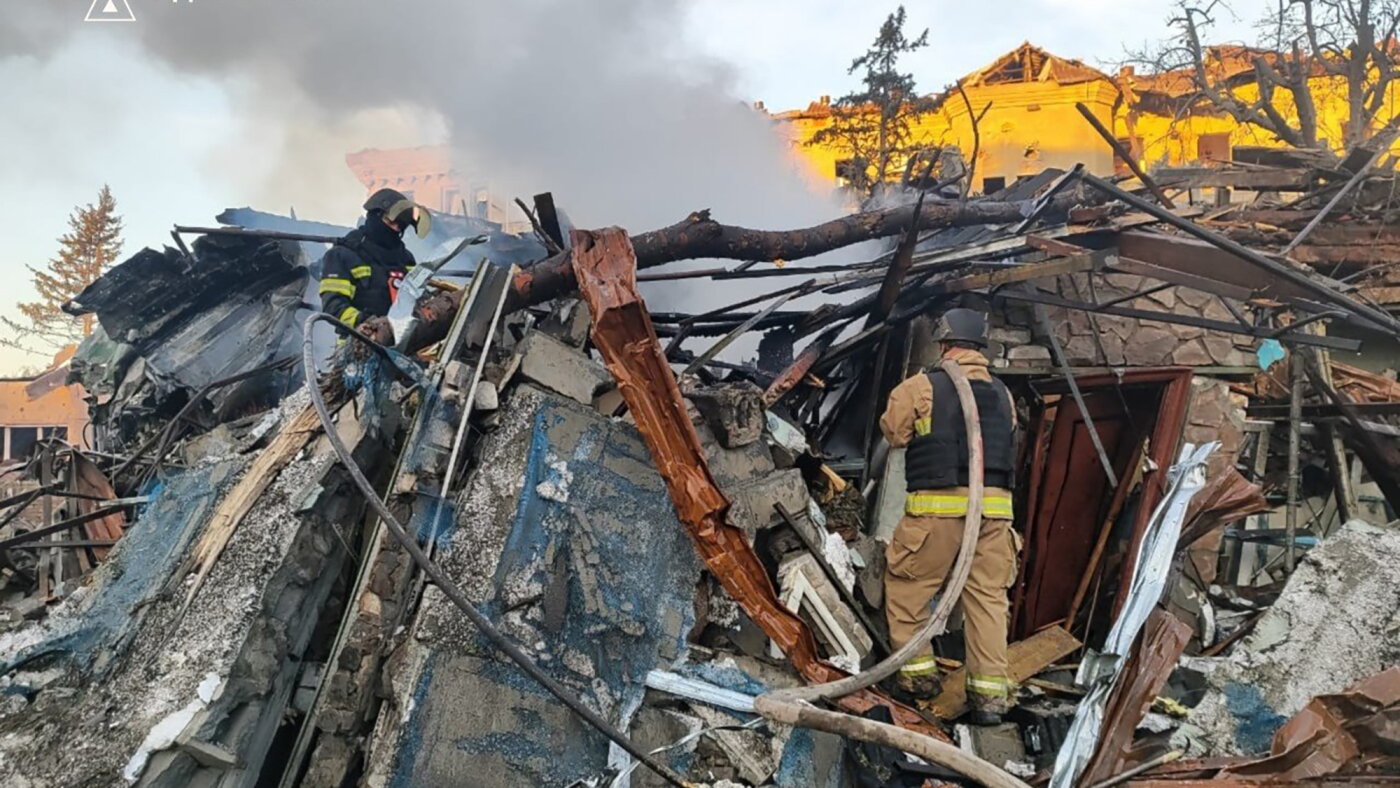
In late July, a Russian cruise missile crashed into Poland's Lublin province after travelling deep into Polish territory during a massive strike against Ukraine. asserted
missile → crash → Ukraine
Multiple drones have also approached or tested Polish airspace in the weeks since. asserted
drones → approach → weeks
A Polish defence expert who specializes in the Russian military and politics said the war in Eastern Europe is rapidly approaching a critical turning point where the Kremlin has reached the conclusion that the only way to defeat Ukraine is to politically break NATO. asserted
way → specialize → NATO
"There is frustration [over the] inability to break Ukrainian armed forces and to defeat Ukrainians in the field," said Withold Rodkiewicz, a security expert at the Center for East European Studies at the University of Warsaw. asserted
Rodkiewicz → be → Warsaw
The Russian "elite," as Rodkiewicz calls them, know they're not winning the war, and Ukraine's increasingly effective attacks on oil and commercial infrastructure have the potential to destabilize the Kremlin's grip on power. asserted
attacks → call → power
"The analysis that's around in Moscow is that the main reason that Ukrainians are able to resist is because they are supplied from the West," he said, adding that nothing short of total victory in Ukraine will satisfy the Kremlin. " asserted
nothing → resist → Kremlin
They're not looking for a way out. asserted
They → look → way
They are not looking for … an off-ramp," he said. asserted
he → look → ramp
"When they are thinking what to do next, an escalation is an obvious thing." asserted
escalation → think → what
Rodkiewicz said he believes the time will be right for Moscow sometime in September, either before or after Russia's parliamentary elections. asserted
time → say → elections
There is mounting evidence of Russian risk-taking, but there is no consensus that Russian President Vladimir Putin has decided to start a conventional war with NATO. asserted
Putin → be → NATO
Estonia’s foreign intelligence service, for example, still assesses that Russia does not presently intend to attack a NATO country militarily in the coming year. asserted
Russia → assess → year
Do I think they'll do something that is so clearly aimed at shaking NATO decision-making and political cohesion? asserted
that → think → making
Absolutely.- Kerry Buck, Canada's former ambassador to NATO At the same time, throughout the summer, U.S., Polish and Baltic warnings about a provocation have become considerably more specific. asserted
warnings → become → provocation
In late June and July, reporting emerged that Western intelligence services had picked up indications that Russia could be preparing some form of action against Poland or the Baltic states, designed specifically to test NATO cohesion. uncertain
Russia → emerge → cohesion
The Guardian newspaper in the U.K. reported that intelligence received by Latvia pointed toward a possible Russian military provocation, and subsequent reporting said the United States had warned Poland about the possibility of an armed incident on Polish territory. asserted
States → report → territory
By early August, the warning sharpened even further. asserted
warning → sharpen → August
U.S. intelligence was reportedly telling Poland and the Baltic countries that Putin could be prepared to authorize provocative action against NATO while the Ukraine war is still underway, rather than waiting for Russia to regenerate its conventional forces after the war. uncertain
Russia → tell → war
Canada's former ambassador to NATO, Kerry Buck, said Russia has been out to destroy the alliance since its invasion of Crimea in 2014, and the conditions have only improved since U.S. President Donald Trump returned to power last year. asserted
Trump → say → power
The constant berating of allies, the new fiscal demands placed on them, the cutting of U.S. forces earmarked for an emergency, and now Washington's review of American troop posture in Europe have created the conditions for a major political crisis, should there be a provocation. asserted
review → place → crisis
It is, Buck said, "a window of opportunity where Russia was emboldened to poke NATO more, poke NATO territory, airspace and space more. asserted
Russia → say → territory
" While she doesn't believe an outright attack on NATO is in the offing, she also believes Russia is prepared to try something ambiguous. asserted
Russia → believe → something
"Do I think they'll do something that is so clearly aimed at shaking NATO decision-making and political cohesion? asserted
that → think → making
Absolutely," Buck said. asserted
Buck → say → ?
Trump told reporters last week that he's "not concerned at all" about Russia attacking NATO territory. asserted
Russia → tell → territory
He said he's spoken to Putin and has been assured he "is not going to be attacking a NATO territory. asserted
he → say → territory
At a meeting of the North Atlantic Council in Brussels last week, U.S. defense policy chief Elbridge Colby insisted Washington is not abandoning Europe. asserted
Washington → insist → Europe
He said it wants a new vision of NATO built around European-led conventional defence. asserted
it → say → defence
Buck said most of what Russia is likely planning falls below the threshold of a direct attack. asserted
Russia → say → attack
She also accepts at face value what Colby has said. asserted
Colby → accept → what
Rather, her concern lies within the reality of NATO politics. asserted
concern → lie → politics
In the past, whenever there's a crisis, the U.S. has stepped up to organize the allied response. asserted
U.S. → be → response
Will that happen under the current administration? asserted
that → happen → administration
"All signs from President Trump are that they are not as committed as they used to be, so who would step in and lead the preliminary response?" Buck asked. asserted
Buck → use → response
…and 10 more, not listed.

💬 Give feedback
🕘 History 🎫 Support