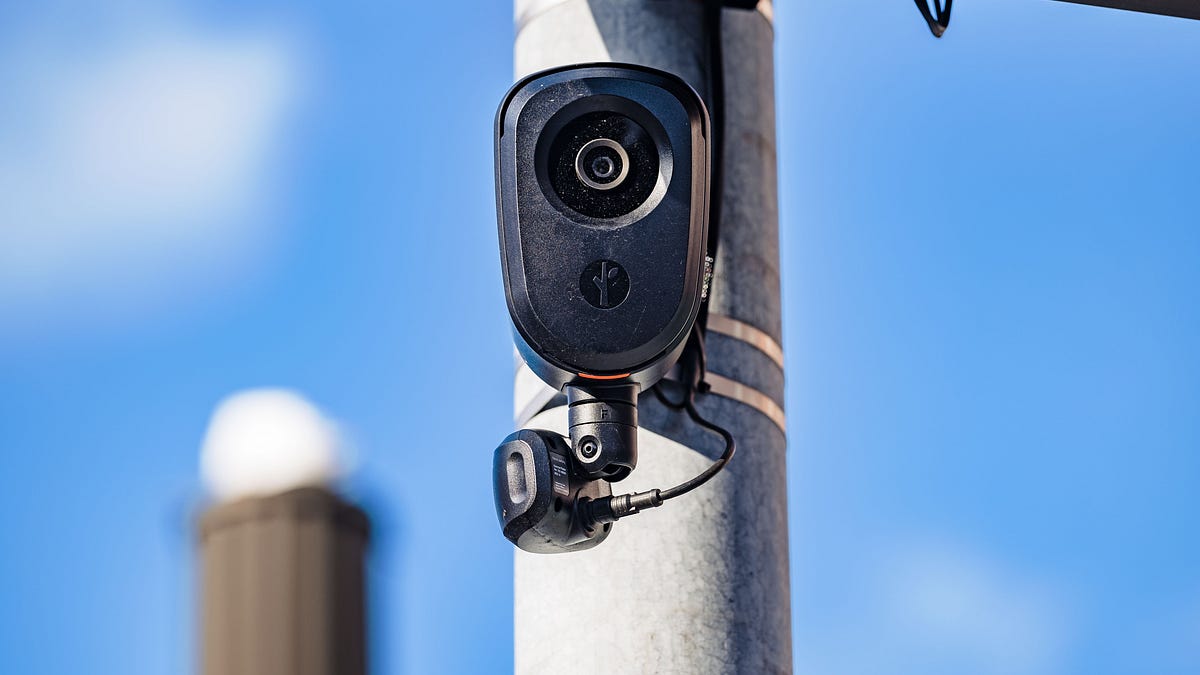
Flock Safety is feeling the heat from ongoing public backlash against the company's controversial surveillance technology.
asserted
Safety → feel → technology
Amid mounting contract cancellations and anti-Flock vigilantes targeting automatic license plate reader (ALPR) cameras across the country, CEO Garrett Langley appeared on Fox News earlier this week beseeching a national "compromise" to save the company from efforts to ban the technology outright.
asserted
Langley → mount → technology
But while many privacy advocates may relish seeing Flock on the run, civil liberties experts warn against losing sight of what truly matters: passing strong legal protections that outlive Flock's dominance.
uncertain
that → relish → dominance
The attention on Flock is certainly justified.
asserted
attention → justify → Flock
As the largest provider of ALPRs, Flock has 120,000 cameras across 49 states, works with over 5,000 law enforcement agencies, and captures more than 20 billion license plate scans every month.
asserted
Flock → have → scans
And while the company bears the brunt of the public's animosity, competitors are watching, learning, and waiting, ready to swoop in on whatever infrastructure Flock leaves behind after the public-relations shitstorm passes.
asserted
shitstorm → bear → infrastructure
And whatever comes after could potentially be even worse, unless government actors start taking privacy rights seriously, according to Jay Stanley, a senior policy analyst at the American Civil Liberties Union's (ACLU) Speech, Privacy, and Technology Project.
uncertain
actors → come → Project
Motorola Solutions, currently Flock's "most significant" competitor, "has been expanding its police technology offerings through an aggressive acquisition strategy in recent years," writes Stanley in a new analysis published on Tuesday.
asserted
Stanley → expand → Tuesday
And through the company's nationwide Digital Recognition Network, over 500 million monthly plate scans are made available to participating law enforcement agencies.
asserted
scans → make → agencies
But unlike Flock, which has responded to criticism by adjusting its controversial 30-day default retention policy down to seven days and introducing limits on police access to data, Motorola has made no such changes.
asserted
Motorola → respond → changes
Instead, Motorola has no default retention period and imposes no enforced limits on how long customers, including law enforcement, can retain ALPR data.
asserted
customers → have → data
(Flock enforces a maximum one-year retention policy.)
asserted
Flock → enforce → policy
For example, the New York Police Department retains data from Motorola's ALPRs for a whopping five years, according to Stanley.
uncertain
Department → retain → Stanley
Such long retention periods of law-abiding citizens' location data are concerning given the risk of misuse and mission creep.
asserted
periods → abide → misuse
Indeed, Motorola has contracted with Immigration and Customs Enforcement (ICE) since at least 2018, and in September 2023 was "awarded a $15.6 million contract…to 'implement and maintain' ICE's tactical communication infrastructure," according to Forbes, giving ICE direct access to Motorola's surveillance database.
uncertain
Motorola → contract → database
Another one of Flock's competitors, Axon, is also gunning for a top police surveillance position.
asserted
one → gun → position
Formerly known as Taser, the company got its start with the TASER energy weapon and has since grown its police offerings to include body-worn cameras and digital evidence management software.
asserted
company → know → cameras
The company's newest products include ALPR services, which it began selling through dashboard and in-car camera products in 2021 and fixed-cameras in 2025, according to Stanley.
uncertain
it → include → Stanley
Since "many Flock customers already have contracts with Axon for body cameras and other products," argues Stanley, switching from Flock to Axon may be an easy and attractive option for government officials during this time of anti-Flock fervor.
uncertain
switching → have → fervor
Even though Axon, unlike Flock and Motorola, doesn't offer nationwide data sharing, the company's policies on handling ALPR data still fall short of protecting privacy.
asserted
policies → offer → privacy
From long data retention periods to the experimental use of AI analytics, whatever Axon and many other surveillance competitors' policies and capabilities may look like now, they simply can't be trusted to protect civil liberties over the long term.
uncertain
they → look → term
"Communities should not gain too much comfort from what companies are and are not doing right now, but instead keep their eye on the longer game by putting protections into law," writes Stanley.
asserted
Stanley → gain → law
Whether a community chooses to use ALPR surveillance or not, Stanley recommends a handful of legal protections, including a retention period of no more than 48 hours, disallowing nationwide data sharing, storing data locally, and declining AI analytics software.
asserted
Stanley → choose → software
Mandating such policies—along with requiring police to obtain a warrant before searching ALPR data—can help ensure Americans' civil liberties remain proactively protected no matter which surveillance technology company dominates.
asserted
company → mandate → data
 The Aporia