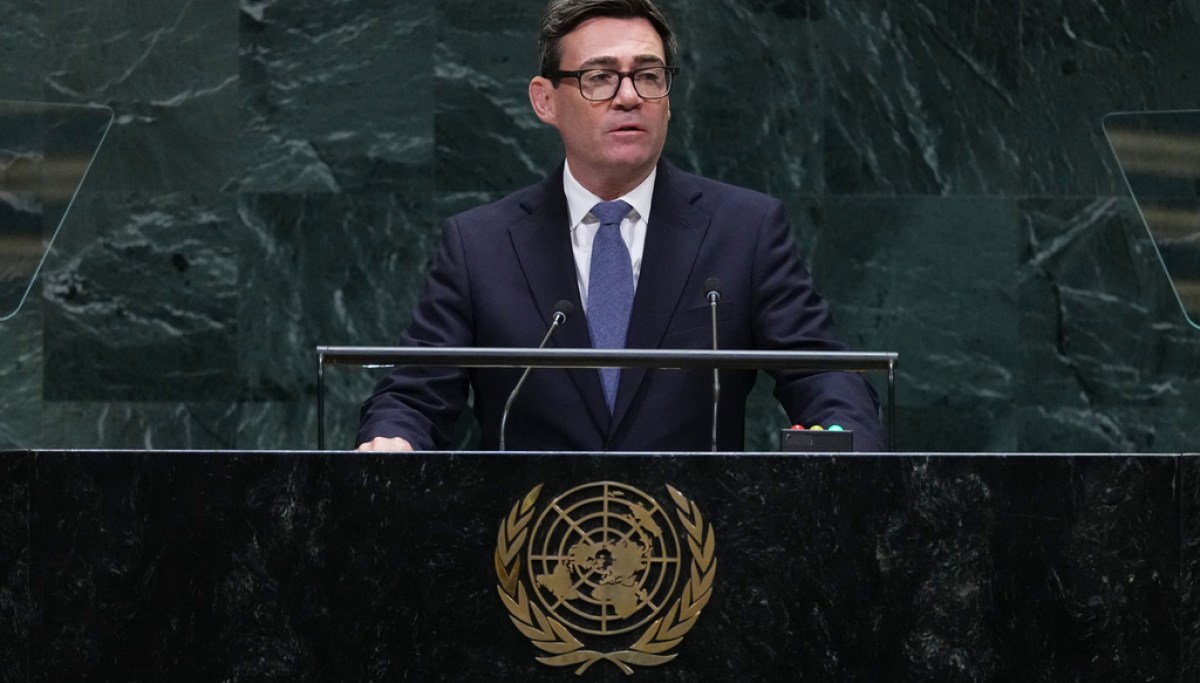
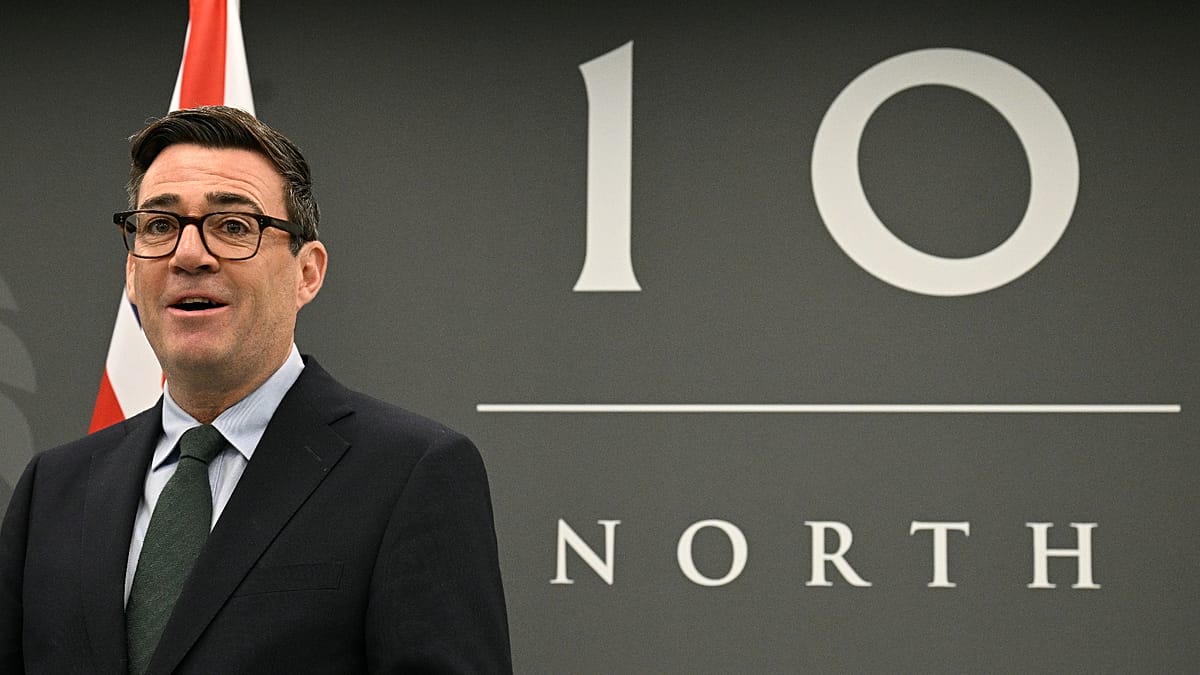
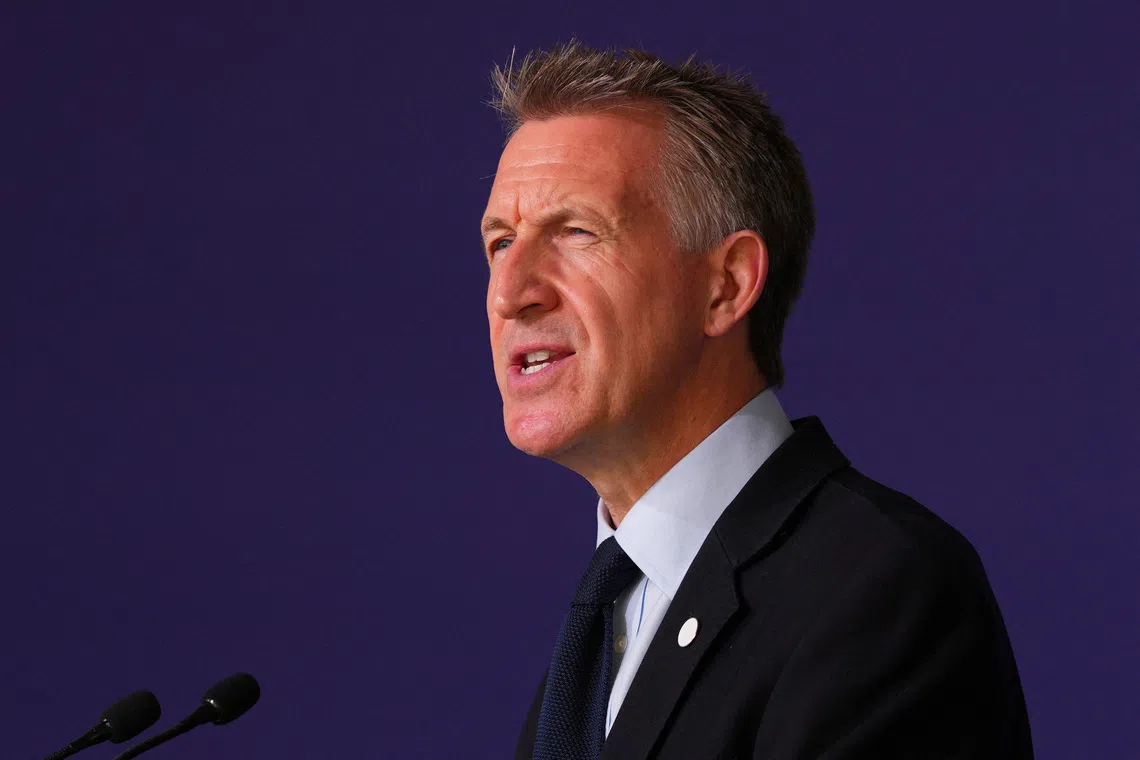
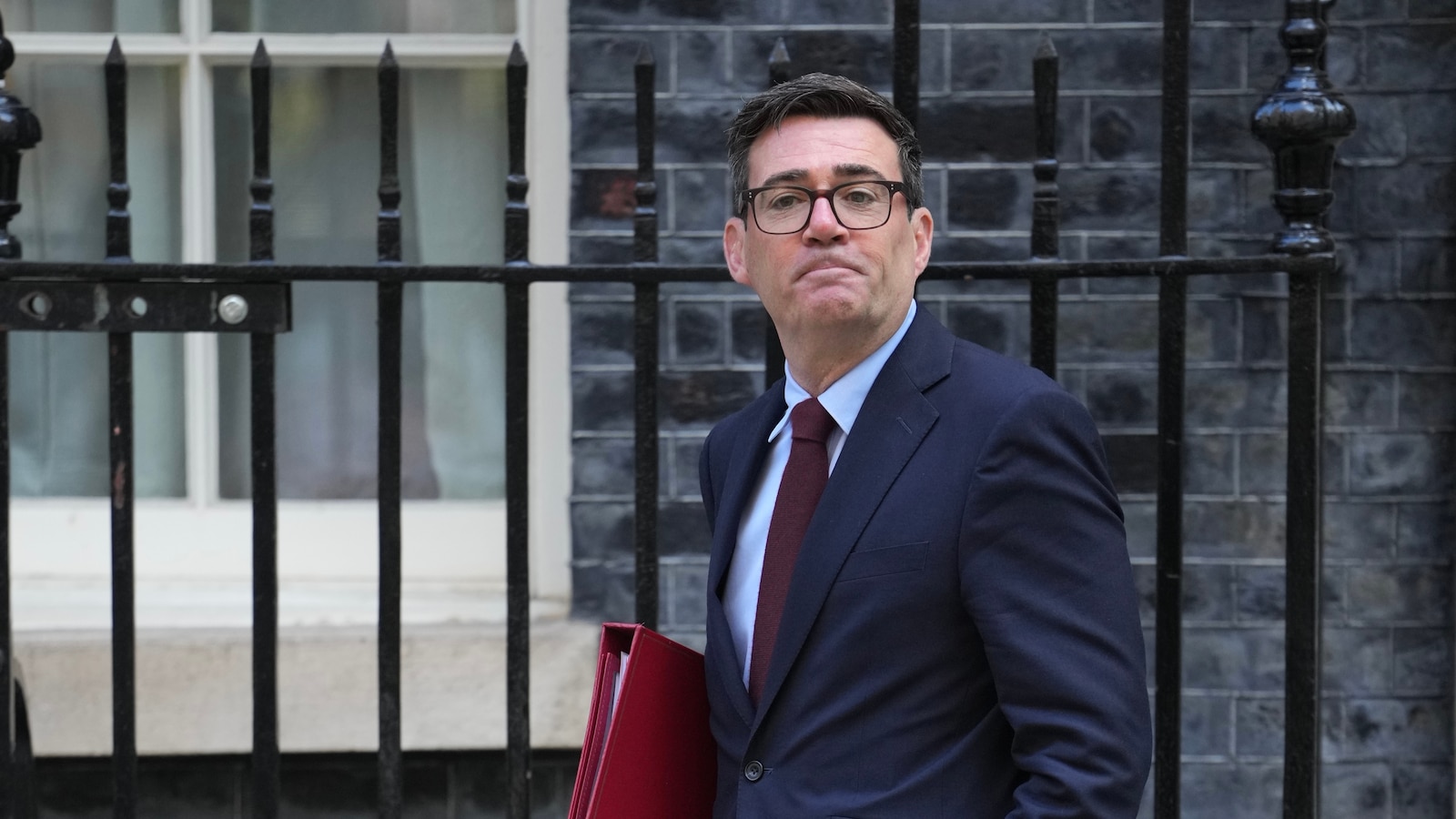
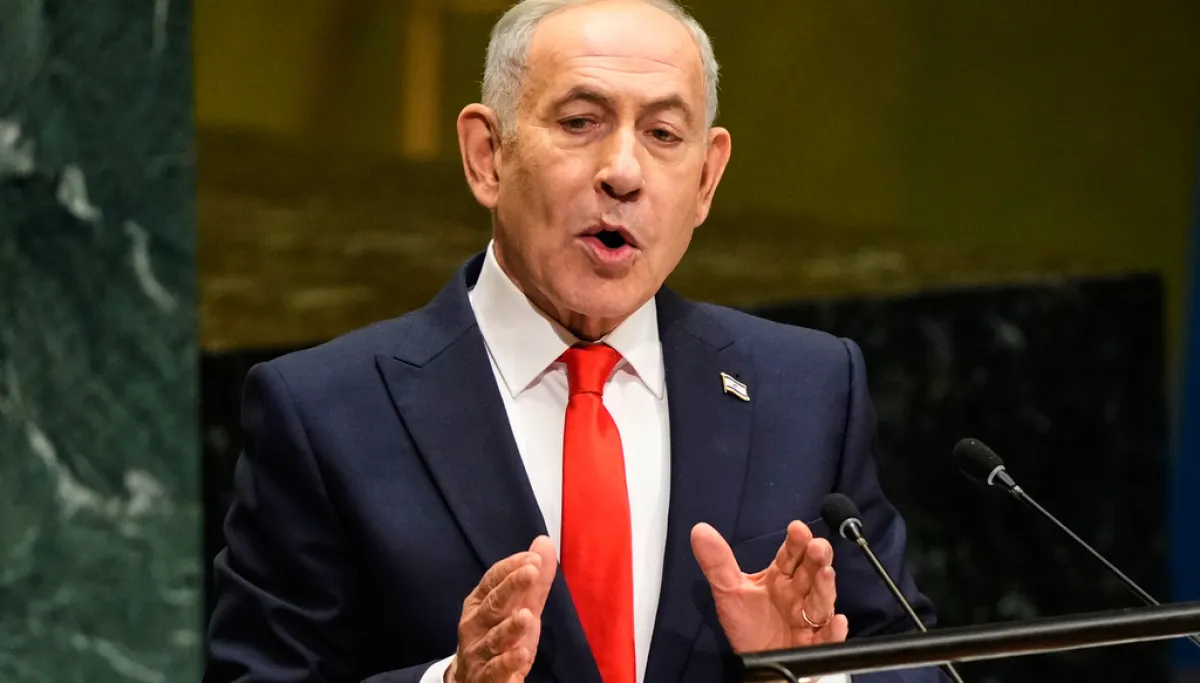
Prime Minister Andy Burnham of Britain addressed the U.N. General Assembly, announcing a new AI defense partnership between the UK and the US. This collaboration aims to enhance military technology and protect infrastructure from threats. Additionally, Burnham warned about Russia's aggressive use of disinformation and cyberattacks against Western democracies, calling it an "insidious" campaign aimed at destabilizing these nations. He emphasized the need for coordinated global efforts in AI governance and pledged British support for Ukraine amid deteriorating relations with Russia.
Written locally by qwen2.5:14b on 2026-09-23,
using this article's own text rather than the other coverage of the
same event (that is the story summary below).
Story summary
Andy Burnham, the newly appointed British Prime Minister, addressed the United Nations General Assembly in New York City, where he emphasized that Britain is not "on the slide." Despite acknowledging long-term issues affecting living standards and the current cost-of-living crisis as major challenges, Burnham presented an optimistic outlook for the country's future. He highlighted Britain’s rapid economic growth, making it one of the fastest-growing economies in the G7.
Burnham also discussed his plans to establish a national center dedicated to countering disinformation campaigns, particularly those from Russia, which he accused of spending around £1.3 billion annually on manipulating information and spreading lies through various means including bots and fake websites. He proposed that Britain take up a leading role in setting global safety standards for artificial intelligence (AI), arguing that it is critical to prevent rogue AI development.
At the U.N., Burnham also announced plans to cooperate with the United States on an AI defense partnership, integrating British military’s Rapid AI Delivery Taskforce and the U.S. Department of War’s Chief Digital and Artificial Intelligence Office. This initiative aims to protect infrastructure, detect threats, and enhance governance through advanced technology, positioning Britain as a key player in global tech regulation efforts.
Written for “Andy Burnham UN Speeches” on 2026-10-05,
grounded in this article and the 16 other(s) covering the same event.
British Prime Minister Andy Burnham used his debut address to the U.N. General Assembly on Tuesday to tout a new artificial intelligence defense partnership with the United States and warn that Russia is waging an “insidious” information campaign aimed at destabilizing Western democracies.
asserted
Russia → use → democracies
Burnham, who took office in July, presented Britain as a possible bridge between global powers as countries grapple with rapidly developing AI, wars, and growing threats from Moscow’s cyberattacks and disinformation.
asserted
countries → take → cyberattacks
Burnham said the AI partnership will bring together the British military’s Rapid AI Delivery Taskforce and the Department of War’s Chief Digital and Artificial Intelligence Office.
asserted
partnership → say → War
The countries plan to cooperate on AI and autonomous technology that could help protect infrastructure, detect threats, and strengthen governance.
uncertain
that → plan → governance
The prime minister said Britain would also put AI “at the heart” of its G20 presidency next year, with the goal of developing global principles and standards governing the technology.
asserted
Britain → say → technology
He compared the effort to international coordination following the 2008 financial crisis.
asserted
He → compare → crisis
“Fundamental decisions on this technology are too important to be left to chance,” Burnham said.
asserted
Burnham → leave → chance
“They must be taken by elected governments who serve working people, and we need to give people the support they need through this change, ensuring that it becomes an engine for reindustrialization and opportunity, as well.
asserted
it → take → reindustrialization
But Burnham warned that technological advances, while they have positive effects, could also magnify existing security threats, pointing specifically to Russia’s effort to manipulate public opinion.
uncertain
they → warn → opinion
He accused Russian agencies of using bots, fake websites, falsified news articles, and forged branding from British organizations to spread disinformation.
asserted
He → accuse → disinformation
“We’re talking about an insidious campaign that reaches into people’s homes and twists what they feel about their own country and community, creating a narrative of decline, stoking division, and sowing despair,” he said.
asserted
he → talk → despair
“On top of that, we have seen cyberattacks on companies and institutions, and we know that AI will multiply the threat.
asserted
AI → see → threat
We have tiptoed around this for too long.”
asserted
We → tiptoe → this
Burnham branded a new Britain to participate on the global stage.
asserted
Burnham → brand → stage
“Over the last decade, we have given too much ground to those who want to run a negative, corrosive narrative about life in Britain, which bears no resemblance to reality,” he said.
asserted
he → give → reality
We are going to face the new decade in a different way, with our eyes wide open.
asserted
We → go → eyes
We are going to be much prouder in standing up for our values and the rule of law, and we are going to help our people to strengthen their resilience.”
asserted
people → go → resilience
In recent history, Burnham has pledged British support for Ukraine as relations with Russia crumble.
asserted
relations → pledge → Russia
He said the United Kingdom would help protect Ukrainian civilians and energy infrastructure ahead of winter while increasing pressure on Moscow to end the war.
asserted
Kingdom → say → war
He also noted Russia expanding attacks to target civilians and defense infrastructure.
asserted
Russia → note → civilians
“Everyone in this room knows that strikes on civilian infrastructure are explicitly forbidden by international law.
asserted
strikes → know → law
Yet we stand here in the U.N. announcing funding to mitigate the effects of these war crimes, which we reliably expect to be perpetrated yet again by a permanent member of the Security Council.
asserted
we → stand → Council
It must end,” he said.
asserted
he → end → ?
“Russia could choose a different course tomorrow, accept a ceasefire, come to the negotiating table,” he added.
uncertain
he → choose → table
“I urge them to do so.
asserted
I → urge → them
But until then, we will stand with Ukraine, stronger than ever, for as long as it takes.
asserted
it → stand → Ukraine
This is about upholding the U.N. Charter and the rule of law.”
asserted
This → uphold → law
The address served as Burnham’s first major attempt to define Britain’s role on the world stage since taking office.
asserted
address → serve → office
Ten years after Brexit, he argued, the country could use its close relationships with Washington, ties to Europe, and partnership with emerging powers to help bridge growing international divisions.
uncertain
country → argue → divisions
 The Aporia