Zambia after the polls: A test for democracy in Africa

World | Deutsche Welle · collected 2026-08-27 · by Kathy Short
Read the original at World | Deutsche Welle ↗

Summary

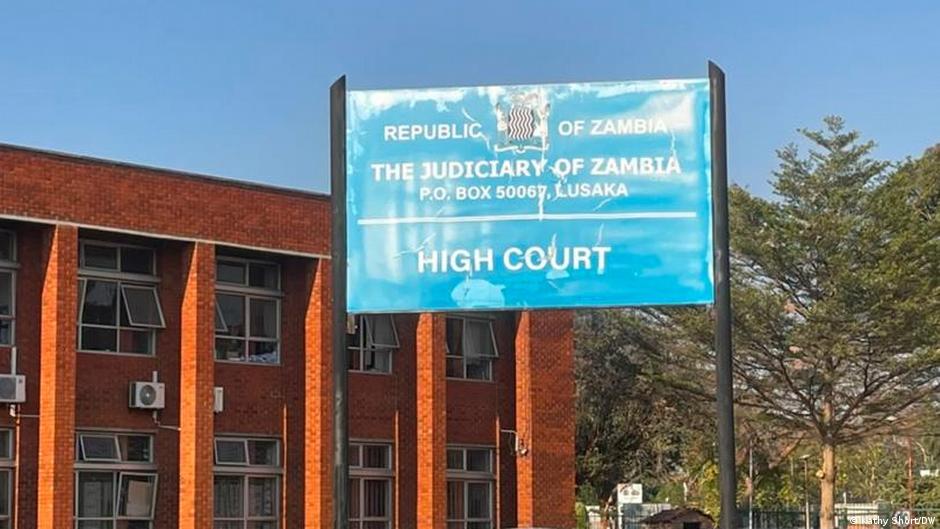
Zambia's Electoral Commission declared incumbent President Hakainde Hichilema winner of the August 13 presidential election, but his challenger Brian Mundubile has challenged the result. According to official results, Mundubile received 38% of the vote. The court closure since August 24 has raised questions about opposition voices having access to judicial election safeguards during this crucial stage of the post-election process. Zambia's Law Association and Human Rights Commission have expressed concern that disruption to judicial operations could affect fundamental rights in the country.
Written by the local model on 2026-08-27, using this article's own text rather than the other coverage of the same event (that is the story summary below).

Signals How these are calculated →

Claims extracted
25
claim-shaped sentences
Uncertain
8%
2 of 25 hedged
Leaning
withheld
no quote in the article backed the model's score
Publisher trust
94.6
red-flag proxy, not a credibility rating
Outlets on this story
1
Politics
Narrative spread
1
articles carrying this framing
Analyzed 2026-08-27 · how these are computed

AI analysis (generated at analysis time, not now)

Story summary

In Zambia, incumbent President *Hakainde Hichilema* has been declared the winner of the August 13 presidential election by the *Electoral Commission of Zambia*. His closest challenger, *Brian Mundubile*, received 38% of the vote but is disputing the result. The *National Reconciliation Party for Unity and Prosperity (NRPUP)*, led by Mundubile, has vowed to continue challenging the outcome despite the official declaration. However, Zambia's courts have been closed since August 24 due to claimed *security concerns*, raising questions about opposition access to judicial safeguards during this critical post-election period. The *Law Association of Zambia (LAZ)* has called for the restoration of court access and alternative arrangements for urgent cases. This dispute highlights concerns about democratic institutions in Southern Africa, where elections are increasingly being contested and scrutinized.

Written for “Election Results in Zambia” on 2026-08-31, grounded in this article and the 0 other(s) covering the same event.
Why this leaning score
The model judged this article politically coded and scored it -0.35, but every quote it verified points right, so the score is not published.
Written under an earlier scoring contract, which gave a paragraph rather than checkable quotes. Re-analysing this article replaces it.
Leaning score withheld for article 2784: score contradicts its own evidence · logged 2026-08-27

Story

📰 Election Results in Zambia
Politics · 1 article(s) covering the same event. This is the one the site leads with.

How this is being covered How these are calculated →

Article leaning vs. publisher reliability
Source leaning vs. consistency

Compared with similar articles

This article reads unscored and hedges 8% of its claims. Each row says how that neighbour differs.
World | Deutsche Welle
⚖️ Leans right 🔴 6% hedged 1 of 17 📰 publisher trust 95
“Article A refers to election results published last week, while Article B mentions the day after the election, suggesting they describe different parts of the same electoral process”

Publisher

World | Deutsche Welle · 73 article(s) · 0 correction(s) detected
SignalValueWeight
Correction rate 0.000 0.4
Uncertainty density 0.108 0.25
Assertive mismatch rate 0.000 0.35
No corrections detected for this publisher. That may mean careful reporting, or simply that nothing has been checked.

Who wrote this

Kathy Short
2 article(s) here · 1 carrying a prediction
🔮 However, Mundubile has since announced on several occasions that he would be challenging that result, and that his National Reconciliation Party for Unity and Prosperity (NRPUP) "shall not relent" in the face of any obstacle.
2026-08-27 · assertive framing · Zambia after the polls: A test for democracy in Africa
🔮 However, it is not a full peace plan with binding resolutions and terms; rather, many aspects of the push will still need to be fine-tuned.
2026-08-25 · assertive framing · DR Congo peace roadmap: Will the fighting finally end?
Also by Kathy Short
DR Congo peace roadmap: Will the fighting finally end?
2026-08-25 · World | Deutsche Welle
Nothing else under this byline is closely related to this article, so these are simply their most recent.

Topics

LAZ NRPUP National Reconciliation Party for Unity and Prosperity The Electoral Commission of Zambia Zambia

Subjects

Zambia GPE · 4× LAZ ORG · 2× Arnold Kaluba PERSON · 1× Brian Mundubile PERSON · 1× Hakainde Hichilema PERSON · 1× Mundubile PERSON · 1× NRPUP ORG · 1× National Reconciliation Party for Unity and Prosperity ORG · 1× The Electoral Commission of Zambia ORG · 1× The Law Association of Zambia ORG · 1×

Narrative

Political commentator and human rights activist Laura Miti meanwhile questioned the lack of a fuller public explanation for the closure, writing on Facebook that "if you are going to unprecedentedly close the courts, you owe the nation an explanation beyond a blanket — there is a security threat." A test beyond the ballot box Zambia has long been regarded as one of Southern Africa's more stable multiparty democracies with a reputation for political stability and peaceful transfers of power. But the current dispute comes at a time when democratic institutions across the region keep facing growing scrutiny over contested elections and political transitions.
framing: assertive · carried by 1 article(s) · first seen 2026-08-27
🔮 However, Mundubile has since announced on several occasions that he would be challenging that result, and that his National Reconciliation Party for Unity and Prosperity (NRPUP) "shall not relent" in the face of any obstacle.
2026-08-27 · World | Deutsche Welle
Zambia after the polls: A test for democracy in Africa · assertive framing

Claims (25 extracted, 2 hedged)

The Electoral Commission of Zambia has declared incumbent President Hakainde Hichilema winner of the August 13 presidential election. asserted
Hichilema → declare → election
His closest challenger, Brian Mundubile, received 38% of the vote, according to official results published last week. uncertain
challenger → receive → results
However, Mundubile has since announced on several occasions that he would be challenging that result, and that his National Reconciliation Party for Unity and Prosperity (NRPUP) "shall not relent" in the face of any obstacle. asserted
Party → announce → obstacle
That challenge, however, comes as Zambia's courts have all remained closed since August 24 until further notice, with officials citing "security concerns." asserted
officials → come → concerns
The timing of this closure has raised questions about opposition voices having access to judicial election safeguards during this crucial stage of the post-election process, as random reports of irregularities continue to surface. asserted
reports → raise → irregularities
Election dispute continues to unfold asserted
dispute → continue → ?
The Law Association of Zambia (LAZ) has called for the urgent restoration of access to the courts and for alternative arrangements to be enacted for urgent cases. asserted
arrangements → call → cases
LAZ President Arnold Kaluba said security measures must not undermine any access to justice or judicial independence. asserted
measures → say → justice
"Such measures must be lawful, proportionate and implemented in a manner that preserves access to justice and respects the constitutional independence and autonomy of the judiciary," he stressed. asserted
he → implement → judiciary
Meanwhile, the Human Rights Commission of Zambia has also expressed concern; its chairperson, Pamela Towela Sambo, warned that disruption to judicial operations could affect fundamental rights in the country, including access to a fair trial and legal remedies. uncertain
disruption → express → trial
"[If] the right to a fair trial is delayed, there is increased risk of arbitrary detentions, while access to remedies is effectively blocked," she said. asserted
she → delay → remedies
However, the ongoing election dispute has taken a new turn: Zambia's Chief Justice Mumba Malila, acknowledged on August 25 that he had received documents described as a presidential election petition through his private email-address. asserted
he → take → address
Malila described the method of submission as "highly irregular" —despite the current circumstances allowing no access to legal procedures. asserted
Malila → describe → procedures
He said he nevertheless referred the documents to the Constitutional Court to determine whether this qualified as a petition having been formally filed. asserted
this → say → petition
The distinction here is important: The receipt of such documents does not confirm that a presidential election petition has been formally lodged per se. asserted
petition → confirm → documents
The latest development comes as the courts remain closed, adding to questions about how election-related cases can be filed and processed. Government continues to cite security concerns for court closure Meanwhile, the presidency has rejected suggestions that the court closures were intended to prevent and intervene with any challenges to the election result. asserted
closures → come → result
Hichilema's chief communications specialist Clayson Hamasaka said the security measures were of a "intelligence-led and preventive" nature, adding that they involved several government institutions beyond courts, and that they were intended to protect officials, institutions and members of the public. He also maintained that people with legitimate grievances remained free to pursue remedies provided by law. asserted
people → say → law
Questions about the independence of the media had also surface in the run-up to the vote. asserted
Questions → surface → vote
Concerns about access to justice and public confidence remain strong, especially against this backdrop; the Zambia Executive Director Maurice Nyambe of Transparency International said in this context the country needs stronger institutions for resolving political disputes. " asserted
country → remain → disputes
At this stage of the electoral process, Zambia does not need fewer avenues for resolving political disputes. asserted
Zambia → need → disputes
It needs stronger, accessible, and trusted institutions through which those disputes can be peacefully resolved." asserted
disputes → need → which
Political commentator and human rights activist Laura Miti meanwhile questioned the lack of a fuller public explanation for the closure, writing on Facebook that "if you are going to unprecedentedly close the courts, you owe the nation an explanation beyond a blanket — there is a security threat." A test beyond the ballot box Zambia has long been regarded as one of Southern Africa's more stable multiparty democracies with a reputation for political stability and peaceful transfers of power. But the current dispute comes at a time when democratic institutions across the region keep facing growing scrutiny over contested elections and political transitions. asserted
institutions → question → elections
Therefore, the handling of situation will likely be observed beyond Zambia and the southern African region. asserted
handling → observe → Zambia
For Zambians, the issue goes beyond the contest between Hichilema and Mundubile; it is about how political disagreements can be resolved peacefully through independent, accessible and trusted institutions. asserted
disagreements → go → institutions
That notion is perhaps best reflected on the streets of Lusaka; a citizen of the capital simply told DW: "We are anxious and afraid because we do not know the truth about what is happening. asserted
what → reflect → truth

💬 Give feedback
🕘 History 🎫 Support