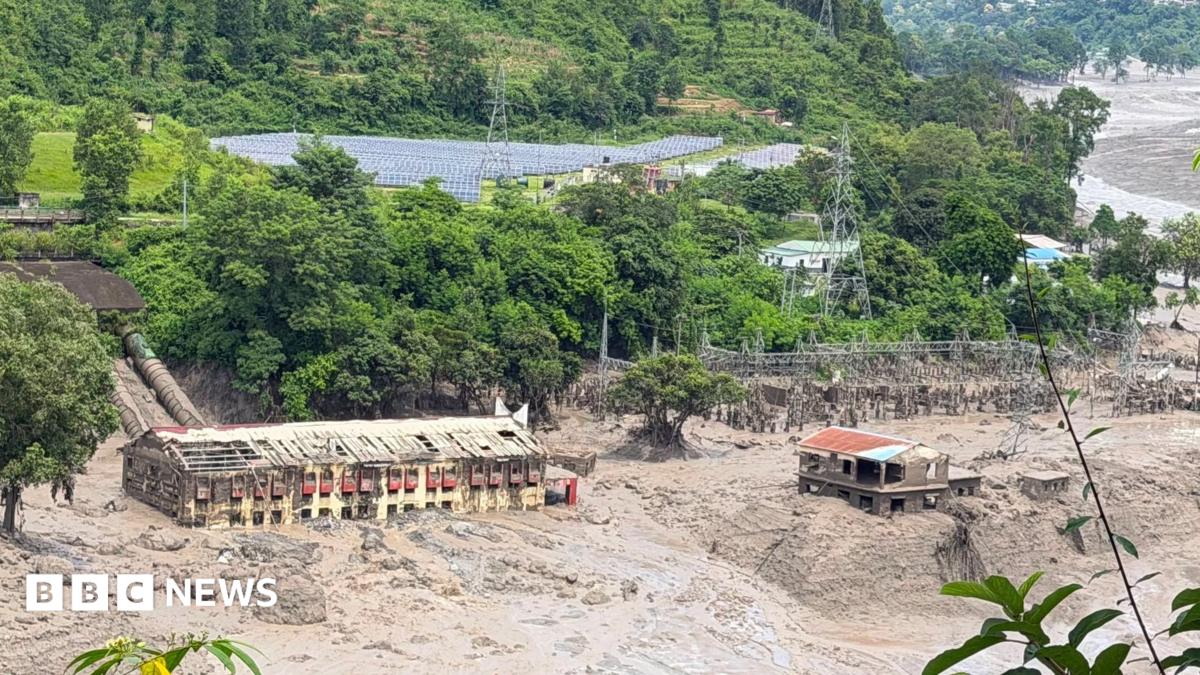
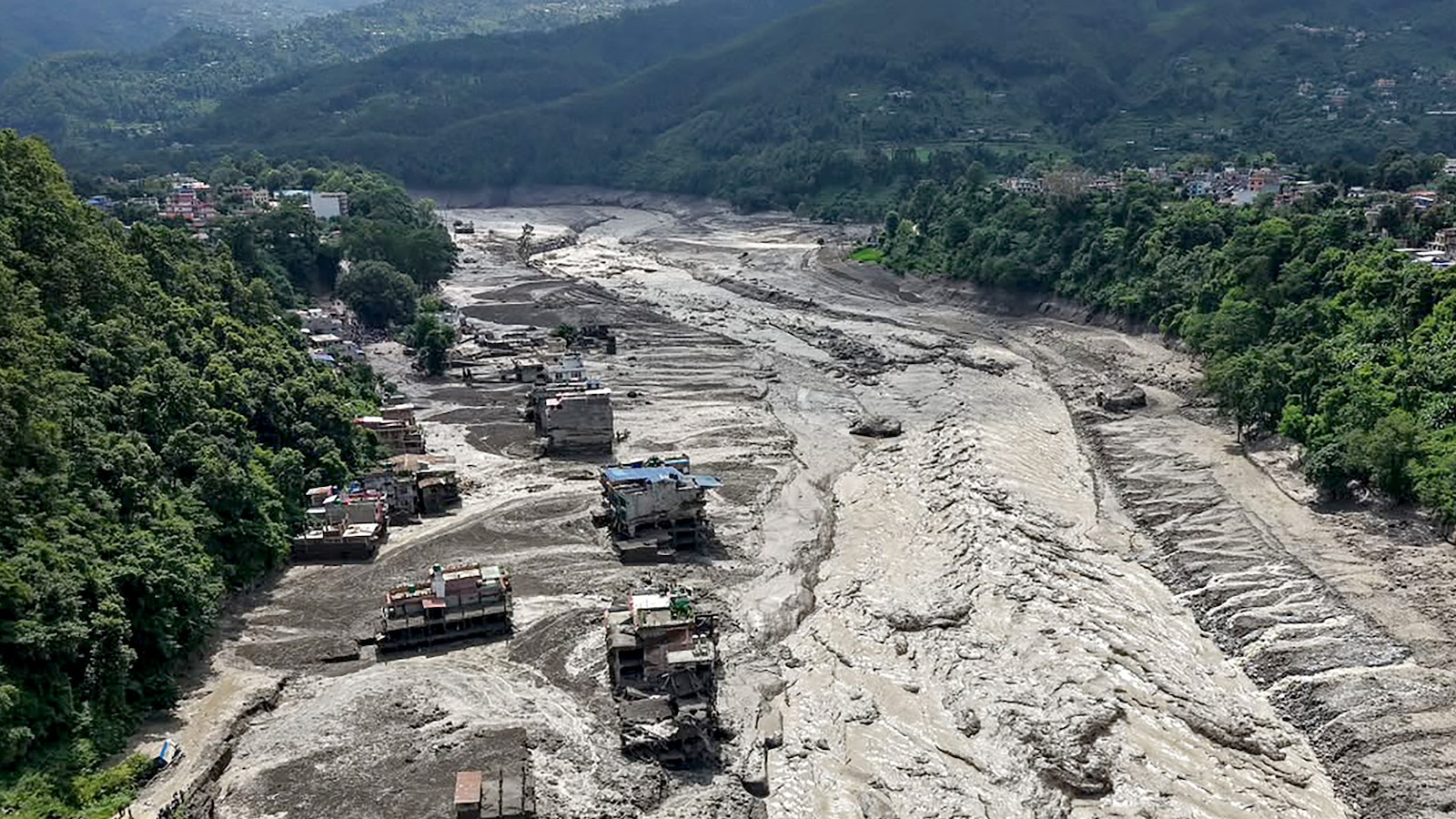
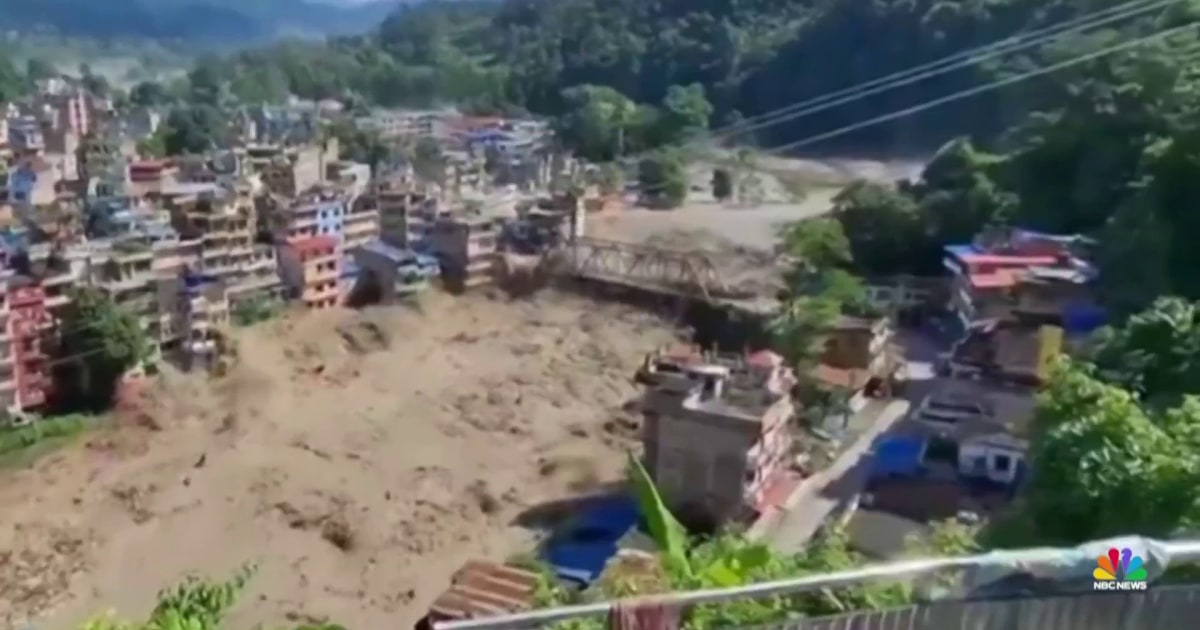
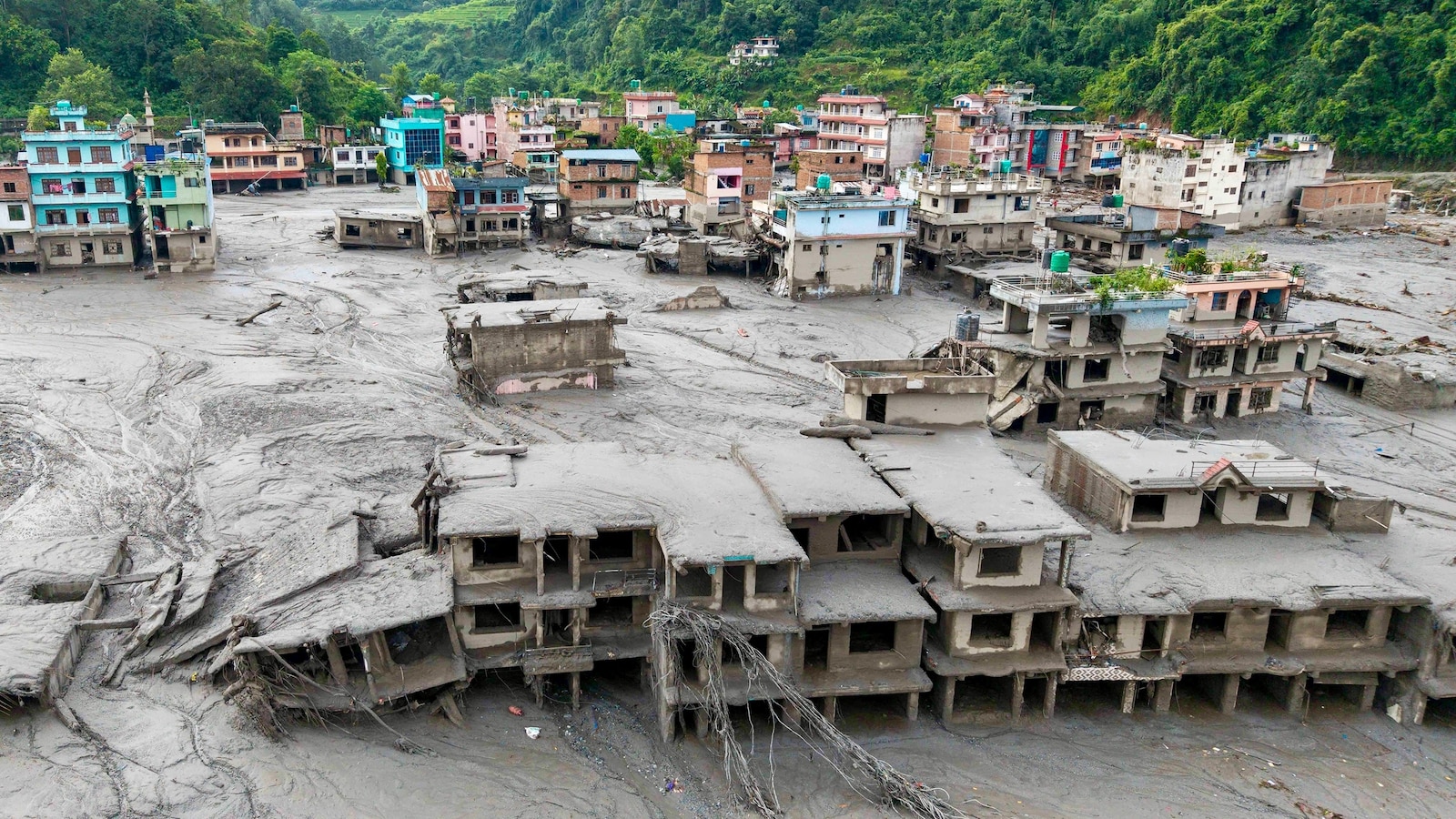
More than 1,500 people are missing across Nepal and China’s Tibet, including more than 800 foreign tourists, after rare flash glacial-lake outburst floods submerged towns and communities under a sludge of mud and water.
asserted
floods → miss → mud
More than 270 people have been killed, but officials say the toll is expected to rise as rescue teams attempt to reach farther areas that have been cut off by the floods, with several key bridges and highways also devastated.
asserted
bridges → kill → floods
With skies still clear above the Nepal-China border, and no rain pouring, officials earlier believed that a magnitude 4.4 earthquake could have triggered the downstream floods.
uncertain
earthquake → believe → floods
However, several experts and the United States Geological Survey have confirmed that “the seismic event” was a consequence of “a glacial collapse and debris flow that caused subsequent catastrophic impacts downstream” – rather than the other way around.
asserted
that → confirm → way
So, what is a glacial collapse, and is this a catastrophic outcome of worsening climate change?
asserted
this → worsen → change
In simple terms, a glacial collapse is the detachment of a large mass of glacier ice from its bed – sometimes involving millions of cubic metres of ice, rock, and water – that can transform into a highly mobile ice-rich avalanche or debris flow.
asserted
that → involve → avalanche
This collapse is not a formally defined scientific term in glaciology, but is widely used to describe the event.
Earth System Science Data, an international open-access scientific journal, describes this as gravity-driven failures of glacier ice on mountain slopes, including ice avalanches, glacier detachments, and rock-ice avalanches.
An initial study of Planet Labs satellite imagery showed a landslide of ice and rock unleashed a flood carrying debris in the Lhende River in Tibet, about 20km (12 miles) northeast of the Nepal-China border crossing in Rasuwagadhi, Nepal’s disaster management officials said on X.
Television images showed collapsed homes, floating cars and a metal bridge being washed away, while witnesses said the waters engulfed entire villages.
What happened in Nepal and Tibet?
The disaster struck the mountainous Nepal-Tibet border region, with some of the worst damage in Nepal’s Rasuwa district, immediately south of the Chinese border.
asserted
disaster → define → border
The initial surge entered the Lhende Khola, which feeds into the Bhote Koshi and then the Trishuli river, carrying floodwaters south through Nepal.
asserted
which → enter → Nepal
Water levels in the Trishuli reportedly rose by as much as 9 metres (27ft) in just 30 minutes.
uncertain
levels → rise → minutes
Nepal’s National Disaster Risk Reduction and Management Authority said the “glacier-inclusive flood” occurred in the Lhende River due to “an ice-rock avalanche on the Nepali side”, according to Prakash Pokharel, a geologist at the authority.
uncertain
flood → say → authority
Vikram Gupta, who specialises in engineering geology and teaches at Sikkim University in India’s northeast state bordering Nepal, said it was “confirmed that a substantial portion of that glacier snout collapsed to initiate the event – probably including or entraining a fair amount of rock and sediment”.
Earth scientist Dan Shugar, an associate professor at the University of Calgary, said the imagery seemed to show that a large amount of snow had melted in the 24 hours before the disaster. “The lower part of a glacier broke off at about 5,200 metres and crashed onto the valley floor about 1,200 metres below,” Shugar said.
asserted
Shugar → specialise → floor
The disaster comes against a backdrop of rapid warming and glacial loss across the Himalayas.
asserted
disaster → come → Himalayas
Glaciers across the Hindu Kush Himalaya mountain range – which spans Afghanistan, Bangladesh, Bhutan, China, India, Myanmar, Nepal and Pakistan – lost ice 65 percent faster between 2011 and 2020 than during the previous decade.
asserted
which → span → decade
Nepal’s glaciers – sandwiched between two major carbon emitters, India and China – have lost close to one-third of their ice volume in roughly three decades due to global warming, the United Nations said in 2023.
asserted
Nations → sandwich → 2023
“It was a huge gush of mud coming straight towards us,” said Keshav Prasad Baral, a 68-year-old survivor being treated in a Nepali hospital.
asserted
Baral → come → hospital
“As it got closer, it kept rising higher and higher.
asserted
it → get → ?
When I saw it enter our home, I tried to grab my wife’s hand and take her to the terrace.
asserted
I → see → terrace
But she was swept away by the mud.”
asserted
she → sweep → mud
A helicopter ferried him to safety four hours later.
asserted
helicopter → ferry → safety
“My wife is still somewhere beneath the mud,” he added.
asserted
he → add → mud
“She’s gone.”
asserted
She → go → ?
Did global warming cause it?
asserted
warming → cause → it
Experts note it is too soon to tell conclusively if global warming and worsening climate change were the cause behind the devastating floods.
asserted
warming → note → floods
The so-called glacial lake outburst floods (GLOF) – the sudden and catastrophic release of vast volumes of water from melting glacier-fed lakes – are among the dangers associated with such events in the region’s extreme topography.
asserted
floods → call → topography
Dorothy Heinrich, a researcher at the United Kingdom’s University of Reading, said GLOFs were among the hazards posed by a warming planet in the region.
asserted
GLOFs → say → region
“We do know what climate change trends look like in the Himalayas.
asserted
trends → know → Himalayas
There is high confidence of more heatwaves, glacial retreat, permafrost reduction, these sorts of things that can drive things like landslides and glacial outburst floods,” she said.
asserted
she → be → landslides
Hatim Sharif, a hydrologist at the University of Texas San Antonio, said the one thing that struck him was the lack of rainfall beforehand.
asserted
that → say → rainfall
“That defeats essentially every operational flood warning system in the world,” he said.
asserted
he → defeat → world
By the time you see the mud flow coming, it’s too late.
asserted
it → see → time
“Running will not help,” nor will trying to flee by vehicle, Sharif said, because the mud and water moving at high speed form a lethal combination “like liquid concrete”.
asserted
mud → run → concrete
There have been a handful of instances of glacial collapse over the last decade, where scientists and geologists see them as highly unusual and rare.
asserted
scientists → see → them
Tibet has emerged as a hotspot for some of the world’s largest documented glacier collapses, although scientists say their causes are site-specific.
asserted
causes → emerge → collapses
In July 2016, the lower part of a valley glacier in Tibet’s Aru Range – far western Tibet, near the Pangong Tso region – detached, sending about 68 million cubic metres of ice down the mountain and killing nine herders and hundreds of animals.
asserted
part → detach → animals
Two months later, a nearby glacier collapsed, releasing about 83 million cubic metres of ice.
asserted
glacier → collapse → ice
NASA called it a rare occurrence.
asserted
NASA → call → it
Two years later, this time in Tibet’s Sedongpu Basin, two ice-rock avalanches occurred, spilling large quantities of glacier ice and debris into the Yarlung Tsangpo River, the upper Brahmaputra.
asserted
avalanches → occur → River
Here, the debris blocked the river and created a dangerous temporary lake, showing how a glacier collapse can turn into a major downstream flood hazard.
asserted
collapse → block → hazard
In November 2022, about 40 million cubic metres of glacier ice detached from the Bukadaban Feng glacier in the Kunlun Mountains, and an ice avalanche crashed into a lake below, creating a 13-meter (42ft) high wave, according to analysis by the European Space Agency.
uncertain
avalanche → detach → Agency
It initially went completely unseen due to the site’s extremely remote location.
asserted
It → go → location
…and 4 more, not listed.
 The Aporia