The Guardian
· collected 2026-09-22 · by Peter Walker Senior political correspondent
At the Liberal Democrat conference in Brighton, party frontbencher Lisa Smart criticized polling expert John Curtice for misunderstanding modern politics, arguing that focused electoral strategies can still yield significant results despite a lack of national visibility. The debate centered on whether the party should continue its targeted seat strategy or adopt a broader national message, with current leaders like Ed Davey advocating for continued focus on specific constituencies to maximize gains in future elections. This strategic approach has led to recent successes, but it faces criticism from some members who argue that it lacks ambition and boldness, fearing it may alienate voters by prioritizing tactical voting over a clear ideological stance.
Written locally by qwen2.5:14b on 2026-09-22,
using this article's own text rather than the other coverage of the
same event (that is the story summary below).
Story summary
The Liberal Democrats, led by Sir Ed Davey, are gathering for their party conference in Brighton from October 7th, aiming to address concerns about their recent lack of growth and relevance. Recent polling shows that 43% of respondents were unclear what the Liberal Democrats stand for, with over half describing them as "weak." Ahead of the conference, some MPs criticized Davey's leadership, urging a rediscovery of the party’s insurgent spirit rather than its current role as polite custodians.
Davey has outlined plans to focus on tax cuts and rejoining the EU customs union and single market, arguing that these moves will help ease cost-of-living pressures and stimulate economic growth. He also vowed not to give up fighting against what he terms "nasty populism," targeting parties like Nigel Farage's Reform UK and individuals such as Elon Musk.
Despite internal frustrations, Davey emphasized the party’s commitment to defending the NHS and countering anti-migrant sentiment. His speech highlighted past political activism, including a successful boycott of Barclays Bank over its investments in apartheid-era South Africa, linking this to current struggles against injustices both domestically and globally.
The conference seeks to reestablish the Liberal Democrats' profile ahead of future elections by addressing issues like tax reform and EU relations while countering populist rhetoric and policies. Davey's leadership aims to galvanize party members and supporters amid skepticism from some quarters about his ability to lead the party effectively.
Written for “Lib Dem Conference Speeches” on 2026-10-05,
grounded in this article and the 16 other(s) covering the same event.
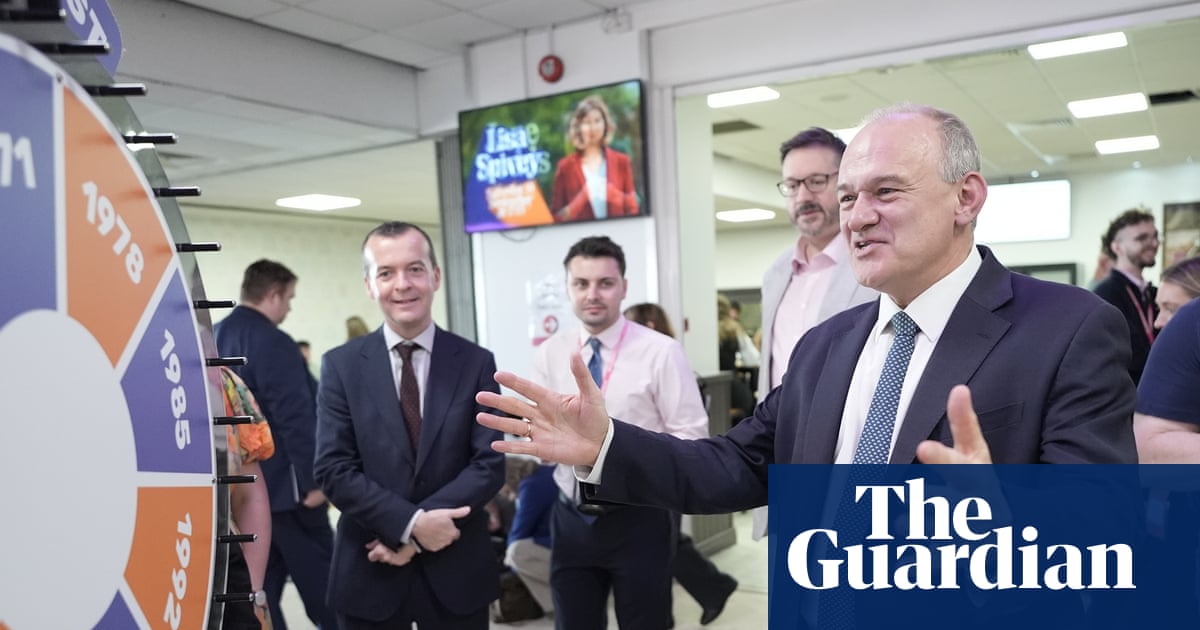
One of the more dramatic moments in a Liberal Democrat conference otherwise short of them came late on Sunday, when the party frontbencher Lisa Smart told the polling veteran John Curtice that, in effect, he no longer understood modern politics.
asserted
he → come → politics
Curtice had warned the Lib Dems they risked being left behind, with the lack of a coherent national message seeing them all but ignored outside a few electoral strongholds.
asserted
them → warn → strongholds
In the new era of five- or six-party politics, and mass tactical voting, this does not matter.
asserted
this → matter → politics
It was a distillation of the largely underground debate which has dominated the gathering in Brighton and is likely to define the party’s future.
asserted
which → dominate → future
It is a battle between, depending on the stance, strategy versus recklessness, or caution versus ambition – or, more bluntly, whether the Lib Dems want to be the first choice of voters, or their route to block a Reform UK government.
asserted
Dems → depend → government
The current choice, as decided by Ed Davey and his leadership team and argued forcefully by Smart, is a continuation of the 2024 electoral approach in which the party set aside a fully national campaign to focus relentlessly on a series of target seats, many of them held by the Conservatives.
asserted
many → decide → Conservatives
It worked.
asserted
It → work → ?
As Smart argued – after Curtice pointed out that the Lib Dems had won 23% of the vote in the 2010 election – in 2024 such careful targeting helped them take 72 MPs on little more than 12% vote share, adding: “I know which one I prefer.”
asserted
I → argue → one
Party strategists are adamant that with voting patterns atomised, many seats at the next election are likely to be won on tiny margins, with the key factors being tactical voting and a ruthlessly efficient ground game, both Lib Dem specialities.
asserted
factors → atomise → margins
Davey and his team say even in public that they can improve on the 2024 result, the best in a century for the party.
asserted
they → say → party
None of this is impossible, but – as Curtice said – it relies on a series of external factors to remain constant, including no noticeable dip in Reform’s fortunes or a boost for the Tories, given the way the strategy hinges on a split vote across the right.
asserted
strategy → say → right
But what is more pressing for a number of Lib Dems is the way the tactic can feel like a slightly desperate attempt to appeal to, or at least not alienate, the voters on the right and left that the party needs to enlist.
asserted
party → press → that
As such, the policy offering on show in Brighton – and there has been no lack of policy – has felt at times a bit disjointed, with economic offerings based on tax cuts and lower regulation balanced by calls to protect human rights.
What is lacking, some fear, is a wider vision, or any boldness.
asserted
some → feel → rights
“Things need to change,” Carl Cashman, the Lib Dem opposition leader on Liverpool city council, told delegates from the conference stage.
asserted
Cashman → need → stage
“I’m a radical because I’m a liberal, and the fact that liberalism has become synonymous with the status quo – it irks me so much.”
asserted
it → ’m → me
Julian Brazil, the Lib Dem leader of Devon county council, was more abrupt still, saying his party was “sleepwalking into irrelevance” under Davey’s leadership.
asserted
party → say → leadership
Even the more malcontented MPs accept he will take the party into the next election, and in many cases they also accept that his careful approach has merits.
asserted
approach → accept → merits
Those around the Lib Dem leader say he is aware of the concerns, but feels a huge responsibility to ensure the party wins enough MPs to prevent a Reform government, something Davey sees as the defining mission of his political life.
asserted
Davey → say → life
Some argue that the apparent conflict is largely artificial, and it is possible to embrace Davey’s approach to the next election while also trying to redefine liberalism for the longer term.
There are, inevitably, still frustrations.
asserted
it → argue → term
“It’s like being stuck on a bumper car, just being buffeted by what the other parties do, with no real control,” one MP said.
asserted
MP → stick → control
Another took a more hopeful view: “You could argue that we’re not being left behind, we’re just standing still, knowing what we think, while everyone else dashes around in chaos, looking stupid.
uncertain
everyone → take → chaos
And maybe we should just let them do that.”
asserted
them → let → that
 The Aporia