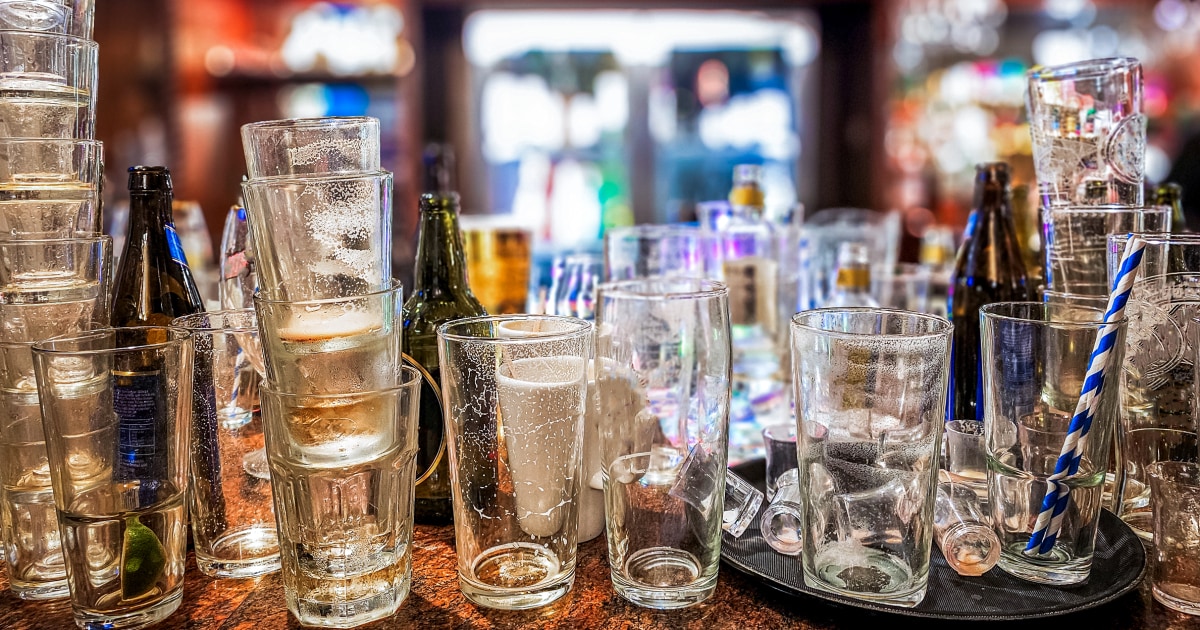
Drinking finally slows after pandemic spike, but not for every age group

Read the original at NBC News ↗
Cite

Sullivan, K. (2026, September 21). Drinking finally slows after pandemic spike, but not for every age group. NBC News. https://www.nbcnews.com/health/health-news/drinking-alcohol-down-after-pandemic-age-generation-gender-rcna598414

Dated when The Aporia collected the article, usually within hours of publication. Check the original for its exact date and byline.

NBC News · collected 2026-09-21 · by Kaitlin Sullivan

Quick Summary

A study published in the Annals of Internal Medicine reports that American drinking rates are decreasing for the first time since the pandemic began, though overall levels remain higher than pre-2020 figures. The decline is modest at around 1%, but significant differences exist across age groups: while Gen Z and millennials show reductions, people aged 50 to 64 report increasing heavy drinking habits. Since 2018, the latter group has seen a one-third increase in heavy drinkers, amounting to an additional million individuals by 2024. This trend is particularly concerning due to the heightened health risks associated with alcohol consumption for older adults, as they are more susceptible to serious conditions like liver disease and cancer.
Written by AI on 2026-09-22, from this article's own text only (the story summary below draws on all the coverage).

AI analysis

Story summary

Americans are drinking less for the first time since the pandemic, according to a study published in the Annals of Internal Medicine by researchers at Keck Medicine of USC in Los Angeles. The decline is modest, around 1%, after heavy alcohol use spiked sharply during the pandemic years 2020-2024. However, drinking habits have not declined evenly across all age groups: while both heavy and occasional drinking decreased among Gen Z and millennials from 2022 to 2024, it increased in people ages 50 to 64. Specifically, heavy drinking rose by 36% between 2018 and 2024 for Boomers and Generation X, with the number of drinkers climbing 4%. Dr. Brian P. Lee noted that older generations are most at risk for liver conditions starting in their 50s, emphasizing the health risks associated with sustained heavy drinking in these age groups. Despite this decline, overall alcohol use remains higher than pre-pandemic levels, indicating ongoing public health concerns.

Written for “Alcohol Consumption Trends Post Pandemic” on 2026-10-29, grounded in this article and the 1 other(s) covering the same event.

Story

📰 Alcohol Consumption Trends Post Pandemic
Health · 2 article(s) covering the same event. See how they differ ↓

Compared with similar articles

This article reads unscored and hedges 10% of its claims. Each row says how that neighbour differs.
TIME
Hedges 8 of 29 claims Outlet record 59/100
“The articles discuss different aspects of drinking trends in America, with Article A focusing on overall reduction and variability across age groups since the pandemic, while Article B highlights an increase in alcohol consumption among older Americans despite a national decline.”
How this article was measured signals, leaning charts, publisher record, byline, topics and claims

Signals How these are calculated →

Claims extracted
20
sentences that state something as happening or true
Uncertain
10%
2 of 20 hedged ("reportedly", "may", "according to")
Leaning
not political
takes no side on a contested political question
Publisher signals
95/100
NBC News's corrections and hedging, across everything collected from it. Not a measure of accuracy.
Outlets on this story
2
Health
Same framing elsewhere
1
articles that frame the event the way this one does
Analyzed 2026-09-22 · how these are computed

How this is being covered How these are calculated →

Article leaning vs. publisher reliability
Source leaning vs. consistency

Publisher

NBC News · 1845 article(s) · 0 correction(s) detected
No corrections detected for this publisher. That may mean careful reporting, or simply that nothing has been checked.

Who wrote this

Kaitlin Sullivan
3 article(s) here · 1 carrying a prediction
🔮 Not all people with signs of CTE in the brain go on to experience cognitive decline or dementia, and some people may never experience symptoms at all.
🔮 However, new data suggests that a steep decline in chickenpox cases over the last three decades, thanks to the chickenpox vaccine, may contribute to a decline in shingles in the coming years.
🔮 “You’ll see a spike and then a bit of a decline, but often those trends will go back to wherever the trend was heading in the first place, and there was already an increasing trend before the pandemic.”
Also by Kaitlin Sullivan
Nothing else under this byline is closely related to this article, so these are simply their most recent.

Topics

Americans Annals of Internal Medicine Keck Medicine Los Angeles USC

Subjects

Lee PERSON · 5× Americans NORP · 2× Annals of Internal Medicine ORG · 1× Brian P. Lee PERSON · 1× Keck Medicine ORG · 1× Los Angeles GPE · 1× U.S. GPE · 1× USC ORG · 1× the Centers for Disease Control and Prevention ORG · 1× the National Health Interview Survey ORG · 1×

Narrative

People in their 50s and 60s who are currently heavy drinkers have also likely been drinking for years, further exacerbating their risk for alcohol-related health complications, said Dr. Michael Siegel, a professor of public health and community medicine at Tufts University School of Medicine in Boston.
framing: assertive · carried by 1 article(s) · first seen 2026-09-22
🔮 “You’ll see a spike and then a bit of a decline, but often those trends will go back to wherever the trend was heading in the first place, and there was already an increasing trend before the pandemic.”

Claims (20 extracted, 2 hedged)

Americans are drinking less for the first time since the pandemic, but alcohol use remains higher than it was before 2020, according to a study published Monday in the journal Annals of Internal Medicine. uncertain
it → drink → Medicine
The decline in drinking rates, though modest at roughly 1%, is welcome news after heavy alcohol use spiked sharply during the pandemic, said senior study author Dr. Brian P. Lee, a liver transplant doctor at Keck Medicine of USC in Los Angeles. asserted
Lee → spike → Angeles
However, Lee said, “these trends haven’t been even across the board. asserted
trends → say → board
While both heavy and occasional drinking declined among Gen Z and millennials from 2022 to 2024, drinking increased in people ages 50 to 64, according to the study, which used data from the National Health Interview Survey conducted by the Centers for Disease Control and Prevention. uncertain
which → decline → Control
Lee and his team looked at survey results for four years: 2018, 2020, 2022 and 2024. asserted
Lee → look → years
Overall, men reported a larger decline in drinking than women did from 2022 to 2024 — 2.4% compared with 1.1% — but heavy drinking declined by 9% among women compared with 7.7% among men. asserted
drinking → report → men
The survey defined heavy drinking as either five or more drinks per day or 15 or more per week for men and four drinks per day or eight drinks per week for women. asserted
survey → define → women
Gen Z adults reported the biggest decrease in drinking from 2022 to 2024, more than 5%, while millennials reported the largest decline in heavy drinking over the same time period, a drop of 17%. asserted
millennials → report → %
Lee said the most concerning finding was that heavy drinking among adults ages 50 to 64 has steadily climbed since 2018. asserted
drinking → say → 2018
About 2% more people in this age group reported drinking heavily in 2024 compared with 2022, and that number has increased by more than one-third since 2018. asserted
number → report → 2018
“This 30% increase, that’s about a million people drinking heavily in that age group alone,” Lee said. asserted
Lee → ’ → group
Drinking raises a person’s risk of high blood pressure, stroke and digestive problems, and alcohol-related liver disease is now the leading cause of liver transplants in the U.S. Yearly cancer deaths linked to alcohol have doubled over the last three decades. asserted
deaths → raise → decades
The older you are, the more vulnerable you are to the damage alcohol can cause, Lee said. asserted
Lee → cause → damage
“The average age of developing cirrhosis is in the 50s, and we know someone with a 50-year-old liver is more likely to develop liver scarring with the same quantity of alcohol as a 20-year-old liver,” he said. asserted
he → develop → liver
People in their 50s and 60s who are currently heavy drinkers have also likely been drinking for years, further exacerbating their risk for alcohol-related health complications, said Dr. Michael Siegel, a professor of public health and community medicine at Tufts University School of Medicine in Boston. asserted
Siegel → drink → Boston
“We’re talking about a substantial amount of alcohol consumption that is probably going to have health effects at that level, and to see that those trends over time have not really decreased is worrisome,” he said. asserted
he → talk → time
Alcohol consumption has been steadily on the rise since around the year 2000 after a decline in the late 1980s and ’90s, said Priscilla Martinez-Matyszczyk, deputy scientific director of the Alcohol Research Group, a nonprofit organization. asserted
Matyszczyk → say → Group
Drinking peaked in 2020, when heavy alcohol use among Americans rose by 20% and any alcohol use rose by 4% compared to 2018. asserted
use → peak → 2018
“We’ve seen this before, where there is a spike in alcohol use after traumatic populationwide events,” Martinez-Matyszczyk said, noting a documented increase in drinking after the 9/11 terrorist attacks. asserted
Matyszczyk → see → attacks
“You’ll see a spike and then a bit of a decline, but often those trends will go back to wherever the trend was heading in the first place, and there was already an increasing trend before the pandemic.” asserted
trend → see → pandemic

💬Give feedback
🕘History 🎫Support