Anthony Furey: Canada should seize the moment and embrace AI data centres

National Post · collected 2026-08-26 · by Special to National Post analysis
Read the original at National Post ↗

Summary

Columnist Anthony Furey argues that Canada should embrace artificial intelligence data centers, warning that turning against them could result in missing out on significant economic benefits. According to Furey, a wave of anti-AI populism has swept the US, with hundreds of municipalities banning data centers and over a dozen proposed state-wide bans, and is also gaining traction in some Canadian cities. Furey cites concerns about energy consumption, water usage, noise, and taxpayer costs as legitimate but addressable issues. He suggests that Canada is at risk of repeating past mistakes by vilifying industries like oil and gas if it rejects AI data centers without a full understanding of their potential benefits.
Written by the local model on 2026-08-26, using this article's own text rather than the other coverage of the same event (that is the story summary below).

Signals How these are calculated →

Claims extracted
38
claim-shaped sentences
Uncertain
8%
3 of 38 hedged
Leaning
Leans strongly right
of the writing, not the subject
Publisher trust
95.9
red-flag proxy, not a credibility rating
Outlets on this story
1
Technology
Narrative spread
1
articles carrying this framing
Analyzed 2026-08-26 · how these are computed

AI analysis (generated at analysis time, not now)

Story summary

Canada is facing a crucial question in its upcoming elections: whether to embrace artificial intelligence (AI) and data centres that support its expansion. The concept of "techno-optimism" has been popularized by Silicon Valley investor Marc Andreessen, who describes those who believe technological progress will bring benefits as techno-optimists. However, the Canadian public is currently divided on this issue, with some warning about potential catastrophes if AI development goes off track. The city of Mississauga, Ont. has recently enacted a one-year moratorium on data centres due to concerns from incumbent politicians ahead of an October municipal election. The question of whether Canada will be a techno-optimist or not will impact its ability to control the direction and benefits of AI expansion.

Written for “Canadian AI Investment Push” on 2026-08-31, grounded in this article and the 0 other(s) covering the same event.
Why this leaning score
The article's own words the score was based on. Each is quoted verbatim and was checked against the article text before being stored, so you can find it in the original.
Score +0.85 Confidence high
Leaning score +0.85 for article 2496 (high confidence, 3 verified quotes) · logged 2026-08-27

Story

📰 Canadian AI Investment Push
Technology · 1 article(s) covering the same event. This is the one the site leads with.

How this is being covered How these are calculated →

Article leaning vs. publisher reliability
Source leaning vs. consistency

Compared with similar articles

This article reads leans strongly right and hedges 8% of its claims. Each row says how that neighbour differs.
Latest & Breaking News on Fox News
⚖️ Leans strongly right 🔴 7% hedged 3 of 46 📰 publisher trust 93
“Article A discusses a general issue with Democrats and data centers, while Article B focuses on Canada's potential adoption of AI data centers in an upcoming election”
TIME
⚖️ leaning not scored 🔴 12% hedged 8 of 67 📰 publisher trust 95
“The articles discuss different topics and have no overlap in content”
New York Post
⚖️ Leans left further left than this 🔴 4% hedged 2 of 54 📰 publisher trust 95
“The articles discuss different topics and do not mention any shared specific happening.”
Latest & Breaking News on Fox News
⚖️ Leans left further left than this 🔴 0% hedged 0 of 27 📰 publisher trust 93
“Article A discusses a plan by Texas Attorney General Ken Paxton to address concerns over data centers in Texas, while Article B focuses on Canada's potential response to AI and data centers without mentioning any specific event or incident”
The Free Press
⚖️ Leans right further left than this 🔴 11% hedged 1 of 9 📰 publisher trust 96
“The articles mention different people and discuss distinct aspects of artificial intelligence regulation and development, without any clear connection to the same specific event.”
Noahpinion
⚖️ Leans left further left than this 🔴 23% hedged 86 of 382
“The articles appear to be discussing unrelated topics: Article A discusses policy recommendations for AI, while Article B discusses Canada's stance on embracing AI data centres.”
Zeteo
⚖️ Leans strongly right 🔴 17% hedged 3 of 18
“The articles cover different topics and authors, with no indication that they are referring to the same incident or event”
Semafor
⚖️ Leans right further left than this 🔴 0% hedged 0 of 4 📰 publisher trust 96
“The articles cover different topics, with Article A discussing the global economy and AI's impact on war, while Article B discusses Canada's stance on AI data centres”
The Globe and Mail
⚖️ Leans right further left than this 🔴 5% hedged 2 of 43 📰 publisher trust 21
“Article A is a general opinion piece discussing AI and data centers in Canada, while Article B describes a specific virtual town hall meeting with Premier Danielle Smith in Alberta”
The AI Data Center Moral Panic different event · 100%
The Dispatch
⚖️ Leans strongly right 🔴 5% hedged 1 of 20 📰 publisher trust 96
“Article A discusses Canada's potential to control AI expansion, while Article B covers a discussion on data centers and their national security implications in a podcast”

Publisher

National Post · 80 article(s) · 0 correction(s) detected
SignalValueWeight
Correction rate 0.000 0.4
Uncertainty density 0.082 0.25
Assertive mismatch rate 0.000 0.35
No corrections detected for this publisher. That may mean careful reporting, or simply that nothing has been checked.

Who wrote this

Special to National Post
14 article(s) here · 1 carrying a prediction
🔮 There was a sense that history would be made.
🔮 U.S. special envoy Jared Kushner recently said that Gaza will not be rebuilt until it’s demilitarized.
🔮 Wine is not unique, it is simply a useful example because settlement-produced wine has already been tested in Canadian courts Canada has dealt with precisely such wines before, the resulting Canadian litigation concerned how they could be labelled, not whether Canadians were prohibited from buying them.
🔮 So when this new round of crop of counter-tariffs takes effect on Sept. 8, we can expect that at least some of the costs will be passed on to Canadian consumers.
🔮 Yet, they did not care to explain how professors teaching courses unrelated to the Middle East might think it was a good idea to assign a podcast arguing that Zionism was similar to Nazism, or spend weeks discussing Gaza and the creation of the State of Israel, repeatedly referring to it as a “Zionist political project.”
🔮 At his Davos 2026 address, Carney drew a false equivalence between the U.S. and China, suggesting Canada could somehow float above the fray as a neutral middle-power broker.
🔮 One of the most pressing questions facing the Canadian public right now is one that most people will have never been asked before, which is: are we techno-optimists?
🔮 It includes non-legally binding illustrative examples of what might constitute antisemitism, including, “Denying the Jewish people their right to self-determination.”
2026-08-26 · assertive framing · Robert Brym: Yes, anti-Zionism is antisemitic
🔮 It is normal to get angry and respond negatively to a perceived injustice, especially when that injustice is perpetrated by someone you would have regarded as a friend.
🔮 Tehran believed it could attack Israel through proxies and would therefore be immune from attack while simultaneously advancing its atomic program as a nuclear threshold state and threatening Western interests, all while serving to insulate Iran from the consequences of its nefarious actions.
Also by Special to National Post
Nothing else under this byline is closely related to this article, so these are simply their most recent.
All 14 articles by Special to National Post →

Topics

Canada Canadian Mississauga Ont the United States

Subjects

Canada GPE · 3× Canadian NORP · 3× Mississauga GPE · 2× Alberta GPE · 1× Albertans NORP · 1× Danielle Smith PERSON · 1× Marc Andreessen PERSON · 1× Ont GPE · 1× the United States GPE · 1×

Narrative

Mississauga, Ont., has just enacted a one year moratorium on data centres as incumbent politicians who were previously in favour of them now trip over themselves to say who is more opposed to the facilities as they seek re-election in the October municipal election.
framing: assertive · carried by 1 article(s) · first seen 2026-08-26
🔮 One of the most pressing questions facing the Canadian public right now is one that most people will have never been asked before, which is: are we techno-optimists?
2026-08-26 · National Post
Anthony Furey: Canada should seize the moment and embrace AI data centres · assertive framing

Claims (38 extracted, 3 hedged)

One of the most pressing questions facing the Canadian public right now is one that most people will have never been asked before, which is: are we techno-optimists? asserted
we → face → that
The answer to that question will influence a number of ballot-box issues in upcoming elections related to artificial intelligence and the data centres that support its expansion. asserted
that → influence → expansion
It will also determine whether Canada embraces the coming tidal wave of change brought about by AI enough to have some control over its direction and share in its spoils, or if we are simply battered about by the forces of AI. asserted
we → determine → AI
While it’s been around for a while, the phrase “techno-optimist” was popularized by Silicon Valley investor Marc Andreessen a few years ago to describe those who believe that the future is friendly and that technological progress will be a force for good. asserted
progress → popularize → good
It doesn’t mean you ignore legitimate concerns. asserted
you → mean → concerns
AI pioneers and executives themselves warn about the potential for catastrophe if things go off the rails. asserted
things → warn → rails
But the techno-optimist believes that these are obstacles to overcome, not reasons to reject the future. asserted
these → believe → future
And we’re at risk of turning against it. asserted
we → ’re → it
A wave of anti-AI populism has flared up across the United States, with hundreds of municipalities banning data centres and over a dozen proposed state-wide bans. asserted
hundreds → flare → centres
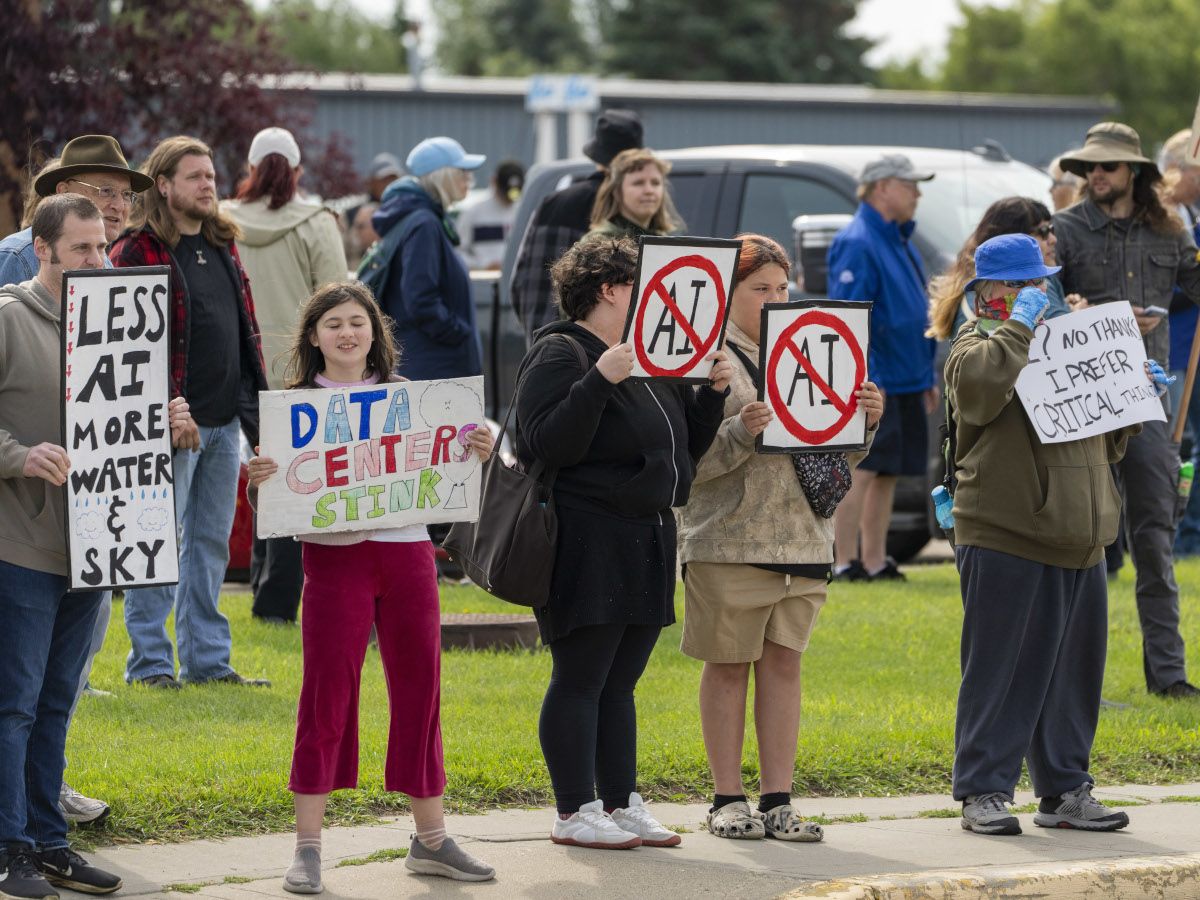
The trend has moved up here in recent months, with protests and calls for bans in some Canadian cities. asserted
trend → move → cities
Mississauga, Ont., has just enacted a one year moratorium on data centres as incumbent politicians who were previously in favour of them now trip over themselves to say who is more opposed to the facilities as they seek re-election in the October municipal election. asserted
they → enact → election
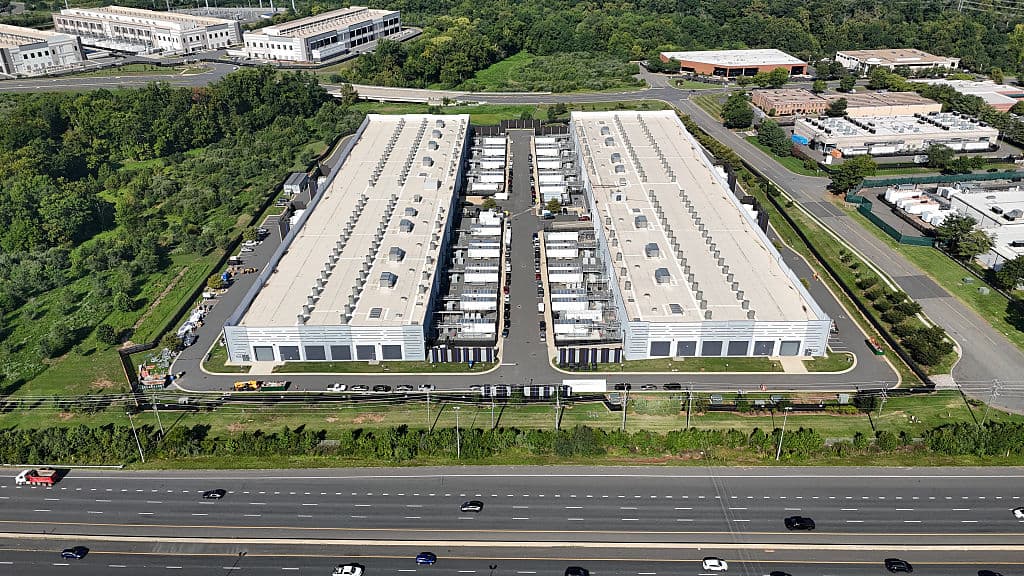
It’s beyond the scope of this column to break down all the concerns about them — and the rebuttals by data centre advocates — but the claims include that the facilities use too much energy, too much water, will be intrusive and noisy and cost the taxpayer in the form of subsidies, handouts and increased energy rates. uncertain
facilities → ’ → subsidies
Some of these complaints are fearmongering, some are legitimate and can be addressed. asserted
some → address → ?
And address them we should, because there are costs to missing out on welcoming such mega-projects. asserted
we → address → projects
Canada is at risk of repeating the mistakes we made in letting our oil and gas sector be vilified, setting us back by more than a decade in developing key projects and enjoying their economic benefits. asserted
sector → repeat → benefits
The public is exposed to plenty of arguments against data centres. asserted
public → expose → centres
But they’re not encountering many arguments in support of them. asserted
they → encounter → them
There is an entire subculture of Silicon Valley podcasts that present compelling and optimistic visions of the future of AI and its infrastructure. asserted
that → be → AI
But they remain a subculture and aren’t filtering down into public consciousness to sway broader opinion. asserted
they → remain → opinion
Because politics is downstream from culture, what the average voter thinks about an issue heavily influences policy. asserted
thinks → think → policy
A politician who supported something one day can pivot the next to chase the mood of the electorate, as the Mississauga example shows. asserted
example → support → electorate
One of the most detailed and spirited defences of data centre expansion in Canada hasn’t come from an AI company or tech podcast, but from the province of Alberta. asserted
One → come → Alberta
Premier Danielle Smith’s government recently launched an online explainer that breaks down what data centres are, how they will and won’t be constructed, along with facts and data to tackle residents’ concerns. asserted
they → launch → concerns
“AI could add US$15.7 trillion to the global economy by 2030, and every dollar of it will flow through a data centre somewhere,” the explainer notes. uncertain
explainer → add → centre
“Refusing to build them would not make AI go away. asserted
AI → refuse → them
It would just mean the jobs, taxes and investment land somewhere else, while Albertans keep using digital services powered by someone else’s economy.” asserted
Albertans → mean → economy
The highly readable document presents the province’s policy journey as heavy-lifting that can now be copied by others: “Some (jurisdictions) let data centres connect faster than new power could be built, and household bills rose. uncertain
bills → present → others
Some handed out billions in tax breaks,” the explainer adds. asserted
explainer → hand → breaks
“Alberta spent two years studying those mistakes and wrote rules to prevent them.” asserted
Alberta → spend → them
Ontario Premier Doug Ford also sees it this way, recently calling opponents to data centres “misinformed.” asserted
Ford → see → centres
Ford’s government has just launched its own data centre policy framework that follows Alberta’s path. asserted
that → launch → path
The federal Liberal government’s national AI strategy also aims to seize the moment in data centre creation. asserted
strategy → aim → creation
However, it’s written more for stakeholders and industry than the regular reader. asserted
it → write → reader
But polling shows the public is divided. asserted
public → show → ?
And opposition is strongest at the municipal level, where local politicians are pressured to say no to future projects. asserted
politicians → pressure → projects
Which way will we go? asserted
we → go → ?
Let’s go the techno-optimist route and embrace the future. To be successful at that, AI advocates need to get louder and recognize they are within a window of opportunity that can be hijacked by noisy opposition if they don’t move fast. asserted
they → go → opposition
Anthony Furey is a former journalist and past Toronto mayoral candidate who now works in corporate consulting. asserted
who → work → consulting

💬 Give feedback
🕘 History 🎫 Support