What will happen when a SpaceX rocket collides with the Moon?

BBC News · collected 2026-08-04 · by Kayla Epstein, Max Matza
Read the original at BBC News ↗

Summary

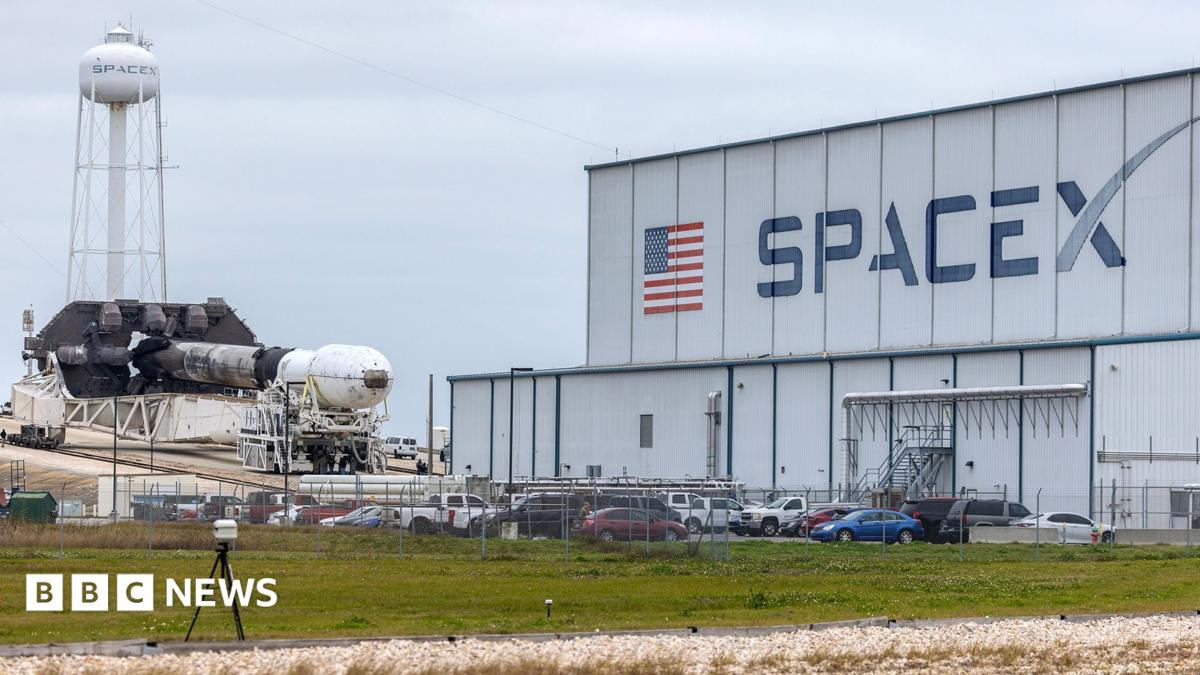
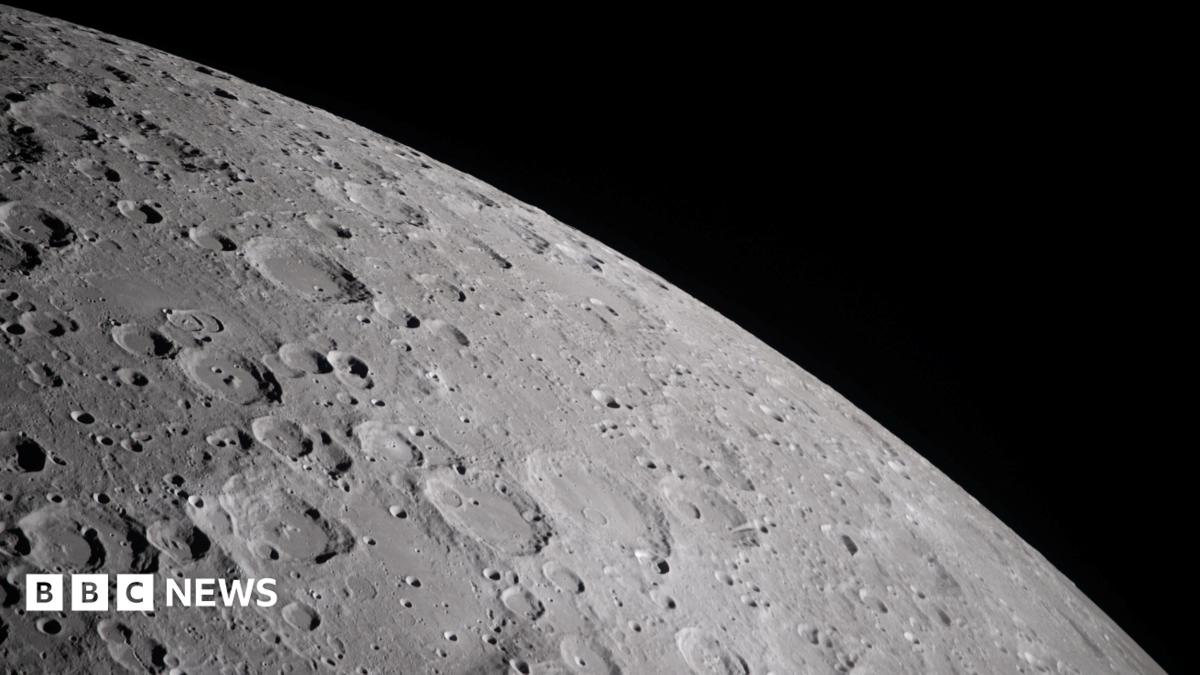
A SpaceX rocket is expected to collide with the Moon on August 5, after scientists discovered it was on an accidental collision course with the lunar satellite. The upper stage of a Falcon 9 rocket, which is about the size of a five-storey building and has a mass of at least 4,000kg, will impact the Moon's surface near the Einstein crater, creating a crater over 17m in diameter. The collision is not expected to be hazardous to Earth, but rather an opportunity for scientists to observe the impact site and collect data. Astronomers predict that the moment of impact will be "more impressive than any explosion on Earth" due to the Moon's lack of atmosphere.
Written by the local model on 2026-08-21, using this article's own text rather than the other coverage of the same event (that is the story summary below).

Signals How these are calculated →

Claims extracted
33
claim-shaped sentences
Uncertain
12%
4 of 33 hedged
Leaning
not scored
needs a local LLM pass
Publisher trust
95.5
red-flag proxy, not a credibility rating
Outlets on this story
5
Science
Narrative spread
1
articles carrying this framing
Analyzed 2026-08-05 · source text last changed 2026-08-05 · how these are computed

AI analysis (generated at analysis time, not now)

Story summary

Here is a summary of the news story:

On August 5, 2026, a SpaceX rocket's second stage slammed into the Moon's surface, creating a new crater near the Einstein Crater. The rocket was launched in January 2025 as part of a mission to carry two lunar landers to the Moon. Due to a combination of solar activity and gravity, the rocket's trajectory changed over time, setting it on an inevitable collision course with the Moon.

The impact occurred at approximately 8,700 km/h (5,400 mph), creating a crater estimated to be roughly 3 tonnes in size, equivalent to a small school bus. While there was no visible flash due to the daylight on the lunar surface, orbiters will survey the ejected dust plume and take high-resolution before-and-after imagery of the newly formed crater.

Scientists are excited about this accidental collision because it provides them with a unique opportunity to study high-velocity cosmic impacts and gain insights that can help future missions.

Written for “SpaceX Rocket Hits Moon” on 2026-08-31, grounded in this article and the 4 other(s) covering the same event.
Why this leaning score
The article uses neutral and matter-of-fact language throughout, but occasionally slips into a somewhat sensationalist tone when describing the collision as 'something really huge smashing into the Moon' or predicting it will create a 'huge plume of dust'. The use of words like 'plucky little probes' to describe spacecraft and 'hugely impressive' explosion also suggests a slightly more enthusiastic and less critical view.
Written under an earlier scoring contract, which gave a paragraph rather than checkable quotes. Re-analysing this article replaces it.
Leaning score +0.25 for article 248 · logged 2026-08-05

Story

📰 SpaceX Rocket Hits Moon
Science · 5 article(s) covering the same event.

How this is being covered How these are calculated →

Article leaning vs. publisher reliability
Source leaning vs. consistency

Compared with similar articles

This article reads unscored and hedges 12% of its claims. Each row says how that neighbour differs.
CBC | World News
⚖️ leaning not scored 🔴 12% hedged 4 of 33 📰 publisher trust 95
“Both articles describe the same SpaceX rocket colliding with the Moon on Wednesday, mentioning the same location (the daylight side of the Moon), and referring to it as a Falcon 9 rocket's upper stage.”
Al Jazeera – Breaking News, World News and Video from Al Jazeera
⚖️ leaning not scored 🔴 15% hedged 2 of 13 📰 publisher trust 96
“Both articles describe the exact same collision between a SpaceX rocket (Falcon 9's upper stage) and the Moon, including the date, location, and speed of impact”
CBC | World News
⚖️ leaning not scored 🔴 5% hedged 2 of 39 📰 publisher trust 95
“Both articles describe a SpaceX rocket colliding with the Moon on Wednesday, at the same time and location.”
BBC News
⚖️ leaning not scored 🔴 17% hedged 5 of 29 📰 publisher trust 96
“Both articles describe a SpaceX rocket's collision with the Moon on Wednesday at approximately 5,400mph, mentioning the same landmark (Einstein crater) and the resulting opportunity for scientific research.”

Publisher

BBC News · 588 article(s) · 0 correction(s) detected
SignalValueWeight
Correction rate 0.000 0.4
Uncertainty density 0.090 0.25
Assertive mismatch rate 0.000 0.35
No corrections detected for this publisher. That may mean careful reporting, or simply that nothing has been checked.

Who wrote this

Max Matza
6 article(s) here · 1 carrying a prediction
🔮 The deployment, which was originally set to end in May, has been repeatedly extended.
🔮 The Porter Airlines flight, which was preparing to depart from Victoria to Toronto on 6 August had to return to the terminal as a "young child was standing in their seat and would not secure their seat belt", the airline said.
🔮 The investigation is continuing, with assistance from the US Secret Service, and officials say more charges may be filed later.
🔮 Now on Wednesday, scientists expect the Moon will experience yet another collision, this time from a drifting SpaceX rocket that has been travelling at around 2.43 kilometres per second, or about 5,400mph.
🔮 - Published Former top US health official Anthony Fauci has refused to answer questions at a tense US Senate hearing on Covid-19, saying he feared Republicans would try to use his testimony to prosecute him for perjury. He invoked the Fifth Amendment to the US Constitution - which says nobody can be "compelled in any criminal case to be a witness against himself" - more than 100 times.
🔮 He could now face life in prison in the federal conviction.
2026-07-30 · assertive framing · Salman Rushdie attacker convicted of terror offences
Also by Max Matza
Nothing else under this byline is closely related to this article, so these are simply their most recent.
All 6 articles by Max Matza →
Kayla Epstein
3 article(s) here · 1 carrying a prediction
🔮 After more than a year-and-a-half of intense spectacle and legal wrangling, Luigi Mangione appeared in a federal courtroom in New York on Friday as rumours swirled that he may plead guilty.
🔮 Discussion of a plea deal does not guarantee one will be reached, and such arrangements can fall apart before they are finalised.
🔮 Now on Wednesday, scientists expect the Moon will experience yet another collision, this time from a drifting SpaceX rocket that has been travelling at around 2.43 kilometres per second, or about 5,400mph.
Also by Kayla Epstein
Nothing else under this byline is closely related to this article, so these are simply their most recent.

Topics

Centre for Near-Earth Object Studies Falcon 9 Japanese Nasa SpaceX

Subjects

Bothwell PERSON · 5× SpaceX ORG · 4× Nasa ORG · 3× Bill Gray PERSON · 1× Centre for Near-Earth Object Studies ORG · 1× Einstein PERSON · 1× Japanese NORP · 1× Jimi Russell PERSON · 1× Matt Bothwell PERSON · 1× the University of Cambridge ORG · 1×

Narrative

"Nasa will continue to track the booster for training purposes, as well as later observe the impact site for scientific purposes." SpaceX launched this specific Falcon 9 rocket as part of a US and Japanese mission to carry a pair of lunar landers and scientific equipment to the Moon last year.
framing: assertive · carried by 1 article(s) · first seen 2026-08-05
🔮 Now on Wednesday, scientists expect the Moon will experience yet another collision, this time from a drifting SpaceX rocket that has been travelling at around 2.43 kilometres per second, or about 5,400mph.
2026-08-05 · BBC News
What will happen when a SpaceX rocket collides with the Moon? · assertive framing

Claims (33 extracted, 4 hedged)

The Moon has endured countless blows over millions of years. asserted
Moon → endure → years
Asteroids and meteors have given the satellite its signature pockmarked surface and network of craters. asserted
Asteroids → give → craters
More recently, it has also experienced impacts from the plucky little probes and landers that Earthbound space agencies have sent hurtling its way. asserted
agencies → experience → way
Now on Wednesday, scientists expect the Moon will experience yet another collision, this time from a drifting SpaceX rocket that has been travelling at around 2.43 kilometres per second, or about 5,400mph. asserted
that → expect → second
The upper stage (section) of one of SpaceX's Falcon 9 rockets will "impact" the Moon on 5 August, according to Nasa's Centre for Near-Earth Object Studies (CNEOS). uncertain
section → impact → Studies
The US space agency reached the conclusion after independent astronomers, using public data, noted that a portion of the rocket from a January 2025 launch was on an accidental collision course with the Moon. asserted
portion → reach → Moon
"There is no danger to Earth," said spokesperson Jimi Russell. asserted
Russell → be → Earth
"Nasa will continue to track the booster for training purposes, as well as later observe the impact site for scientific purposes." SpaceX launched this specific Falcon 9 rocket as part of a US and Japanese mission to carry a pair of lunar landers and scientific equipment to the Moon last year. asserted
SpaceX → continue → Moon
Part of the Falcon 9 is reusable and designed to return back to Earth for its next mission. asserted
Part → design → mission
But parts of the rocket are shed in space and remain there, stuck in orbit unless they eventually collide with another celestial body. asserted
they → shed → body
The SpaceX object will land near the Einstein crater, which is visible from the Earth and will be illuminated by sunlight, according to astronomer Bill Gray. uncertain
which → land → Gray
He predicts it will create a crater more than 17m (56ft) in diameter. asserted
it → predict → diameter
The impending collision - predicted to happen at about 02:35 EDT (06:35 GMT) on Wednesday - is expected to captivate astronomers, both amateur and professional. "It's something really huge smashing into the Moon. asserted
It → impend → Moon
It's not remotely dangerous, we can just watch the show," says Dr Matt Bothwell, public astronomer at the University of Cambridge. asserted
Bothwell → watch → Cambridge
"It's going to impact and it's going to send up a huge plume of dust, maybe 50km into the air or more, and that's going to spread sideways over time," Bothwell said. asserted
Bothwell → go → time
Given the Moon's lack of atmosphere and far weaker gravitational pull, the moment of impact will be "more impressive than any [similar] explosion on Earth", Bothwell said. asserted
Bothwell → give → Earth
Nothing will slow the object down, like the atmosphere would do here on Earth - and nothing will prevent the estimated million kilograms in debris from rocketing up into space. asserted
nothing → slow → space
While the impact will probably not be visible from Earth with the naked eye, people with access to a sophisticated telescope may be able to see a flash radiating off the Moon's surface, Bothwell said. uncertain
Bothwell → see → surface
More significant would be the educative potential of the impact, Bothwell noted. asserted
Bothwell → note → impact
He said this moment would present a unique opportunity to study what happens when an object hits the Moon. asserted
object → say → Moon
Scientists are therefore gearing up to watch the event closely. asserted
Scientists → gear → event
Big telescopes in the Americas, plus Nasa's Lunar Reconnaissance Orbiter and South Korea's Danuri probe, will track the flash, plume and new crater, and a citizen‑science project is signing up keen amateurs to film the impact too. asserted
project → track → impact
By catching the dust plume in action, astronomers hope to turn this accidental crash into a useful experiment. asserted
astronomers → catch → experiment
Watching how much material gets thrown up, how high it goes and how it falls back should sharpen their models of lunar impacts, and even give clues about what lies just beneath the surface at the impact site, where fresh subsurface material will be exposed for the first time. asserted
material → watch → time
Bothwell, the astronomer, also said the collision would provide a cautionary tale about the issue of ever-accumulating, human-made space clutter. asserted
collision → say → clutter
"I think more people should be more worried about space debris," Bothwell said. asserted
Bothwell → think → debris
"Every single year we put more stuff in orbit. asserted
we → put → orbit
Sometimes the satellites just collide, and they shatter into more pieces. asserted
they → collide → pieces
I think there's a worry about a runaway cascade, if we put so much stuff in orbit. asserted
we → think → orbit
According to the European Space Agency (ESA), there are around 54,000 objects floating in space that measure larger than 10cm. uncertain
that → accord → cm
In total, humans have launched about 17,000 tonnes of objects into space since the Space Age began in 1957. asserted
Age → launch → 1957
The last dead rocket to impact the Moon was in 2022, when the Chinese Long March 3C upper stage from the 2014 Chang'e 5‑T1 mission hit the far side of the Moon - which faces away from Earth. asserted
which → impact → Earth
Decades earlier, Nasa launched objects into the Moon on purpose, in order to collect data for the Apollo missions. asserted
Nasa → launch → missions

💬 Give feedback
🕘 History 🎫 Support