- Published
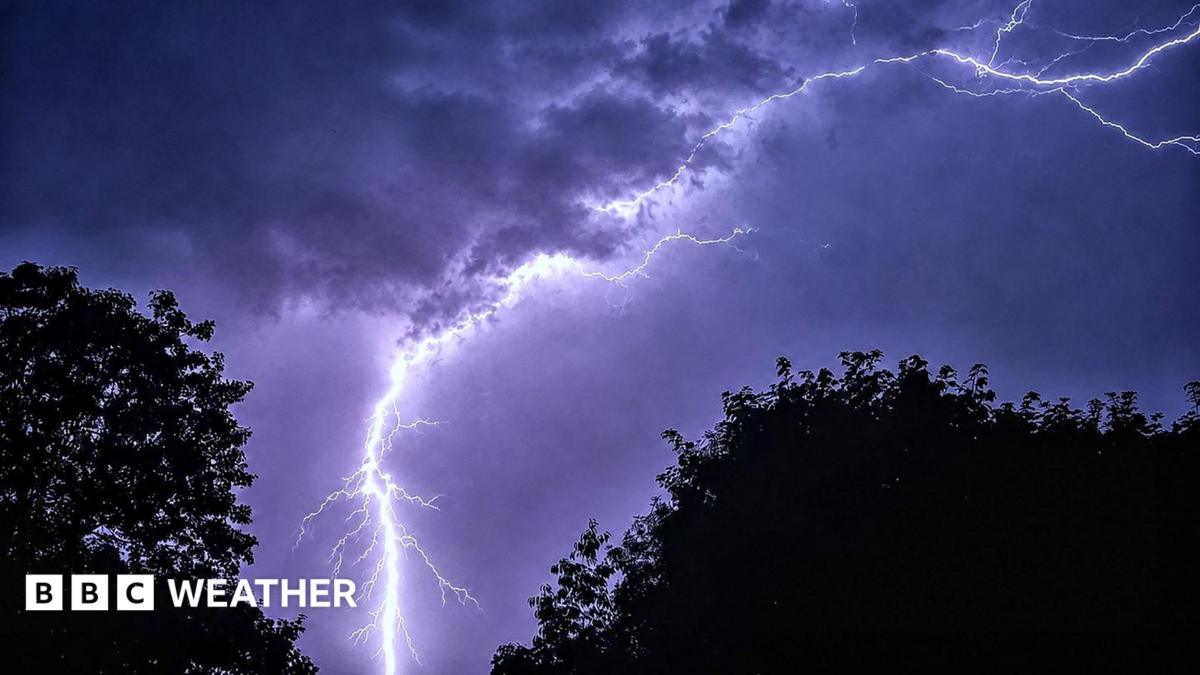
The heatwave impacting parts of the UK this week continues into Tuesday with a risk of thunderstorms in some parts.
asserted
heatwave → publish → parts
Pershore in Worcestershire and Cavendish in Suffolk hit three consecutive days of heatwave threshold temperatures on Monday and it is expected more parts of southern and eastern England will reach heatwave criteria on Tuesday.
asserted
parts → hit → Tuesday
Amber and yellow heat health alerts, external are in effect across much of England until 09:00 BST Wednesday, with temperatures expected to reach more than 30C in some areas.
asserted
temperatures → expect → areas
The intense heat will be short lived though as a change in the weather pattern is on the way from midweek.
asserted
change → live → midweek
When will the heatwave end?
asserted
heatwave → end → ?
During Tuesday, a cold front will move southwards across the Midlands and into south-east England.
asserted
front → move → England
However, it is unlikely to deliver any meaningful rainfall.
asserted
it → deliver → rainfall
Some areas in the far south-east, including London, Essex, Kent and Surrey, are unlikely to receive any rain at all.
asserted
areas → include → rain
This is a pattern that has become all too familiar in recent weeks, as the UK experienced its driest and sunniest July on record.
asserted
UK → become → record
Areas of low pressure have tracked to the north of the UK, bringing below-average rainfall and consistently failing to deliver any meaningful rain further south.
asserted
Areas → track → rain
Flash flooding and hail risk
Low pressure which has recently brought rainfall to Scotland, Northern Ireland and parts of northern England will bring scattered showers and thunderstorms on Tuesday and into Wednesday.
asserted
which → bring → Wednesday
However, this is unlikely to alleviate the current drought.
asserted
this → alleviate → drought
A yellow thunderstorm warning has been issued by the Met Office for parts of Northern Ireland on Tuesday.
asserted
warning → issue → Tuesday
It runs until 21:00, when up to 30mm of rain in an hour or two is possible, along with strong winds and the chance of hail.
asserted
mm → run → hail
Areas that do see a heavy downpour are at risk of flash flooding.
asserted
that → see → flooding
The scorched ground, dry grass and soil caused by the lack of rain is likely to cause significant pooling and runoff, as rainfall struggles to get absorbed during brief bursts of heavy rain.
asserted
rainfall → cause → rain
Hail may accompany the most intense downpours which could come as a surprise following the predominantly hot and dry conditions.
uncertain
which → accompany → conditions
Hail is most common in summer months as it needs to develop inside towering cumulonimbus clouds, which are often spawned by intense heat at ground level.
asserted
which → need → level
Following one of the driest and hottest stretches of weather in the UK's history, the indications are that August is likely to bring more of the same.
asserted
August → follow → same
Forecast models suggest low rainfall and above average temperatures will continue for much of the UK, meaning it is unlikely that any of the hosepipe bans affecting more than 20 million people in England and Wales will be lifted soon.
asserted
any → suggest → England
Wisley in Surrey remains the driest location in the UK, having recorded 47 consecutive days without measurable rainfall, while many other parts of the UK have had a fraction of their normal rainfall in June and July.
Further spikes of heat are likely, however as August wears on and the sun gradually loses some of its intensity, the likelihood of extreme temperatures in the high 30s lessens.
But it is not uncommon to have spells of intense heat reaching 30C or higher even into September.
asserted
spells → remain → September
You can see the latest forecast for the coming weeks here.
asserted
You → see → weeks
- Published
The heatwave impacting parts of the UK this week continues into Tuesday with a risk of thunderstorms in some parts.
asserted
heatwave → publish → parts
Pershore in Worcestershire and Cavendish in Suffolk hit three consecutive days of heatwave threshold temperatures on Monday and it is expected more parts of southern and eastern England will reach heatwave criteria on Tuesday.
asserted
parts → hit → Tuesday
Amber and yellow heat health alerts, external are in effect across much of England until 09:00 BST Wednesday, with temperatures expected to reach more than 30C in some areas.
asserted
temperatures → expect → areas
The intense heat will be short lived though as a change in the weather pattern is on the way from midweek.
asserted
change → live → midweek
When will the heatwave end?
asserted
heatwave → end → ?
During Tuesday, a cold front will move southwards across the Midlands and into south-east England.
asserted
front → move → England
However, it is unlikely to deliver any meaningful rainfall.
asserted
it → deliver → rainfall
Some areas in the far south-east, including London, Essex, Kent and Surrey, are unlikely to receive any rain at all.
asserted
areas → include → rain
This is a pattern that has become all too familiar in recent weeks, as the UK experienced its driest and sunniest July on record.
asserted
UK → become → record
Areas of low pressure have tracked to the north of the UK, bringing below-average rainfall and consistently failing to deliver any meaningful rain further south.
asserted
Areas → track → rain
Flash flooding and hail risk
Low pressure which has recently brought rainfall to Scotland, Northern Ireland and parts of northern England will bring scattered showers and thunderstorms on Tuesday and into Wednesday.
asserted
which → bring → Wednesday
However, this is unlikely to alleviate the current drought.
asserted
this → alleviate → drought
A yellow thunderstorm warning has been issued by the Met Office for parts of Northern Ireland on Tuesday.
asserted
warning → issue → Tuesday
It runs until 21:00, when up to 30mm of rain in an hour or two is possible, along with strong winds and the chance of hail.
asserted
mm → run → hail
Areas that do see a heavy downpour are at risk of flash flooding.
asserted
that → see → flooding
The scorched ground, dry grass and soil caused by the lack of rain is likely to cause significant pooling and runoff, as rainfall struggles to get absorbed during brief bursts of heavy rain.
asserted
rainfall → cause → rain
Hail may accompany the most intense downpours which could come as a surprise following the predominantly hot and dry conditions.
uncertain
which → accompany → conditions
Hail is most common in summer months as it needs to develop inside towering cumulonimbus clouds, which are often spawned by intense heat at ground level.
asserted
which → need → level
…and 4 more, not listed.
 The Aporia