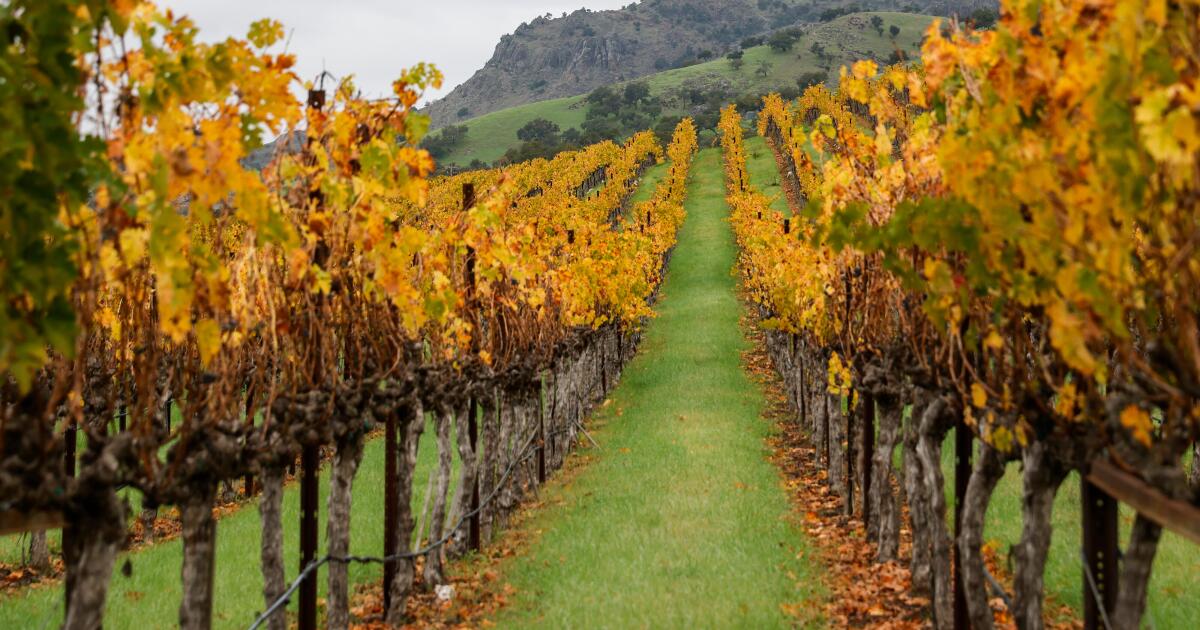
California wine exposed again as U.S.-Canada trade fight flares

World & Nation · collected 2026-08-26 · by Annika Duneja
Read the original at World & Nation ↗

Summary

The U.S.-Canada trade dispute has resulted in Canadian boycotts of American wine, with California's wine industry being particularly affected. According to Wine Institute, the export market for U.S. wines declined by 35% last year, with 80% of that decrease attributed to Canada. The boycotts have erased $360 million in revenue from the U.S. wine industry and forced some family-owned wineries to lay off staff and scale back operations. California's wine industry expects further losses as trade tensions between the two countries continue to escalate.
Written by the local model on 2026-08-26, using this article's own text rather than the other coverage of the same event (that is the story summary below).

Signals How these are calculated →

Claims extracted
28
claim-shaped sentences
Uncertain
4%
1 of 28 hedged
Leaning
Leans left
of the writing, not the subject
Publisher trust
95.3
red-flag proxy, not a credibility rating
Outlets on this story
1
Economy/Business
Narrative spread
1
articles carrying this framing
Analyzed 2026-08-26 · how these are computed

AI analysis (generated at analysis time, not now)

Story summary

California's wine industry is facing significant losses due to trade tensions between the U.S. and Canada. The $360 million in revenue erased by boycotts since last March has forced some family-owned wineries to lay off staff and scale back production. This comes after President Trump announced tariffs of up to 50% on Canadian goods, prompting Canada to retaliate with tariffs on $20 billion worth of American products, including American alcohol. The trade clash is not only affecting the wine industry, but also denting California tourism and other industries. The impact has been described as the "most significant disruption to U.S. wines since Prohibition" by Julie Berge, vice president of communications at Wine Institute.

Written for “California Wine Trade Dispute” on 2026-08-31, grounded in this article and the 0 other(s) covering the same event.
Why this leaning score
The article's own words the score was based on. Each is quoted verbatim and was checked against the article text before being stored, so you can find it in the original.
Score -0.35 Confidence high 1 quote(s) discarded as not found in the article
Leaning score -0.35 for article 2425 (high confidence, 1 verified quote) · logged 2026-08-27

Story

📰 California Wine Trade Dispute
Economy/Business · 1 article(s) covering the same event. This is the one the site leads with.

How this is being covered How these are calculated →

Article leaning vs. publisher reliability
Source leaning vs. consistency

Compared with similar articles

This article reads leans left and hedges 4% of its claims. Each row says how that neighbour differs.
The Globe and Mail
⚖️ Leans left 🔴 0% hedged 0 of 6 📰 publisher trust 21
“The articles mention trade tensions and counter-tariffs between Canada and the US, but Article A focuses on wine industry impact while Article B discusses seafood and fish products removal from counter-tariff list”
CBC | World News
⚖️ leaning not scored 🔴 100% hedged 2 of 2 📰 publisher trust 95
“Although both articles mention a U.S.-Canada trade fight and its impact on California's wine industry, Article B focuses on Trump's tariffs and their potential impact on battleground states, while Article A describes the actual effect of the tariffs on California's wine industry, implying they may be discussing related but different events”
CBC | Top Stories News
⚖️ Leans left 🔴 2% hedged 1 of 44 📰 publisher trust 95
“Article A describes a specific Canadian ban on U.S. alcohol and its effect on one California winemaker, while Article B mentions the broader trade fight between the U.S. and Canada, including boycotts and revenue losses for the wine industry”
CBC | Top Stories News
⚖️ leaning not scored 🔴 13% hedged 6 of 47 📰 publisher trust 95
“Article A discusses a possible return of US booze to Canadian shelves, while Article B talks about the negative impact of U.S.-Canada tariffs on California wine exports”
CBC | World News
⚖️ leaning not scored 🔴 4% hedged 1 of 26 📰 publisher trust 95
“Article A discusses a potential restart of trade talks between the US and Canada, while Article B discusses the ongoing negative impact of the U.S.-Canada trade fight on California's wine industry”
The Globe and Mail
⚖️ leaning not scored 🔴 9% hedged 3 of 35 📰 publisher trust 21
“Article B mentions specific trade retaliations and actions by provincial leaders, whereas Article A only mentions escalating U.S.-Canada tariffs, without specifying that alcohol is being targeted”
Semafor
⚖️ Centre further right than this 🔴 40% hedged 2 of 5 📰 publisher trust 96
“Article A discusses the impact of escalating US-Canada trade tensions on California's wine industry, while Article B reports on potential US bans on Canadian imports as retaliation for Canada's matching tariffs”

Publisher

World & Nation · 27 article(s) · 0 correction(s) detected
SignalValueWeight
Correction rate 0.000 0.4
Uncertainty density 0.095 0.25
Assertive mismatch rate 0.000 0.35
No corrections detected for this publisher. That may mean careful reporting, or simply that nothing has been checked.

Who wrote this

Annika Duneja
1 article(s) here · 1 carrying a prediction
🔮 The boycotts have “erased” roughly $360 million in revenue that the U.S. wine industry would have otherwise earned, according to the report.
The only article under this byline in the corpus.

Topics

California Canada Canadian U.S. U.S.-Canada

Subjects

California GPE · 11× Canada GPE · 9× U.S. GPE · 6× Berge PERSON · 4× Canadian NORP · 4× American NORP · 3× Californian NORP · 2× Trump PERSON · 2× U.S.-Canada GPE · 2× Wine Institute ORG · 2×

Narrative

Californian wines have borne the brunt of the tit-for-tat — and now these local, often family-owned businesses expect further losses, said Julie Berge, vice president of communications at Wine Institute, which represents California wineries. “It has been the most significant disruption to U.S. wines since the Prohibition,” she said.
framing: assertive · carried by 1 article(s) · first seen 2026-08-26
🔮 The boycotts have “erased” roughly $360 million in revenue that the U.S. wine industry would have otherwise earned, according to the report.
2026-08-26 · World & Nation
California wine exposed again as U.S.-Canada trade fight flares · assertive framing

Claims (28 extracted, 1 hedged)

California wine exposed again as U.S.-Canada trade fight flares - Click here to listen to this article - - California’s wine industry faces a new blow as escalating U.S.-Canada tariffs and provincial boycotts loom. asserted
tariffs → expose → blow
- With Canada accounting for more than a third of U.S. wine exports, boycotts have erased roughly $360 million in revenue, forcing some family-owned California wineries to slash staff and scale back. asserted
boycotts → account → staff
- The trade clash reaches beyond wine, denting California tourism and other industries. asserted
clash → reach → tourism
California’s struggling wine industry says it expects to take another hit as trade tensions between the U.S. and Canada flare up again. asserted
tensions → struggle → U.S.
President Trump announced tariffs of up to 50% on Canadian goods this week and Canada responded with retaliatory tariffs on $20 billion worth of American products. asserted
Canada → announce → products
Though wine was not explicitly mentioned, American alcohol has been the target of boycotts imposed by several Canadian provinces since last March in response to earlier tariffs on Canadian goods by Trump. asserted
alcohol → mention → Trump
With wine consumption down, major California wine companies are laying off workers and shuttering production facilities. asserted
companies → lay → facilities
Californian wines have borne the brunt of the tit-for-tat — and now these local, often family-owned businesses expect further losses, said Julie Berge, vice president of communications at Wine Institute, which represents California wineries. “It has been the most significant disruption to U.S. wines since the Prohibition,” she said. asserted
she → bear → Prohibition
At the one-year mark of the restrictions, a Wine Institute report said U.S. wine exports totaled $805 million in 2025, down 35% from 2024. asserted
exports → say → 2025
Berge said 80% of that decrease was because of Canada, which makes up 36% of the U.S. wine export market, more than the EU, U.K. and China markets combined. asserted
which → say → markets
The boycotts have “erased” roughly $360 million in revenue that the U.S. wine industry would have otherwise earned, according to the report. uncertain
industry → erase → report
“We spent decades building relationships with these Canadian importers, retailers, restaurants, even consumers building a brand in Canada,” Berge said. asserted
Berge → spend → Canada
G3 Enterprises, which makes wine corks and bottles, announced plans to lay off 66 workers, in yet another hit to California’s wine industry One Sonoma winery referenced in the report said Canada made up about 85% of its international sales and called the boycotts “devastating.” asserted
Canada → make → boycotts
Multiple wineries have had to lay off employees because of hits to their business. asserted
wineries → have → business
“I think the ironic part about this is winemakers are in this business because they love to create a product that brings people together,” Berge said. asserted
Berge → think → people
“So for it to be caught up in a trade conflict that has nothing to do with wine is really challenging.” asserted
that → catch → wine
Wine is not the only Californian business that has taken a hit — tourism has also seen a sharp decline in arrivals from Canada. asserted
tourism → take → Canada
In 2025, visitors from the country dropped by 20%. asserted
visitors → drop → %
Canada also targeted the agriculture, electronics and transportation equipment industries with its tariffs announced Tuesday, all of which have a presence in California. asserted
all → target → California
Berge said the longer these boycotts go on, the more difficult it will be for winemakers to reenter the market. asserted
winemakers → say → market
“The more that we are off the shelves in Canada, the more other countries have the opportunity to come in and take that shelf space, and even when we get back on shelves, that’s just the first step,” she said. asserted
she → have → shelves
“There’s a lot of work that needs to happen.” asserted
that → ’ → work
The continued boycotts add to a pile of issues the struggling industry faces. California wine has already been contending with declining demand and global oversupply issues, leading to downsizing, closures and disposal of tons of grapes. asserted
wine → continue → grapes
In December, Rep. Mike Thompson (D-St. Helena) introduced a bill that would use taxpayer dollars to reimburse American wine producers for the money they have lost due to tariffs. asserted
they → introduce → tariffs
But despite bipartisan support, the Specialty Crop & Wine Producer Tariff Relief Act hasn’t seen any movement since. asserted
Act → see → movement
In the wake of these measures, wineries have worked to expand to other international markets, including in Japan, the UAE and Mexico. asserted
wineries → work → Japan
But building those relationships takes time, Berge said. asserted
Berge → build → time
“There’s not going to be any single market that can make up for the loss in Canada,” she said. asserted
she → go → Canada

💬 Give feedback
🕘 History 🎫 Support