How Did America Get $40 Trillion in Debt?

Reason.com · collected 2026-08-25 · by Robby Soave
Read the original at Reason.com ↗

Summary

A discussion of the US national debt hitting $40 trillion is featured in this podcast episode, where editors and writers from Reason magazine examine how the debt doubled in less than a decade and why federal spending continues to outpace revenue. The conversation also touches on various other topics, including the impact of President Trump's trade war with Canada and the growth of data centers. According to Nick Gillespie, government spending as a percentage of GDP and per capita is at an all-time high, contributing to the nation's debt problem. The podcast's discussion highlights the complexities of addressing the national debt issue.
Written by the local model on 2026-08-25, using this article's own text rather than the other coverage of the same event (that is the story summary below).

Signals How these are calculated →

Claims extracted
12
claim-shaped sentences
Uncertain
17%
2 of 12 hedged
Leaning
Leans right
of the writing, not the subject
Publisher trust
94.1
red-flag proxy, not a credibility rating
Outlets on this story
6
Politics
Narrative spread
1
articles carrying this framing
Analyzed 2026-08-25 · how these are computed

AI analysis (generated at analysis time, not now)

Story summary

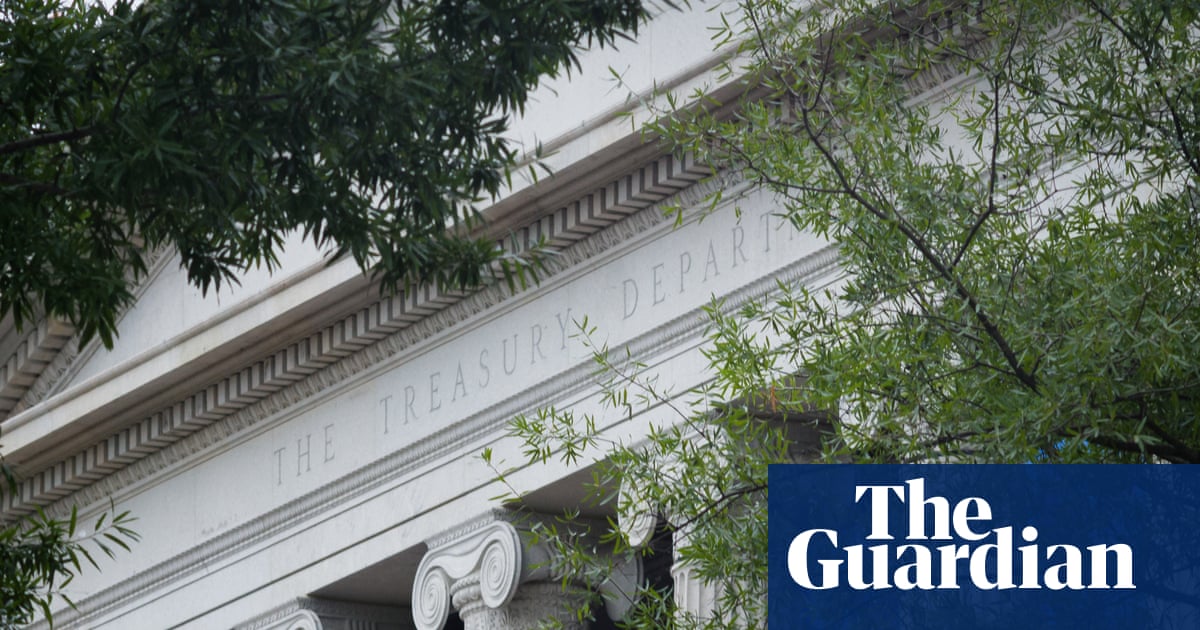
The US national debt has surpassed $40 trillion, reaching $40.047 trillion on Tuesday afternoon, according to the Treasury Department, marking the highest level of debt in US history. It took nearly 200 years for America's gross debt to reach $1 trillion for the first time in 1981, said Maya MacGuineas, president of the Committee for a Responsible Federal Budget. The government deficit has doubled over the last decade, and $8.4 trillion of debt was added during Donald Trump's first term, while $4.3 trillion was added under Joe Biden's presidency. $1.8 trillion in new debt has been added since October 2025, with a significant portion going towards tariff refunds totaling $100 billion, according to the Bipartisan Policy Center. Experts warn that this high level of debt could lead to a loss of confidence in the US government and higher interest rates, potentially signaling expectations of higher inflation or even a global sovereign debt retrenchment.

Written for “US National Debt Crisis” on 2026-08-31, grounded in this article and the 5 other(s) covering the same event.
Why this leaning score
The article's own words the score was based on. Each is quoted verbatim and was checked against the article text before being stored, so you can find it in the original.
Score +0.35 Confidence high
Leaning score +0.35 for article 2357 (high confidence, 2 verified quotes) · logged 2026-08-27

Story

📰 US National Debt Crisis
Politics · 6 article(s) covering the same event.

How this is being covered How these are calculated →

Article leaning vs. publisher reliability
Source leaning vs. consistency

Compared with similar articles

This article reads leans right and hedges 17% of its claims. Each row says how that neighbour differs.
US news | The Guardian
⚖️ leaning not scored 🔴 15% hedged 2 of 13 📰 publisher trust 95
“Both articles report on the US national debt reaching $40tn for the first time, citing similar sources and timeframes.”
The Dispatch
⚖️ Leans right 🔴 0% hedged 0 of 15 📰 publisher trust 96
“Both articles report on the exact same date (2026-08-25) and describe the US national debt hitting $40 trillion, suggesting they are covering the same specific news event.”
The Dispatch
⚖️ Leans right 🔴 0% hedged 0 of 3 📰 publisher trust 96
“Both articles discuss the recent issue with the US government selling 30-year bonds and the high interest rate offered, indicating they are reporting on the same specific event.”
NBC News Top Stories
⚖️ Leans left further left than this 🔴 18% hedged 2 of 11 📰 publisher trust 96
“Article A mentions a focus group sharing affordability concerns, while Article B discusses a panel discussing the national debt with Reason Senior Editor Robby Soave”
Zeteo
⚖️ Leans strongly left further left than this 🔴 13% hedged 2 of 15
“The articles cover different topics with no apparent connection between them, discussing national debt in one case and right-wing corruption in another.”

Publisher

Reason.com · 37 article(s) · 0 correction(s) detected
SignalValueWeight
Correction rate 0.000 0.4
Uncertainty density 0.117 0.25
Assertive mismatch rate 0.000 0.35
No corrections detected for this publisher. That may mean careful reporting, or simply that nothing has been checked.

Who wrote this

Robby Soave
2 article(s) here · 1 carrying a prediction
🔮 They examine how the debt doubled in less than a decade, why federal spending continues to outpace revenue, and whether turmoil in the bond market could force politicians to take deficits seriously.
2026-08-25 · assertive framing · How Did America Get $40 Trillion in Debt?
🔮 Greene says she once thought President Donald Trump would help crash the system.
Also by Robby Soave
Nothing else under this byline is closely related to this article, so these are simply their most recent.

Topics

America Canada Canadian Meta Reason

Subjects

Nick Gillespie PERSON · 3× Canadian NORP · 2× Jason Arday PERSON · 2× Peter Suderman PERSON · 2× Reason ORG · 2× Robby Soave PERSON · 2× America GPE · 1× Canada GPE · 1× Donald Trump PERSON · 1× Katherine Mangu-Ward PERSON · 1×

Narrative

"Bad Reasons and Worse Reasons to Hate Data Centers," by Robby Soave "Data Centers Are Doing Your Dirty Work for You," by Christian Britschgi "Sen. Ed Markey doesn't know what AI he is using," by Taylor Lorenz "Censors Seize on Jason Arday's Death as Excuse To Demand More Censorship," by Reem Ibrahim "Tony Is an Anthony Bourdain Origin Story," by Peter Suderman "Travel Shows Were Boring as Fuck.
framing: assertive · carried by 1 article(s) · first seen 2026-08-25
🔮 They examine how the debt doubled in less than a decade, why federal spending continues to outpace revenue, and whether turmoil in the bond market could force politicians to take deficits seriously.
2026-08-25 · Reason.com
How Did America Get $40 Trillion in Debt? · assertive framing

Claims (12 extracted, 2 hedged)

This week, editors Peter Suderman, Katherine Mangu-Ward, and Nick Gillespie are joined by Reason Senior Editor Robby Soave to discuss the national debt hitting $40 trillion and whether decades of fiscal irresponsibility are finally beginning to have consequences. asserted
decades → join → consequences
They examine how the debt doubled in less than a decade, why federal spending continues to outpace revenue, and whether turmoil in the bond market could force politicians to take deficits seriously. uncertain
turmoil → examine → deficits
They also consider why both parties abandoned the fiscal restraint that helped produce balanced budgets in the 1990s and what it would take to reverse course. asserted
it → consider → course
The editors also discuss President Donald Trump's escalating trade war with Canada and his administration's refusal to return tariff revenue collected illegally, the growing bipartisan backlash against AI data centers, and whether economic growth can realistically help America escape its debt problem. asserted
America → discuss → problem
They examine the government's case against Meta and the latest effort to blame social media for harms to children, then turn to calls for restrictions on journalists following the death of Cambridge professor Jason Arday. asserted
They → examine → Arday
Finally, a listener asks whether AI could shrink the federal workforce and dramatically reduce the cost of government. uncertain
AI → ask → government
0:00—National debt hits $40 trillion 15:26—Canadian trade war intensifies asserted
war → hit → trillion
Mentioned in the podcast: "$40 Trillion and Parents' Night Out," by Liz Wolfe "Why We Need To Shrink the National Debt, and Fast!" by Nick Gillespie Nick Gillespie on X: "For those of us concerned about national debt, here is federal spending and revenue expressed as pct. of GDP and per capita in 2017 dollars. asserted
spending → mention → dollars
We are spending too much, not taxing too little." asserted
We → spend → little
"Trump Imposes Harmful and Illegal Section 338 Tariffs Against Many Canadian Imports," by Ilya Somin asserted
Trump → impose → Somin
"Bad Reasons and Worse Reasons to Hate Data Centers," by Robby Soave "Data Centers Are Doing Your Dirty Work for You," by Christian Britschgi "Sen. Ed Markey doesn't know what AI he is using," by Taylor Lorenz "Censors Seize on Jason Arday's Death as Excuse To Demand More Censorship," by Reem Ibrahim "Tony Is an Anthony Bourdain Origin Story," by Peter Suderman "Travel Shows Were Boring as Fuck. asserted
Shows → hate → Fuck
Then Came Anthony Bourdain," by Todd Krainin asserted
Bourdain → come → Krainin
💬 Give feedback
🕘 History 🎫 Support