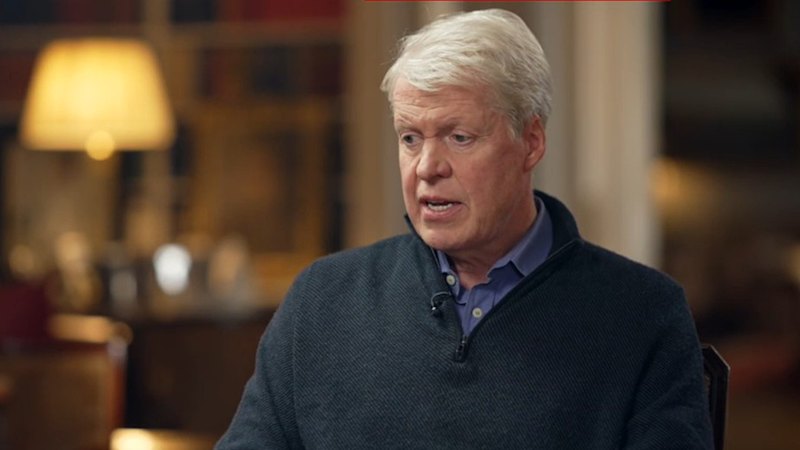
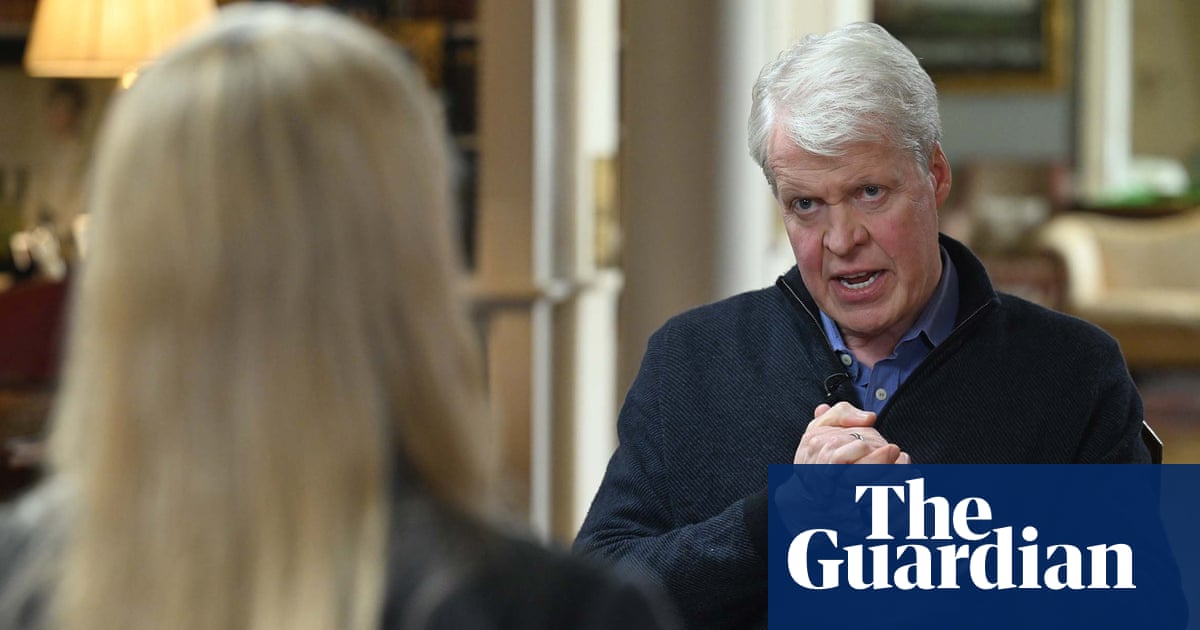
Earl Spencer claims he has previously informed Prince William and Prince Harry about a reported comment made by their father, then-Prince Charles, shortly after Princess Diana’s death in 1997. According to Spencer’s forthcoming memoir, Charles allegedly said they would “forget her soon enough” during an argument over the funeral arrangements. The Palace has contested the veracity of these claims, suggesting that grief could have distorted memory. In a recent BBC interview, Earl Spencer stated that William and Harry will not be surprised by this revelation, though specifics about his conversations with them were not detailed further.
Written locally by qwen2.5:14b on 2026-09-20,
using this article's own text rather than the other coverage of the
same event (that is the story summary below).
Story summary
Experts suggest that Earl Spencer felt a duty to write his memoir about Diana's life. In the book, he makes explosive claims against King Charles, alleging that shortly after Princess Diana’s death in 1997, then-Prince Charles said "we’ll forget her soon enough." This prompted Buckingham Palace to issue a statement saying His Majesty is mindful that fraternal grief can cloud judgment and reason.
Spencer accused the king of gaslighting him when the palace responded by questioning his recollections. He called the palace's defense a "rather poor imitation" of how Queen Elizabeth II handled similar allegations from Prince Harry in their Oprah interview.
The book also includes details about an alleged row over Diana’s funeral arrangements where King Charles reportedly went ballistic, criticizing Spencer's family for not fulfilling their duties adequately enough. Buckingham Palace did not comment on the specifics of these claims but suggested that grief could affect memory accuracy over time.
Earl Spencer told BBC he wanted to put down truths before it was too late due to his awareness of mortality. He added that there are other facts about King Charles he chose not to include in the book, deeming them irrelevant.
Written for “Diana Controversies Royal Family” on 2026-10-05,
grounded in this article and the 92 other(s) covering the same event.
- See more Daily Mail on Google - save us as a Preferred Source
Earl Spencer has claimed his incendiary allegations about the King following the death of Princess Diana will 'not be a surprise' to Prince William and Prince Harry.
asserted
allegations → see → William
The earl today suggested that he had informed the two brothers in the past that Charles remarked during a row over her funeral that their mother would soon be forgotten.
uncertain
mother → suggest → funeral
The brothers are understood not to have been aware of the contents of Earl Spencer's forthcoming memoir about his sister, which include the King's reported comments.
asserted
which → understand → comments
In an interview with the BBC's Laura Kuenssberg, he said: 'I don't like to talk about what I've been speaking about to William and Harry, but this will not be a surprise to them.
'
asserted
this → say → them
I will tell you that these words will not be a surprise to them.'
asserted
words → tell → them
The Royal Family is reeling from a string of explosive claims in the memoir – entitled Swan Song: Diana, My Sister – after extracts were exclusively published by the Mail last week.
uncertain
extracts → reel → Mail
Earl Spencer's incendiary claim that – days after Diana's 1997 death – the then Prince Charles told him: 'Rest assured, we'll forget her soon enough' provoked a highly unusual response from the Palace.
uncertain
we → tell → Palace
The Prince of Wales's alleged comment was made during a blistering row with the earl over whether Princes William and Harry, then aged 15 and 12, should walk in their mother's funeral procession.
asserted
William → make → procession
But in a statement, a Palace spokesman last week questioned the veracity of Earl Spencer's explosive account and said that fraternal grief can 'cloud reason, affect judgment and colour memory'.
asserted
grief → question → memory
Earl Spencer has claimed he had an explosive row with Charles after suggesting that he was uncomfortable with Harry and William, then both children, walking behind their mother's coffin in the funeral procession, which led to Charles attacking his family's sense of duty.
asserted
Charles → claim → duty
He told the BBC today that evidence of his argument with Charles - and his reaction to his alleged comments - was actually contained within his famous eulogy at Diana's funeral.
asserted
evidence → tell → funeral
The earl today suggested that he had informed the two brothers in the past that Charles remarked during a row over her funeral that their mother would soon be forgotten
In an interview with the BBC's Laura Kuenssberg, Earl Spencer said: 'I don't like to talk about what I've been speaking about to William and Harry, but this will not be a surprise to them.'
uncertain
this → suggest → them
As well as his notorious remarks that Diana's 'bloody family' would ensure her sons were protected, his eulogy also included the line: 'Above all, we give thanks for the life of a woman I'm so proud to be able to call my sister: the unique, the complex, the extraordinary and irreplaceable Diana, whose beauty, both internal and external, will never be extinguished from our minds.'
asserted
beauty → ensure → minds
Earl Spencer said today of his explosive row with the future king on the eve of the funeral: 'You can see evidence of that conversation in the final eulogy.
'
asserted
You → say → eulogy
I really stress Diana's sense of duty - duty comes across very clearly in the eulogy, and then it culminates in something which I think really underlines the truth of my assertion here.
asserted
I → stress → assertion
If you get to the final bit of my eulogy, it is that her fantastic qualities "will never be extinguished from our minds".
asserted
qualities → get → minds
It was a direct rebuttal of "we'll forget her soon enough".'
asserted
we → forget → her
The early also had to deny that he was making a threat against the King when he suggested that he had more unflattering material which he chose not to use in his book.
uncertain
he → have → book
He said: ‘This is not a threat, it's a fact, I know lots of things about the King which I chose not to include in the book because they were not relevant.’
asserted
they → say → book
Challenged that his remarks did, in fact, sound a bit like a threat, he continued: 'No, it's not at all a threat.
asserted
it → challenge → threat
I want to give the context of what I said and what I didn't say, I'm not threatening.
'
asserted
I → want → what
I'm not a salacious writer on any level, but if I was a salacious writer and wanted to write that sort of thing, I have plenty of other things I could have said, and really have no interest in doing so.
uncertain
I → want → interest
Earl Spencer later claimed he had no intention of making any further claims about the Royal Family, saying: 'That's it.
uncertain
That → claim → Family
That's me done.'
asserted
me → do → ?
 The Aporia