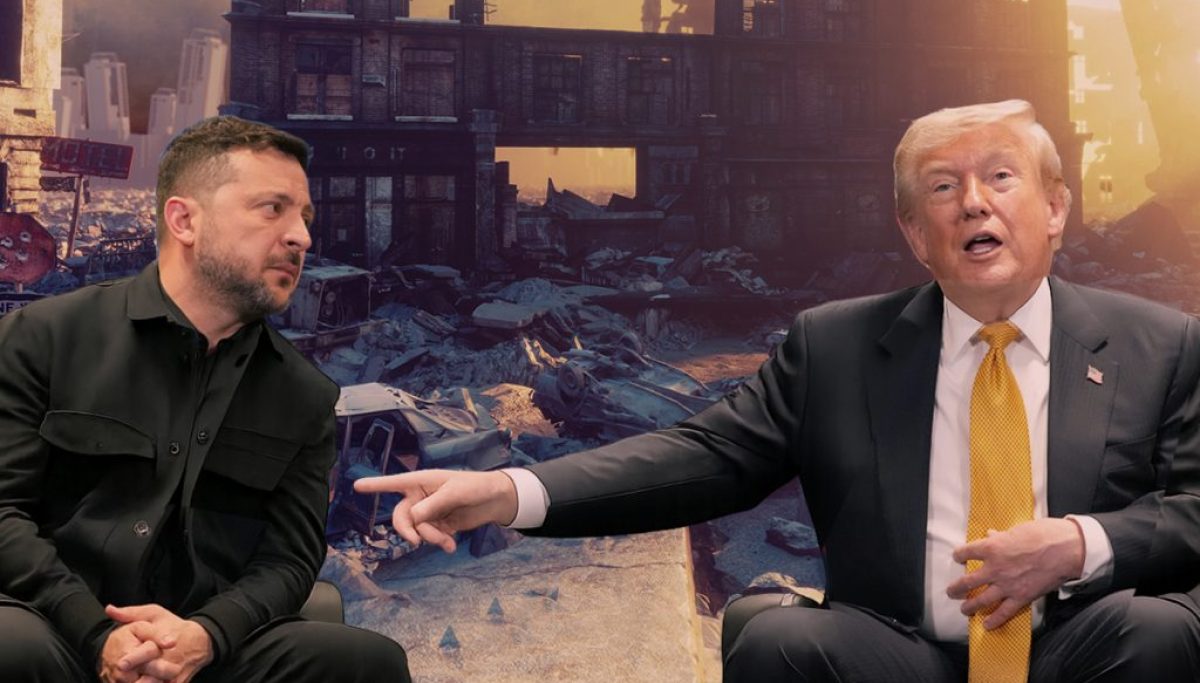
Trump didn’t abandon Ukraine — he just forced Kyiv to play to win

Washington Examiner · collected 2026-08-25 · by Eric Wargotz
Read the original at Washington Examiner ↗

Summary

The article presents a case study on the US administration's approach to foreign policy under President Donald Trump, which it dubs "Trumposophy." According to the article, this strategy involves using unpredictability and chaos to force allies and enemies alike into a state of constant confusion. The article cites examples such as NATO and the Russia-Ukraine war, where Washington used pressure tactics to prompt European capitals to increase military spending and Ukraine to adopt a more aggressive military strategy. Key numbers mentioned include the fact that Ukraine's new campaign successfully struck military factories, supply warehouses, and air defense systems deep inside Russia.
Written by the local model on 2026-08-25, using this article's own text rather than the other coverage of the same event (that is the story summary below).

Signals How these are calculated →

Claims extracted
67
claim-shaped sentences
Uncertain
0%
0 of 67 hedged
Leaning
Leans strongly right
of the writing, not the subject
Publisher trust
96.4
red-flag proxy, not a credibility rating
Outlets on this story
8
Politics
Narrative spread
1
articles carrying this framing
Analyzed 2026-08-25 · how these are computed

AI analysis (generated at analysis time, not now)

Story summary

John Ratcliffe, the CIA Director, made a secretive trip to Moscow earlier this week, where he held talks with Russian intelligence officials but did not meet with President Vladimir Putin. The purpose of his visit was to warn Russia not to attack NATO member states, according to multiple sources familiar with the matter.

During his meetings in Moscow, Ratcliffe also brought up Iran, warning that there would be additional sanctions if the Strait of Hormuz does not reopen to shipping traffic. The US had requested that Ukraine hold off on strikes against Russia during Ratcliffe's visit.

The trip was first reported by CBS News, and later confirmed by President Donald Trump in an interview with Glenn Beck. However, Trump called the visit "semi-routine" and downplayed its significance.

This comes amid US intelligence assessments that Russia may try to test NATO's resolve with a limited assault on an allied country. Ratcliffe's warning to Russia was seen as a key aspect of his trip to Moscow.

Written for “CIA Director's Secret Visit to Moscow” on 2026-08-31, grounded in this article and the 7 other(s) covering the same event.
Why this leaning score
The article's own words the score was based on. Each is quoted verbatim and was checked against the article text before being stored, so you can find it in the original.
Score +0.85 Confidence high
Leaning score +0.85 for article 2217 (high confidence, 5 verified quotes) · logged 2026-08-27

Story

📰 CIA Director's Secret Visit to Moscow
Politics · 8 article(s) covering the same event.

How this is being covered How these are calculated →

Article leaning vs. publisher reliability
Source leaning vs. consistency

Compared with similar articles

This article reads leans strongly right and hedges 0% of its claims. Each row says how that neighbour differs.
The Independent World
⚖️ Leans right further left than this 🔴 4% hedged 1 of 26 📰 publisher trust 95
“Article A discusses Putin's threats towards the UK and Nato over Ukraine, while Article B discusses Trump's strategy towards NATO and the Russia-Ukraine war without mentioning a specific incident or event.”
The Straits Times World News
⚖️ Leans strongly right 🔴 11% hedged 1 of 9 📰 publisher trust 95
“Article A refers to a recent announcement by British Prime Minister Andy Burnham, while Article B discusses a broader American strategy and does not mention any specific recent event”
TIME
⚖️ leaning not scored 🔴 15% hedged 4 of 27 📰 publisher trust 95
“Article A discusses a statement made by Ukrainian President Zelensky about holding wartime elections, while Article B mentions the Russia-Ukraine war but does not reference any statements or events related to Zelensky's comments”
Serbia Turns Toward the West different event · 100%
Persuasion
⚖️ leaning not scored 🔴 23% hedged 9 of 39
“Article A discusses Trump's foreign policy strategy towards NATO and Russia-Ukraine war, while Article B is about Serbia's shift towards Western ties and its relationship with Ukraine”
The Independent World
⚖️ Leans right further left than this 🔴 4% hedged 2 of 47 📰 publisher trust 95
“Both articles describe a specific request by the Trump administration for Ukraine not to attack major Russian cities during CIA director John Ratcliffe's visit, which matches the details mentioned in both articles”
The Independent World
⚖️ Leans strongly right 🔴 39% hedged 15 of 38 📰 publisher trust 95
“Article A discusses a general approach or strategy, while Article B reports on a specific meeting and warning by CIA director John Ratcliffe”
World | Deutsche Welle
⚖️ leaning not scored 🔴 16% hedged 6 of 38 📰 publisher trust 95
“Article A discusses a general strategy of 'Trumposterous' statecraft, while Article B describes a specific disruption to grain shipments caused by Ukrainian attacks on Russia's Black Sea ports”
The Straits Times World News
⚖️ leaning not scored 🔴 0% hedged 0 of 8 📰 publisher trust 95
“Article B mentions a quote from Mykhailo Fedorov, which suggests it is discussing a separate event or incident, whereas Article A does not mention Fedorov or any specific event”
The Straits Times World News
⚖️ Centre further left than this 🔴 22% hedged 2 of 9 📰 publisher trust 95
“Article A discusses a general strategy of the US administration towards NATO and the Russia-Ukraine war, while Article B reports on a specific comment by Zelenskiy's aide about possible talks in September”

Publisher

Washington Examiner · 37 article(s) · 0 correction(s) detected
SignalValueWeight
Correction rate 0.000 0.4
Uncertainty density 0.072 0.25
Assertive mismatch rate 0.000 0.35
No corrections detected for this publisher. That may mean careful reporting, or simply that nothing has been checked.

Who wrote this

Eric Wargotz
2 article(s) here · 1 carrying a prediction
🔮 They claim more pressure will yield the same stagnant results.
🔮 Only time will show whether this highly disruptive approach has true merit in this time, this place, and this matter.
Also by Eric Wargotz
Nothing else under this byline is closely related to this article, so these are simply their most recent.

Topics

Kyiv NATO Russia Ukrainian Washington

Subjects

Washington GPE · 5× NATO ORG · 4× Russia GPE · 4× Kyiv GPE · 3× Russian NORP · 3× Ukraine GPE · 3× Ukrainian NORP · 3× American NORP · 2× European NORP · 1× Western NORP · 1×

Narrative

As Ukraine and Russia continue to attack one another, with NATO’s stance as ready to intervene if the conflict expands, Washington must prove it can successfully close the deal to thwart a threat of larger regional conflict.
framing: assertive · carried by 1 article(s) · first seen 2026-08-25
🔮 Only time will show whether this highly disruptive approach has true merit in this time, this place, and this matter.
2026-08-25 · Washington Examiner
Trump didn’t abandon Ukraine — he just forced Kyiv to play to win · assertive framing

Claims (67 extracted, 0 hedged)

Traditional foreign policy experts look at Eastern Europe and see a frozen crisis. asserted
experts → look → crisis
They look at the map and see standard troop positions and old treaties. asserted
They → look → positions
To them, the deadlock cannot be broken. asserted
deadlock → break → them
But Washington is looking at the board differently. asserted
Washington → look → board
To understand the current American strategy toward NATO and the Russia-Ukraine war, we have to look at how this administration actually operates. asserted
administration → understand → NATO
We can call this approach “Trumposterous” statecraft. asserted
We → call → approach
It intentionally rejects the old, polite rules of diplomacy. asserted
It → reject → diplomacy
Instead, it relies on complete unpredictability to keep everyone off-balance. asserted
it → rely → balance
By historical standards, it looks chaotic and even absurd. asserted
it → look → standards
But this calculated chaos serves a real purpose. asserted
chaos → serve → purpose
It forces both allies and enemies into a state of constant confusion, upending all their standard plans. asserted
It → force → plans
Recommended Stories This behavior points to a distinct way of thinking about the world. asserted
behavior → point → world
This is simply the art of turning instability into a real advantage. asserted
This → turn → advantage
Instead of trying to keep things quiet and steady, this strategy thrives on shaking the table. asserted
strategy → try → table
It intentionally triggers fast changes from all sides to find out where people are weak. asserted
people → trigger → sides
Look at what is happening with the North Atlantic alliance. asserted
what → look → alliance
For decades, Western leaders treated NATO like a sacred club. asserted
leaders → treat → club
Washington views the alliance strictly in terms of business lines. asserted
Washington → view → lines
It treats defense guarantees as a paid service. asserted
It → treat → service
By threatening to walk away from traditional defense promises, Washington caused massive panic in Europe. asserted
Washington → threaten → Europe
Yet, this harsh pressure is getting results. asserted
pressure → get → results
It uses fear to force European capitals to finally spend real money on their own militaries. asserted
It → use → militaries
It is a tactical move to force Europe to take responsibility for its own backyard. asserted
It → force → backyard
We see the exact same pattern in the Russia-Ukraine war. asserted
We → see → war
Behind the scenes, the White House has pushed for fast, direct peace talks. asserted
House → push → talks
The administration floated draft proposals to end the war. asserted
administration → float → war
Those terms demanded that Ukraine give up territory and stay out of NATO. asserted
Ukraine → demand → NATO
In public, President Donald Trump pressured Ukrainian leaders, telling Ukrainian President Volodymyr Zelensky that “you don’t have the cards.” asserted
you → pressure → cards
Old-school diplomats thought this public pressure was a total betrayal of a friend. asserted
pressure → think → friend
But it actually triggered a major shift. asserted
it → trigger → shift
Instead of giving up, Kyiv completely changed its military playbook. asserted
Kyiv → give → playbook
Faced with less American support, Kyiv took the war directly onto Russian soil. asserted
Kyiv → face → soil
Using long-range drones and new domestic missiles, Ukrainian forces began hitting critical targets deep inside Russia. asserted
forces → use → Russia
This aggressive campaign successfully struck military factories, supply warehouses, and air defense systems. asserted
campaign → strike → factories
Furthermore, Ukraine went after Russia’s energy system. asserted
Ukraine → go → system
They hit massive oil refineries thousands of miles from the front lines. asserted
They → hit → lines
This strategy cut off the Kremlin’s vital fuel cash and caused severe power shortages for ordinary Russian citizens. asserted
strategy → cut → citizens
By telling Kyiv it lacked cards, Washington’s pressure forced Ukraine to build an entirely new deck. asserted
pressure → tell → deck
This massive drone campaign has brought the real costs of the war straight home to ordinary Russians. asserted
campaign → bring → Russians
It has stretched Russian defenses thin and changed the math of the war. asserted
It → stretch → war
…and 27 more, not listed.
💬 Give feedback
🕘 History 🎫 Support