Can Trump's economic war against Iran do what airstrikes and negotiations couldn't?
asserted
airstrikes → do → Iran
When the U.S. and Israel launched their war against Iran in February, President Trump vowed a swift victory.
asserted
Trump → launch → victory
Now, nearly six months later, and on the heels of a failed 60-day ceasefire deadline that was meant to end the war, the U.S. instead finds itself entangled in a protracted conflict.
asserted
itself → fail → conflict
The war with Iran has battered the global economy, agitated Gulf allies and depleted the U.S. arsenal.
asserted
war → batter → arsenal
It has also weakened President Trump's leverage to pursue his primary war goal, which has shifted from curbing Iran's nuclear ambitions to regime change and is now aimed at prying the Strait of Hormuz out of Iran's grip.
asserted
which → weaken → grip
It is against this backdrop that U.S. Treasury Secretary Scott Bessent unveiled a new sanctions campaign Monday against Iran that intends "to sever every economic lifeline that sustains this tyrannical regime until Tehran stands alone."
asserted
Tehran → unveil → regime
Bessent put nations that continue doing business with Iran on notice, saying they should "expect to share in the isolation of a withering regime."
asserted
they → put → regime
Past administrations, including Trump's first, have attempted to pressure Iran economically through various sanctions campaigns over the years.
asserted
administrations → include → years
But the regime has kept money flowing and the government afloat through various smuggling operations and schemes, according to past U.S. Treasury Department investigations.
uncertain
government → keep → investigations
That has raised questions about whether another punishing economic campaign can really bend — or break — Iran's ruling establishment.
asserted
campaign → raise → establishment
"One thing that we've seen over the years is that maximum pressure tends to generate maximum resistance from Iran's side," says Esfandyar Batmanghelidj, chief executive of the London-based Bourse & Bazaar Foundation, a think tank focused on Iran's economy.
asserted
Batmanghelidj → see → economy
"What the Trump administration is likely to do is trigger Iranian leaders to resume some of the more aggressive targeting in the region in order to show they're not going to be coerced into basically capitulating to U.S. demands.
asserted
they → do → demands
"
Efforts to isolate and squeeze
Soon after the U.S. and Iran dropped their first bombs on Iran, the Islamic Revolutionary Guard Corps launched retaliatory missiles against several U.S. Gulf allies.
Iran is starting to pay a price for those attacks.
The United Arab Emirates, which was the biggest importer of Iranian goods worldwide, valued at roughly $21 billion in 2024, according to the World Trade Organization, and a country Iran has used in the past to bypass sanctions, announced recently it's halting all trade and financial transactions with Iran.
uncertain
it → isolate → Iran
"Regional countries seem to be taking steps — one step at a time — to make it more difficult for Iran to use those jurisdictions to bypass sanctions and as result of the Iranian regime's own decisions to target these countries," says Miad Maleki, a former senior U.S. Treasury official who is currently with the Foundation for Defense of Democracies, an organization with close ties to U.S. and Israeli national security establishments.
asserted
who → seem → establishments
"The landscape of economic sanctions evasion is shifting for Iran."
asserted
landscape → shift → Iran
Former Treasury officials and analysts say the isolation and pressure the Trump administration intends to build on will ultimately come down to whether countries — like China, a longtime customer of Iran's crude oil supply — will cooperate.
asserted
countries → say → supply
Not long after Trump's Aug. 19 post on Truth Social vowing to unleash an "ECONOMIC D-DAY" on Iran, a spokesman for China's Foreign Ministry said that China opposed unilateral sanctions and that pressure would not resolve the crisis in Iran.
asserted
pressure → vow → Iran
In 2025, China purchased an estimated $31 billion in crude oil from Iran, which accounted for nearly 45% of Iran's government budget, according to a March report from the U.S.-China Economic and Security Review Commission.
uncertain
which → purchase → Commission
In July, Secretary Bessent said those oil imports plunged by approximately 40% from prewar levels because of the U.S. naval blockade.
asserted
imports → say → blockade
It's not clear whether Beijing, which has provisionally tapped its oil reserves, will ultimately give in to Trump's demands and cut imports and whether the Trump administration will penalize China if it doesn't.
asserted
it → tap → China
"There has been something of a détente between the U.S. and China after some tit-for-tat where we saw semiconductors, rare earth minerals used in economic warfare," says Adam Szubin, who served for nearly a decade as the director of Treasury's Office of Foreign Assets Control.
asserted
who → see → Control
"It seems like the Trump administration and the Chinese government want to see things quieter, and so we're probably at a moment where there's some hard discussions going on behind the scenes about how much China is willing to do without the U.S. following through on its threat."
asserted
U.S. → seem → threat
A lenient stance toward China could amount to a lifeline for Iran's government.
uncertain
stance → amount → government
A hard-line approach may trigger blowback.
uncertain
approach → trigger → blowback
"The U.S. is going to be forced to impose sanctions on substantial Chinese entities to make this work," says Richard Nephew, who was the lead sanctions expert on the U.S. negotiating team that reached the 2015 nuclear deal with Iran.
asserted
that → go → Iran
"If we do that, then we will lose any chance of a trade deal with China or will be forced to back down on Iran.
asserted
we → do → Iran
That said, the blockade is still doing a lot of damage to Iran, so even if sanctions don't have Chinese cooperation, however grudging that may be, there will still be an impact."
When asked about possible sanctions against China at his Monday press conference, Secretary Bessent simply said "no one is above the reach of U.S. sanctions," never mentioning China directly.
The view from Tehran
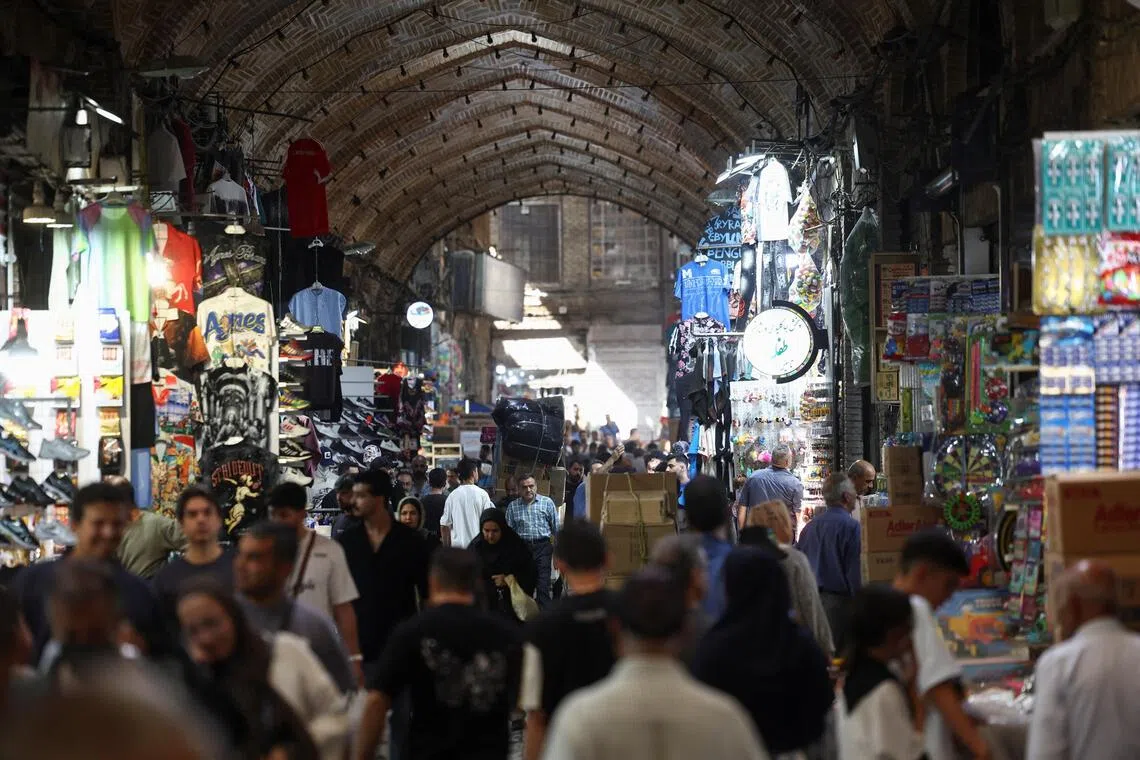
Many people living in Iran say they're already under tremendous economic pressure due to the U.S. naval blockade and decades of economic sanctions.
uncertain
they → say → sanctions
, his father has cancer and they can't find the medicine he needs," says one 40-year-old woman in Tehran who asked NPR not to identify her for fear of government reprisal.
asserted
who → have → reprisal
"A couple of the hospitals they visited couldn't admit the old man for chemotherapy because of broken medical equipment they haven't been able to replace since nothing is entering the country.
asserted
nothing → visit → country
The woman, who works as a baker and caterer, says when she went to the bank over the weekend, she learned that her account was blocked with nearly $1,000 missing.
asserted
1,000 → work → weekend
Bank associates told her the bank had been hacked, though didn't say by whom.
asserted
bank → tell → whom
Her modest grocery haul from a few days ago consisting of laundry detergent, a bag of rice, a couple cartons of milk, lentils, a few bags of pasta and sanitary pads came out to roughly $30 — a big chunk of the average monthly minimum wage of roughly $100.
asserted
haul → consist → 100
"These are bitter days we're living through," she said in a voice note to NPR.
asserted
she → live → NPR
Some Iranian officials haven't shied away from openly discussing the impact of the U.S blockade.
asserted
officials → shy → blockade
Majid-Reza Hariri, the head of the Iran-China Chamber of Commerce, said in an interview this month with Iranian news site Khabar Online that Iran cannot afford to lose maritime trade.
asserted
Iran → say → trade
He pointed out that shipping costs have soared from $3,000 per container by sea before the blockade to $12,000 after.
asserted
costs → point → 12,000
"The blockade is worse than the war," Hariri said.
asserted
Hariri → say → war
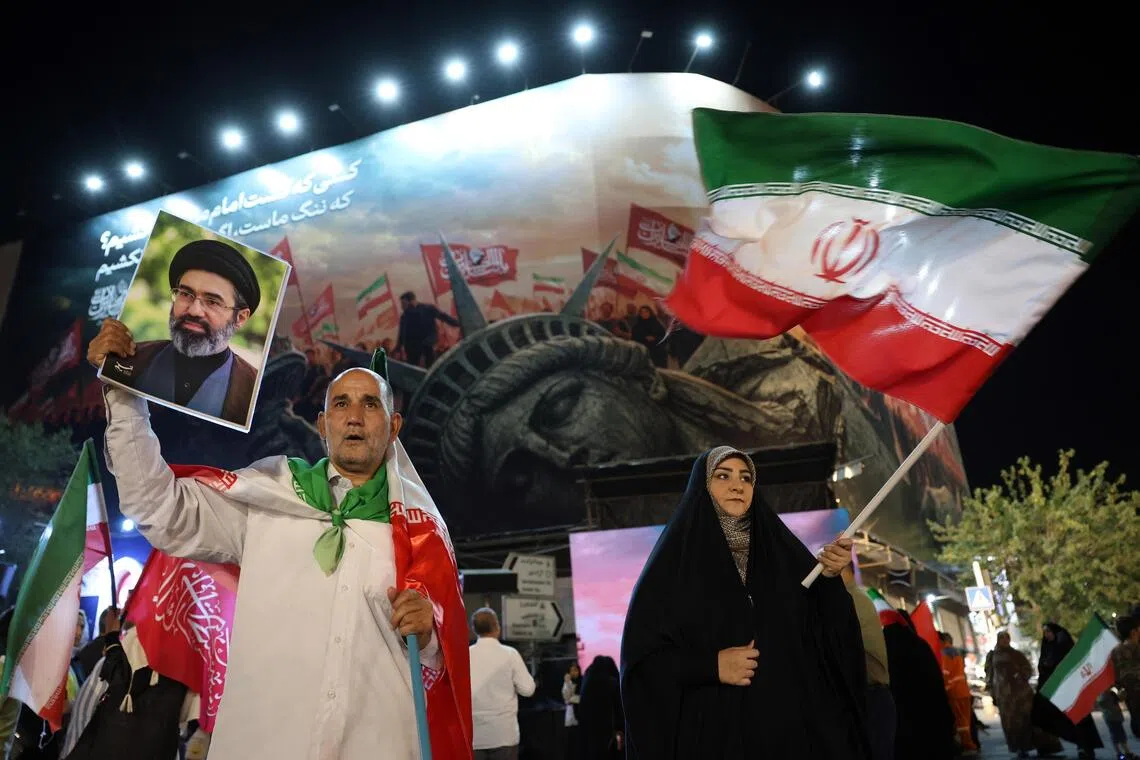
Trump's economic war has led others within the ruling establishment to strike a more defiant tone.
asserted
war → lead → tone
Iran's new security chief Mohsen Rezaei said in an interview on state TV Saturday that Iran would retaliate against countries joining Trump's economic war in a "seismic manner," by targeting tankers using alternate oil shipping routes beyond the Strait of Hormuz so that "not even a single drop of oil will leave from the region."
The war is now about who blinks first in the mutually assured economic destruction the U.S. and Iran are pursuing.
asserted
U.S. → say → destruction
Tehran believes the chaos it's unleashed in the region and Trump's changing tactics show it has gained the upper hand.
asserted
it → believe → hand
…and 2 more, not listed.
 The Aporia



.jpeg?width=1200&auto=webp&trim=0%2C0%2C0%2C0)