The Markup, now a part of CalMatters, uses investigative reporting, data analysis, and software engineering to challenge technology to serve the public good.
asserted
Markup → use → good
Sign up for Klaxon, a newsletter that delivers our stories and tools directly to your inbox.
asserted
that → sign → inbox
When Paula Stannard, one of the federal government’s top healthcare privacy officials, visited her eye doctor this year, she was asked to sign a form, acknowledging she’d received a privacy notice about how the office would use her health data.
asserted
office → visit → data
“Had I received the notice of privacy practices?
asserted
I → receive → practices
No,” she told an audience at one of the nation’s largest health industry conferences in March.
asserted
she → tell → March
“I did not want to tell them who I was and why they should not be doing that,” said Stannard, who is director of the Office for Civil Rights at the U.S. Department of Health and Human Services.
asserted
who → want → Health
“But I did write a note that says, ‘I have not received this.
asserted
I → write → this
I am not acknowledging receipt.’
asserted
I → acknowledge → receipt
Over the last year, I’ve interviewed more than 20 patients, healthcare providers, experts and advocates about the privacy forms they must sign to get care at their providers’ offices.
asserted
they → interview → offices
During my kid’s surgery, I was denied a copy of my consent form — then sent to a ghost office
Help us understand the challenges patients face opting out of voluntary uses of their data, or getting access to their records.
asserted
patients → deny → records
Time and again I was told the same thing: Across the country, from large hospital systems to small, private clinics, patients are being asked to sign waivers blindly without knowing exactly what they’re signing.
asserted
they → tell → what
When patients ask to see more, staff usually don’t have an easy way to show them.
asserted
staff → ask → them
When patients do get the forms, it tells them all the ways their medical data will be shared and reused, and some of the ways patients can refuse.
asserted
patients → get → ways
But electronic systems make it impossible to opt out on the spot, requiring follow up emails.
asserted
it → make → emails
Records sharing between unaffiliated providers through these networks can benefit patients by making their scattered records more visible to the provider who is treating them.
But it can also harm patients.
asserted
it → share → patients
Patients seeking an abortion may not want records to travel with them from a state where that treatment is legal to one where it is criminalized.
uncertain
it → seek → one
In other cases, companies, such as GuardDog, have admitted to accessing patient records “under the guise of treatment” and funneling them to personal injury law firms.
asserted
companies → admit → firms
Researchers have also found healthcare workers snooping through electronic health records.
asserted
workers → find → records
Other dangers include data breaches and serious potential for misuse, such as domestic abusers stalking their partners though the pediatric records of their children.
asserted
abusers → include → children
There’s not much patients can do to limit the risks of their data being available across networks, except by aggressively pursuing opt-outs when providers offer them.
asserted
providers → ’ → them
Turns out, that can be pretty hard to do.
asserted
that → turn → ?
Gale Oleson is a retired dermatologist in Missouri who recalled visiting the emergency room after a hand injury.
asserted
who → recall → injury
“They hand me the signature pad,” he said.
asserted
he → hand → pad
“They said, you have to sign this so we can do the procedure.
asserted
we → say → procedure
And I said, well, I don’t know what the heck I’m signing.
asserted
I → say → heck
Is it like you get my house today?
asserted
you → get → house
You know, you could be taking my car, you know, signing over my life insurance.
uncertain
you → know → insurance
And they just laugh, you know?
asserted
you → laugh → ?
In those situations, I’ve had them either turn the screen to me or I request that they print out a copy for me to review and they’ve always done it, but it’s always a ‘I forgot how a printer works’ kind of thing.”
asserted
printer → have → thing
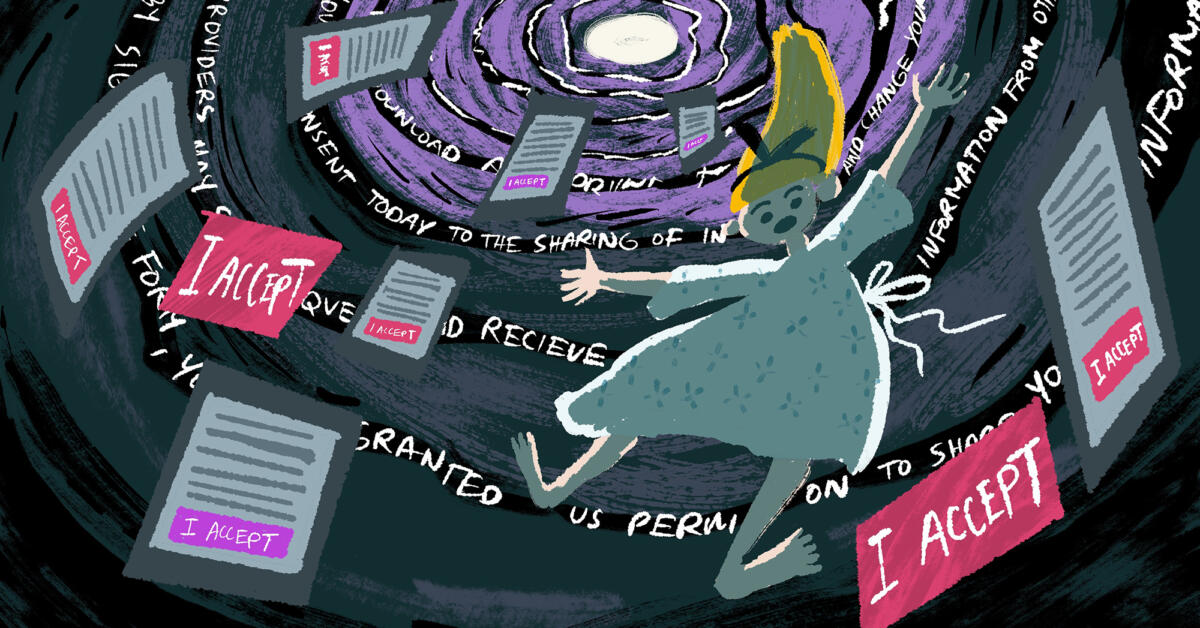
Experts have a name for this practice: “Dark patterns,” which are manipulative design choices that steer people into doing things or making decisions they otherwise would not make.
asserted
they → have → decisions
It’s easier to check the box to say that you’ve received the privacy notice, even if you haven’t.
asserted
you → ’ → notice
It’s easier to sign the digital signature box, even if you can’t see what you’re signing.
asserted
you → ’ → what
The alternative — saying you didn’t get the privacy notice, or asking repeatedly to see what you’re signing — sounds like a simple request, but can be scary for patients.
asserted
you → say → patients
Many of the patients I’ve interviewed, including a lawyer who works as a privacy advocate, told me they’re afraid that speaking up or pushing back against terms they don’t agree to will make health providers categorize them as inconvenient patients and make it harder to get the care they need.
asserted
they → interview → care
As a privacy researcher, I’ve experienced this hesitation myself.
asserted
I → experience → hesitation
Last year, I wrote about the epic lengths I went through to get a copy of the consent forms I signed when my toddler needed surgery.
asserted
toddler → write → surgery
When my child was strapped to a movable bed, the surgeon standing there at the ready, I was asked to verify my signature on a consent form.
asserted
I → strap → form
When I asked if I could have a copy of it, a nurse said she wasn’t allowed to give it to me — and sent me to a ghost office at another hospital to search for it.
uncertain
she → ask → it
In the moment, I let it go, so I wouldn’t hold up the surgery.
asserted
I → let → surgery
Later, after asking multiple people for help, I was finally able to get a copy.
asserted
I → ask → copy
…and 119 more, not listed.
 The Aporia