That is 0 articles you have read today.
The Aporia is free and carries no advertising, so readers are the only
thing paying for it. If you are getting this much out of it, a small
donation is what keeps it independent.
Daily limit reached
You have read 0 articles today.
That is more than the 15 a day The Aporia gives away,
and well past what it can carry on nothing. Your allowance resets at
midnight.
There is no advertising here and nothing about you is sold, so readers
are the only thing paying for it. If the site is worth this much of
your day, it is worth a few dollars.
Everything else stays open: the
maps, the
directory and
search do
not count against this, and neither does re-opening something you have
already read today.
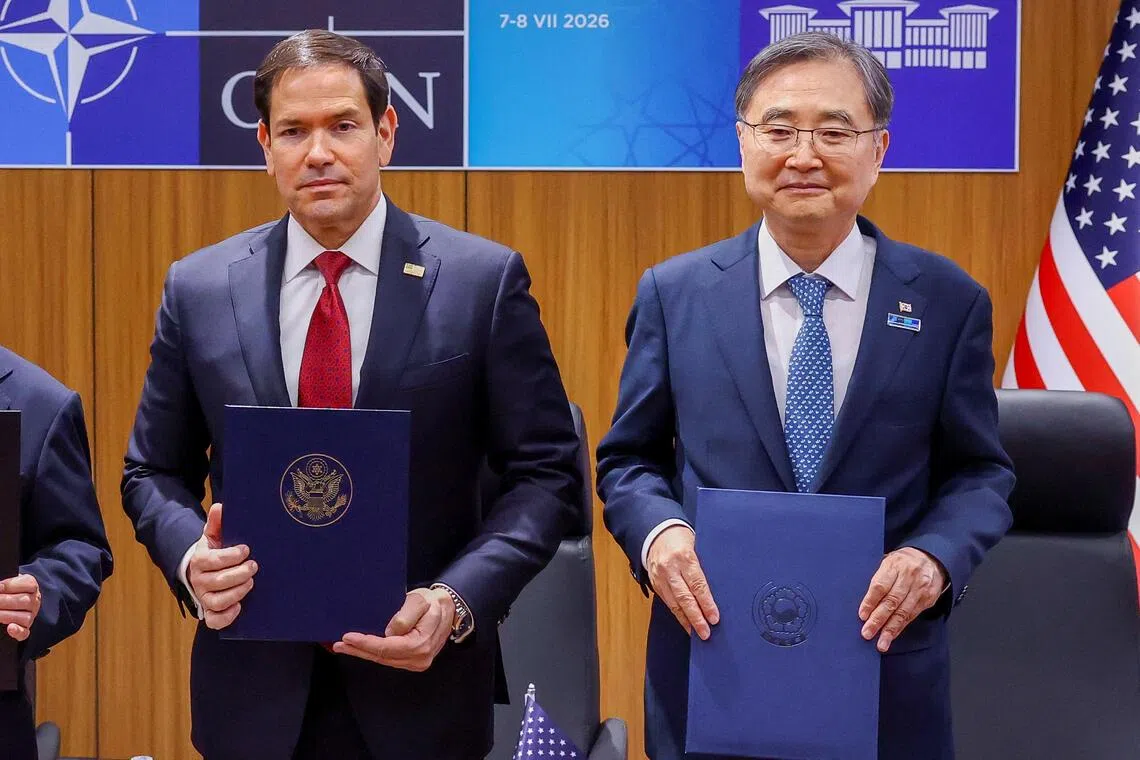
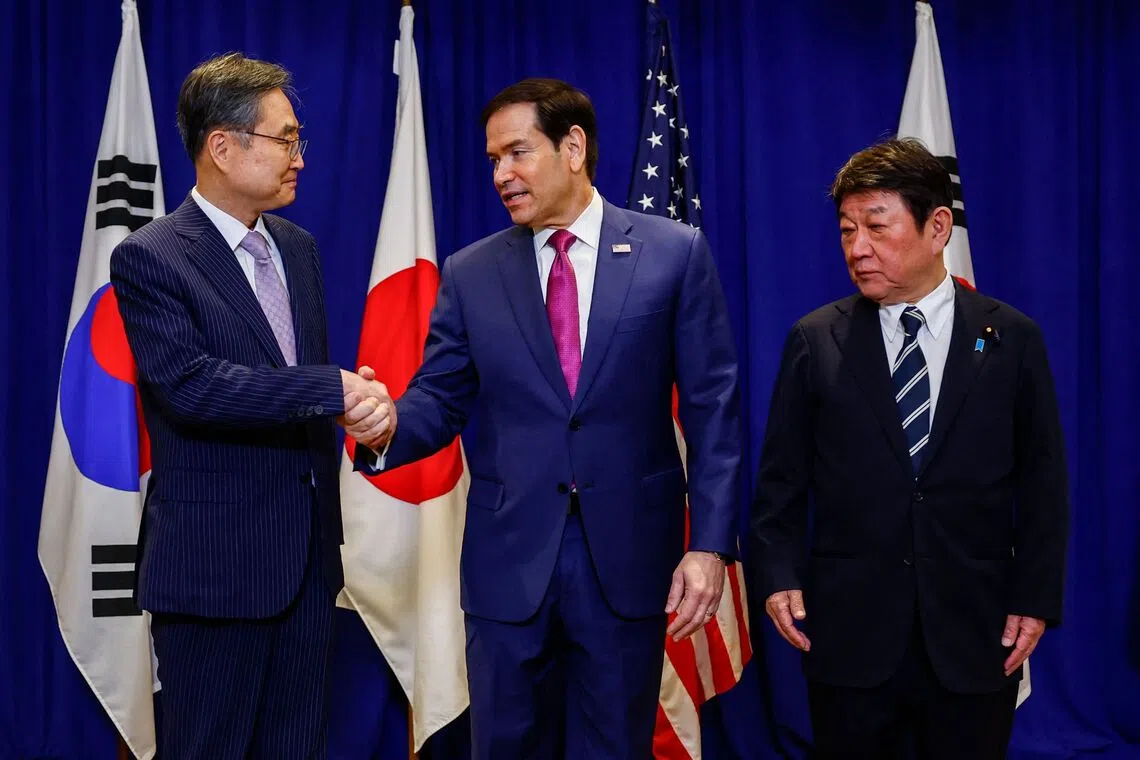
South Korean Foreign Minister Cho Hyun met with US Secretary of State Marco Rubio on September 18 to discuss Seoul's role in Middle East security and delays in South Korea’s $350 billion investment commitments to the United States under a trade deal from 2025. The meeting addressed concerns over Iran, freedom of navigation in the Strait of Hormuz, and the need for fair business practices. President Lee Jae Myung stated that Seoul would review its role in Middle East security but ruled out deploying military assets. Additionally, both sides discussed North Korea's denuclearization and potential summit meetings between US and North Korean leaders.
Written locally by qwen2.5:14b on 2026-09-19,
using this article's own text rather than the other coverage of the
same event (that is the story summary below).
Story summary
On September 18, South Korean Foreign Minister Cho Hyun met with US Secretary of State Marco Rubio in Washington to discuss delayed South Korean investments in the US and Seoul’s role in Middle East security. Recent tensions have arisen over what US President Donald Trump described as a lack of support from South Korea for US efforts to pressure Iran. The two countries are yet to finalize agreements on $350 billion (S$447 billion) in South Korean investments pledged under a trade deal reached previously. During the meeting, Cho assured Rubio that South Korea is willing to contribute to restoring freedom of navigation in the Strait of Hormuz, though specifics were not elaborated upon. Both sides agreed on the need for swift execution of investment commitments and ongoing collaboration across strategic sectors like semiconductors.
Written for “South Korea Us Diplomatic Talks” on 2026-10-04,
grounded in this article and the 0 other(s) covering the same event.
South Korea, US discuss Seoul’s role in Middle East, investment pact
asserted
Korea → discuss → East
South Korean Foreign Minister Cho Hyun met US Secretary of State Marco Rubio on Sept 18 as the long-time allies grappled with delayed South Korean investments in the United States and Seoul’s role in Middle East security.
asserted
allies → meet → security
US President Donald Trump has criticised Seoul in recent weeks over what he described as a lack of South Korean support for US efforts to pressure Iran.
asserted
he → criticise → Iran
The two countries have also yet to finalise agreements governing US$350 billion (S$447 billion) in South Korean investments pledged under a trade deal reached in 2025.
asserted
countries → finalise → 2025
Cho explained to Rubio Seoul’s willingness to make a substantive contribution to restoring freedom of navigation in the Strait of Hormuz, the ministry said in a statement without elaborating.
asserted
ministry → explain → statement
On Seoul’s investment commitments, Rubio stressed their swift execution, the US State Department said, while South Korea’s foreign ministry said Rubio and Cho agreed to keep communicating to ensure ongoing consultation plans “bear good fruit”.
asserted
plans → stress → fruit
Rubio and Cho also pledged ongoing collaboration across key strategic sectors including semiconductors, the State Department said, while Rubio underscored the need for a fair and transparent business environment for US companies in South Korea.
asserted
Rubio → pledge → Korea
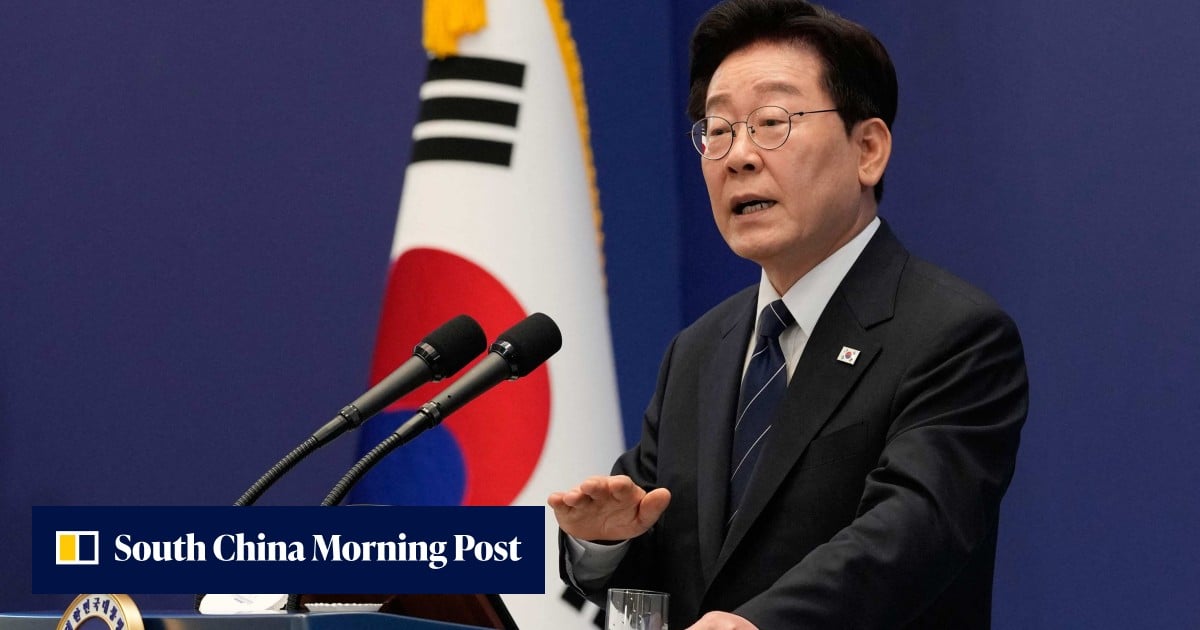
South Korean President Lee Jae Myung, who is due in the United States next week for the UN General Assembly, said on Sept 18 he would not deploy military assets to the Middle East in a way that could draw the country into conflict.
uncertain
that → say → conflict
However, he said Seoul was reviewing whether to play a greater role in safeguarding navigation in the region.
asserted
Seoul → say → region
Cho said before leaving Seoul on Sept 17 that investment plans under its trade deal had been delayed while procedural issues were clarified, without elaborating.
asserted
issues → say → deal
Lee told a news conference on Sept 18 that concerns over the commercial viability of the package had become a sticking point in negotiations, although the two sides were nearing an agreement.
asserted
sides → tell → agreement
He said some elements of the package were difficult for Seoul to accept, but the government would continue discussions to ensure any deal protects South Korea’s interests while benefiting both countries and the broader US-South Korea relationship.
asserted
deal → say → relationship
Seoul committed in 2025 to invest in US manufacturing in return for lowering tariffs on imports from South Korean to 15 per cent.
asserted
Seoul → commit → cent
Lee said Seoul had insisted on including a reference to “commercially reasonable” investments in the text of the agreement.
asserted
Seoul → say → agreement
North Korea also featured in the talks, amid speculation over a possible summit between Trump and North Korean leader Kim Jong Un.
asserted
Korea → feature → Trump
Rubio and Cho reaffirmed their commitment to the complete denuclearisation of North Korea, the State Department said, while Cho said Seoul would actively support the resumption of talks between Washington and Pyongyang, according to the ministry.
uncertain
Seoul → reaffirm → ministry
President Lee said on Sept 18 it was possible for a summit meeting between Kim and Trump to take place in coming months, but it remained uncertain.
asserted
it → say → months
 The Aporia