Iran's 'new Hezbollah:' How powerful are the Houthis now?

Read the original at Deutsche Welle ↗
Deutsche Welle · collected 2026-09-18 · by Cathrin Schaer

Quick Summary

Recent military gains by the Houthi rebel group in Yemen have drawn praise from Iranian hardline newspapers, suggesting the group's growing influence within Iran's "axis of resistance." The Houthis now control more territory along the Red Sea, posing a threat to regional oil exports. Experts suggest that the Houthis might be surpassing Hezbollah as the most potent force in this network due to their recent success in downing a Saudi F-15 fighter jet with a modified missile, unlike any achievement by Hezbollah recently.
Written locally by qwen2.5:14b on 2026-09-18, using this article's own text rather than the other coverage of the same event (that is the story summary below).

AI analysis runs on qwen2.5:14b, locally

Story summary

In recent developments, Houthi rebels in Yemen have significantly expanded their territorial control by capturing additional areas along the coast and several islands in the Red Sea, according to a report from the Institute for the Study of War. This move positions them as increasingly influential members within Iran's "axis of resistance," alongside groups like Hezbollah and Hamas, which are typically aligned with Iranian interests but rarely engage in such aggressive military actions.

The Houthi offensive marks a shift since late February 2026 when Iran, Israel, and the US began clashing directly. Previously, the Houthis stayed largely out of these conflicts; now they're actively participating and even surpassing other groups' capabilities. For instance, earlier this week, Houthi forces successfully downed a Saudi F-15 fighter jet using a modified missile. This event underscores their growing military prowess beyond what groups like Hezbollah have achieved.

These actions are seen as part of Iran's broader strategy to control key maritime routes for regional oil exports through the establishment of an "axis of resistance-controlled" sea, potentially impacting global energy markets and international shipping lanes in critical ways.

Written for “Houthis Power In Yemen” on 2026-10-05, grounded in this article and the 1 other(s) covering the same event.

Signals How these are calculated →

Claims extracted
52
claim-shaped sentences
Uncertain
6%
3 of 52 hedged
Leaning
withheld
no quote in the article backed the model's score
Correction & hedging signals
95.2
corrections and hedging in what we collected; not a measure of accuracy
Outlets on this story
2
Politics
Narrative spread
2
articles carrying this framing
Analyzed 2026-09-18 · how these are computed

Story

📰 Houthis Power In Yemen
Politics · 2 article(s) covering the same event. See how they differ ↓

How this is being covered How these are calculated →

Article leaning vs. publisher reliability
Source leaning vs. consistency

Compared with similar articles

This article reads unscored and hedges 6% of its claims. Each row says how that neighbour differs.
Deutsche Welle · 0.88 cosine similarity
⚖️ leaning not scored 🔴 6% hedged 3 of 51 📰 publisher trust 95
“Both articles describe a small crowd marching down an Iraqi street with signs similar to those used by the Houthi group, indicating the same incident and time frame.”
Semafor
⚖️ Leans right 🔴 0% hedged 0 of 4 📰 publisher trust 95
“The articles describe different events: one focuses on military pressure against Saudi Arabia from Iranian-backed groups, while the other discusses a demonstration in Iraq showing solidarity with the Houthis and Iran.”
Houthi Defeat Is Closer Than We Think different event · 95%
The Free Press
⚖️ Leans strongly right 🔴 0% hedged 0 of 12 📰 publisher trust 96
“The articles describe different events: one about Houthi advances and drone attacks in Yemen and Saudi Arabia, while the other discusses a protest march by Iraqi paramilitaries.”
CBC News
⚖️ Leans left 🔴 10% hedged 3 of 29 📰 publisher trust 60
“Article A describes military actions and a travel warning related to conflict between Saudi Arabia and Houthis in Yemen, while Article B discusses the broader context of Iranian support for Houthi rebels and similar protests by Iraqi paramilitaries.”
The Straits Times
⚖️ Leans left 🔴 3% hedged 1 of 32 📰 publisher trust 59
“Article A describes a military offensive by Houthi forces in Yemen, while Article B discusses the broader context of Iranian influence and similar actions among allied groups in Iraq.”
The Hindu
⚖️ Leans left 🔴 0% hedged 0 of 11 📰 publisher trust 60
“The articles describe different aspects of ongoing conflicts involving the Houthis but do not refer to the same specific incident.”
Al Jazeera
⚖️ Leans left 🔴 19% hedged 6 of 32 📰 publisher trust 60
“The articles describe different events: one is about a demonstration in Iraq supporting the Houthis, while the other describes ongoing battles and tensions involving the Houthis in Yemen.”
Semafor
⚖️ leaning not scored 🔴 14% hedged 1 of 7 📰 publisher trust 95
“The articles describe different aspects of tensions between Iran-backed Houthis and Saudi Arabia, but do not focus on the same specific incident or time frame.”
Euronews
⚖️ leaning not scored 🔴 12% hedged 2 of 17 📰 publisher trust 60
“Article A describes a march in Iraq with signs similar to those used by Houthi rebels, while Article B discusses security alerts issued due to attacks by Houthis on Saudi Arabia.”
Al Jazeera
⚖️ leaning not scored 🔴 0% hedged 0 of 8 📰 publisher trust 60
“The articles describe different aspects related to conflicts involving Iran-backed Houthis and Saudi Arabia but do not refer to the exact same incident or occurrence.”

Publisher

Deutsche Welle · 330 article(s) · 0 correction(s) detected
No corrections detected for this publisher. That may mean careful reporting, or simply that nothing has been checked.

Who wrote this

Cathrin Schaer
7 article(s) here · 1 carrying a prediction
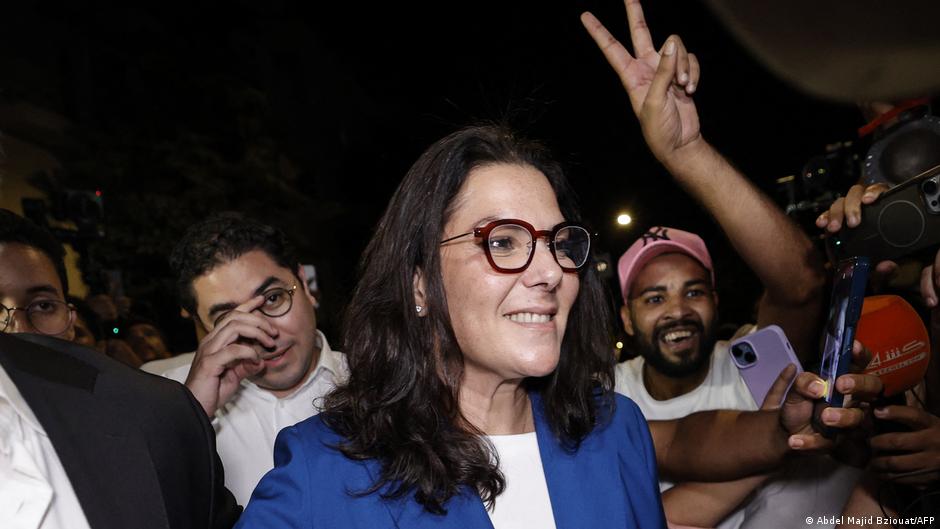
🔮 After the announcement that Morocco would appoint its first female head of government – Marrakech mayor Fatima Zahra Mansouri – citizens interviewed by local television reporters were mostly enthusiastic.
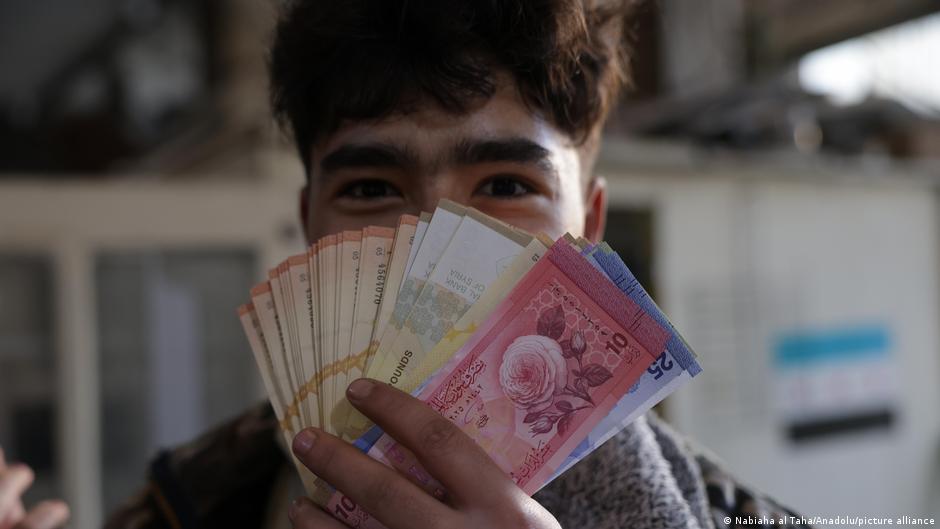
🔮 There are regular reports about billion-dollar, international investments and projects and, speaking at the Arab Media Summit in Dubai on Tuesday, Syrian President Ahmad al-Sharaa predicted Syria's economy would be worth around $50 billion (approx. €44 billion) this year, up from around $20 billion in 2024.
2026-09-23 · assertive framing · Is Syria's 'new' economy for the rich only?
🔮 And the Houthis now appear to be doing things that Hezbollah couldn't — for example, bringing down a Saudi F-15 fighter jet this week using a missile the group said it modified itself.
2026-09-20 · assertive framing · Yemeni militants: How powerful are the Houthis now?
🔮 And the Houthis now appear to be doing things that Hezbollah couldn't — for example, bringing down a Saudi F-15 fighter jet this week using a missile the group said it modified itself.
🔮 If you don't, maybe we will take her to the house of the sisters,"
2026-09-09 · assertive framing · Syria: How the 'house of sisters' threat split society
🔮 A spokesperson sent DW a statement similar to one previously sent to other media outlets and human rights organizations that said Israel detains Syrians that it suspects might wish it harm.
2026-08-21 · assertive framing · Why is Israel's military presence growing in Syria?
🔮 In July, authorities in the United Arab Emirates made a headline-grabbing offer: If UAE residents could entice visitors there between July and October this year, the residents would qualify for a package of perks worth around $800.
2026-08-18 · assertive framing · UAE economy: On the brink or bouncing back?
Also by Cathrin Schaer
Is Syria's 'new' economy for the rich only?
2026-09-23 · Deutsche Welle
Nothing else under this byline is closely related to this article, so these are simply their most recent.
All 7 articles by Cathrin Schaer →

Topics

Hezbollah Houthi Houthis Iran Yemen

Subjects

Hezbollah ORG · 13× Houthis NORP · 9× Iran GPE · 8× Israel GPE · 8× Houthi NORP · 6× Yemen GPE · 5× Iraqi NORP · 3× Lebanon GPE · 3× Saudi Arabia GPE · 2× Yemeni NORP · 2×

Narrative

However their latest military campaign, which has seen Houthi fighters take further control of the Yemeni coast and several islands in the Red Sea, "sets up conditions to establish… an axis of resistance-controlled body of water as part of [an] effort to assert control over regional oil exports," US-based research organization the Institute for the Study of War explained last week.
framing: assertive · carried by 2 article(s) · first seen 2026-09-18
🔮 And the Houthis now appear to be doing things that Hezbollah couldn't — for example, bringing down a Saudi F-15 fighter jet this week using a missile the group said it modified itself.
2026-09-18 · Deutsche Welle
Iran's 'new Hezbollah:' How powerful are the Houthis now? · assertive framing
2026-09-20 · Deutsche Welle
Yemeni militants: How powerful are the Houthis now? · assertive framing

Claims (52 extracted, 3 hedged)

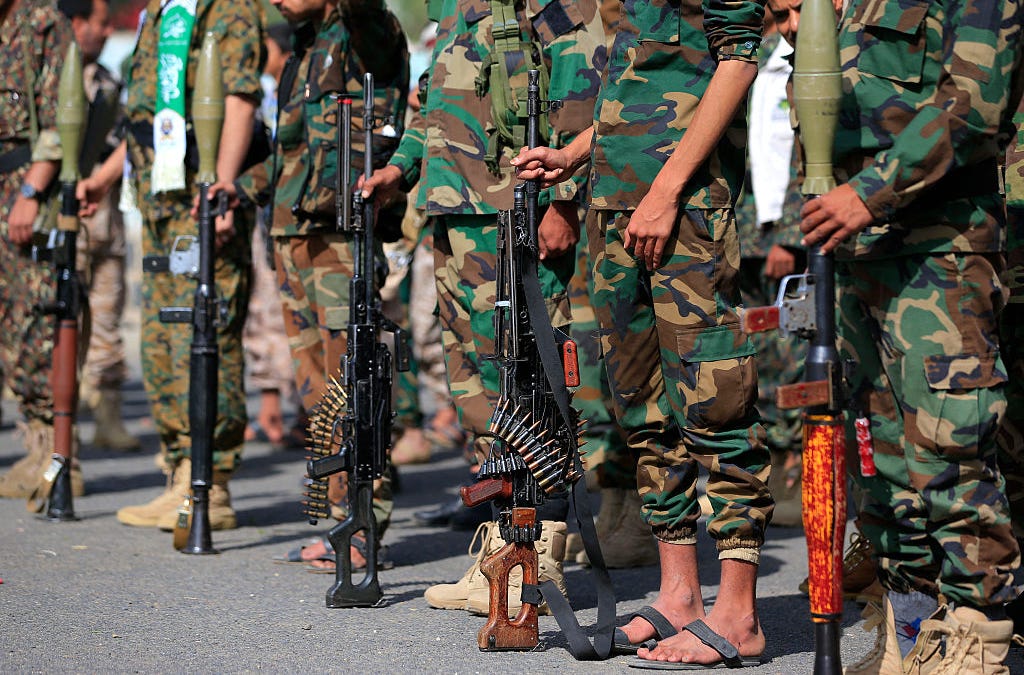
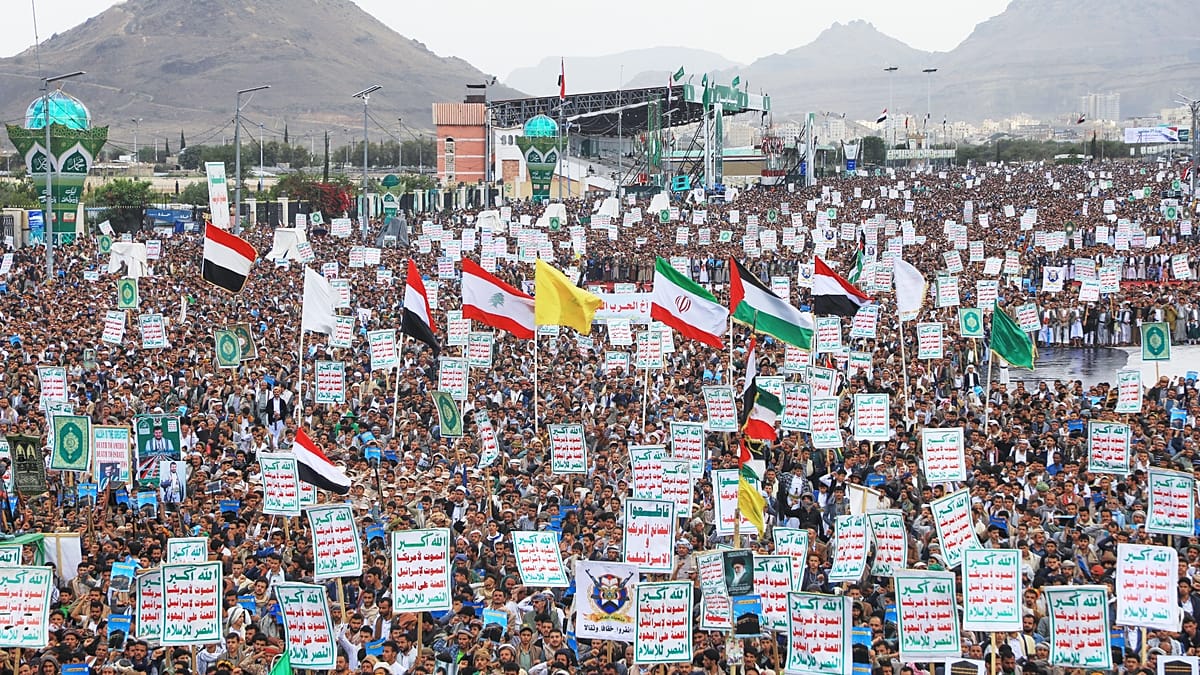
After recent events in Yemen, a small crowd marched down an Iraqi street holding signs that were almost identical to those seen not too long ago further south. asserted
that → march → those
The signs said, "death to America" and insulted Saudi Arabia and Israel, with slogans very similar to those used by the Houthi rebel group in Yemen. asserted
signs → say → Yemen
Both the Iraqi paramilitaries and the Houthi group in Yemen are part of what is known as the "axis of resistance" in the Middle East, groups supported by Iran that often act at Iran's behest. asserted
that → know → behest
After the US and Israel began attacking Iran in late February 2026, "axis of resistance" members responded by targeting sites associated with the US or Israel. asserted
members → begin → US
But up until recently, the Houthi group had remained more or less on the sidelines. asserted
group → remain → sidelines
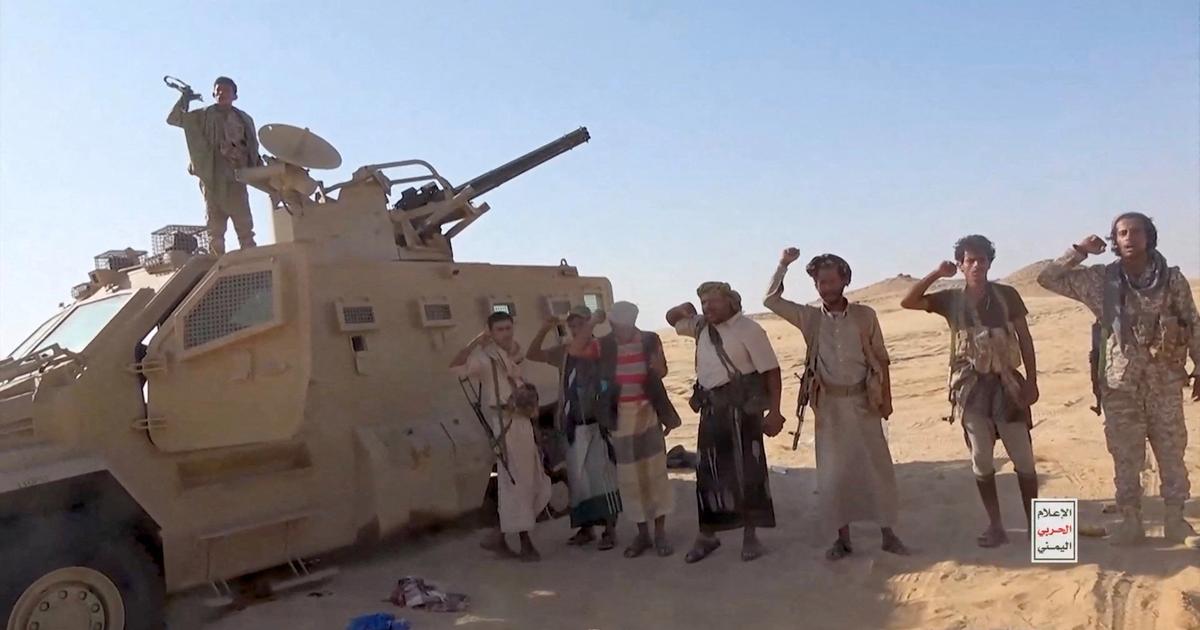
However their latest military campaign, which has seen Houthi fighters take further control of the Yemeni coast and several islands in the Red Sea, "sets up conditions to establish… an axis of resistance-controlled body of water as part of [an] effort to assert control over regional oil exports," US-based research organization the Institute for the Study of War explained last week. asserted
fighters → see → War
Iran and the US are already fighting for control over the Strait of Hormuz, another important waterway for oil exports and trade. asserted
Iran → fight → exports
In Iran, hardline regime-supporting newspapers published laudatory articles about the Houthis' territorial gains. asserted
newspapers → support → gains
The gains "greatly increased the weight of Sanaa [the Yemeni capital, under Houthi control] as a branch of resistance in the ongoing regional war," one of Iran's most conservative newspapers, Kayhan, wrote. asserted
one → increase → newspapers
Supporters of the Iranian government have been holding nightly gatherings in major cities across the country since the US-Iran war began and this week, at the 200th such event, crowds chanted "you are my soul, O Yemen!" asserted
you → hold → event
This was the kind of praise previously lavished on another "axis of resistance" group, Hezbollah. asserted
This → lavish → group
But Hezbollah's armed faction, degraded by recent Israeli attacks and the loss of their base in Syria, looks less intimidating these days. asserted
faction → degrade → Syria
And the Houthis now appear to be doing things that Hezbollah couldn't — for example, bringing down a Saudi F-15 fighter jet this week using a missile the group said it modified itself. asserted
it → appear → missile
Hezbollah has managed to shoot down large Israeli drones and has targeted fighter jets but never hit any. asserted
Hezbollah → manage → any
Could the Houthis be taking Hezbollah's place as the potentially most important and possibly even more dangerous force in the "axis of resistance?" uncertain
Houthis → take → resistance
The Houthis haven't had to fight Israel — they are too far away geographically. asserted
they → have → Israel
"But I think they [the Houthis] have become more valuable than Hezbollah could ever be," says Farea al-Muslimi, a research fellow focused on Yemen at UK think tank Chatham House. uncertain
Muslimi → think → House
"Of course, Hezbollah had decades of experience and was the one who built the Houthis' capacity over years. asserted
who → have → years
But the Houthis have now exceeded them. asserted
Houthis → exceed → them
" The Houthis are "increasingly performing a similar strategic function for Iran [as Hezbollah] and in some respects a more useful one," confirms Andreas Krieg, a senior lecturer at the School of Security Studies at King's College London. asserted
Krieg → perform → London
"Hezbollah gave Tehran deterrence against Israel from Lebanon. asserted
Hezbollah → give → Lebanon
The Houthis give Iran leverage over Saudi Arabia, Israel and global shipping," he told DW. asserted
he → give → DW
"So I think their strategic importance to Tehran has risen sharply as Hezbollah has come under much greater pressure." asserted
Hezbollah → think → pressure
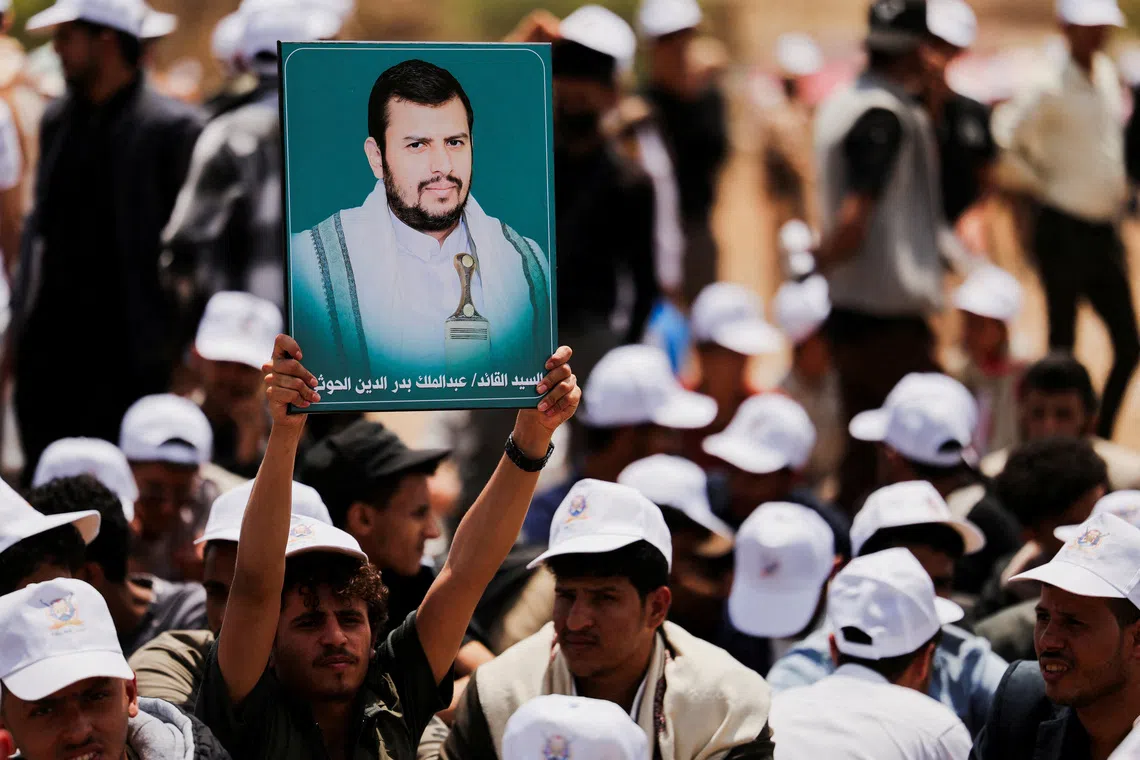
Al-Muslimi notes that Houthi leaders, including current chief Abdul Malik al-Houthi, were devoted fans of Hezbollah leader Nassan Hasrallah, killed by Israel in 2024 and seen as a hero because of his organization's part in forcing Israel to withdraw from Lebanon in 2000. asserted
leaders → note → 2000
"You can see how he even tries to imitate Nasrallah in his speeches," al-Muslimi, who co-founded the Sanaa Center for Strategic Studies, asserted
who → see → Studies
"And now Abdul Malik al-Houthi has more leverage than Nasrallah ever had." asserted
Nasrallah → have → leverage
Nasrallah was once seen as "the fixer" for the "axis of resistance," he notes, a leader who acted as a conduit between the different factions, giving orders to Iran-supported fighters in Lebanon, Yemen and Syria. asserted
who → see → Lebanon
Al-Houthi is likely moving into that role now, al-Muslimi believes, pointing to the fact that one recent attack on Saudi pipelines actually came from Iraqi axis members. asserted
attack → move → members
Unlike with Hezbollah though, there's still disagreement over exactly how much control Iran has over them. asserted
Iran → be → them
A review of press by the Iraq-based outlet Amwaj showed that while Iranian media celebrated Houthi gains as a victory for Iran's "axis of resistance," Houthi-run channels were more focused on their own fight against Saudi Arabia, which has set up a blockade on Houthi-controlled territories. asserted
which → base → territories
Krieg believes the biggest difference between the Houthis and Hezbollah is autonomy. asserted
difference → believe → Houthis
"The Houthis… have their own leadership, ideology, domestic constituency and territorial project," he pointed out. asserted
he → have → leadership
"Tehran can enable them, arm them and benefit from their actions, but it cannot necessarily switch them on and off at will." asserted
it → enable → will
Other observers note that in the past, the Houthis moved ahead with certain military plans despite objections from Iran. asserted
Houthis → note → Iran
Tehran has also denied having anything to do with this latest campaign. asserted
Tehran → deny → campaign
He says that over the past two years, the Houthis have come a lot closer to Iran. asserted
Houthis → say → Iran
There are regular reports of Iran sending sophisticated weaponry to the Houthis. asserted
Iran → be → Houthis
In July, sources inside Iran told Reuters news agency that Iranian leadership had discussed with the Houthis having them close off the Bab el-Mandeb Strait. asserted
them → tell → Strait
"Even as Houthi leaders frame their actions in local terms, their alignment with Tehran appears to have tightened," Allison Minor, previously the US deputy special envoy for Yemen, said in Foreign Affairs magazine last week. asserted
Minor → frame → magazine
Can the Houthis be beaten? asserted
Houthis → beat → ?
…and 12 more, not listed.

💬Give feedback
🕘History 🎫Support