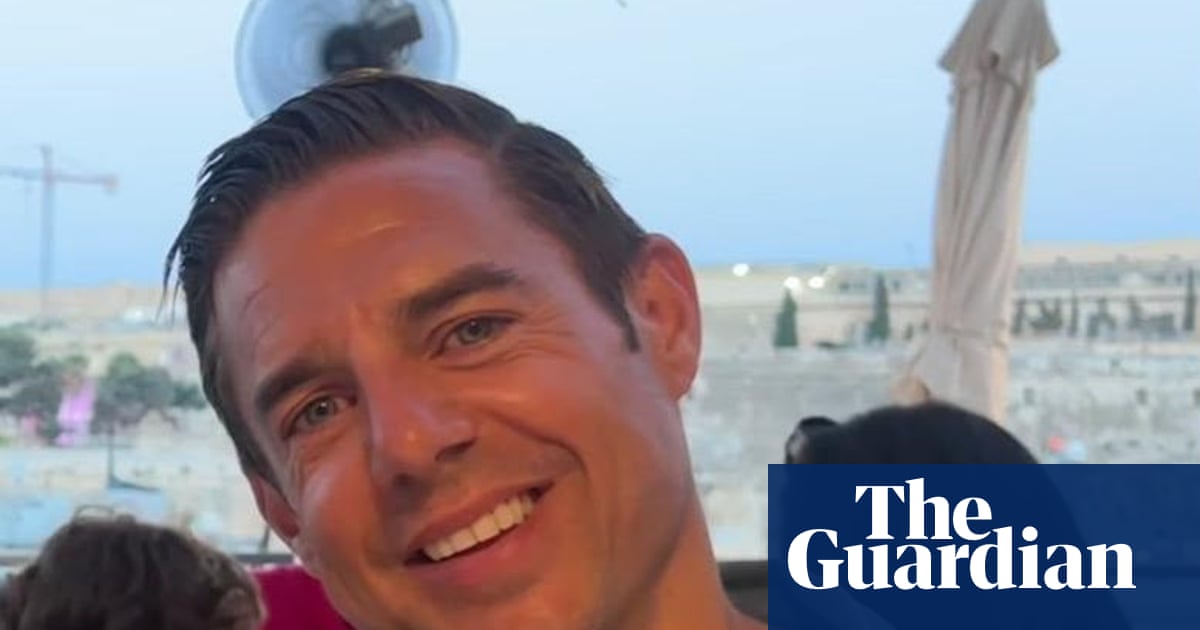
Until his arrest in June this year, Nicholas Brandram appeared to be living the most charmed of lives.
asserted
Brandram → appear → lives
Dashing and debonair, his colleagues in the City used to joke that the decorated former Army captain, who was a direct descendant of Queen Victoria, looked so good in the tailored suits he wore to work that he was in the running to be the new James Bond.
Those who knew the 44-year-old millionaire banker were utterly stunned when he emerged as the prime suspect in the notorious ‘Putney Pusher’ case.
asserted
he → use → case
How on earth was it possible that a man described as an ‘officer and a gentleman’, whose life had been defined by duty, honour and sacrifice, could be the male jogger who appeared in grainy CCTV footage recorded on Putney Bridge nearly a decade ago, randomly pushing a 33-year-old woman off the pavement and headlong into the path of a bus?
uncertain
who → describe → bus
In the wake of Brandram’s suicide on Tuesday evening, serious questions are being asked about the police investigation into that baffling incident in 2017 and how Brandram, whose Greek princess grandmother was Queen Victoria’s last surviving great-grandchild, suddenly found himself at the centre of it.
asserted
himself → ask → it
His devastated family claim he killed himself ‘after months of immense pressure’ which also saw him suspended from his role as senior relationship manager at HSBC Private Bank.
uncertain
him → claim → Bank
‘He lived with the shame, anxiety, humiliation and extraordinary pressure created by a wholly unnecessary investigation,’ they said in a searing, grief-laden statement on Thursday which directly pointed the finger of blame for Brandram’s death at the Metropolitan Police.
asserted
which → live → Police
Just hours later, the Independent Office for Police Conduct (IOPC) said it had received a ‘mandatory referral’ from the force.
asserted
it → say → force
Nicholas Brandram at City of London Magistrates’ Court in October 2013, where he pleaded guilty to driving without due care and attention and failing to stop following an accident, after knocking a female cyclist off her bike while riding his Harley-Davidson past Hyde Park Corner
Nicholas Brandram fought in Afghanistan.
asserted
Brandram → plead → Afghanistan
Army colleagues believe he was suffering from PTSD, which had a knock-on effect on personal relationships
His sisters Sophie Voelcker, 45, and Alexia Hicks, 40, said their family had ‘put faith in the justice system’ but felt let down.
asserted
family → believe → system
They claim their brother was awaiting a DNA test before his death which they believe would have cleared him and that he had told them just before he took his life that ‘this investigation was murdering him’.
uncertain
investigation → claim → him
More, later, of Brandram’s family’s insistence that he was not ‘the Putney Pusher’ and there was ‘no credible evidence that he was the man shown in the footage’.
asserted
he → be → footage
This week, friends, colleagues and former Army comrades told the Daily Mail how the father-of-one was initially confident that detectives would quickly realise they’d got the wrong man – not realising the investigation would drag on.
asserted
investigation → tell → man
He’d lived in Fulham with his first wife before they divorced in 2014, although his family say he’d moved to Notting Hill Gate by the time of the pushing incident in 2017.
asserted
he → live → 2017
Another source said he regularly went for an early morning run before work.
asserted
he → say → work
At the time, he worked for Bank Leumi, which had offices near Bond Street in the West End.
asserted
which → work → End
He was arrested in June at his £1.4m home in Chiswick, in west London, which he’d bought in 2018.
asserted
he → arrest → 2018
He told one friend how he ‘walked out of his door and was suddenly set upon and handcuffed and taken to the station’.
asserted
he → tell → station
‘Nick said that all the way there, he was in the dark about what he was being arrested for,’ said the friend.
asserted
friend → say → what
‘When the police told him at the station that it was on suspicion of being the Putney Pusher, he said: “I punched the air with relief because I knew it wasn’t me.
asserted
it → tell → relief
He said he knew he was in the clear and so had nothing to worry about.’
asserted
he → say → nothing
As the months went by his early bullishness gave way to despair, particularly following his suspension from HSBC.
asserted
bullishness → go → HSBC
He separated from his second wife last year and was said to be worried, too, about the impact the ongoing investigation might have on his relationship with his three-year-old son.
uncertain
investigation → separate → son
He told one who met with him just a week before he died: ‘Everyone knows that I’ve been accused, but I didn’t do it.’
asserted
I → tell → it
He cited as proof the fact that, unlike the figure in the CCTV, he had a withered calf dating back to his time in the Army and a prominent tattoo on his forearm – although admittedly on a section of his arm which would not have been visible in the image.
asserted
which → cite → image
‘Over the last couple of weeks, the strain of being the most hated man in Britain was taking its toll, even if he appeared to be stoical,’ says the friend.
asserted
friend → hat → toll
Even though he was never named in the Press ‘everyone knew who he was because it was all over social media,’ they said.
asserted
they → name → media
‘It was weighing on his mind constantly but he swore blind to the end that it wasn’t him.’
asserted
it → weigh → end
If most knew Brandram as an ebullient character with a ready smile, then there was also a darker, more introspective side to his character, a legacy of the psychological trauma he suffered after commanding troops in Afghanistan, Bosnia and Iraq.
asserted
he → know → Afghanistan
Aged 22, he passed out from Royal Military Academy Sandhurst with flying colours in August 2005 – a year ahead of Princes William and Harry.
asserted
he → age → William
But just 12 months on, in August 2006, his closest Sandhurst friend, Ralph Johnson, was killed in Afghanistan’s Helmand Province by a rocket-propelled grenade when the Taliban ambushed the armoured car in which he was travelling.
asserted
he → kill → which
‘He was absolutely inconsolable at losing Ralph,’ a former Army comrade told the Daily Mail this week.
asserted
comrade → lose → Ralph
‘They considered themselves indestructible, as most young recruits do.
asserted
recruits → consider → ?
As well as 24-year-old Johnson, Brandram also lost the man he considered a father figure while commanding an infantry platoon in Helmand, when his second in command, 42-year-old Colour Sergeant Alan ‘Cammy’ Cameron, was hit by an improvised explosive device in Lashkar Gah in April 2010.
asserted
second → lose → April
Paying tribute to Cameron, who succumbed to his injuries in hospital nearly a year later, Brandram said: ‘The sadness with which I mourn his loss is only matched by the joy and appreciation I had in working with and knowing him.’
Brandram, who was educated privately at Stowe School and studied philosophy and psychology at Newcastle University, resigned his commission soon after the Scots Guards’ 2010 Afghanistan tour, swapping his life in uniform, as many former officers do, for a career in the City.
In 2012 he was awarded a Queen Elizabeth II Diamond Jubilee Medal in recognition of his military service.
asserted
he → pay → service
After leaving the Army he worked at stockbroker Killik & Co.
asserted
he → leave → Killik
He moved to Israel’s Bank Leumi before moving to HSBC where he managed the assets of wealthy individuals.
asserted
he → move → individuals
He was nominated as Private Banker of the Year 2026.
asserted
He → nominate → Year
A former colleague describes him as ‘a very archetypal posh ex-Army bloke’.
asserted
colleague → describe → bloke
‘He was very well-turned out, competitive, sporty, had a good sense of humour.
asserted
He → turn → humour
I remember him being described as Captain Charm Offensive.’
asserted
him → remember → Offensive
…and 65 more, not listed.
 The Aporia