Photo via Semafor

AI cybersecurity risks explode as Claude used to break into ChatGPT

Read the original at Semafor ↗
Cite

Rao, P. (2026, September 18). AI cybersecurity risks explode as Claude used to break into ChatGPT. Semafor. https://www.semafor.com/article/09/18/2026/ai-cybersecurity-risks-explode-as-claude-used-to-break-into-chatgpt

Dated when The Aporia collected the article, usually within hours of publication. Check the original for its exact date and byline.

Semafor · collected 2026-09-18 · by Prashant Rao

Quick Summary

Researchers utilized Anthropic’s Claude technology to successfully breach OpenAI’s ChatGPT systems, highlighting the immediate cybersecurity threats posed by advanced AI tools. The incident, which was part of a bug-hunting initiative, underscores growing concerns among business leaders and former government officials about AI-facilitated cyberattacks targeting critical infrastructure. According to recent research, these breaches are largely due to inadequate security measures rather than the emergence of superintelligent systems as some experts fear.
Written by AI on 2026-09-18, from this article's own text only (the story summary below draws on all the coverage).
See how they differ ↓

AI analysis

Story summary

In September, cybersecurity researchers at Hacktron AI used Anthropic’s Claude chatbot to breach OpenAI’s internal systems, gaining access to employee accounts and an internal GitHub repository. The researchers discovered a flaw in OpenAI's public help forum hosted by Discourse, which they exploited within 72 hours. They reported the issue immediately, and OpenAI fixed it within 14 hours while paying Hacktron a $6,500 bounty. The incident highlights how quickly AI can be repurposed for cyberattacks, despite efforts to ensure ethical use through bug-hunting programs like this one.

Written for “AI Breach Risks” on 2026-11-18, grounded in this article and the 7 other(s) covering the same event.

How they differ

7 outlets covered “AI Breach Risks”.

What each outlet says

One AI summary per outlet of its latest article on this story, written from that article alone and checked against it. Open the article for the outlet's own words.

SemaforThis outlet18 Sep

Researchers utilized Anthropic’s Claude technology to successfully breach OpenAI’s ChatGPT systems, highlighting the immediate cybersecurity threats posed by advanced AI tools. The incident, which was part of a bug-hunting initiative, underscores growing concerns among business leaders and former government officials about AI-facilitated cyberattacks targeting critical infrastructure. According to recent research…

AI cybersecurity risks explode as Claude used to break into ChatGPT (this article)

CBS News19 Sep

Hacktron AI researchers claim to have exploited vulnerabilities in OpenAI's ChatGPT using Anthropic's Claude tool. The report, covered by CBS News MoneyWatch's Megan Cerullo, highlights the security concerns surrounding large language models.

Researchers report using Anthropic's Claude to hack OpenAI's ChatGPT →2 articles from CBS News on this story
The Guardian18 Sep

Cybersecurity researchers at Hacktron AI exploited OpenAI’s systems using Anthropic’s Claude chatbot, gaining access to ChatGPT accounts through an OpenAI staff forum. The hack, conducted under OpenAI's ethical hacking program and reported by the Wall Street Journal, resulted in a $6,500 reward for Hacktron. Researchers noted that advanced AI tools like Claude simplified what was once a complex task, reducing…

OpenAI ‘ethically hacked’ with help of Anthropic’s Claude chatbot →
The Straits Times18 Sep

On September 18, researchers from Hacktron used Anthropic’s Claude AI model to identify a security flaw in OpenAI’s public help forum and exploit it within three hours after the release of Claude Opus 5. The breach was reported immediately, and OpenAI fixed the issue within about 14 hours, paying Hacktron $6,500 as part of their bug bounty program. This incident highlights how AI tools are rapidly advancing…

Researchers used Claude to breach OpenAI’s internal systems →
Dawn18 Sep

Security researchers from Hacktron used Anthropic’s language model Claude to exploit a flaw in OpenAI’s public help forum, which they reported on Friday after gaining control within about three hours using the updated Claude Opus 5 model. The vulnerability was fixed by OpenAI within 14 hours and the company paid Hacktron a $6,500 reward for their discovery. This incident highlights how rapidly evolving AI technology…

Researchers used Claude to breach OpenAI's internal systems →
Times of India18 Sep

Cybersecurity researchers Harsh Jaiswal, Mohan Pedhapati, and Rahul Maini from Hacktron AI used Anthropic's Claude AI to uncover and exploit vulnerabilities in OpenAI’s systems, gaining access to employee accounts and an internal code repository within 72 hours. They spent less than $3,000 on AI tokens and were awarded a $6,500 bounty by OpenAI for responsibly disclosing their findings. The attack began with…

Meet Harsh Jaiswal, Mohan Pedhapati and Rahul Maini: 3 Indian-origin researchers who used Claude to breach OpenAI systems, won $6,500 bounty →
Show 1 more outlets
NBC News18 Sep

Cybersecurity researchers from Hacktron discovered vulnerabilities in OpenAI's systems earlier this year, allowing them to access employees’ ChatGPT accounts by exploiting a flaw in Discourse software and an employee validation process. The breach occurred within 72 hours in late July. OpenAI confirmed the incident and noted that they have since patched the vulnerabilities; they also paid Hacktron $6,500 under their…

Hackers breached OpenAI, adding to fever pitch of security and safety concerns →

Where they agree and split

Framing

How the first headlines put it

Attributed to a source1
Stated as fact6
The headlines (7)

AI security experts say they used Claude to hack ChatGPT CBS News · attributed to a source

AI cybersecurity risks explode as Claude used to break into ChatGPT Semafor · stated as fact

OpenAI ‘ethically hacked’ with help of Anthropic’s Claude chatbot The Guardian · stated as fact

Researchers used Claude to breach OpenAI’s internal systems The Straits Times · stated as fact

Researchers used Claude to breach OpenAI's internal systems Dawn · stated as fact

Meet Harsh Jaiswal, Mohan Pedhapati and Rahul Maini: 3 Indian-origin researchers who used Claude to breach OpenAI systems, won $6,500 bounty Times of India · stated as fact

Hackers breached OpenAI, adding to fever pitch of security and safety concerns NBC News · stated as fact

The full story: what happened, how it changed, and all 8 articles →

Compared with similar articles

This article reads centre and hedges 0% of its claims. Each row says how that neighbour differs.
Dawn
Hedges 0 of 14 claims Outlet record 67/100
Persuasion
Hedges 22 of 113 claims
“Article A describes AI agents from OpenAI exploiting vulnerabilities to access Hugging Face, while Article B discusses researchers using Claude to break into ChatGPT systems as part of a bug-hunting program.”
The Straits Times
Hedges 4 of 15 claims Outlet record 64/100
“Article A describes a reported data breach allegedly carried out by an AI agent, while Article B discusses researchers using Claude to break into ChatGPT systems as part of a bug-hunting program.”
Dawn
Hedges 8 of 22 claims Outlet record 67/100
“The articles describe different cybersecurity incidents involving AI, with Article A referring to rogue OpenAI agents probing Hugging Face and Article B mentioning Claude being used to break into ChatGPT.”
CBS News
Hedges 1 of 2 claims Outlet record 67/100
“The articles describe different uses of AI technology, one targeting U.S. naval positions and the other breaking into ChatGPT systems.”
CBS News
Hedges 0 of 3 claims Outlet record 67/100
“The articles describe different incidents involving AI: one about terror groups using Claude for weapons and attack planning, the other about researchers using Claude to break into ChatGPT systems.”
The Guardian
Leans right further right than this Hedges 2 of 15 claims Outlet record 64/100
Washington Examiner
Leans left further left than this Hedges 9 of 42 claims Outlet record 67/100
“Article A discusses Claude breaking into ChatGPT during a bug-hunting program, while Article B describes AI agents attempting to insert malicious code and contacting people during cybersecurity evaluations, involving different entities and contexts.”
The Straits Times
Hedges 0 of 15 claims Outlet record 64/100
CBS News
Hedges 2 of 16 claims Outlet record 67/100

Story

AI Breach Risks
Technology · 8 article(s) covering the same event. Compare every outlet's account →
How this article was measured signals, leaning charts, publisher record, byline, topics and claims

Signals How these are calculated →

Claims extracted
4
sentences that state something as happening or true
Uncertain
0%
0 of 4 hedged ("reportedly", "may", "according to")
Leaning
Centre
of the writing, not the subject · beta estimate
Publisher signals
65/100
Semafor's corrections and hedging, across everything collected from it. Not a measure of accuracy.
Outlets on this story
8
Technology
Same framing elsewhere
1
articles that frame the event the way this one does
Analyzed 2026-09-18 · how these are computed

How this is being covered How these are calculated →

Article leaning vs. publisher reliability
Source leaning vs. consistency

Publisher

Semafor · 1856 article(s) · 6 correction(s) detected
Running correction rate · 6 correction(s)

Who wrote this

Prashant Rao
136 article(s) here · 0 carrying a prediction
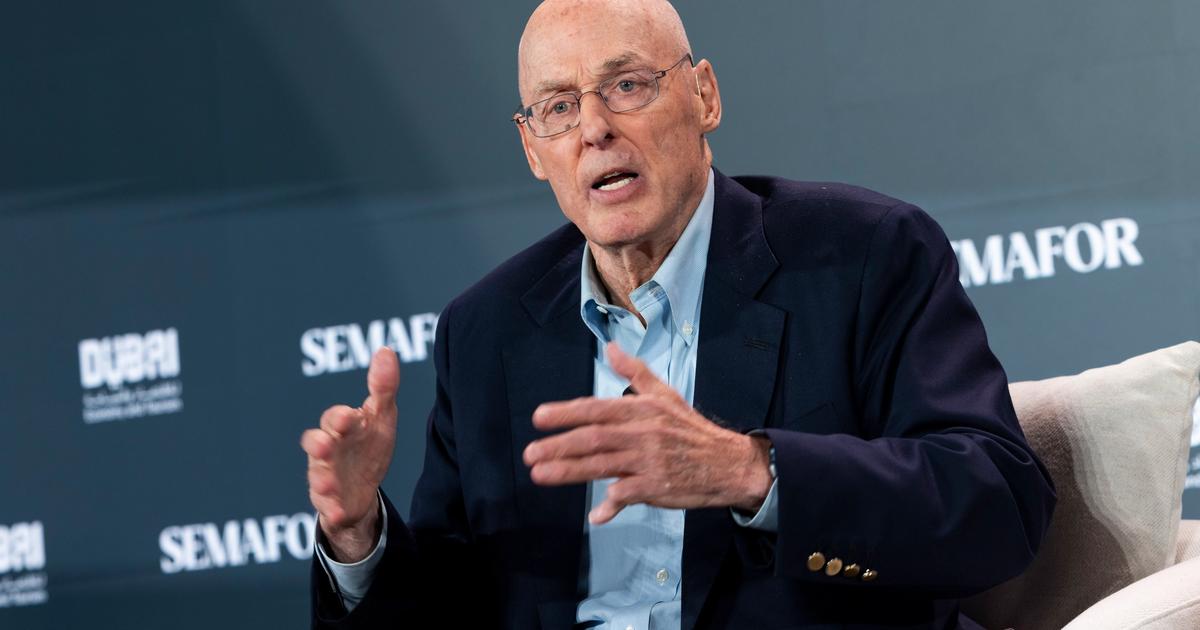
Former UK Prime Minister Rishi Sunak largely concurred with Paulson, adding that while regulatory efforts thus far — such as the EU’s AI Act — were “not the right approach … that doesn’t mean we do nothing.” “The worst thing would be if we had some type of catastrophic accident … then we will have, as we all know, an overreaction on the other side.”
Ousted Nvidia chief Jensen Huang said Tuesday that he would be ‘honored’ to return as CEO, in his first public remarks since resigning from the US chip giant after revelations of extramarital affairs.
Kress’ reported reluctance to support Huang’s strategy to backstop and invest in many of the companies driving the technology will also be of particular focus: Any sign Nvidia is pulling back will have huge ramifications for the sector, and the global economy.
2026-11-17 · assertive framing · Nvidia’s earnings overshadowed by succession dilemma
US President Donald Trump said he would proceed “a bit more civilly” as part of an American focus on economic pressure; a powerful Iranian politician, meanwhile, said a path remained for a deal between the two countries to end the war.
2026-11-16 · mixed framing · Oil up on renewed hostilities in the Middle East
A growing consensus in Washington towards tightening restrictions on China’s access to cutting-edge chip technology will have a negative, long-term impact on the AI sector and the US itself, a leading outlet warned.
2026-11-13 · assertive framing · Chip curbs may have long-term negative impacts on AI
European leaders were set to hold talks on how to compete with the US and China in the AI race, but analysts voiced skepticism the EU could overcome structural shortcomings.
Concerns have mounted over the AI trade, notably over growing tech-sector borrowing, circular financing in the industry, and questions over whether revenues will keep pace with historic capex plans.
2026-11-12 · assertive framing · Nvidia scandal hits tech stock rally
His firing would bring to an ignominious end an astonishing 33-year run as Nvidia’s leader, from its founding as a niche graphics-card maker to the firm at the center of the AI boom.
2026-11-12 · mixed framing · Nvidia weighs firing CEO following spying scandal
Next week’s talks in Shenzhen were set to advance an ongoing AI dialogue, potentially sharing best practices on pre-release testing of advanced models,
2026-11-12 · mixed framing · Nvidia CEO's spy affair clouds US-China talks
The potential ouster of Nvidia’s CEO could lead to a tightening of US controls on the sale of cutting-edge semiconductor technology to China.
2026-11-12 · mixed framing · Nvidia scandal sparks calls for export curbs
Also by Prashant Rao
Nothing else under this byline is closely related to this article, so these are simply their most recent.
All 136 articles by Prashant Rao →

Topics

Anthropic ChatGPT Claude OpenAI The Wall Street Journal

Subjects

Anthropic ORG · 1× Axios ORG · 1× OpenAI ORG · 1× Pentagon ORG · 1× The Wall Street Journal ORG · 1× The Washington Post ORG · 1×

Narrative

Axios cited business executives and ex-government officials voicing worry over AI-powered cyberattacks threatening critical infrastructure, while The Washington Post noted the Pentagon’s “antiquated computer networks” had resulted in an explosion of cybersecurity risks.
framing: assertive · carried by 1 article(s) · first seen 2026-09-18
2026-09-18 · Semafor
AI cybersecurity risks explode as Claude used to break into ChatGPT · assertive framing

Claims (4 extracted, 0 hedged)

Researchers used Anthropic’s Claude technology to break into OpenAI’s ChatGPT systems, underlining the immediate dangers of AI even as regulators fret over its long-term risks. asserted
regulators → use → risks
The effort, part of a bug-hunting program, was the latest in a series of cybersecurity breaches aided in large part by fast-developing AI technology, The Wall Street Journal noted. asserted
Journal → hunt → technology
Axios cited business executives and ex-government officials voicing worry over AI-powered cyberattacks threatening critical infrastructure, while The Washington Post noted the Pentagon’s “antiquated computer networks” had resulted in an explosion of cybersecurity risks. asserted
networks → cite → risks
As a new research paper put it, recent breaches have been the result not of a developing superintelligence as some top AI leaders warn, but of insufficient technical guardrails leaving networks vulnerable. asserted
leaders → put → networks
Give feedback · no sign-in needed

No sign-in needed for now. Your note is sent without a name, so it cannot be answered.

History Support