That is 0 articles you have read today.
The Aporia is free and carries no advertising, so readers are the only
thing paying for it. If you are getting this much out of it, a small
donation is what keeps it independent.
Daily limit reached
You have read 0 articles today.
That is more than the 15 a day The Aporia gives away,
and well past what it can carry on nothing. Your allowance resets at
midnight.
There is no advertising here and nothing about you is sold, so readers
are the only thing paying for it. If the site is worth this much of
your day, it is worth a few dollars.
Everything else stays open: the
maps, the
directory and
search do
not count against this, and neither does re-opening something you have
already read today.
Dame Caroline Dinenage, chair of the UK's digital, culture, media, and sport committee, plans to investigate why the country has performed poorly in Eurovision since 2000. The inquiry will examine factors such as song selection criteria and performance quality, following the UK’s last-place finishes in recent years including 2021 with James Newman and 2026 with Sam Battle. The committee expects to hear from BBC chiefs and music industry experts about the selection process for the UK's entrant.
Written locally by qwen2.5:14b on 2026-09-18,
using this article's own text rather than the other coverage of the
same event (that is the story summary below).
Story summary
Dame Caroline Dinenage, chair of the Digital, Culture, Media and Sport committee, announced an inquiry into the UK's poor performance at Eurovision, citing recent dismal results. In May 2023, Look Mum No Computer placed last with just one point; in 2022, Mae Muller finished second-to-last, while James Newman won "nul points" in 2021. The committee will investigate who selects the UK's entrant and on what basis, questioning if bad song choices or weak performances contribute to the poor showings. Since 2000, the UK has only reached the top 10 three times and placed last six times. Prior to 2000, however, the country enjoyed more success, winning in 1997 with Katrina And The Waves' "Love Shine A Light."
Written for “UK Eurovision Performance Scrutiny” on 2026-10-04,
grounded in this article and the 2 other(s) covering the same event.
Who could forget them?
uncertain
Who → forget → them
They are among some of the many acts who represented the UK at the Eurovision song contest in the last 20 years that have failed to find a place in the country’s cultural pantheon.
asserted
that → represent → pantheon
Now, the chair of an influential parliamentary committee has decided to interrogate exactly why the UK has been performing so poorly.
asserted
UK → decide → committee
Dame Caroline Dinenage, who heads the digital, culture, media and sport committee, told the BBC: “We want to get to the bottom of who chooses our entrant, on what basis and whether our dismal record of achievement in recent years is the result of bad song choice, weak performance … or something else.”
asserted
record → head → choice
Prior to 2000, the UK could be proud of its efforts: it finished in the top 10 every year except in 1978, 1987 and 1999, and won with Love Shine a Light by Katrina and the Waves in 1997.
But since then it has only reached the top 10 three times and finished in last place six times – in 2003, 2008, 2010, 2019, 2021 and 2026 – with Jemini and James Newman scoring nul points in 2003 and 2021 respectively.
uncertain
Jemini → finish → 2003
The exception was Sam Ryder’s Space Man in 2022, which came second.
asserted
which → come → 2022
The act that represents the UK is selected by the BBC with support from a record label or music management company.
asserted
that → represent → label
The Commons committee is reportedly expected to hear evidence from BBC chiefs, as well as music industry experts over the coming months.
uncertain
committee → expect → months
In 2026, Bulgaria won the contest as singer Dara swept to victory with the song Bangaranga.
asserted
Dara → win → song
The 27-year-old singer’s triumph was a first victory for Bulgaria, which only joined Eurovision in 2005 and had sat out the past three editions.
asserted
which → join → editions
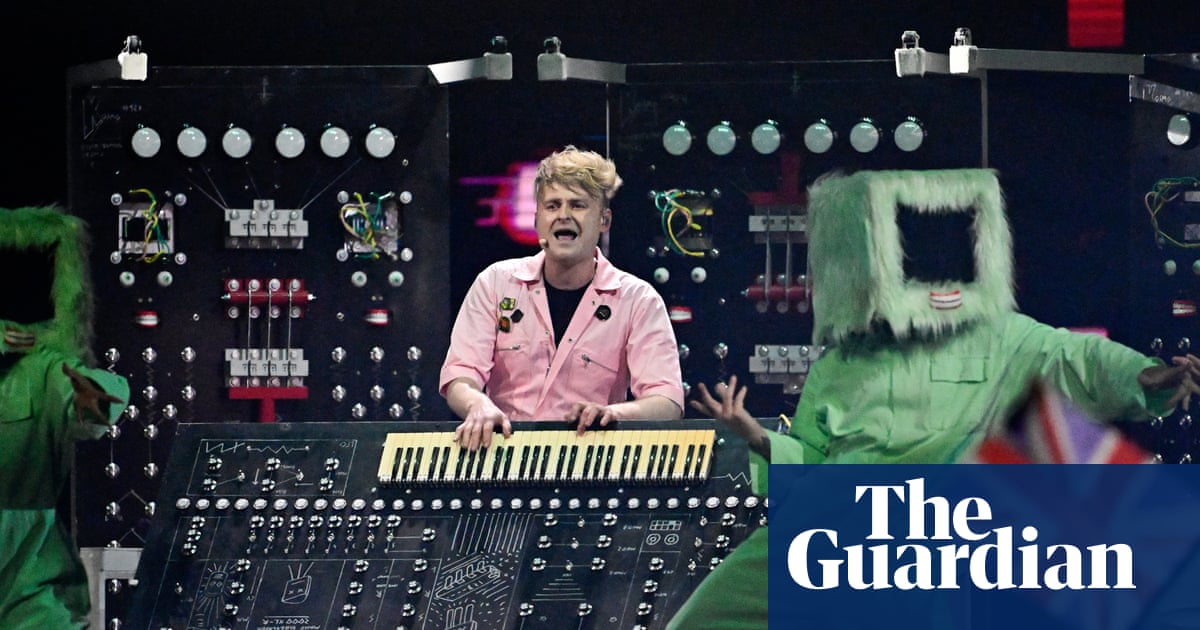
The UK finished last with Look Mum No Computer, AKA Sam Battle.
asserted
UK → finish → Mum
The YouTuber, who makes his own synthesisers, failed to win over neutral voters with the song Eins, Zwei, Drei.
asserted
who → make → song
The song received zero points in the public vote, meaning it did not make it into the top 10 in any of the voting countries.
asserted
it → receive → countries
The contest has become increasingly political, primarily over the inclusion of Israel, which has been participating in the event since 1973.
asserted
which → become → 1973
Ireland is to boycott the contest for the second year running over the Gaza war.
asserted
Ireland → boycott → war
It was one of five countries, along with Iceland, the Netherlands, Spain and Slovenia, that refused to take part in the competition this year in protest against Israel’s participation.
asserted
that → refuse → participation
 The Aporia