Photo via Al Jazeera

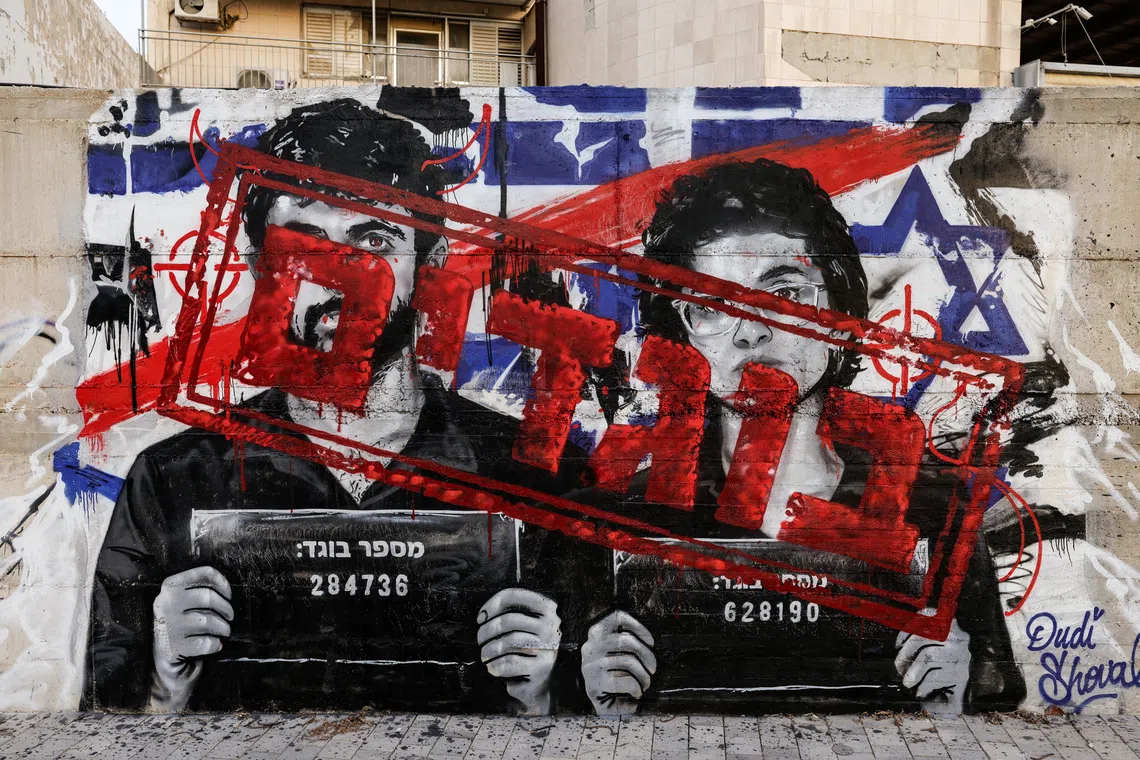
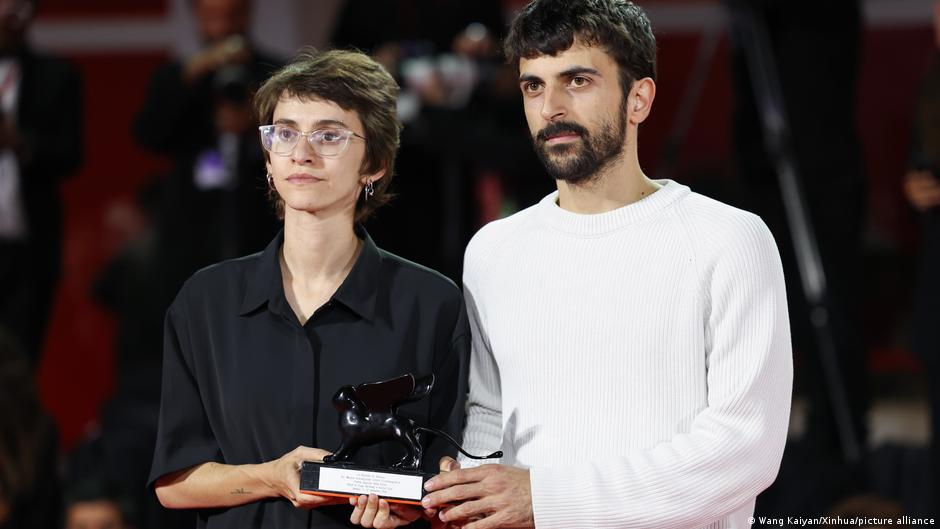
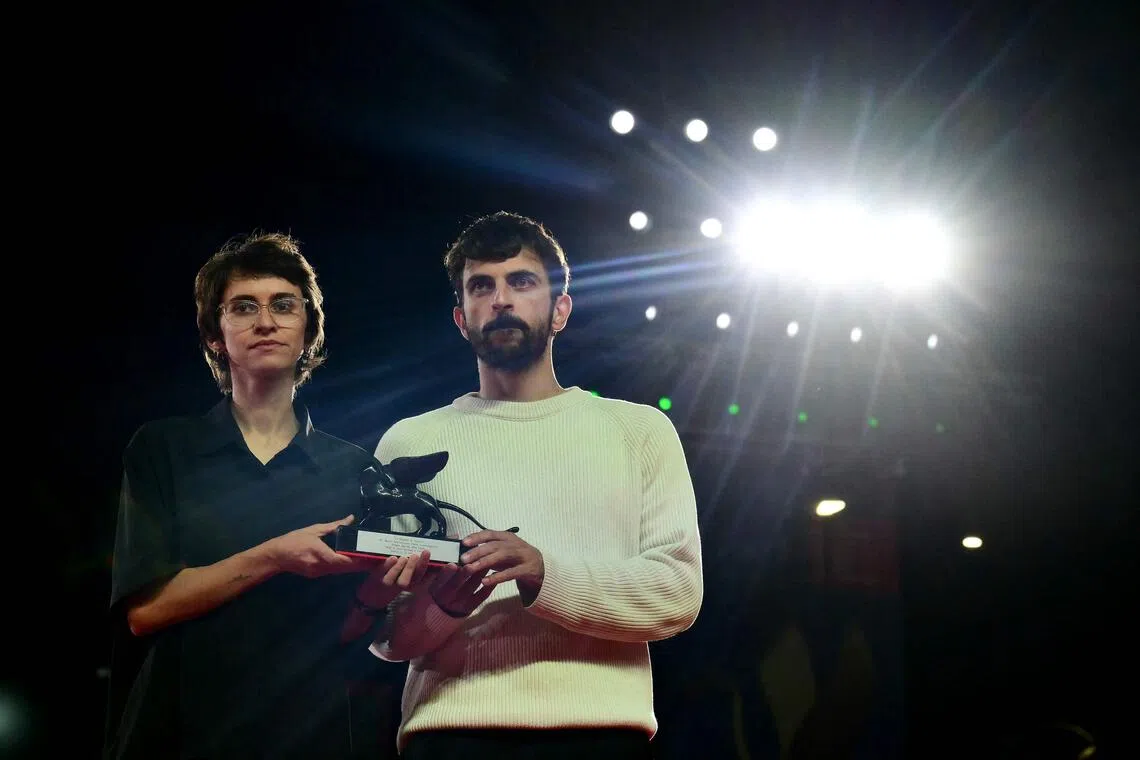
Israel would rather not watch NAZA

Read the original at Al Jazeera ↗
Cite

Goldberg, O. (2026, September 18). Israel would rather not watch NAZA. Al Jazeera. https://www.aljazeera.com/opinions/2026/9/18/israel-would-rather-not-watch-naza?traffic_source=rss

Dated when The Aporia collected the article, usually within hours of publication. Check the original for its exact date and byline.

Al Jazeera · collected 2026-09-18 · by Ori Goldberg

Quick Summary

The documentary "NAZA," directed by Yuval Avraham and Rachel Szor, has faced significant resistance from Israeli officials and media figures who refuse to watch it, despite promises to take unspecified actions against its creators. The film's theme of collateral damage in Gaza during the conflict has led many Israelis to declare they will not view it or feel sympathy for those affected by the war's devastation. Critics within the Israeli left argue that the documentary lacks journalistic integrity and potentially serves external anti-Israel agendas, while others suggest it could incite public unrest if widely seen.
Written by AI on 2026-09-20, from this article's own text only (the story summary below draws on all the coverage).
See how they differ ↓

AI analysis

Story summary

At the 2026 Venice Film Festival, "NAZA", a documentary by Israeli directors Yuval Abraham and Rachel Szor, won a special jury prize. The film, named after an Israeli military acronym for collateral damage, accuses Israel's army of intentionally targeting civilians in Gaza using AI-powered systems. It includes interviews with 24 anonymous Israeli military whistleblowers who describe systemic mass civilian killings during the war that began on October 7, 2023.

The documentary received a standing ovation and sparked intense backlash from Israeli officials. Culture Minister Miki Zohar threatened to strip Abraham and Szor of their citizenship for alleged treason, while Prime Minister Benjamin Netanyahu called it "shocking incitement." The military chief Eyal Zamir ordered a legal review to investigate the sources involved in the documentary.

The film's controversial nature highlights deep divisions within Israel over the war's conduct and raises questions about freedom of expression versus national security concerns.

Written for “Gaza Documentary Controversy Israel” on 2026-11-18, grounded in this article and the 17 other(s) covering the same event.

How they differ

12 outlets covered “Gaza Documentary Controversy Israel”.

What each outlet says

One AI summary per outlet of its latest article on this story, written from that article alone and checked against it. Open the article for the outlet's own words.

Al JazeeraThis outlet18 Sep

The documentary "NAZA," directed by Yuval Avraham and Rachel Szor, has faced significant resistance from Israeli officials and media figures who refuse to watch it, despite promises to take unspecified actions against its creators. The film's theme of collateral damage in Gaza during the conflict has led many Israelis to declare they will not view it or feel sympathy for those affected by the war's devastation…

Israel would rather not watch NAZA (this article)4 articles from Al Jazeera on this story
The Straits Times16 Sep

Prime Minister Benjamin Netanyahu threatened to pass legislation revoking the citizenship and imposing heavy financial penalties on individuals who defame Israeli soldiers, specifically targeting directors Yuval Abraham and Rachel Szor of the Gaza documentary "NAZA." The film has drawn backlash in Israel for alleging that mass civilian deaths were planned into Israeli military decisions during operations in Gaza…

Netanyahu steps up threats against directors of Gaza documentary 'NAZA' →3 articles from The Straits Times on this story
The Guardian19 Sep

The Guardian-produced documentary NAZA premiered at the Venice Film Festival, where it received a 25-minute standing ovation. The film, which uses Hebrew interviews with anonymous Israeli military insiders, details systems used in Israel that select targets for strikes, often resulting in civilian casualties. In Gaza, over 73,000 Palestinians have been killed. While the documentary has gained international attention…

From ovations in Venice to death threats in Israel: the extreme responses to NAZA documentary →2 articles from The Guardian on this story
Dawn13 Sep

At the Venice Film Festival, Israeli directors Yuval Abraham and Rachel Szor won a special jury prize for their documentary NAZA, which critiques Israel’s use of AI in targeting civilians in Gaza. The film, based on interviews with 24 whistleblowers from Israeli military and intelligence, received significant acclaim but missed out on the top Golden Lion award, which went to Danish director May el Toukhy's post-war…

Gaza documentary by Israeli directors wins special prize at Venice →
Deutsche Welle14 Sep

Israeli Culture Minister Miki Zohar has threatened to revoke the citizenship of filmmakers Yuval Abraham and Rachel Szor for their Venice Film Festival-winning documentary "NAZA," which details Israeli airstrikes in Gaza that killed Palestinian civilians. The minister accused the filmmakers of treason, saying they harmed their homeland to gain international approval. The film features interviews with 24 unnamed…

Israeli minister accuses 'NAZA' filmmakers of 'treason' →
CBS News14 Sep

Israel's culture minister, Miki Zohar, has called for revoking the citizenship of documentary filmmakers Yuval Abraham and Rachel Szor after their film "NAZA" won an award at the Venice International Film Festival. The documentary features interviews with Israeli military and intelligence whistleblowers who claim that AI-powered systems were used to target Palestinian civilians in Gaza. In social media posts, Zohar…

Israeli official calls for revocation of "NAZA" filmmakers' citizenship →
Show 5 more outlets
South China Morning Post14 Sep

Israeli army chief Eyal Zamir has ordered a legal review of the documentary film NAZA, which won a special prize at the Venice Film Festival. The film investigates alleged mechanisms behind Israeli warfare in Gaza through interviews with 24 former military and intelligence personnel whose identities are concealed. In response to concerns about false claims affecting soldiers' safety and state security, Zamir…

Israeli army chief orders legal review of Gaza war documentary NAZA →
BBC14 Sep

Israel's culture minister, Miki Zohar, has threatened to revoke the citizenship of Oscar-winning filmmakers Yuval Abraham and Rachel Szor over their documentary "Naza," which accuses the Israeli army of mass civilian killings in Gaza. The film, released at the Venice Film Festival last week, features interviews with 24 unidentified former Israeli military personnel who discuss advanced targeting systems used during…

Israeli minister threatens to revoke filmmakers' citizenship over Gaza documentary →
The Free Press16 Sep

Yuval Abraham and Rachel Szor's documentary NAZA premiered at the Venice International Film Festival on September 10, winning a Special Jury Prize and receiving a record-breaking 25-minute standing ovation. The film, titled after an Israeli military acronym meaning "collateral damage," alleges that Israel's targeting and authorization systems in Gaza led to unlawfully high civilian casualties, suggesting these…

Hold Your Applause for the New Gaza Documentary →
CBC16 Sep

A documentary film called NAZA, which premiered at the Venice International Film Festival and received critical acclaim, alleges that Israel’s military tactics in Gaza involve targeting civilians with AI systems designed to kill individuals in residential areas. The film features anonymous testimonies from 24 former Israeli military and intelligence personnel who claim attacks are approved regardless of civilian…

Documentary alleges Israel bombs Gaza regardless of risk to civilians →
ABC News (AU)19 Sep

Israeli filmmakers Yuval Abraham and Rachel Szor directed a documentary titled NAZA, which alleges that the Israeli army systematically killed civilians during military operations in Gaza. The film won a Special Jury Prize at the Venice International Film Festival but sparked intense criticism back home, with Prime Minister Benjamin Netanyahu threatening to revoke citizenship from those who defame IDF soldiers…

Gaza documentary sparks 'treason' uproar in Israel →

Where they agree and split

Agreed

AI · cited, from two or more outlets

  • The documentary NAZA won a special jury prize at the Venice Film Festival.14
  • Israeli officials have threatened to revoke the citizenship of the filmmakers behind 'NAZA'.25
Quoted from the coverage (3)

According to figures by Gaza officials, which are considered to be broadly reliable by the UN, more than 73,000 Palestinian people, including 20,000 children, have been killed in Israeli attacks since the operation began.

5 outlets

The revocation of nationality is legally possible in Israel, although it is rarely applied.

4 outlets

Chief of the General Staff Eyal Zamir instructed the military prosecutor to “examine and advance possible legal measures concerning the film and those involved in it”, the military posted on social media.

4 outlets

Disputed

Picked by our model, which is sometimes wrong

  • The filmmakers claim that Israeli intelligence officers described AI-powered targeting systems used to kill Palestinian civilians, while Israel's military denies deliberately targeting civilians.12
  • Culture Minister Miki Zohar accuses the filmmakers of harming their homeland for international applause, but the filmmakers argue that their work exposes systemic mass killing and dehumanization of Palestinians.21

Framing

How the first headlines put it

  • The Guardian presents a broader context of international acclaim and domestic controversy, whereas Al Jazeera emphasizes the long-standing nature of the allegations made by 'NAZA'.67
Words to watch (1)

Netanyahu says Gaza documentary 'NAZA' is 'shocking incitement' The Straits Times

The full story: what happened, how it changed, and all 18 articles →

Compared with similar articles

This article reads leans left and hedges 11% of its claims. Each row says how that neighbour differs.
ABC News (AU)
Hedges 2 of 29 claims Outlet record 67/100
The Straits Times
Hedges 3 of 17 claims Outlet record 64/100
“While both articles discuss threats against the directors of the documentary 'NAZA', ARTICLE A reports Netanyahu's vow to pass a law regarding citizenship revocation on September 16, while ARTICLE B mentions broader unspecified steps and difficulties in distributing the film on September 18.”
The Straits Times
Hedges 1 of 16 claims Outlet record 64/100
“The articles describe different aspects of reactions to the documentary 'NAZA', with Article A focusing on Netanyahu's statement about it being incitement and Article B discussing the difficulty in securing an Israeli distributor or public screening.”
Al Jazeera
Leans strongly left further left than this Hedges 6 of 72 claims Outlet record 60/100
“The articles discuss different topics; Article A is about a documentary's lack of distribution in Israel, while Article B focuses on Palestinian journalists documenting events during a conflict in Gaza.”
Al Jazeera
Leans strongly left further left than this Hedges 3 of 51 claims Outlet record 60/100
“The articles discuss different topics related to Israeli narrative power and censorship, with Article A focusing on a documentary film's lack of distribution in Israel due to controversy, while Article B discusses the erosion of pro-Israel narrative dominance.”
The Dispatch
Hedges 0 of 4 claims Outlet record 61/100
“Article A discusses a documentary about Israel and its lack of distribution, while Article B talks about a study analyzing news articles across multiple languages.”
Al Jazeera
Hedges 2 of 16 claims Outlet record 60/100
“The articles describe different aspects of the reaction to the documentary NAZA, but not the same specific incident or time. Article A focuses on Netanyahu's threat to revoke citizenship, while Article B discusses difficulties in distributing and screening the film.”
Deutsche Welle
Hedges 3 of 12 claims Outlet record 95/100
“While both articles discuss reactions to the documentary 'NAZA', Article A reports on the immediate accusation and threat by an Israeli minister, while Article B covers subsequent events regarding distribution issues and vague threats of action against the filmmakers.”
The Straits Times
Hedges 4 of 17 claims Outlet record 64/100
“The articles discuss different aspects of the controversy surrounding the documentary NAZA: Article A reports on an Israeli minister's call for a probe into sources, while Article B focuses on the difficulty in securing distribution and screening for the film in Israel.”
CBS News
Hedges 1 of 11 claims Outlet record 67/100
“While both articles discuss reactions to the documentary NAZA and mention potential citizenship revocation by Israeli officials, they describe different aspects of the ongoing situation rather than a single specific incident.”

Story

Gaza Documentary Controversy Israel
Politics · 18 article(s) covering the same event. Compare every outlet's account →
How this article was measured signals, leaning charts, publisher record, byline, topics and claims

Signals How these are calculated →

Claims extracted
47
sentences that state something as happening or true
Uncertain
11%
5 of 47 hedged ("reportedly", "may", "according to")
Leaning
Leans left
of the writing, not the subject · beta estimate
Publisher signals
60/100
Al Jazeera's corrections and hedging, across everything collected from it. Not a measure of accuracy.
Outlets on this story
18
Politics
Same framing elsewhere
1
articles that frame the event the way this one does
Analyzed 2026-09-20 · how these are computed

How this is being covered How these are calculated →

Article leaning vs. publisher reliability
Source leaning vs. consistency

Publisher

Al Jazeera · 6027 article(s) · 4 correction(s) detected
Running correction rate · 4 correction(s)

Who wrote this

Ori Goldberg
2 article(s) here · 1 carrying a prediction
Other than stripping them of their Israeli citizenship (considered a remarkably rare measure), what those “steps” could be was unclear.
2026-09-18 · assertive framing · Israel would rather not watch NAZA
Netanyahu will not step back from his insistence that Hamas has to disarm first before Israel fulfils any of its commitments.
Also by Ori Goldberg
Nothing else under this byline is closely related to this article, so these are simply their most recent.

Topics

Gaza Israel Israeli Israelis NAZA

Subjects

Israeli NORP · 11× Gaza GPE · 7× Israelis NORP · 6× Israel GPE · 5× NAZA ORG · 5× Avraham PERSON · 2× Drucker PERSON · 2× Yuval Avraham PERSON · 2× Rachel Szor PERSON · 1× Szor PERSON · 1×

Narrative

Raviv Drucker, perhaps Israel’s most prominent investigative journalist, when asked by Yuval Avraham (during an interview of Avraham himself conducted by Drucker) why Israeli media had done nothing to expose the methods of killing documented by NAZA, said with visible embarrassment that doing so was “difficult” for a host of reasons.
framing: assertive · carried by 1 article(s) · first seen 2026-09-20
Other than stripping them of their Israeli citizenship (considered a remarkably rare measure), what those “steps” could be was unclear.
2026-09-20 · Al Jazeera
Israel would rather not watch NAZA · assertive framing

Claims (47 extracted, 5 hedged)

NAZA (Hebrew acronym for “collateral damage”), the documentary made by Yuval Avraham and Rachel Szor, has yet to secure an Israeli distributor or a public screening, despite its creators’ stated intention to show it widely in the country. asserted
NAZA → make → country
Various senior executives, from the Israeli military chief of staff to the minister of culture, promised that they were about to “take steps” against the creators of the film. asserted
they → promise → film
Other than stripping them of their Israeli citizenship (considered a remarkably rare measure), what those “steps” could be was unclear. uncertain
be → strip → citizenship
However, one refrain dominated the outrage directed at Avraham and Szor: Those condemning the film had no intention of watching it. asserted
Those → dominate → it
It is important to emphasise that this oath to refrain from watching the film was authentic. asserted
oath → emphasise → film
In a way, it is a variation on a theme that became prevalent throughout the first months of the “war”. asserted
that → become → war
When images of devastation began to emerge from Gaza, many Israelis wrote that they could feel no pity for the children of Gaza uncertain
they → begin → Gaza
(at the end of 2023, the number of children killed and orphaned was already known and difficult to grasp, as were military “procedures”). asserted
procedures → kill → children
These Israelis said they had “closed their hearts” in response to the huge, intentional death toll in the Israeli towns and villages surrounding Gaza. asserted
they → say → Gaza
They claimed they would not and could not feel pity for anyone who had committed such atrocities, or for anyone related to them. uncertain
who → claim → them
Activists on the Israeli left believed that if Israelis were exposed to images from the already nearly deleted Gaza, they would head for the streets and call for a stop to the war. asserted
they → believe → war
These activists were soundly rebuffed. asserted
activists → rebuff → ?
NAZA was, itself, a rebuttal of the position actively taken by the Israeli media – “Yes, the Israeli military had made mistakes but these should be investigated by the military and the Israeli legal system, both very much capable of carrying out the task.” asserted
these → take → task
Raviv Drucker, perhaps Israel’s most prominent investigative journalist, when asked by Yuval Avraham (during an interview of Avraham himself conducted by Drucker) why Israeli media had done nothing to expose the methods of killing documented by NAZA, said with visible embarrassment that doing so was “difficult” for a host of reasons. asserted
doing → ask → reasons
However, Drucker was also quick to add that if it were up to him, he would not have aired the film because he believed it lacked journalistic professionalism, relying as it does on anonymous testimony. asserted
it → add → testimony
This line of criticism was quickly taken up by other journalists considered a part of the Israeli left. asserted
line → take → left
They attacked the film and its creators, accusing them of everything from seeking money and attention to actively working for Israel’s downfall in the service of Netanyahu and Qatar. asserted
They → attack → Netanyahu
They were called “useful idiots”, meaning people who work for a worthy cause but are unwittingly used in the service of another. asserted
who → call → another
Journalists like Uri Misgav acknowledged the importance of criticism but implied that NAZA served the goals of Israel’s enemies. asserted
NAZA → acknowledge → enemies
They suggested that its disregard for journalistic standards showed that the creators had already reached their conclusion: That Israel was the root of all evil and solely responsible for the state of Gaza. uncertain
Israel → suggest → Gaza
For Israelis, not watching NAZA is a point of pride. asserted
watching → watch → pride
Some will cite the lack of journalistic standards (this from a country that assassinated more than 200 journalists over the course of its genocide in Gaza). asserted
that → cite → Gaza
Other Israelis will suggest that they recognise “treason” when they see it. asserted
they → suggest → it
Many Israelis will apply the following wondrous excuse: “Even if some of this is true, you wash your dirty laundry at home; you don’t entertain others by using that dirty laundry to demonstrate that Israel really is responsible for the killing of 20,000 children and more than 70,000 Palestinians in Gaza.” asserted
Israel → apply → Gaza
The fact that the military and the Israeli legal system have proven themselves to be incompetent at best (and thoroughly politicised at worst) when investigating war crimes and crimes against humanity is beside the point for many Israelis. asserted
themselves → prove → Israelis
After all, one could offer up such incompetence as an excuse for the strategies exposed by NAZA. uncertain
one → offer → NAZA
Israelis wouldn’t hear of it. asserted
Israelis → hear → it
This is yet another example of the world’s hatred for Israel (“anti-Semitism”, if you like) that makes international accusations levelled against Israel completely irrelevant. asserted
accusations → like → Israel
No matter what we do, we will emerge at fault, so why encourage this state of affairs by having lengthy discussions about a critical movie? asserted
we → do → movie
We’ve heard the criticism countless times. asserted
We → hear → criticism
We know there is a web of detractors all over the world (perhaps funded by Qatar, perhaps by the Red-Green alliance between the woke left and radical Islam). asserted
We → know → left
It doesn’t matter. asserted
It → matter → ?
Just as Israelis “closed their hearts” when the genocide began, so they are shutting their eyes and ears now. asserted
they → close → eyes
They take pride in their ignorance of the film’s content. asserted
They → take → content
They feel it misrepresents them. asserted
it → feel → them
How do they know? asserted
they → know → ?
They don’t, but that only makes them even more convinced of the one-sidedness of the whole episode. asserted
them → do → episode
It is enough to hear that the directors received an unprecedented 25-minute standing ovation at the Venice Film Festival, where they won a special jury prize. asserted
they → hear → prize
A special prize can simply be invented on the spot to present Israel negatively. asserted
prize → invent → Israel
It isn’t as though Avraham and Szor walked away from the podium with the Silver Lion, one of the festival’s major awards, is it? asserted
it → walk → awards
…and 7 more, not listed.
Give feedback · no sign-in needed

No sign-in needed for now. Your note is sent without a name, so it cannot be answered.

History Support