That is 0 articles you have read today.
The Aporia is free and carries no advertising, so readers are the only
thing paying for it. If you are getting this much out of it, a small
donation is what keeps it independent.
Daily limit reached
You have read 0 articles today.
That is more than the 15 a day The Aporia gives away,
and well past what it can carry on nothing. Your allowance resets at
midnight.
There is no advertising here and nothing about you is sold, so readers
are the only thing paying for it. If the site is worth this much of
your day, it is worth a few dollars.
Everything else stays open: the
maps, the
directory and
search do
not count against this, and neither does re-opening something you have
already read today.
German Chancellor Friedrich Merz stated on September 17 that the era of unconditional friendship between the US and Europe, built after World War II, is likely over at least for now due to changes in political attitudes under President Trump’s administration. Speaking ahead of Berlin's state election on September 20, Merz highlighted the contrast with past strong ties during visits by American presidents like Kennedy and Reagan. The same day, Merz spoke with Trump about several issues including resolving the Ukraine conflict and trade tensions, but emphasized that despite efforts to maintain a special bond between Germany and America, significant challenges remain in transatlantic relations.
Written locally by qwen2.5:14b on 2026-09-18,
using this article's own text rather than the other coverage of the
same event (that is the story summary below).
Story summary
German Chancellor Friedrich Merz said on September 17 that the era of "unconditional" ties between the US and Europe built since World War II is probably over for now, reflecting a significant shift in transatlantic relations under US President Donald Trump's presidency. Speaking to party members ahead of the Berlin state election on September 20, Merz noted changes in political attitudes and assessments of the transatlantic alliance that were previously unimaginable. Despite this sentiment, Merz spoke with Trump earlier on the same day, where they emphasized the special bond between Germans and Americans but also discussed US efforts to end Russia’s war against Ukraine. This indicates a complex relationship where diplomatic ties are strained yet not entirely severed.
Written for “Germany Us Relations Strain” on 2026-09-18,
grounded in this article and the 0 other(s) covering the same event.
Why this leaning score
The article's own words the score was based on. Each is quoted
verbatim and was checked against the article text before being
stored, so you can find it in the original.
Leaning score -0.35 for article 17683 (medium confidence, 2 verified quotes) · logged 2026-09-18
Claims extracted
14
claim-shaped sentences
Uncertain
21%
3 of 14 hedged
Leaning
Leans left
of the writing, not the subject
Correction & hedging signals
58.9
corrections and hedging in what we collected;
not a measure of accuracy
Outlets on this story
1
Politics
Narrative spread
1
articles carrying this framing
Germany’s Merz says US friendship since war ‘probably over’ for now
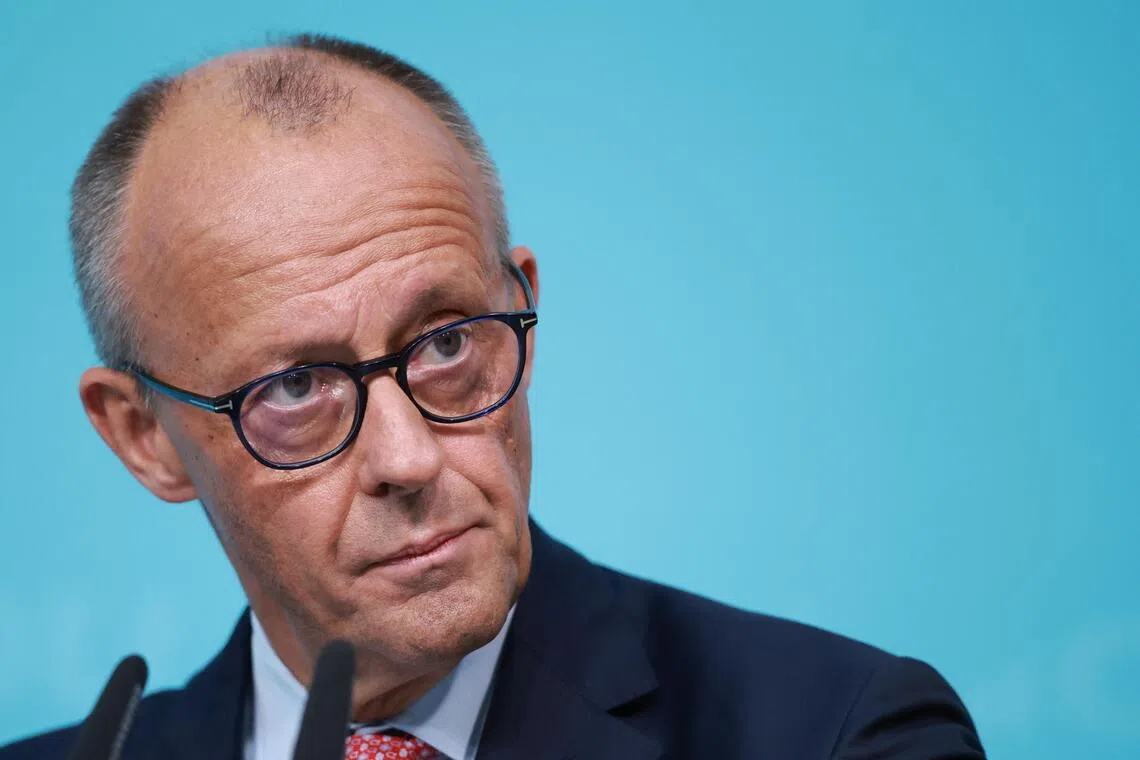
BERLIN – German Chancellor Friedrich Merz said the era of “unconditional” ties between the US and Europe built since World War II are over, at least for now, the latest pronouncement of a breakdown in relations under US President Donald Trump’s presidency.
asserted
era → say → presidency
“This era of unconditional transatlantic friendship is probably over for the foreseeable future,” Merz told party members in Berlin on Sept 17.
asserted
Merz → tell → Sept
“On the other side of the Atlantic, we are seeing a change in political attitudes, a change in the assessment of the transatlantic alliance, which we might not have thought possible.”
uncertain
we → see → alliance
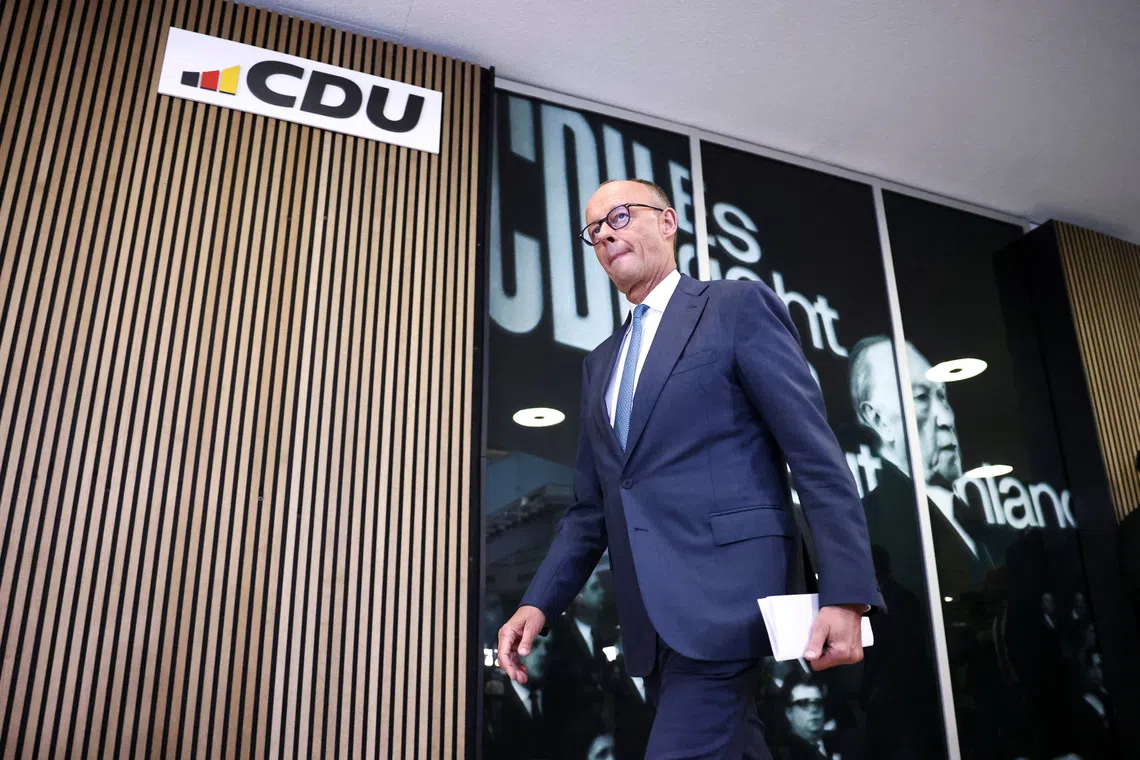
Merz, giving a stump speech at his conservative party headquarters ahead of the Berlin state election on Sept 20, contrasted the current US relationship to past visits by American presidents to the German capital, citing famous speeches by John F. Kennedy and Ronald Reagan.
asserted
Merz → give → Kennedy
His comments came the same day that he spoke on the phone with Trump, where the two “emphasised the special bond between Germans and Americans”, according to a German government spokesman.
uncertain
two → come → spokesman
The pair also discussed US efforts to end Russia’s war against Ukraine, as well as the ongoing trade friction in the Strait of Hormuz and Red Sea.
asserted
pair → discuss → Hormuz
Merz’ speech came as Canadian Prime Minister Mark Carney welcomed an overture to become an “associate member” of the European Union this week.
asserted
Carney → come → Union
Trump responded by threatening a new round of tariffs against the 27-member bloc if he deems the new relationship to be harmful to the US.
asserted
relationship → respond → US
Trump lauded a shock victory by Germany’s far-right Alternative for Germany in a state election earlier in September, an event that has shaken the country’s political establishment and raised calls for Merz to step aside.
asserted
Merz → laud → calls
Merz has a track record of provoking the Trump administration with his rhetoric.
asserted
Merz → have → rhetoric
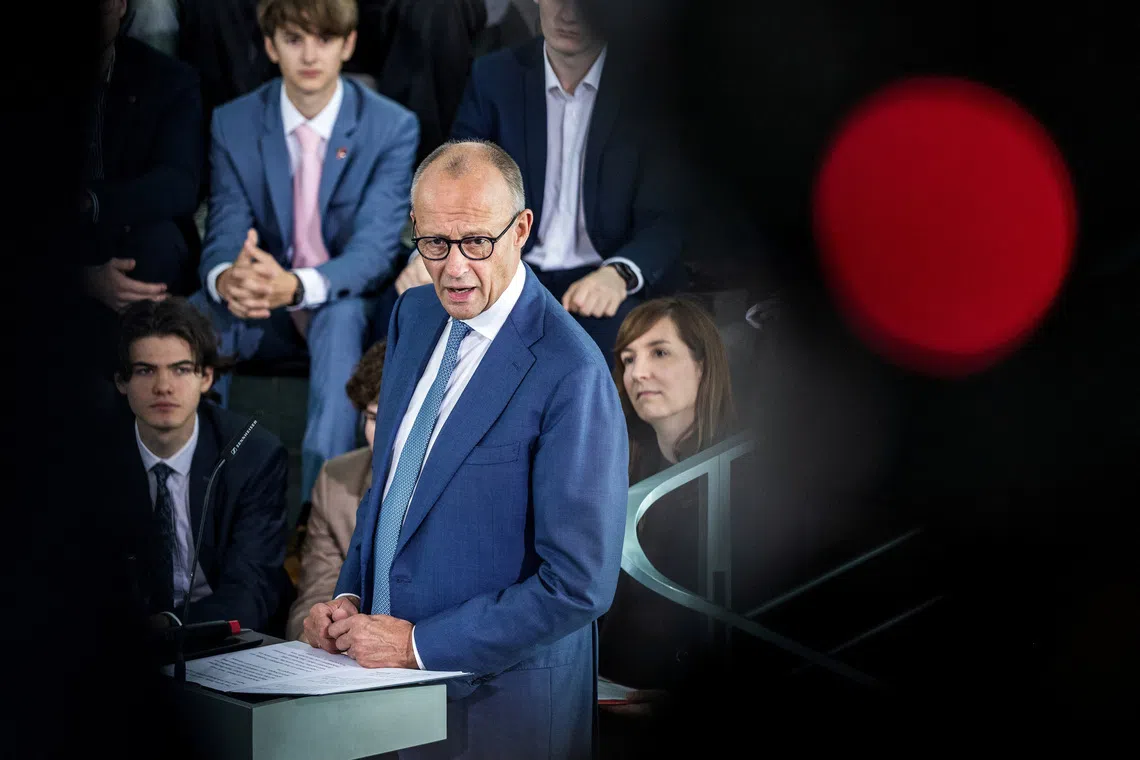
In April, he told a group of school students that US negotiators seeking a way out of the war with Iran were being “humiliated”.
asserted
negotiators → tell → Iran
The US President responded with an announcement of the withdrawal of some 5,000 troops from the country.
asserted
President → respond → country
The comments echo those made by then-Chancellor Angela Merkel, who in May 2017, during Trump’s first term, told a rally that reliable relationships forged since World War II “are to some extent over”.
uncertain
relationships → echo → extent
The comments triggered global attention.
asserted
comments → trigger → attention
 The Aporia