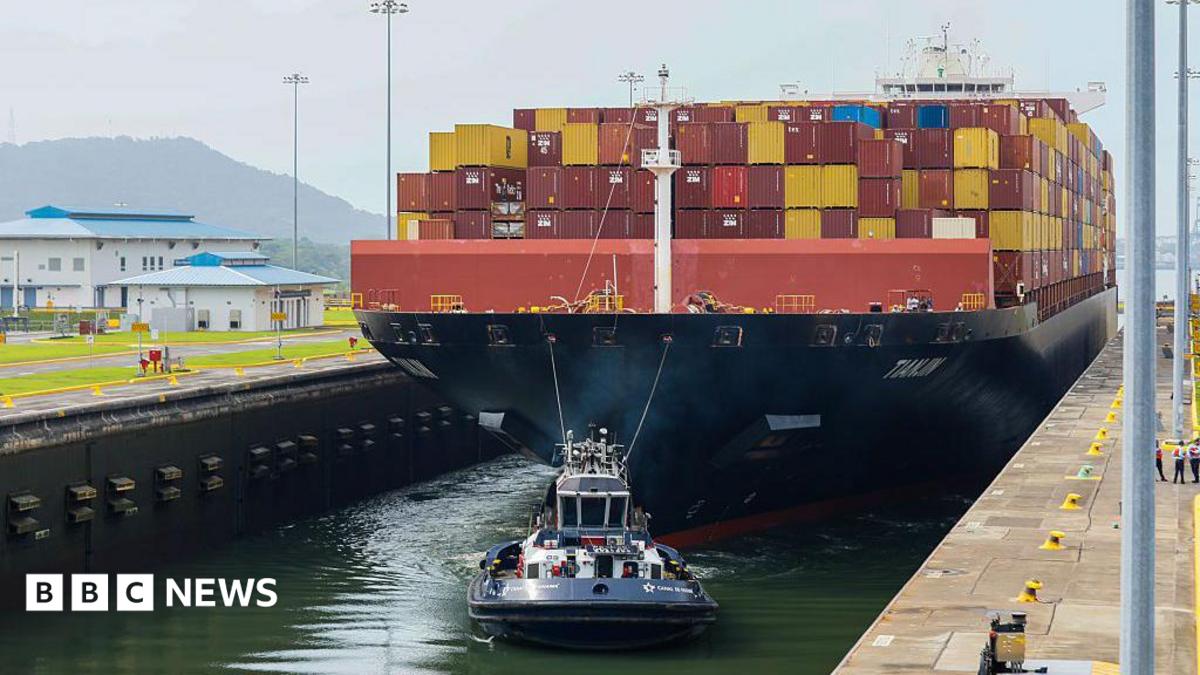
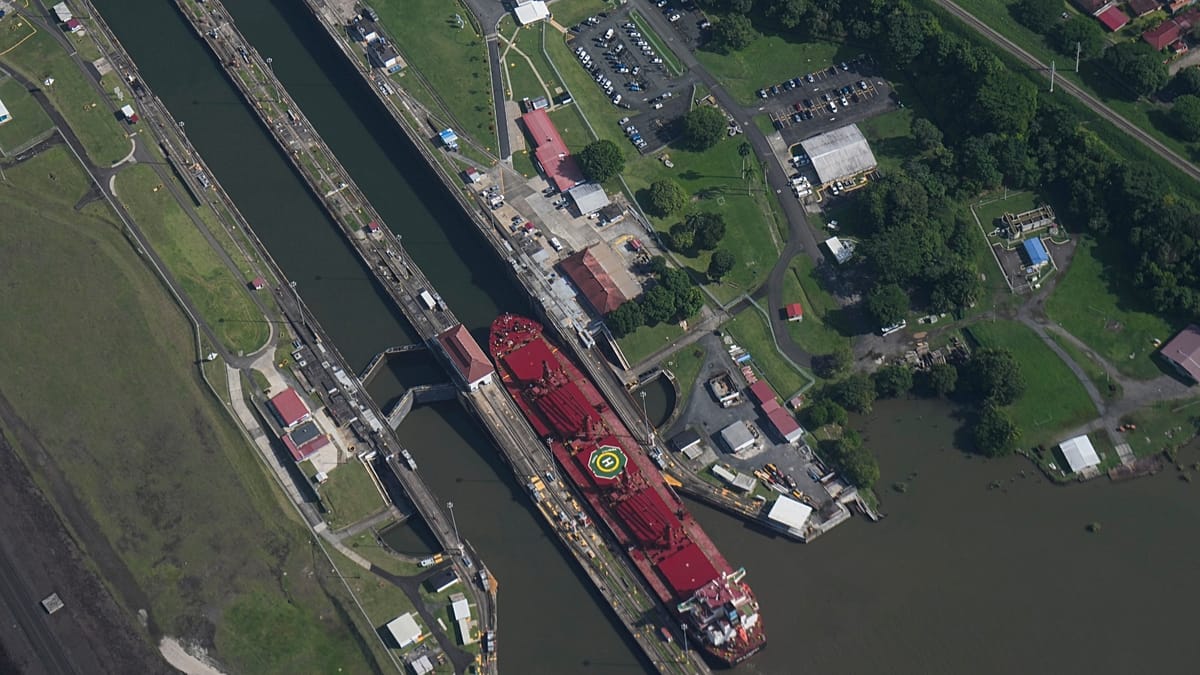
The Panama Canal Authority (ACP) will reduce the number of vessels passing through the Panama Canal from 36 to 32 per day starting on September 15 due to low rainfall caused by El Niño. This is in addition to measures already being phased in from September 3, in an effort to preserve service reliability and safeguard water resources for human consumption. The Panama Canal handles about 14,000 ships per year and generates around $3bn annually for the country of Panama. The reduced number of vessels will be part of a plan to mitigate disruptions caused by this year's strong El Niño event.
Written by the local model on 2026-08-21,
using this article's own text rather than the other coverage of the
same event (that is the story summary below).
Story summary
The Panama Canal Authority (ACP) is reducing the number of ships passing through the waterway due to a drought caused by El Niño, which has led to low water levels in two artificial lakes that feed the canal. The ACP will allow 32 vessels per day from September 15, down from the current 36, and possibly even fewer if rainfall does not improve. This decision is part of efforts to preserve service reliability and safeguard water resources for human consumption. The drought has been particularly severe in Central America, with 34% less rainfall than usual from May to August, and El Niño's effects are expected to worsen the situation. The Panama Canal handles a significant portion of global maritime trade, including 40% of US container traffic, and this reduction is likely to have economic implications for industries that rely on shipping through the canal.
Written for “Panama Canal Cuts Shipping” on 2026-08-31,
grounded in this article and the 1 other(s) covering the same event.
Why this leaning score
This article does not take a side on a contested political
question, so it has no leaning score. That is an
answer rather than a gap: a match report or a rescue can be warmly
or critically written without being left or right, and scoring it
anyway is how approval of a subject gets recorded as a political
position.
No political leaning scored for article 1744 · logged 2026-08-31
- Published
Panama Canal's operator is to cut the number of vessels passing through the key waterway due to low rainfall caused by El Niño.
asserted
operator → publish → Niño
The Panama Canal Authority (ACP) told shipping firms on Thursday that 32 vessels a day will be able to pass through it from 15 September, compared to 36 currently.
asserted
vessels → tell → 36
El Niño, a pattern of periodical sea surface warming, affects weather systems globally.
asserted
Niño → affect → systems
This year is expected to be particularly strong, with its effects made more intense by climate change.
asserted
effects → expect → change
The shipping industry is already dealing with severe disruptions due to the Iran war causing a large reduction in the number of vessels passing through the crucial Strait of Hormuz.
asserted
industry → deal → Hormuz
The ACP said the measures were being put in place to preserve service reliability and safeguard water resources for human consumption.
asserted
measures → say → consumption
It added that despite the arrival of the rainy season in Central America and some water-saving measures already being put in place in the canal, additional action was needed "to support the long-term sustainability of transit operations".
asserted
action → add → operations
The new measures will be phased in from 3 September.
asserted
measures → phase → September
The Panama Canal greatly reduces the time and distance ships have to travel between the Atlantic and Pacific oceans.
asserted
ships → reduce → oceans
About 14,000 ships per year use the artificial waterway - which operates 24 hours a day, 365 days a year.
asserted
which → use → waterway
As well as being a crucial route for global trade, it is also a key source of income for Panama, bringing in about $3bn (£2.2bn) a year.
asserted
it → bring → 3bn
In 2023, the ACP cut the number of vessels using the waterway during the last El Niño period after Panama was hit with its driest October since records began in 1950.
asserted
records → cut → 1950
Since then, the authority has introduced measures to cut the amount of water it uses.
asserted
it → introduce → water
Many forecasts suggest that this year's El Niño, which is a naturally occurring pattern, could be one of the strongest ever recorded, with disruptions to weather, food supplies and economies.
uncertain
which → suggest → weather