The Trump Administration announced this week that it plans to shift tens of millions in military aid from countries in Europe and the Middle East to nations in Latin America with right-leaning governments.
asserted
it → announce → governments
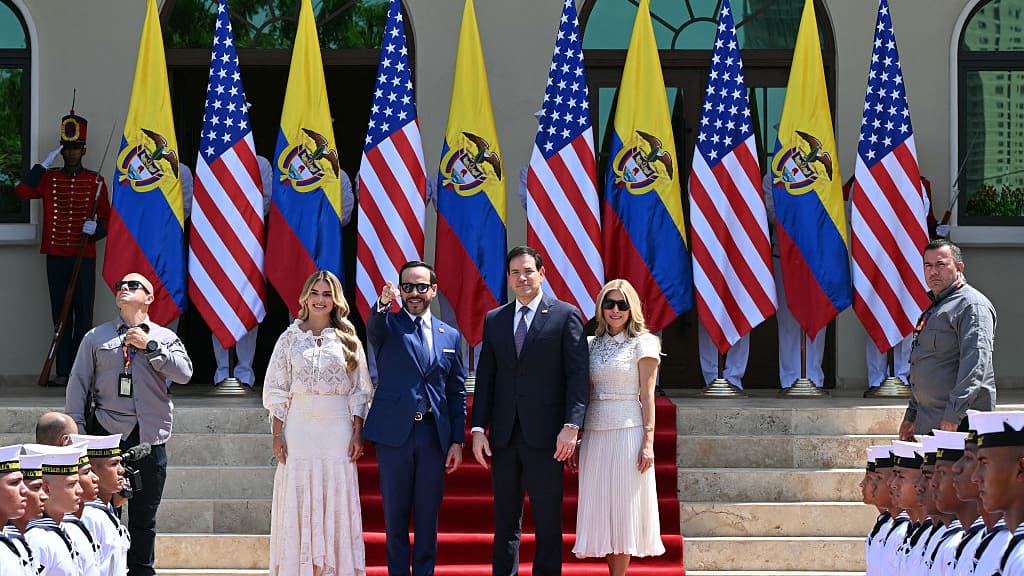
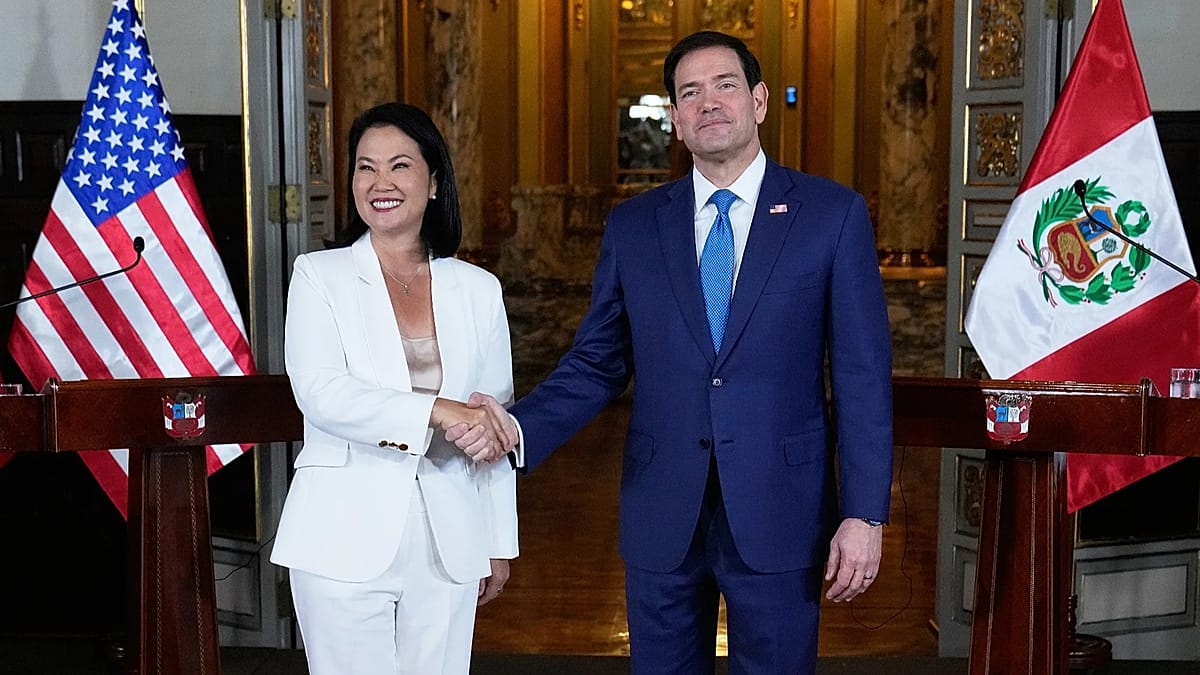
A State Department official confirms to TIME that the department notified Congress that $52 million in foreign military funding for Iraq, North Macedonia, Slovakia, and Tunisia will be diverted to Colombia, Ecuador, Panama, and Peru, and that the funds will be used to “combat narcoterrorism in our own backyard and help continue to secure the Panama Canal.”
asserted
funds → confirm → Canal
The department did not specify how much military funding the U.S. will continue to provide those Middle Eastern and European nations following the shift.
asserted
U.S. → specify → shift
“The proposed reprogramming in the Western Hemisphere will reduce opportunities for adversaries to establish or sustain strategic footholds in our hemisphere,” the State Department official says.
asserted
official → propose → hemisphere
The reallocation of military funding reflects a broader shift in the U.S.’s priorities when it comes to foreign policy.
asserted
it → reflect → policy
Since Trump’s return to office last year, his Administration has worked to buttress the U.S.'s presence in the Western Hemisphere in the name of curbing drug trafficking from Central and South America and squashing the influence of other nations, such as China, in the region.
asserted
Administration → work → region
The Trump Administration has also sought to recalibrate its foreign policy regarding the Middle East and Europe.
asserted
Administration → seek → East
A national security strategy laid out by the White House at the end of last year stated that the Administration intended to take a more hands-off approach to armed conflict in those regions and allow them to become more militarily self-reliant.
asserted
them → lay → regions
The diversion of foreign military aid marks the latest in several moves Trump has made to cut U.S. troops and funding in Europe during his second term—though in the Middle East, his war in Iran has engaged the U.S. in months of conflict.
asserted
war → mark → conflict
Experts warn that the shift in military funding—and the broader plans of realigning U.S. foreign policy it fits into—threatens to weaken the country’s alliances around the world over the long term.
asserted
it → warn → term
“You're eroding silently, quietly, bit by bit, this trust in the United States,” Jim Townsend, who served as Deputy Assistant Secretary of Defense for European and NATO Policy for eight years in the Obama Administration, tells TIME of the Administration diverting military funding from European and Middle Eastern countries.
asserted
Administration → erode → countries
“And then when we need them to do something … well, you're turning to a weaker country because you have been pulling their assistance and all of these tools that we have to make them a stronger ally.
asserted
them → need → that
And the Trump Administration’s increasing support for conservative-led nations in the Americas carries its own risks, contends Rebecca Bill Chavez, who served as the Deputy Assistant Secretary of Defense for Western Hemisphere Affairs in the Obama Administration.
asserted
who → increase → Administration
“U.S. security relations, these are some things you build over time, and if they start to become relationships only with particular governments rather than with countries, that's risky,” she says.
asserted
she → build → countries
“We have to show the region that we are a reliable partner.
asserted
we → have → region
And one of the best ways to do this is to be consistent.”
asserted
one → do → this
How—and why—the Trump Administration is ramping up U.S. military involvement in the Western Hemisphere
During Trump’s second term his Administration has increased military funding to Latin American countries, as well as boosting the U.S.’s own military presence in the region.
asserted
Administration → ramp → region
The U.S. has also conducted a number of military operations in the region since Trump returned to the White House, including a series of lethal attacks on what federal officials claimed were vessels transporting narcotics to the U.S. from the Caribbean that have drawn blowback from lawmakers on both sides of the aisle in Washington.
asserted
that → conduct → Washington
The Trump Administration has also partnered with Ecuador for a joint military operation targeting “narco-terrorists” in the South American country, while announcing plans for further campaigns of the same kind in other nations in the region.
asserted
Administration → partner → region
And in January, the U.S. launched a military operation in Venezuela that resulted in the capture of the country’s then-leader Nicolas Maduro, who had previously been indicted in the U.S. on charges of drug trafficking and corruption.
asserted
who → launch → trafficking
After the operation, Trump pledged that “American dominance in the Western Hemisphere will never be questioned again.”
asserted
dominance → pledge → Hemisphere
These moves reflect what the President has referred to as the “Trump Corollary” to the Monroe Doctrine or, later, as the “Donroe Doctrine,” a revival of a 19th century foreign policy framework first articulated by former President James Monroe that was used to justify assertions of U.S. military and economic control in Latin America.
asserted
that → reflect → America
A national security strategy released by the White House in November detailed that “Trump Corollary” in effect as an assertion that the U.S. must be “preeminent in the Western Hemisphere … a condition that allows us to assert ourselves confidently where and when we need to in the region.”
asserted
we → release → region
“We want to ensure that the Western Hemisphere remains reasonably stable and well-governed enough to prevent and discourage mass migration to the United States; we want a Hemisphere whose governments cooperate with us against narco-terrorists, cartels, and other transnational criminal organizations; we want a Hemisphere that remains free of hostile foreign incursion or ownership of key assets, and that supports critical supply chains; and we want to ensure our continued access to key strategic locations,” the strategy document reads.
asserted
document → want → locations
The strategy described the Administration’s plans to back like-minded leaders in the Western Hemisphere as well, stating that it would “reward and encourage the region’s governments, political parties, and movements broadly aligned with our principles and strategy.”
asserted
it → describe → principles
Experts warn about the potential consequences of shifting military aid
Townsend warns that reducing military funding for European and Middle Eastern countries will weaken their ability to collaborate with and support the U.S.
“
asserted
reducing → warn → U.S.
It creates allies who are not as strong as they could have been,” Townsend says.
uncertain
Townsend → create → allies
“It creates allies who are not as helpful as they could have been, and they're creating allies that are not as integrated and as pro-U.S. as they could have been.”
This is especially true, he asserts, for members of the North Atlantic Treaty Organization (NATO), which include North Macedonia and Slovakia.
uncertain
which → create → Macedonia
Trump has repeatedly clashed with the U.S.’s NATO allies during his second term, going so far as to threaten to pull out of the military pact after several other member countries declined to help the U.S. in its ongoing war against Iran.
asserted
countries → clash → Iran
Foreign military financing (FMF) allows other governments to purchase U.S. military equipment and carry out military trainings in tandem with the U.S.
asserted
governments → allow → U.S.
Without it, countries may be left unable to purchase key defensive equipment, such as drones or aircrafts, Townsend explains, which in turn weakens U.S. military alliances in the region.
uncertain
which → leave → region
Chavez meanwhile tells TIME that many Latin America nations could benefit greatly from U.S. military support, but argues that selecting who receives that support based on political ideology isn’t sustainable for U.S. relations in the region.
“All of this raises the question whether U.S. security assistance is increasingly being tied to the political orientation of a president rather than to long-term relationships with countries and institutions, and there's a risk there,” Chavez says.
uncertain
Chavez → tell → countries
“In the past, the trouble has come when we've been feeding money to a regime that ends up killing the opposition,” he says.
asserted
he → come → opposition
“It's been a very spotty record in terms of assistance that we give to countries in the Caribbean or in Central America, Latin America, where this money ends up going to the wrong people.”
asserted
money → give → people
 The Aporia