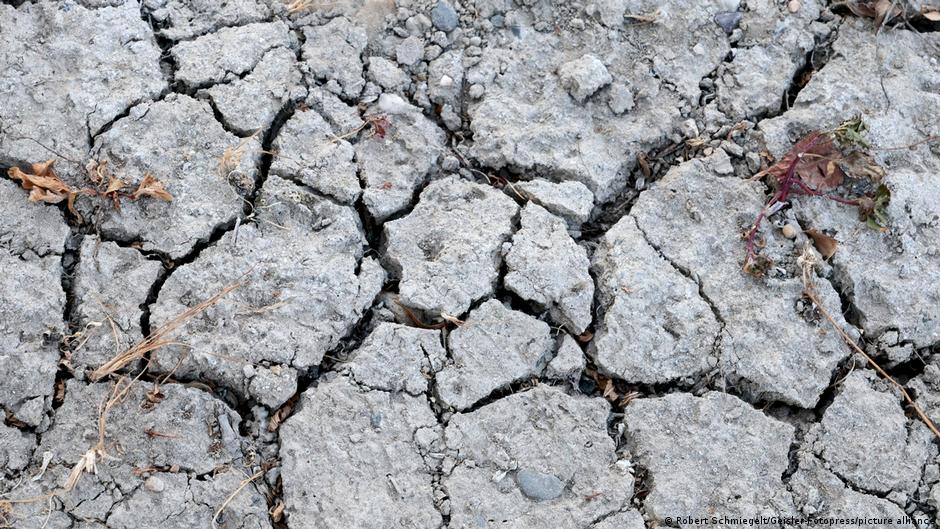
Drought in Germany and Europe are driving up costs

World | Deutsche Welle · collected 2026-08-21 · by Astrid Prange de Oliveira
Read the original at World | Deutsche Welle ↗

Summary

Research has shown that droughts and extreme weather conditions in Germany and Europe are contributing to rising costs, with transport costs increasing significantly due to reduced cargo capacity on rivers like the Rhine. According to the Food and Agriculture Organization of the United Nations (FAO), food prices are currently 30% higher than in 2020, with meat and oilseeds experiencing sharp price increases. A study by the European Central Bank (ECB) found that climate change and extreme weather events can lead to persistent upward pressures on inflation, particularly from extreme temperatures in summer. The ECB is considering whether to raise interest rates again due to increased costs, which could hamper economic growth.
Written by the local model on 2026-08-21, using this article's own text rather than the other coverage of the same event (that is the story summary below).

Signals How these are calculated →

Claims extracted
24
claim-shaped sentences
Uncertain
29%
7 of 24 hedged
Leaning
withheld
no quote in the article backed the model's score
Publisher trust
94.6
red-flag proxy, not a credibility rating
Outlets on this story
1
Environment
Narrative spread
1
articles carrying this framing
Analyzed 2026-08-21 · how these are computed

AI analysis (generated at analysis time, not now)

Story summary

Germany and other parts of Europe are experiencing a severe drought, causing significant economic costs due to increased transportation costs and higher food prices. Research by the RWI – Leibniz Institute for Economic Research shows that if cargo ships on the Rhine River can only carry a fraction of their usual load, transport costs per metric ton will rise substantially, leading to higher energy prices and cost passed on to consumers. The Food and Agriculture Organization of the United Nations (FAO) reports that global food prices are currently 30% higher than in 2020, with meat and oilseed prices rising sharply. According to a study by the European Central Bank, climate change and extreme weather events are also contributing to inflation rates, along with supply bottlenecks and price shocks caused by conflicts such as the US-Iran and Russia-Ukraine wars. The drought's impact on Germany's economy is not yet fully quantified, but the FAO takes into account its effects in calculating food prices.

Written for “European Drought Crisis” on 2026-08-31, grounded in this article and the 0 other(s) covering the same event.
Why this leaning score
The model judged this article politically coded and scored it +0.35, but none of the 1 quote(s) it offered could be found in the article text, so the score is not published.
Written under an earlier scoring contract, which gave a paragraph rather than checkable quotes. Re-analysing this article replaces it.
Leaning score withheld for article 1716: no verified evidence · logged 2026-08-31

Story

📰 European Drought Crisis
Environment · 1 article(s) covering the same event. This is the one the site leads with.

How this is being covered How these are calculated →

Article leaning vs. publisher reliability
Source leaning vs. consistency

Compared with similar articles

This article reads unscored and hedges 29% of its claims. Each row says how that neighbour differs.
Al Jazeera – Breaking News, World News and Video from Al Jazeera
⚖️ leaning not scored 🔴 0% hedged 0 of 7 📰 publisher trust 96
“Article A describes a broader heatwave and energy crunch affecting Europe as a whole, while Article B focuses specifically on drought in Germany and its impact on transport costs and energy prices”

Publisher

World | Deutsche Welle · 73 article(s) · 0 correction(s) detected
SignalValueWeight
Correction rate 0.000 0.4
Uncertainty density 0.108 0.25
Assertive mismatch rate 0.000 0.35
No corrections detected for this publisher. That may mean careful reporting, or simply that nothing has been checked.

Who wrote this

Astrid Prange de Oliveira
1 article(s) here · 1 carrying a prediction
🔮 "If ships on the Rhine can only carry a fraction of their usual cargo, transport costs per metric ton will rise significantly," Torsten Schmidt, an economist at the RWI – Leibniz Institute for Economic Research, told DW.
The only article under this byline in the corpus.

Topics

ECB FAO Germany the Food and Agriculture Organization of the United Nations the RWI – Leibniz Institute for Economic Research

Subjects

ECB ORG · 6× FAO ORG · 2× Germany GPE · 2× Iran GPE · 2× Ukraine GPE · 2× Russia GPE · 1× Torsten Schmidt PERSON · 1× the European Central Bank ORG · 1× the Food and Agriculture Organization of the United Nations ORG · 1× the RWI – Leibniz Institute for Economic Research ORG · 1×

Narrative

Inflation driven by extreme weather and energy shocks Recent studies also suggest that climate change and extreme weather events are affecting inflation rates, as are supply bottlenecks as well as gas and oil price shocks caused by the US-Iran and Russia-Ukraine wars.
framing: mixed · carried by 1 article(s) · first seen 2026-08-21
🔮 "If ships on the Rhine can only carry a fraction of their usual cargo, transport costs per metric ton will rise significantly," Torsten Schmidt, an economist at the RWI – Leibniz Institute for Economic Research, told DW.
2026-08-21 · World | Deutsche Welle
Drought in Germany and Europe are driving up costs · mixed framing

Claims (24 extracted, 7 hedged)

So far, research institutes have not been able to quantify the impact of extreme weather conditions on inflation in Germany, but there are clear trends. asserted
institutes → quantify → Germany
"If ships on the Rhine can only carry a fraction of their usual cargo, transport costs per metric ton will rise significantly," Torsten Schmidt, an economist at the RWI – Leibniz Institute for Economic Research, told DW. asserted
Schmidt → carry → DW
He added that this would drive up the cost of energy sources, such as diesel and heating oil, which are in large part transported by water. asserted
which → add → water
He said that higher costs would be passed on to consumers. asserted
costs → say → consumers
For its data, the Food and Agriculture Organization of the United Nations (FAO) takes into account the effects of global warming, extreme weather and crop losses. asserted
Organization → take → warming
According to the FAO, food prices are currently about 30% higher than in 2020, with meat and oilseeds rising sharply since then. uncertain
meat → accord → 2020
Inflation driven by extreme weather and energy shocks Recent studies also suggest that climate change and extreme weather events are affecting inflation rates, as are supply bottlenecks as well as gas and oil price shocks caused by the US-Iran and Russia-Ukraine wars. asserted
bottlenecks → drive → wars
A study conducted by the European Central Bank (ECB) and five European research institutes entitled "Climate extremes, food price spikes, and their wider societal risks" that was published in July 2025, warned against escalating inflation. "Central bank mandates for price stability may become increasingly challenging to deliver if more frequent extreme weather events make food prices less stable domestically and in global markets," the study states. uncertain
study → conduct → markets
Higher coffee prices in Brazil or Vietnam can also affect inflation in the EU. asserted
prices → affect → EU
Will ECB raise interest rates again? asserted
ECB → raise → rates
These challenges could become even more trying if temperature rises have a long-term effect on inflation. uncertain
rises → become → inflation
If inflation has to be dealt with by higher interest rates, economic growth will also be hampered. asserted
growth → have → rates
In 2023, the ECB published a study called "The asymmetric effects of weather shocks on euro area inflation" that reached a similar conclusion after examining the four largest European Union economies. asserted
that → publish → economies
"With a changing climate implying an increased frequency and severity of extremes in Europe, the shocks studied here can be expected to occur more frequently and could lead to persistent upward pressures on inflation, especially from extreme temperatures in summer," it read. uncertain
it → change → summer
"Given the differing impacts of shocks in different seasons and across countries, our results also suggest that climate change could enhance heterogeneity of inflation developments across euro area countries. uncertain
change → give → countries
According to the ECB, the inflation rate in the euro area in June this year ranged from 2% in France to 5.4% in Lithuania. uncertain
rate → accord → Lithuania
High transport costs, at 5.3%, are driving inflation. asserted
costs → drive → inflation
Whether the ECB will raise key interest rates again in view of increased costs on waterways remains to be seen. asserted
raise → raise → waterways
On June 11, it raised the deposit rate by 0.25 percentage points to 2.25%. asserted
it → raise → %
"For monetary policy, the key question is whether this is a one-time, temporary spike in costs or whether the effect is being compounded by other factors that are driving up prices, such as energy prices resulting from the war in Iran," explained Schmidt from the RWI. asserted
Schmidt → compound → RWI
He predicted that a "weather-related price spike" would probably not lead to "tighter monetary policy" but suggested the situation would be different if multiple crises coincided, resulting in "wider, more persistent inflation that the ECB could no longer ignore." Holger Schulz, a financial expert with the German Savings Banks Association (DSGV), recommended in a statement that the "German economy should return to operating with higher inventory levels. uncertain
economy → predict → levels
He explained that this was the lesson learned from recent supply chain crises. asserted
this → explain → crises
Whether the COVID-19 crisis, the war in Ukraine or the closure of the Strait of Hormuz,” he said, "higher inventory levels are a kind of insurance premium in a world that is so unpredictable on so many fronts. asserted
that → say → fronts
This article was originally published in German. asserted
article → publish → German

💬 Give feedback
🕘 History 🎫 Support