How much could Trump's 'economic D-Day' hurt Iran?

BBC News · collected 2026-08-21 · by Bernd Debusmann Jr
Read the original at BBC News ↗

Summary

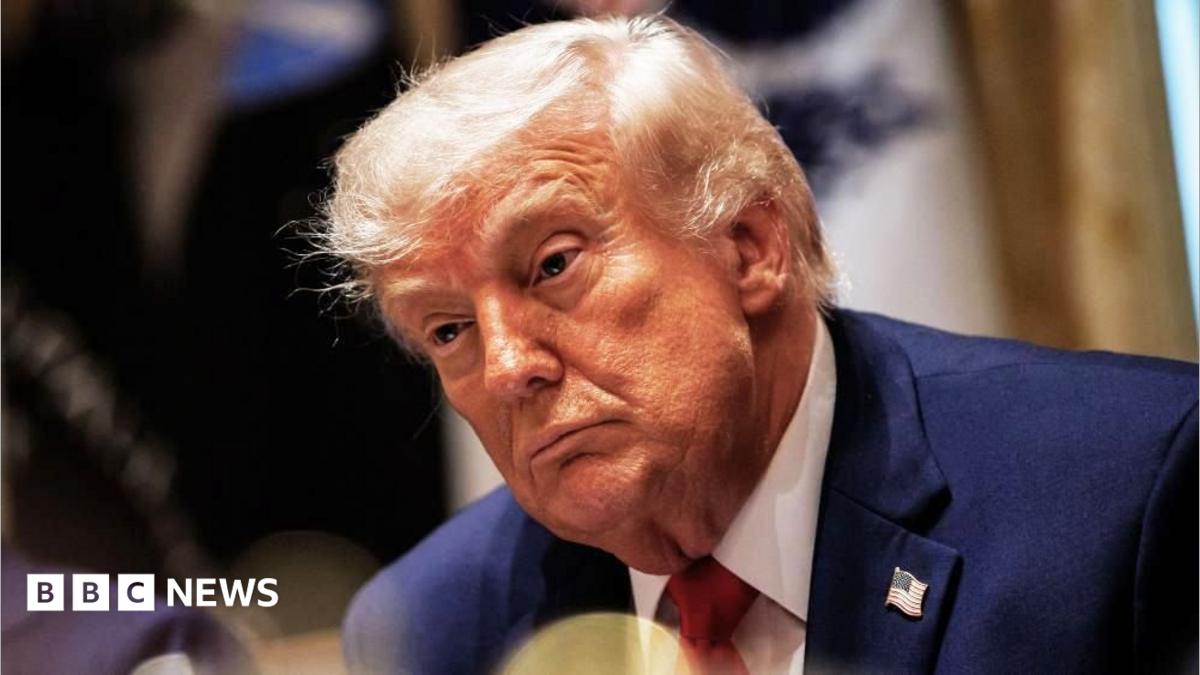
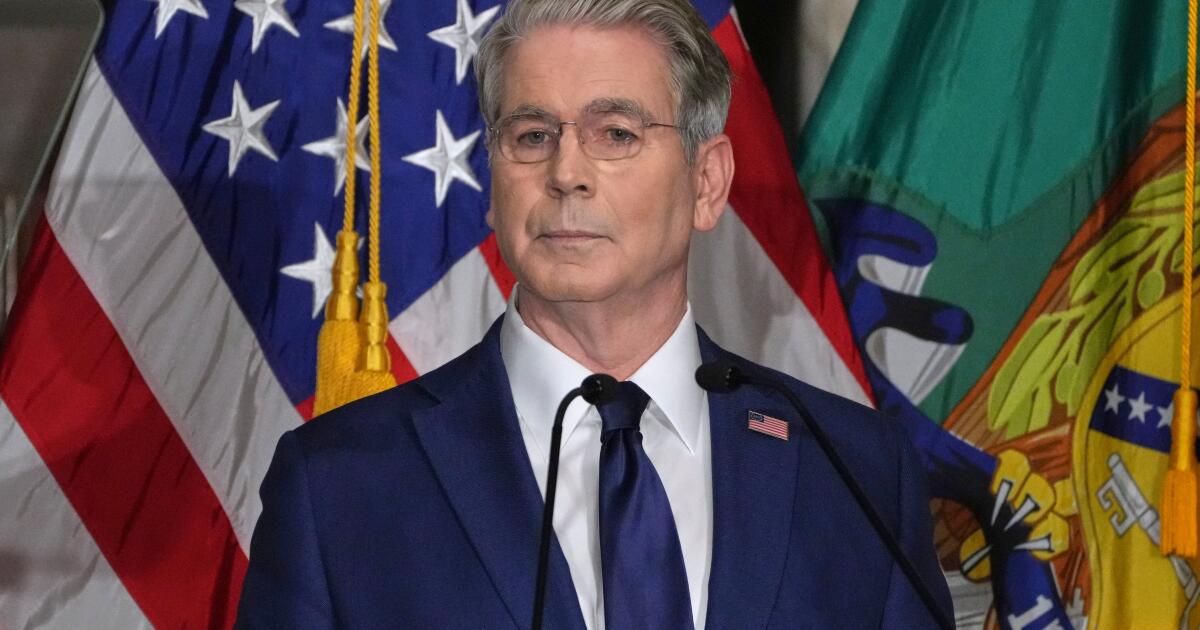
US President Donald Trump has announced an "economic D-Day" aimed at pressuring countries into stopping business with Iran, threatening them with "tremendous" economic consequences. According to Treasury Secretary Scott Bessent, any country found doing business with Iran will face enforcement from the US government and Treasury. The exact mechanisms of this plan are unclear, but it is expected to be revealed in a news conference on August 24. The move comes as the conflict between the US and Iran appears stalled, with previous strategies failing to yield results.
Written by the local model on 2026-08-21, using this article's own text rather than the other coverage of the same event (that is the story summary below).

Signals How these are calculated →

Claims extracted
39
claim-shaped sentences
Uncertain
10%
4 of 39 hedged
Leaning
Leans right
of the writing, not the subject
Publisher trust
95.5
red-flag proxy, not a credibility rating
Outlets on this story
193
Politics
Narrative spread
1
articles carrying this framing
Analyzed 2026-08-21 · how these are computed

AI analysis (generated at analysis time, not now)

Story summary

Here are the articles grouped by topic:

Iran War

Trade Tariffs

Other

Note that some of the article summaries are quite similar, and it may be worth combining or rephrasing them to reduce duplication.

Written for “US-Iran Trade Dispute Escalation” on 2026-08-31, grounded in this article and the 192 other(s) covering the same event.
Why this leaning score
The article's own words the score was based on. Each is quoted verbatim and was checked against the article text before being stored, so you can find it in the original.
Score +0.35 Confidence medium 1 quote(s) discarded as not found in the article
Leaning score +0.35 for article 1672 (medium confidence, 1 verified quote) · logged 2026-08-31

Story

📰 US-Iran Trade Dispute Escalation
Politics · 193 article(s) covering the same event.

How this is being covered How these are calculated →

Article leaning vs. publisher reliability
Source leaning vs. consistency

Compared with similar articles

This article reads leans right and hedges 10% of its claims. Each row says how that neighbour differs.
Home - CBSNews.com
⚖️ leaning not scored 🔴 15% hedged 41 of 270 📰 publisher trust 58
“Article A reports on President Trump announcing a 'crushing economic operation' on Iran on August 18, while Article B discusses the concept of an 'economic D-Day' with no mention of a specific date or announcement”
The Straits Times World News
⚖️ leaning not scored 🔴 0% hedged 0 of 4 📰 publisher trust 95
“Both articles describe US President Donald Trump's announcement of an 'economic D-Day' or 'crushing economic operation' against Iran on August 20, with a focus on the potential consequences for both Iran and other countries.”
Al Jazeera – Breaking News, World News and Video from Al Jazeera
⚖️ leaning not scored 🔴 0% hedged 0 of 1 📰 publisher trust 96
“Article A discusses the current struggles of Iranians due to soaring prices and a weakening currency, while Article B focuses on Trump's announcement of an 'economic D-Day' as a potential future action against Iran”
www.thestar.com - RSS Results of type article
⚖️ leaning not scored 🔴 0% hedged 0 of 2 📰 publisher trust 97
“Article A reports on Iran dismissing US economic threats in general, while Article B specifically discusses Trump's 'economic D-Day' plan and its potential impact on Iran”
CBC | World News
⚖️ leaning not scored 🔴 11% hedged 2 of 19 📰 publisher trust 95
“Article A reports Trump's promise of an 'economic operation' against Iran, while Article B discusses the potential consequences and feasibility of such a move, suggesting they are related but distinct events.”
Home - CBSNews.com
⚖️ Leans left further left than this 🔴 12% hedged 5 of 41 📰 publisher trust 58
“Both articles describe President Trump's threat of an 'economic D-Day' against Iran on the same day, August 21st”
The Straits Times World News
⚖️ leaning not scored 🔴 75% hedged 3 of 4 📰 publisher trust 95
“Both articles report on US Treasury Secretary Scott Bessent announcing the toughest sanctions ever imposed on Iran, which happened on the same day and time.”
The Independent World
⚖️ Leans strongly right further right than this 🔴 7% hedged 4 of 56 📰 publisher trust 95
“Both articles report on the same exact event: US President Donald Trump's vow to impose economic sanctions on any country doing business with Iran”
National Post
⚖️ Leans right 🔴 8% hedged 3 of 36 📰 publisher trust 96
“Both articles describe a specific event, at the same time (Aug 21, 2026), where U.S. Treasury Secretary Scott Bessent will unveil plans to economically isolate Iran and its trading partners, with President Trump's threat of an 'economic D-Day' as the context.”
CBC | World News
⚖️ Leans strongly left further left than this 🔴 12% hedged 3 of 25 📰 publisher trust 95
“Both articles report on Trump's threat of 'economic warfare' or 'economic D-Day' made on the same day, August 21, 2026”

Publisher

BBC News · 588 article(s) · 0 correction(s) detected
SignalValueWeight
Correction rate 0.000 0.4
Uncertainty density 0.090 0.25
Assertive mismatch rate 0.000 0.35
No corrections detected for this publisher. That may mean careful reporting, or simply that nothing has been checked.

Who wrote this

Bernd Debusmann Jr
2 article(s) here · 1 carrying a prediction
🔮 To break the deadlock, Trump has vowed an "economic D-Day" under which any country that does business with Iran would face "tremendous" economic consequences.
2026-08-21 · assertive framing · How much could Trump's 'economic D-Day' hurt Iran?
🔮 The USS George Washington, which was near Malaysia on Thursday, could arrive in the region in about nine days, BBC analysis shows.
Also by Bernd Debusmann Jr
Nothing else under this byline is closely related to this article, so these are simply their most recent.

Topics

CNBC Iran Treasury the Islamic Republic the Joint Comprehensive Plan of Action

Subjects

Iran GPE · 12× Iranian NORP · 2× Parker PERSON · 2× Trump PERSON · 2× Bessent ORG · 1× CNBC ORG · 1× Donald Trump PERSON · 1× JD Vance PERSON · 1× Scott Bessent PERSON · 1× Treasury ORG · 1×

Narrative

Michael Parker, an eight-year veteran of the Office of Foreign Assets Control and expert on economic sanctions, said the new strategy will likely represent an effort to "expand the economic blast radius" of sanctions by targeting third countries that still deal with Iran but which have economies that depend on the US dollar.
framing: assertive · carried by 1 article(s) · first seen 2026-08-21
🔮 To break the deadlock, Trump has vowed an "economic D-Day" under which any country that does business with Iran would face "tremendous" economic consequences.
2026-08-21 · BBC News
How much could Trump's 'economic D-Day' hurt Iran? · assertive framing

Claims (39 extracted, 4 hedged)

- Published Nearly six months after US President Donald Trump vowed a swift victory over Iran, the conflict appears to be at a standstill, with prospects of a military victory or negotiated settlement growing dimmer. asserted
prospects → publish → victory
To break the deadlock, Trump has vowed an "economic D-Day" under which any country that does business with Iran would face "tremendous" economic consequences. asserted
that → break → consequences
Iran, however, has long faced sanctions and has so far shown a willingness to endure pain, and a capacity to adapt to immense economic and military pressure as the conflict drags on. asserted
conflict → face → pressure
The key question for the US then becomes, will further sanctions work where other strategies have failed? asserted
strategies → become → US
The exact mechanics of the new US economic pressure campaign remain unclear, with Treasury Secretary Scott Bessent promising to reveal them in a news conference on 24 August. uncertain
Bessent → remain → August
But in an interview with CNBC, Bessent made clear that the US was willing to take action against any country - friend or foe - that it believes is extending a lifeline to Iran. asserted
it → make → Iran
"You are either with us or against us," he said. asserted
he → say → us
"If you insist on doing business with [Iran], either transferring money, buying their oil or doing seaborne sea transfers, then the US Treasury and the US government... will put its full might and force toward enforcing against you." uncertain
Treasury → insist → you
Vice-President JD Vance has described the sanctions as a "new phase" of the conflict in which economic pressure was the "most effective" tool available to the US. asserted
pressure → describe → US
"They're going to try to apply economic pressure to us, but what has been true over the last couple of weeks is that they felt a lot more pressure than we have," Vance said on the Clay Travis and Buck Sexton show. " asserted
Vance → go → show
We're going to keep that going because we think that's the best way to ultimately achieve the final objective." asserted
that → go → objective
Iran has faced significant US sanctions since nearly the beginning of the Islamic Republic in 1979. asserted
Iran → face → 1979
The economic pressure campaign intensified after the first Trump administration withdrew from the Joint Comprehensive Plan of Action, a 2015 pact between world powers and Iran to curb its nuclear programme. asserted
administration → intensify → programme
And in the current conflict, the US government has already announced Operation Economic Fury, a two-pronged US economic campaign combining US Treasury-co-ordinated sanctions against regime financial flows and a naval blockade against Iranian ports. asserted
government → announce → ports
Imran Bayoumi, a geostrategy expert with the Atlantic Council in Washington DC and former policy adviser for the defence department, told the BBC that the latest announcement was likely the result of mounting frustration that other options have not delivered the results Trump wants. asserted
Trump → tell → results
"This is really a recognition that the US is almost stuck in this war," he said. asserted
he → say → war
"This is just another tool that the US is using," Bayoumi added. asserted
Bayoumi → use → that
"We've not seen a clear strategy laid out by the administration with either military or economic tools. asserted
We → see → tools
The question of what the US is trying to achieve is still unanswered." asserted
US → try → what
Michael Parker, an eight-year veteran of the Office of Foreign Assets Control and expert on economic sanctions, said the new strategy will likely represent an effort to "expand the economic blast radius" of sanctions by targeting third countries that still deal with Iran but which have economies that depend on the US dollar. asserted
that → say → dollar
"Thus far, the US has largely used the threat of these secondary sanctions against foreign financial institutions to encourage compliance with sanctions policy," he said. asserted
he → use → policy
"But this is a lever that is sort of unexplored insofar as targeting anything touching the US dollar that is also touching Iran," Parker added. asserted
Parker → target → Iran
As an example, Parker pointed to foreign financial institutions that help Iran evade sanctions, or directs money towards Iranian coffers. asserted
Iran → point → coffers
How Iran would respond to these moves remains unclear, but sanctions experts say that Iran has so far proved adept at using irregular channels to circumvent sanctions - such as "shadow" vessels transporting oil or new commercial fronts unlisted by US sanctions. uncertain
Iran → respond → sanctions
"You keep seeing new names popping up, because Iran is adapting really quickly," said Mohammed Hammouda, an export control and sanctions manager at the London Stock Exchange. asserted
Hammouda → keep → Exchange
"Whatever sanctions one does, they find a new road [around it]." asserted
they → do → it
These Iranian counter-moves, he added, often left those charged with enforcing compliance playing a game of catch-up. asserted
he → add → up
"Sanctions are all on paper, but the hard work is behind the scenes," Hammouda said. asserted
Hammouda → say → scenes
"There are teams worldwide trying to impose sanctions and identify those parties involved, which is why Iran has to try to adapt. asserted
Iran → be → parties
" How effective these sanctions are will largely be determined by how the countries that are ultimately targeted - which could include US allies like Turkey and Iraq, as well as China - react. uncertain
which → determine → Turkey
"Some of this is out of Iran's hands," Parker said. asserted
Parker → say → hands
"Iran's ability to evade or avoid sanctions is, in large part, contingent on other countries and financial institution's willingness to give them [Iran] access to the formal banking system." asserted
ability → evade → system
Parker believes that the sanctions were "only as powerful" as the willingness of targeted countries to comply with US foreign policy objectives or face potentially painful sanctions on trade involving the US dollar. asserted
sanctions → believe → dollar
Some experts question whether that willingness currently exists. asserted
willingness → question → ?
"I can't really see China agreeing to that, for example," Bayoumi said. asserted
Bayoumi → see → example
"These states have all been able to navigate their own interests with the Trump administration." asserted
states → navigate → administration
"The underlying point is that this is just another tool," he added. asserted
he → add → ?
"But the broader question of strategy remains. asserted
question → remain → strategy
Absent that, I'm not sure this is going to change anything long term." asserted
this → go → anything

💬 Give feedback
🕘 History 🎫 Support