That is 0 articles you have read today.
The Aporia is free and carries no advertising, so readers are the only
thing paying for it. If you are getting this much out of it, a small
donation is what keeps it independent.
Daily limit reached
You have read 0 articles today.
That is more than the 15 a day The Aporia gives away,
and well past what it can carry on nothing. Your allowance resets at
midnight.
There is no advertising here and nothing about you is sold, so readers
are the only thing paying for it. If the site is worth this much of
your day, it is worth a few dollars.
Everything else stays open: the
maps, the
directory and
search do
not count against this, and neither does re-opening something you have
already read today.
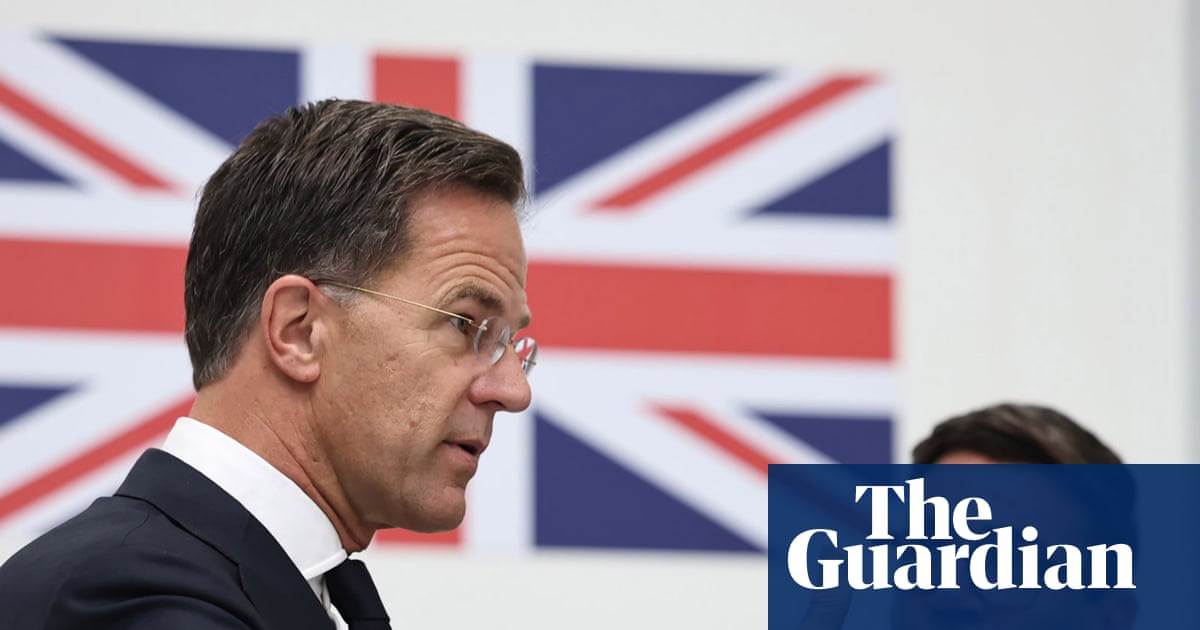
Nato chief Mark Rutte expressed confidence in the UK’s commitment to meet the alliance's target of spending 3.5% of GDP on defense by 2035 after meeting with British ministers in London. He emphasized that a "credible path" toward this goal needs to be established, though specifics will not be outlined until next year's spending review. Rutte also stressed the importance of economic growth for achieving these military commitments without compromising social security programs.
Written locally by qwen2.5:14b on 2026-09-17,
using this article's own text rather than the other coverage of the
same event (that is the story summary below).
Story summary
NATO Secretary General Mark Rutte met with UK Prime Minister Andy Burnham, Chancellor John Healey, and other key UK officials this week to discuss the country's defense spending commitments. Rutte emphasized that NATO member states must aim for a 3.5% allocation of GDP towards core defense by 2035, but he stressed the importance of establishing yearly increments to reach this goal rather than immediate or delayed action. Concerning recent Russian threats and actions in Ukraine, including President Vladimir Putin's significant military spending, Rutte underscored that NATO nations need to maintain a defensive edge. He expressed confidence in the UK's commitment to this target after meetings with British ministers who agreed on the necessity of incremental steps toward the 3.5% goal. However, Burnham has faced pressure from critics and former officials like John Healey, who previously argued for an interim target of reaching 3% defense spending by 2030 as a sign of seriousness about NATO commitments.
Written for “UK Defence Spending Goal” on 2026-09-18,
grounded in this article and the 2 other(s) covering the same event.
Why this leaning score
The article's own words the score was based on. Each is quoted
verbatim and was checked against the article text before being
stored, so you can find it in the original.
Leaning score +0.50 for article 16667 (high confidence, 2 verified quotes) · logged 2026-09-17
- Published
Nato chief Mark Rutte has said he is confident the UK government understands the need for a "credible path" to increase defence spending.
asserted
government → publish → spending
The alliance's secretary general told the BBC he was "absolutely confident" in the UK's commitment to hit a Nato-wide spending target of 3.5% of GDP by 2035.
asserted
he → tell → 2035
Speaking after meetings in London, he said British ministers accepted the need to make yearly steps towards hitting the target.
asserted
ministers → speak → target
But he accepted that the exact "pathway" towards the goal would not be set out until next year.
asserted
pathway → accept → year
Since entering Downing Street, Andy Burnham has recommitted to the Nato 3.5% target, after predecessor Sir Keir Starmer signed up to the goal last year.
But he has faced pressure to immediately set out a path towards an interim goal of 3% by 2030, which his chancellor John Healey had previously held up as a sign of credibility that Britain was serious about the goal.
asserted
Britain → enter → goal
Former Dutch PM Rutte has been encouraging members of the alliance not to defer spending increases until the last minute.
asserted
Rutte → encourage → minute
Speaking to BBC political editor Chris Mason after meeting Defence Secretary Wes Streeting and Foreign Secretary Ed Miliband in London, Rutte said he was confident British ministers understood the 2035 target could not be met "in one go in 2034".
uncertain
target → speak → 2034
"I am absolutely confident that when it comes to the 3.5[%] they are there," he said.
asserted
he → come → 3.5[%
"I am absolutely confident that when it comes to the yearly increments, they totally take it and accept it, that they have to be there.
asserted
they → come → it
What that credible path exactly will be, we will see with the spending review next year," he added.
asserted
he → see → review
Rutte also said that defence spending should be separated out from the issue of welfare, adding that economic growth was the key to ensuring military commitments could be met.
uncertain
commitments → say → welfare
The Conservatives have been pushing for hikes in defence spending to be funded through cuts to benefits, and have criticised Burnham for saying last week that national security "can't come at the expense of social security".
asserted
security → push → security
Rutte added: "I don't know all the details of the UK economy, I think this is something this government is now navigating," he added.
asserted
he → add → economy
"But I would say these are two separate issues."
asserted
these → say → ?
"One is, indeed, spending on defence, but the other is of course making sure that the economy is growing enough, so you can distribute the success of a growing economy amongst various income groups, various issues in the Budget, for example welfare and healthcare and the pensions."
asserted
you → spend → welfare
"You have to do it all, and if you want to do it successfully, you need economic growth," he added.
"
asserted
he → have → growth
You have to take tough decisions, and it's not always easy."
asserted
it → have → decisions
 The Aporia