That is 0 articles you have read today.
The Aporia is free and carries no advertising, so readers are the only
thing paying for it. If you are getting this much out of it, a small
donation is what keeps it independent.
Daily limit reached
You have read 0 articles today.
That is more than the 15 a day The Aporia gives away,
and well past what it can carry on nothing. Your allowance resets at
midnight.
There is no advertising here and nothing about you is sold, so readers
are the only thing paying for it. If the site is worth this much of
your day, it is worth a few dollars.
Everything else stays open: the
maps, the
directory and
search do
not count against this, and neither does re-opening something you have
already read today.
NATO Secretary General Mark Rutte visited the UK to discuss defense spending with Prime Minister Andy Burnham at a science business park in Oxford. Rutte emphasized the need for Britain and other European nations to increase their military expenditures to 3.5% of GDP by 2035, aligning with US demands and addressing what he called "the most dangerous and complex security environment in a generation." He cited concerns over Russia's aggression towards Ukraine, terrorism, Iran, and global geopolitical competition as reasons for the urgent need for higher defense spending.
Written by the local model on 2026-09-17,
using this article's own text rather than the other coverage of the
same event (that is the story summary below).
Story summary
Mark Rutte, NATO's secretary general, warned during a visit to the UK in Oxfordshire that NATO faces "the most dangerous and complex security environment in a generation." This statement came amid discussions about increasing defense spending by European nations. At a summit in The Hague in 2025, the UK and other alliance members agreed to boost their own defense budgets to match US levels following former President Trump's demands for Europe to take greater responsibility in defending the continent. Rutte emphasized the need for "more UK and more Europe" within NATO to address escalating geopolitical uncertainties and potential conflicts in Europe and the Middle East.
Despite these commitments, there are concerns about Britain’s progress toward the 3.5% GDP target by 2035—around £30 billion—which is currently only budgeted at 2.7% of GDP by the end of the next decade due to short-term financial constraints. Chancellor John Healey's recent resignation as defense secretary highlighted disagreements within the UK government over committing substantial funds towards this goal, with fears that such increases would necessitate significant adjustments in taxation or spending cuts across other sectors.
Written for “Nato Security Concerns” on 2026-09-17,
grounded in this article and the 0 other(s) covering the same event.
Why this leaning score
The article's own words the score was based on. Each is quoted
verbatim and was checked against the article text before being
stored, so you can find it in the original.
Leaning score +0.65 for article 14374 (high confidence, 1 verified quote) · logged 2026-09-17
Nato needs “more UK and more Europe in the alliance” to deal with the most dangerous security environment faced by the west in a generation, the secretary general of the 32-country military alliance said this afternoon on a visit to the UK.
asserted
general → need → UK
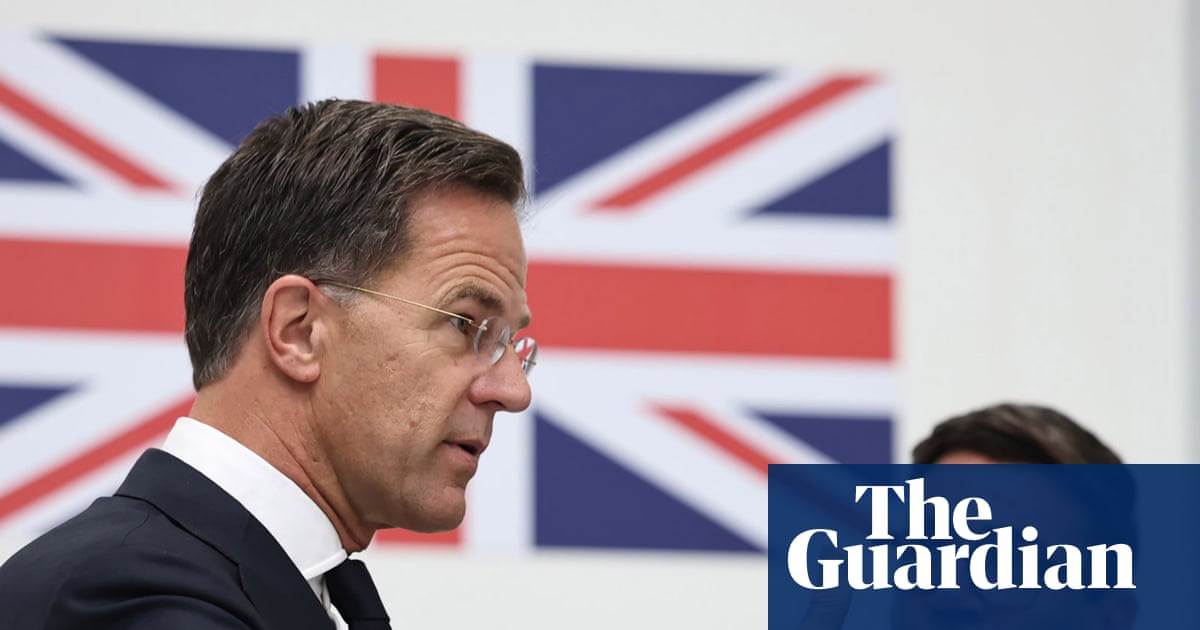
Mark Rutte praised Britain for promising to increase defence spending in line with US demands after a meeting with prime minister Andy Burnham – but argued that the military and financial effort must continue into the future.
“It is essential that your armed forces continue to provide the hard power Nato needs,” Rutte said in a speech to a specialist audience at Ditchley Park, a wartime retreat used by Winston Churchill in Oxfordshire.
asserted
Rutte → praise → Oxfordshire
It was a plea for the UK to make progress towards an alliance-wide target demanded by Donald Trump of spending 3.5% of GDP by 2035, around £30bn in real terms, money that has to be found from extra taxation, borrowing or reducing other spending.
asserted
that → make → spending
Britain has so far only budgeted to increase defence spending to 2.7% of GDP by the end of the next decade.
asserted
Britain → budget → decade
Short-term financial pressures have meant that the army has been told to stop non-essential training by the end of the year.
asserted
army → mean → year
Chancellor John Healey resigned as defence secretary from Keir Starmer’s government in June because the former prime minister would not commit to 3% by 2030, arguing that it would require too great a step up in the next decade.
But Healey refused to recommit to the interim target when he was appointed to the Treasury by Burnham a month later, raising questions that the new government was backloading spending increases until after the next election.
asserted
government → resign → election
Rutte said that he had discussed Britain’s “Nato commitments” when he had met Burnham at a science business park in Oxford earlier on Wednesday, without offering any details, in the first one-on-one meeting between the two.
asserted
he → say → two
Prior to that meeting, Burnham acknowledged that he had replaced Starmer, but insisted that there was “never any change in the UK’s unwavering commitment to Nato and our Nato obligations”.
asserted
he → acknowledge → Nato
The Nato chief, a former Dutch prime minister, said that many in Europe had made the “casual assumption” that the US would “always provide most of the muscle and pick up the bill, no matter what” until Trump returned to the White House.
asserted
Trump → say → House
Instead, he noted that during a summit in The Hague in 2025, the UK and other alliance members had agreed to increase their own defence spending to match US levels, in response to Trump’s demand that Europe take the lead in defending the continent.
“We need more UK and more Europe in the alliance,” Rutte said, because Nato “faces the most dangerous and complex security environment in a generation” with a return to wars in Europe and the Middle East, and wider geopolitical uncertainty.
asserted
Nato → note → Europe
Citing “Russia and its war against Ukraine, terrorism, Iran and the tectonic shifts of global geopolitical competition”, Rutte argued that the UK and Europe needed to invest more, because otherwise “our collective defence will not be credible”.
asserted
defence → cite → more
Britain, he said, had “a central role in building this stronger Europe in a stronger Nato” and noted that the UK was spending billions to upgrade the Trident nuclear deterrent, which is pledged to the defence of Nato members.
asserted
which → say → members
The UK is also gradually upgrading its conventional forces, though the UK’s overall defence spending, long the second largest in the alliance, is now behind Germany.
asserted
spending → upgrade → Germany
The UK was “leading the pushback” against a Russian campaign of provocation and sabotage across Europe, Rutte said, and that the UK had been “a good friend to Ukraine”.
asserted
UK → lead → Ukraine
Britain spends £3bn a year supporting Ukraine with weapons.
asserted
Britain → spend → weapons
 The Aporia