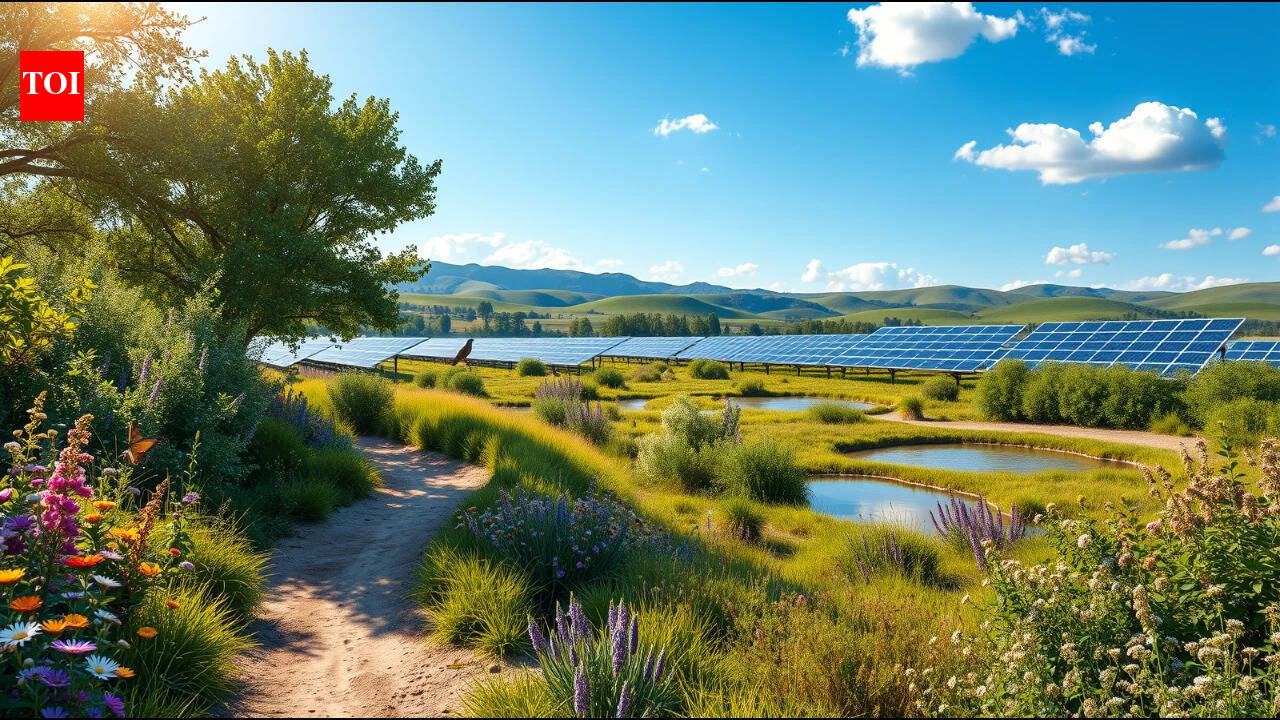
In 2011, planning began for a solar farm on the Broxted Estate in Suffolk, and by December 2013, the site was generating electricity for the first time.
asserted
site → begin → time
But what happened around the panels proved just as significant as the power they produced.
asserted
they → happen → power
Rather than simply fencing off the land and leaving it alone, the estate's owners worked with Suffolk Wildlife Trust and renewable energy company Cubico to manage the surrounding landscape for wildlife while continuing to generate solar power.
asserted
owners → fence → power
Over the following 12 years, the partners carried out long-term ecological monitoring to track how the site was changing.
asserted
site → follow → monitoring
A new report now shows that biodiversity across the estate and solar farm increased by 41 per cent compared with 2011.
asserted
biodiversity → show → 2011
The findings provide a rare long-term look at how a working solar farm can coexist with nature recovery when habitats are deliberately managed, suggesting that renewable energy infrastructure does not automatically have to come at the expense of wildlife.
asserted
infrastructure → provide → wildlife
How Suffolk Wildlife Trust tracked biodiversity at Broxted for more than a decade
asserted
Trust → track → decade
According to Suffolk Wildlife Trust's report, the project draws on more than 12 years of ecological monitoring and habitat management across the estate.
uncertain
project → accord → estate
Jo Green, the trust's wilder ecology manager, said involving ecologists during the planning and design stages was important in shaping the site's eventual ecological outcomes.
asserted
involving → say → outcomes
The long-running monitoring programme has also produced a dataset that the trust considers particularly valuable because detailed evidence covering such an extended period remains relatively uncommon among UK solar developments.
asserted
evidence → run → developments
Rather than treating the solar panels and surrounding farmland as separate areas, the management approach considers the site as one connected landscape, allowing habitat restoration, agriculture and renewable energy generation to operate alongside one another.
What wildlife has returned to the land around Broxted's solar panels
The 41 per cent increase represents more than a single biodiversity score.
asserted
increase → treat → score
Monitoring recorded 6 Red List and 13 Amber List Birds of Conservation Concern species using habitats around the solar farm, including the turtle dove, a farmland bird that has undergone severe population declines in Britain.
asserted
that → record → Britain
Meadow pipit numbers have more than doubled across the site, while 8 species of bat have also been recorded using the surrounding habitats.
asserted
species → double → habitats
Sheep grazing has formed part of the site's management strategy, helping maintain the grassland while allowing conservation measures to operate alongside agricultural use.
asserted
measures → form → use
The solar farm has also continued producing substantial amounts of renewable electricity.
asserted
farm → continue → electricity
Since it began operating in December 2013, it has generated more than 350 gigawatt-hours of electricity, according to the report, demonstrating that the ecological improvements did not require the site to stop functioning as a productive energy installation.
uncertain
improvements → begin → installation
Why Broxted's results could influence future UK solar farms
uncertain
results → influence → farms
The findings come as Britain faces the difficult task of expanding renewable energy while also protecting and restoring biodiversity.
asserted
Britain → come → biodiversity
Charles Ryder, owner of the Broxted Estate, said solar power can play a major role in the UK's energy future when developments are planned in a way that also considers wildlife and local communities.
asserted
that → say → wildlife
The Broxted experience suggests that the ecological effects of solar farms depend heavily on what happens to the land between and around the panels, rather than simply on the presence of the infrastructure itself.
uncertain
what → suggest → infrastructure
Since February 2024, new solar farm developments in England have also been subject to a requirement to deliver at least 10 per cent biodiversity net gain, making ecological planning an increasingly important part of the approval process.
asserted
planning → deliver → process
Broxted's long-term results therefore offer a useful real-world example of what can happen when habitat management begins at the planning stage and continues throughout the life of a renewable energy project.
asserted
management → offer → project
 The Aporia