United States Congress has passed a bill that gives President Donald Trump sweeping powers to impose sanctions on Russia’s crude exports as well as steep tariffs on buyers of Russian energy, a measure which will impact Moscow’s biggest customers, China and India.
asserted
which → pass → customers
The legislation, passed in the House of Representatives on Wednesday and sent to Trump to sign into law, is the most significant US action against Moscow since the president’s return to the White House.
asserted
legislation → pass → House
Recommended Stories
list of 3 items- list 1 of 3NATO downs drone over Lithuania, ‘probably’ launched by Russia
- list 2 of 3Eto’o could face Cameroon probe over alleged Russia payment
- list 3 of
uncertain
3Eto’o → down → payment
China play peacemaker as Iran’s foreign minister heads to Beijing?
asserted
minister → play → Beijing
Here is what we know:
asserted
we → know → what
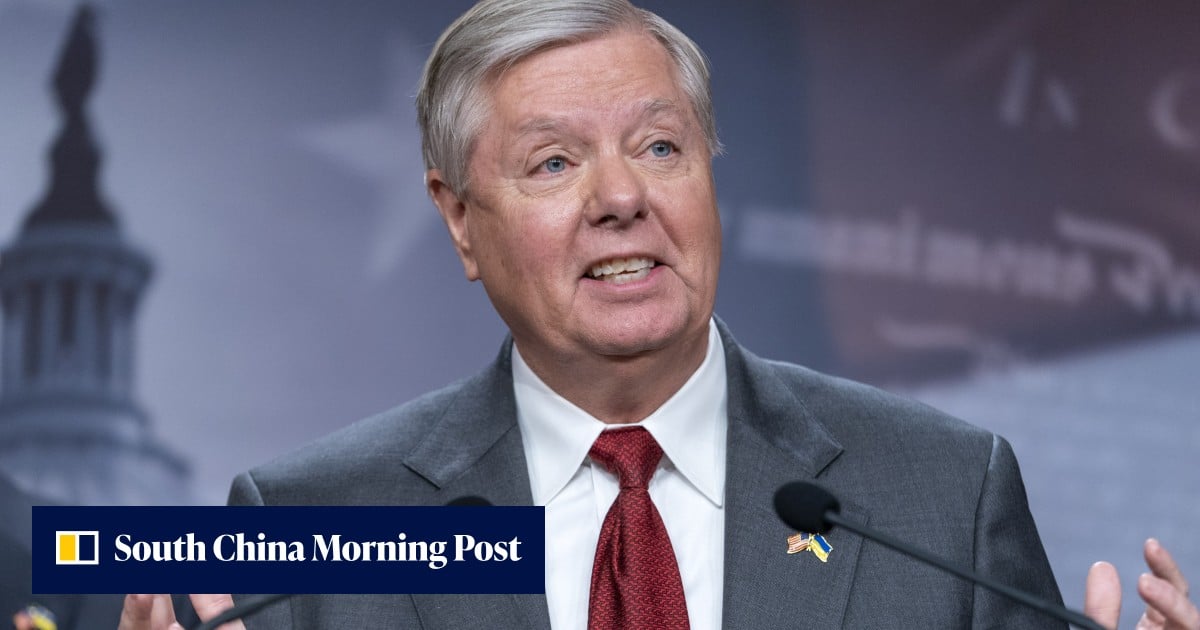
The “Lindsey O Graham Sanctioning Russia Act of 2026”, named after the late senator who was a staunch supporter of Ukraine up until his death in July, is designed to curtail the economic pipeline that has enabled Russia to fund its war against Ukraine, now in its fifth year.
asserted
that → name → year
Major provisions include new sanctions on Russian President Vladimir Putin as well as on more than 20 top officials and companies that work with the Russian defence industry.
asserted
that → include → industry
It also targets Russia’s “shadow fleet” of oil tankers and the network it uses to evade international sanctions on energy exports.
asserted
it → target → exports
The bill gives the president authority to impose sanctions by invoking the International Emergency Economic Powers Act (IEEPA).
asserted
bill → give → Act
Under it, he will be able to apply tariffs of up to 100 percent on exports to the US from the top five purchasers of Russian energy, military equipment or countries facilitating Russian sanctions evasion.
asserted
he → apply → evasion
Tariffs of up to 500 percent can also be applied to Russian imports directly into the US.
asserted
Tariffs → apply → US
The US imported $3.8bn in goods from Russia in 2025.
asserted
US → import → 2025
Who is buying Russian energy?
asserted
Who → buy → energy
China and India are the top two buyers of Russian energy and likely to be hit hardest by the new legislation.
asserted
China → hit → legislation
China buys about half of Russian crude oil exports, followed by India at 37 percent, according to August data from the think tank Centre for Research on Energy and Clean Air (CREA).
uncertain
China → buy → Energy
Turkiye and the European Union each import about 5 percent, the report says.
asserted
report → import → percent
How have India and China responded?
asserted
India → respond → ?
India, one of the world’s largest crude importers and a country whose dependence on foreign oil is expected to grow further in the coming years, is in a tricky position as its attempts to diversify away from Russian energy were disrupted by the shutdown of the Strait of Hormuz.
asserted
attempts → expect → Hormuz
Hours after the US Congress approved the bill, the Indian Ministry of External Affairs said New Delhi had raised the issue with various US interlocutors in recent months, and had “very clearly articulated” the potential implications for the bilateral relationship and the international energy market.
asserted
Delhi → approve → relationship
“The Indian side has also made clear its determination to take all necessary measures to protect its trade and economic interests,” it said in a statement.
asserted
it → make → statement
The government will work closely with trade and industry bodies to deal with the legislation’s implications, it added.
asserted
it → work → implications
The International Energy Agency (IEA) has warned that India’s rising reliance on crude imports has “major implications” for its energy security.
asserted
reliance → warn → security
Replacing Russian supplies could also mean sourcing more crude from producers farther away, including in the Americas.
uncertain
Replacing → replace → Americas
Recent experience suggests India has been more responsive to Western pressure over Russian oil purchases than China.
uncertain
India → suggest → China
According to the IEA, tanker-tracking data show Indian imports of Russian crude fell to 1.1 million barrels per day (bpd) in January, their lowest level since November 2022 and down from an average of 1.7 million bpd in 2025.
uncertain
imports → accord → 2025
By contrast, Russian crude deliveries to China surged to an all-time high that month.
asserted
deliveries → surge → high
China faces a tough choice.
asserted
China → face → choice
It must weigh the benefits of cheap Russian crude against steep US trade penalties.
asserted
It → weigh → penalties
“China systematically opposes extraterritorial jurisdiction, which lacks a basis in international law and does not have the authorisation of the United Nations Security Council,” said the spokesperson for the Chinese Ministry of Foreign Affairs, Guo Jiakun.
asserted
spokesperson → oppose → Affairs
Beijing “has always carried out normal economic and trade cooperation with countries around the world on the basis of equality and mutual benefit,” he said, adding that “such cooperation is not directed against third parties nor is it subject to interference or coercion by third parties.”
asserted
it → carry → parties
China does have one important advantage over India: Not all of its Russian oil arrives by sea.
asserted
all → have → sea
It receives crude through the Eastern Siberia-Pacific Ocean pipeline system, providing an overland supply route that is unaffected by disruptions in the Strait of Hormuz.
asserted
that → receive → Hormuz
But the calculation for both countries has changed since the war with Iran began.
asserted
war → change → Iran
Disruptions to Middle East supplies have made Russian barrels more, rather than less, important to Asian buyers, complicating Washington’s attempt to use access to the US market to pressure Moscow’s largest energy customers.
asserted
barrels → make → customers
How will this impact the oil market globally?
asserted
this → impact → market
The question now is how aggressively Trump will use his new powers, analysts say.
asserted
analysts → use → powers
The legislation allows him to impose tariffs of up to 100 percent, but does not automatically trigger them.
asserted
him → allow → them
Trying to squeeze large volumes of Russian crude out of the market, however, could prove particularly difficult at a time when alternate supplies are already under severe pressure.
uncertain
supplies → try → pressure
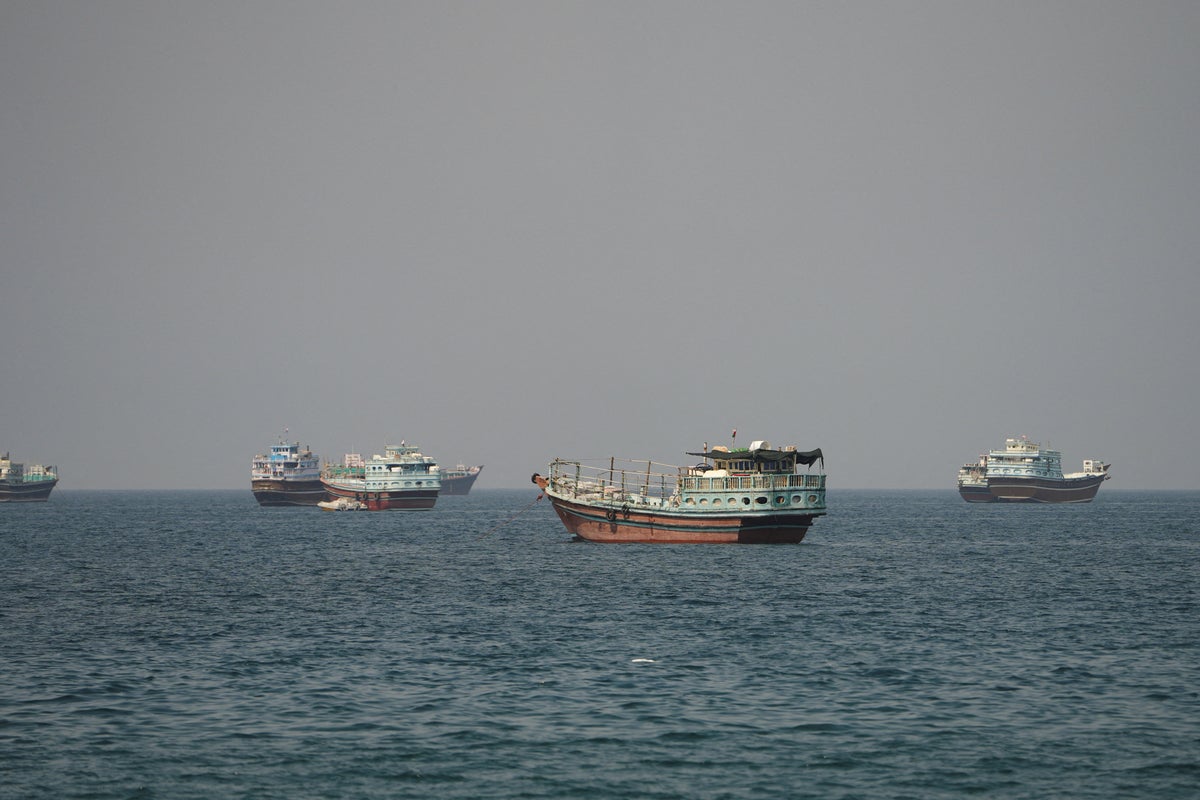
Iran has de facto controlled traffic through the Strait of Hormuz in retaliation for joint US-Israeli attacks on its territory since late February, disrupting one of the world’s most important energy routes.
asserted
Iran → control → routes
About one-fifth of global oil supplies were shipped through the waterway before the war began.
asserted
war → ship → waterway
…and 3 more, not listed.
 The Aporia