Photo via The Guardian

School phone bans result in ‘modest’ academic gains for students, study shows

Read the original at The Guardian ↗
Cite

Associated Press. (2026, November 17). School phone bans result in ‘modest’ academic gains for students, study shows. The Guardian. https://www.theguardian.com/education/2026/nov/17/school-phone-bans-results-students

Dated from the outlet's own feed. Check the original for its byline.

The Guardian · collected 2026-11-17 · by Associated Press

Quick Summary

A study by Harvard’s Center for Education Policy Research found that strict cellphone restrictions in US schools lead to small academic improvements, equivalent to about an additional week or two of learning over a school year. Analyzing test scores of 3.3 million students across 4,600 schools, the researchers concluded that while the gains are modest, they could accumulate over time. The study suggests that phone bans are a cost-effective way to mitigate the gradual learning loss associated with the rise of smartphone use since 2013.
Written by AI on 2026-11-17, from this article's own text only (the story summary below draws on all the coverage).
See how they differ ↓

AI analysis

Story summary

A new study from Harvard University and the National Bureau of Economic Research suggests that strict cellphone bans in U.S. schools, requiring students to place their phones in locked pouches during the school day, result in small but statistically significant academic gains. The research, analyzing test scores of 3.3 million students at 4,600 schools, found that these bans led to improvements equivalent to about an additional week or two of learning over a school year. However, the study's authors, including Harvard's Tom Kane and Dartmouth's Douglas Staiger, emphasize that while the bans show positive effects, they are not a cure-all solution, as student achievement has been declining globally since 2013, coinciding with the rise of smartphones and social media.

Written for “School Cellphone Ban Study Finds Benefits” on 2026-11-18, grounded in this article and the 1 other(s) covering the same event.

How they differ

2 outlets covered “School Cellphone Ban Study Finds Benefits”.

What each outlet says

One AI summary per outlet of its latest article on this story, written from that article alone and checked against it. Open the article for the outlet's own words.

The GuardianThis outlet17 Nov

A study by Harvard’s Center for Education Policy Research found that strict cellphone restrictions in US schools lead to small academic improvements, equivalent to about an additional week or two of learning over a school year. Analyzing test scores of 3.3 million students across 4,600 schools, the researchers concluded that while the gains are modest, they could accumulate over time. The study suggests that phone…

School phone bans result in ‘modest’ academic gains for students, study shows (this article)
NPR17 Nov

A new study suggests that strict cellphone bans in schools may help improve students' reading and math achievement, reversing some of the learning losses observed since around 2013. Researchers from Harvard University and Dartmouth College analyzed test scores of over 3 million students across the country before and after schools implemented locked pouches to store phones during school hours. The study found that…

Do school cellphone bans work? New study says yes – but it's complicated →

Compared with similar articles

This article reads leans right and hedges 18% of its claims. Each row says how that neighbour differs.
NPR
Hedges 6 of 50 claims Outlet record 60/100
The Independent
Hedges 10 of 41 claims Outlet record 59/100
“While both articles discuss the same general topic of academic gains from phone bans, they describe different aspects of the issue and do not report on the same specific study or event.”
New York Post
Leans left further left than this Hedges 1 of 22 claims Outlet record 66/100
“Article A reports on a nationwide study about academic gains from phone bans, while Article B focuses on the specific implementation and survey results in the LAUSD district.”
Toronto Star
Hedges 6 of 42 claims Outlet record 64/100
“While both articles discuss the impact of school phone bans on student learning, they appear to be summarizing different aspects of a broader topic or different studies rather than reporting on the same specific event or study release.”

Story

School Cellphone Ban Study Finds Benefits
Education · 2 article(s) covering the same event. See how they differ ↑
How this article was measured signals, leaning charts, publisher record, byline, topics and claims

Signals How these are calculated →

Claims extracted
40
sentences that state something as happening or true
Uncertain
18%
7 of 40 hedged ("reportedly", "may", "according to")
Leaning
Leans right
of the writing, not the subject · beta estimate
Publisher signals
64/100
The Guardian's corrections and hedging, across everything collected from it. Not a measure of accuracy.
Outlets on this story
2
Education
Same framing elsewhere
2
articles that frame the event the way this one does
Analyzed 2026-11-17 · how these are computed

How this is being covered How these are calculated →

Article leaning vs. publisher reliability
Source leaning vs. consistency

Publisher

The Guardian · 3642 article(s) · 8 correction(s) detected
Running correction rate · 8 correction(s)

Who wrote this

Associated Press
787 article(s) here · 1 carrying a prediction
When “Grand Theft Auto VI” finally drops this week, professional athletes across the globe will immediately begin stealing cars, running from the cops and causing every manner of virtual mayhem under the Vice City sun.
An image of Russian players briefly appeared alongside a message accusing the federation of banning a team its opponents couldn’t beat, the Canadian Press reported.
“Fears about what humans may lose when we outsource our thinking have made us reconsider the extent to which we rely on AI: from top mathematicians to teachers of young children.”
“What I would say to the White House is: transparency is key,” Leavitt said on Fox News.
Georgia stayed atop the latest College Football Playoff rankings, while surging Wake Forest moved up two spots and would be in the projected 12-team bracket if the postseason started this week.
But there was one thing working against the 40-year-old Pattinson: They thought he might be too famous.
“But what I can tell you for sure is that Jensen is a remarkable guy who founded and built a remarkable company with a lot of hard work and foresight, and he deserves admiration and respect no matter what and that will never go away,” Bezos said.
“The department determined that Waymo’s driverless freeway operations pose an imminent hazard to public safety due to recurring incursions by its vehicles into active construction zones where construction workers, vehicles and equipment are present,” Groveman said, adding that “similar incidents” previously occurred on 18 May.
As negotiations continue on the sidelines, his bloc, along with the Arab-led parties, can use their majority in the newly-sworn in Knesset to advance their legislative agenda.
And there could be further gains if schools continue banning phones, the researchers said.
Wire or desk byline, not an individual reporter.
Also by Associated Press
Nothing else under this byline is closely related to this article, so these are simply their most recent.
All 787 articles by Associated Press →

Topics

Center for Education Policy Research Harvard National Bureau of Economic Research Yondr the Phone Free Schools State Report Card

Subjects

Harvard ORG · 4× Dee PERSON · 3× Stanford ORG · 2× Center for Education Policy Research ORG · 1× Kane PERSON · 1× National Bureau of Economic Research ORG · 1× Thomas Kane PERSON · 1× Yondr ORG · 1× the Phone Free Schools State Report Card ORG · 1× the University of Michigan ORG · 1×

Narrative

The National Bureau of Economic Research study looked at a different set of standardized test scores than Harvard’s study, as well as GPS phone activity, teacher surveys and data from Yondr, the leading provider of lockable phone pouches, at 4,600 schools that use the pouches.
framing: assertive · carried by 2 article(s) · first seen 2026-11-17
And there could be further gains if schools continue banning phones, the researchers said.
2026-11-18 · Toronto Star
Do school phone bans help students learn? So far, gains are 'modest' · assertive framing

Claims (40 extracted, 7 hedged)

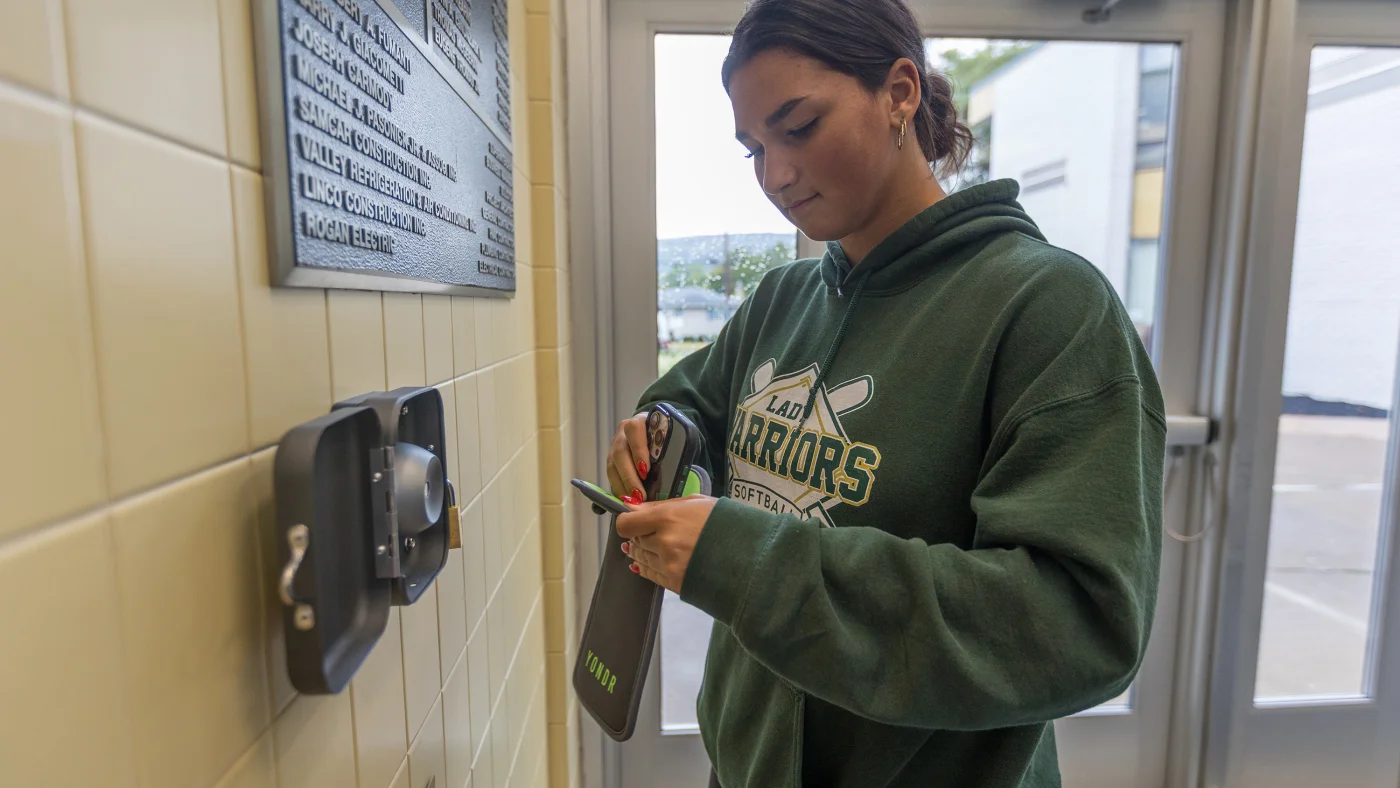
A large-scale study published Tuesday found strict cellphone restrictions in US schools – ones that require students to put phones in locked pouches for the entire academic day – result in small academic gains. asserted
that → publish → gains
And there could be further gains if schools continue banning phones, the researchers said. uncertain
researchers → continue → phones
The study, led by Harvard’s Center for Education Policy Research, found the schools with strict phone restrictions saw “modest” improvements in academic growth, compared with students in similar schools without those restrictions. asserted
schools → lead → restrictions
Analyzing test scores of 3.3 million students at 4,600 schools nationally, the study estimates the academic gains were equivalent to about an additional week or two of learning over a school year. asserted
gains → analyze → year
Student achievement has been falling globally since 2013, which is roughly when social media-enabled smartphones took off. asserted
smartphones → fall → 2013
The researchers sought to determine if the decline is being reversed now that schools have started taking phones away, said Harvard professor Thomas Kane, one of the study’s authors. asserted
Kane → seek → authors
“Our answer is yes, phone bans do have a positive effect on growth. asserted
bans → have → growth
But it’s not a panacea,” Kane said. asserted
Kane → ’ → ?
Learning loss was gradual over a decade, he noted, and it’s not surprising that gains would also be gradual. asserted
gains → note → decade
The study used math and reading test data for grades four through 10 from the past five academic years. asserted
study → use → years
“While schools should not expect large boosts in achievement immediately, storing students’ phones seems to be a cost-effective way to add 1-2 weeks of instruction each year, which could add up over time, just as the initial declines did,” the study says. uncertain
study → expect → time
The boost is equal to about half the annual decline in test scores since smartphones became mainstream, the study said. asserted
study → become → scores
The emerging research illustrating that complicated reality comes as more than 40 US states have passed laws that restrict cellphones at schools, according to the Phone Free Schools State Report Card, which tracks state phone legislation. uncertain
which → emerge → legislation
The laws vary widely and often let schools design their own policies, resulting in a patchwork of rules and enforcement across the country. asserted
schools → vary → country
The argument for school cellphone bans is simple: Phones offer endless distraction. asserted
Phones → offer → distraction
Take them away and students can focus on classwork, engage with peers and, ultimately, learn more. asserted
students → take → more
However, while schools can lock phones away in pouches or banish them to backpacks, the study published on Tuesday makes evident that they can’t shut out the digital world. asserted
shut → lock → world
A different study published in May concluded strict school phone bans had “close to zero” effect on test scores. uncertain
bans → publish → scores
It compared schools with bans with tens of thousands of other schools. asserted
It → compare → schools
The National Bureau of Economic Research study looked at a different set of standardized test scores than Harvard’s study, as well as GPS phone activity, teacher surveys and data from Yondr, the leading provider of lockable phone pouches, at 4,600 schools that use the pouches. asserted
that → look → pouches
The study had found “modest positive effects” in high school test scores over three years, particularly in math. asserted
study → find → math
But the report’s authors – researchers at Stanford, the University of Michigan, Duke and the University of Pennsylvania – were hesitant to conclude overall learning benefits from the bans. asserted
authors → conclude → bans
Both studies point to a similar conclusion, said Stanford education economist Thomas Dee, an author of the NBER study. asserted
Dee → point → study
“The early results from school phone bans are largely disappointing and raise unresolved questions,” Dee said. asserted
Dee → raise → questions
Noting that the Harvard study showed learning gains may accumulate over time, Dee said: “I hope they’re right. uncertain
they → note → time
However, I’m not comfortable making that extrapolation from estimates that are small, sensitive and based on just a few years of phone bans.” asserted
that → ’m → bans
The reasons, Dee said, could be that students are still distracted on other devices at school. uncertain
students → say → school
Or, he said, “it may be that we see these disappointing results because out-of-school phone use is harming child development.” uncertain
use → say → development
Whether schools or states actually enforce any existing bans is also a question, said Jean Twenge, a psychologist at San Diego State University and author of 10 Rules for Raising Kids in a High-Tech World. asserted
Twenge → enforce → World
Ask any teacher – or teenager – and they’ll tell you that some phone bans are largely cosmetic. asserted
bans → ask → you
Teens come up with creative workarounds, including stowing burner phones or even phone-shaped rocks in their locked pouches. asserted
Teens → come → pouches
At schools that rely on students to keep phones in backpacks, adherence to the ban can be spotty. asserted
adherence → rely → ban
“It happens pretty often that there’s a policy of no phones during the school day, bell-to-bell, and you go into the school and phones are everywhere,” Twenge said. asserted
Twenge → happen → school
Even without phones, Twenge asked: “Do they have laptops at school? asserted
they → ask → school
Are they just doing social media on laptops instead?” asserted
they → do → laptops
Phone use outside school affects academics too, Twenge said. asserted
Twenge → affect → academics
“If they have that phone available when they’re studying, how much are they really taking in?” Kane, of the Harvard study, agrees the effect of cellphone use outside school is “the big question”. asserted
effect → have → school
But researchers have not been able to investigate parents and educators’ suspicions that late-night binges on YouTube and other platforms are costly for students. asserted
binges → investigate → students
“I find it astonishing that social media companies know how much time kids spend on their platforms, but that data has never been linked to student outcomes,” Kane said. asserted
Kane → find → outcomes
“We can’t provide answers until the social media companies share data.” asserted
companies → provide → data
Give feedback · no sign-in needed

No sign-in needed for now. Your note is sent without a name, so it cannot be answered.

History Support