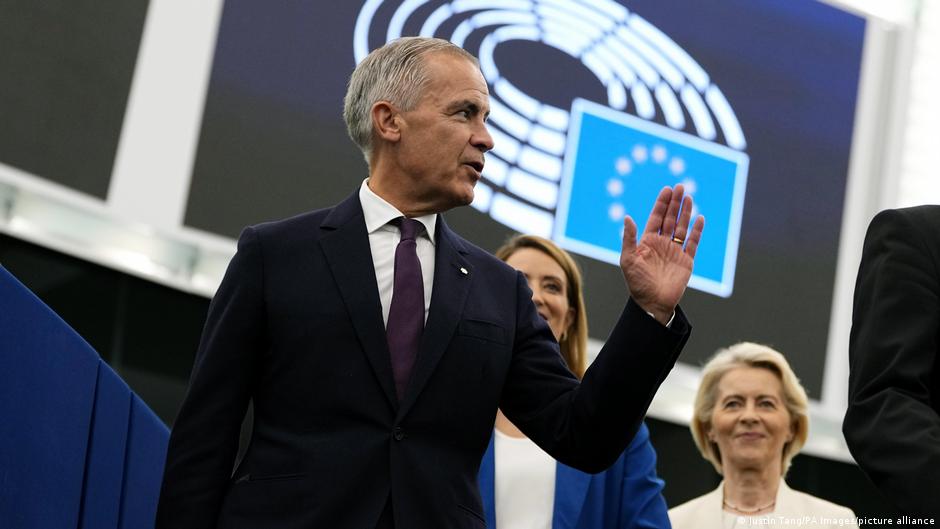
Ursula von der Leyen, European Commission President, proposed enhancing Canada’s relationship with the EU, possibly making Canada an “associate member.” Mark Carney, Canada’s Prime Minister, endorsed this idea at a speech to the European Parliament on Thursday. This closer engagement aims to lessen Canada's dependence on the U.S., but could also involve relinquishing some national sovereignty over areas like labor mobility, market access, and fiscal policy to align with EU standards. Full membership requires adopting policies that can dilute national interests in favor of common EU goals across various sectors including trade, agriculture, and climate change.
Written locally by qwen2.5:14b on 2026-09-17,
using this article's own text rather than the other coverage of the
same event (that is the story summary below).
Story summary
European Commission President Ursula von der Leyen announced plans for Canada to potentially become an "associate member" of the EU during her annual State of the European Union address in Strasbourg on September 14, 2022. This move was seen as a strategic choice amid deteriorating ties between Canada and the US under then-President Donald Trump, who had threatened tariffs and even suggested annexing Canada. The proposal caught many EU diplomats off guard, as it hadn't been discussed with all member states beforehand.
While Mark Carney, the Canadian premier mentioned in some articles (though officially he is not Canada's leader), welcomed the idea during his visit to Brussels, critics question what "associate membership" actually entails since it does not exist under current EU treaties. Experts suggest this arrangement could be more symbolic than practical and might create challenges for future relationships with countries like the UK that are seeking closer ties after Brexit.
The proposal raises questions about sovereignty and potential regulatory burdens for Canada, especially regarding economic policies and trade agreements. Without clear details on how such a status would function legally or economically, opposition parties in Canada have begun voicing concerns over possible impacts on Canadian autonomy and financial obligations to European institutions.
Written for “EU Canada Associate Membership” on 2026-09-17,
grounded in this article and the 12 other(s) covering the same event.
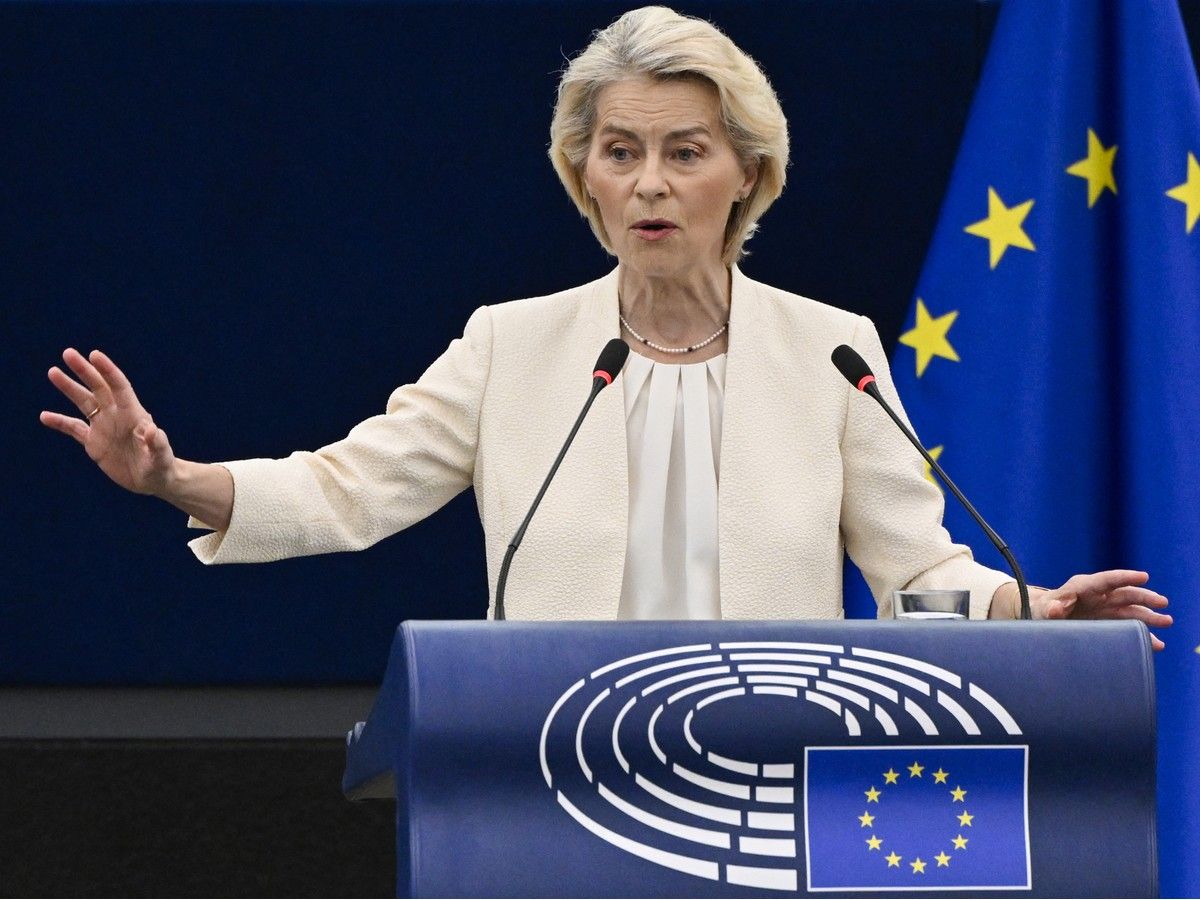
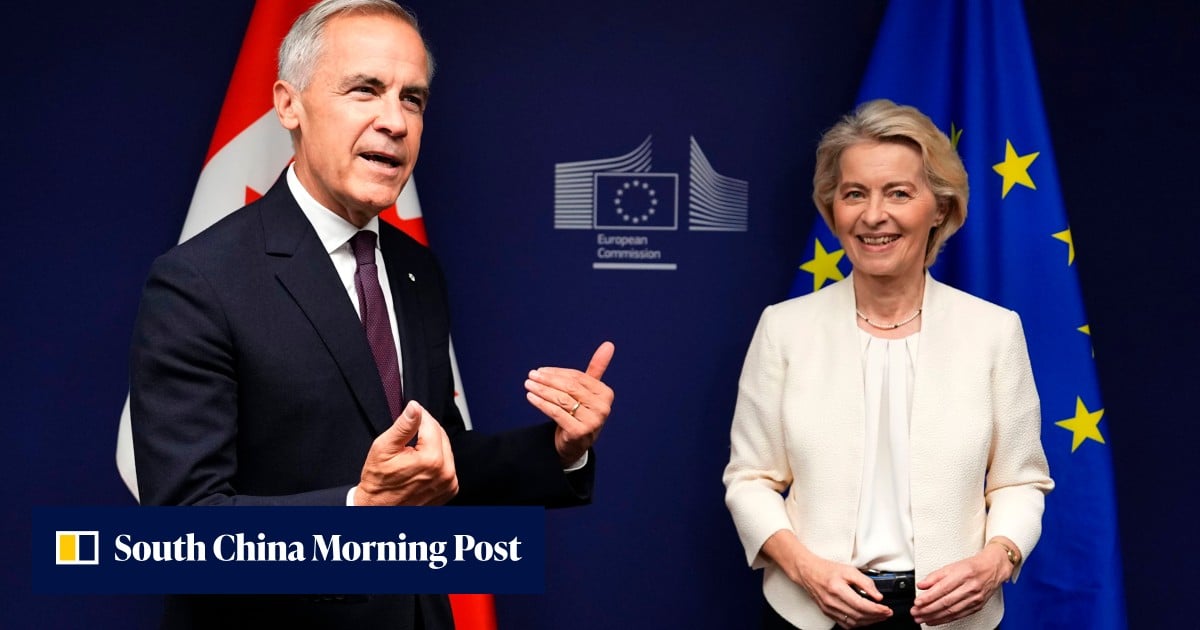
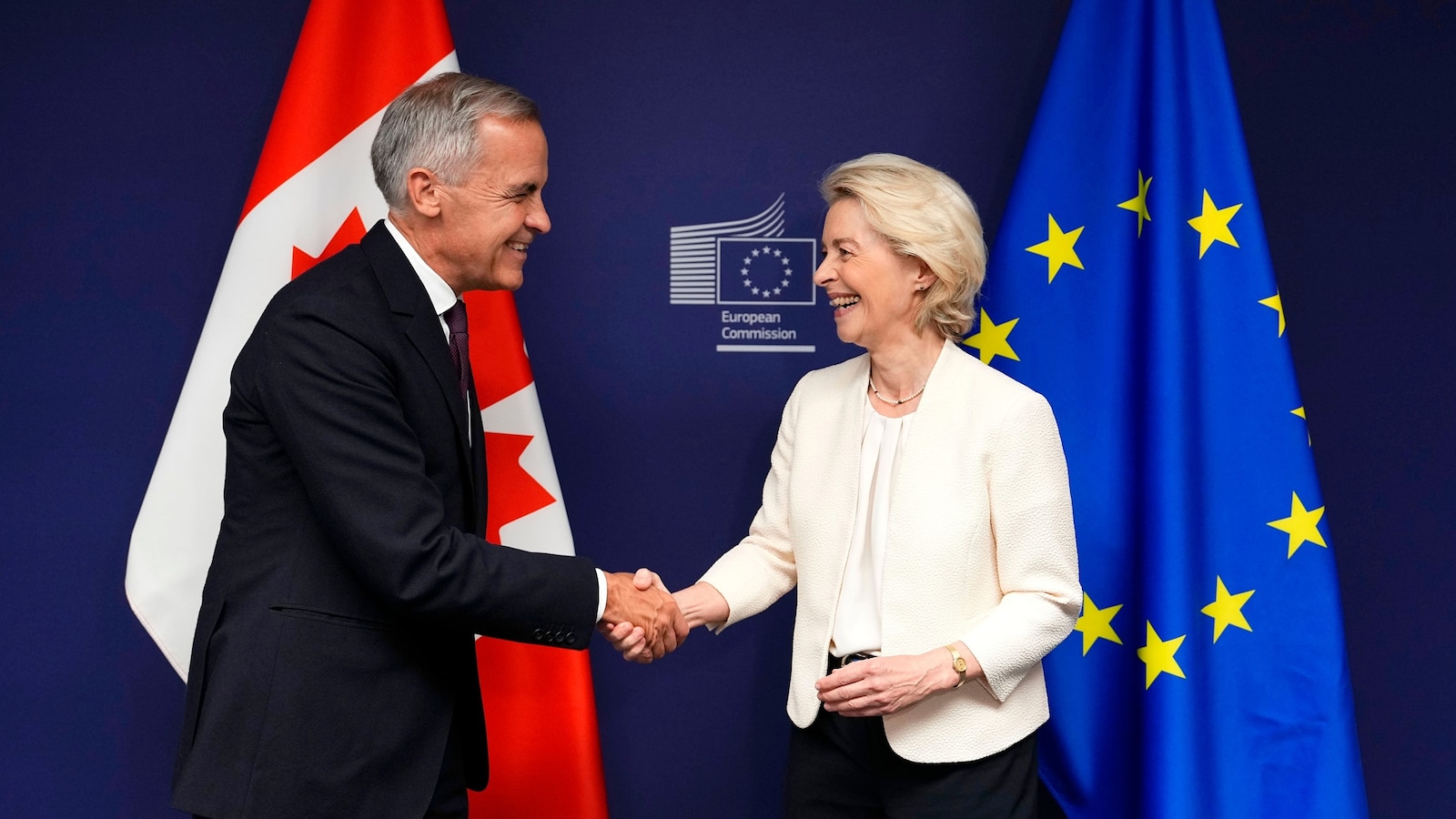
European Commission President Ursula von der Leyen promised to bring the EU’s relationship with Canada “to the highest level possible” in a speech on Wednesday, and said she wants to work with Prime Minister Mark Carney to make Canada an “associate member” of the 27-member bloc.
asserted
Canada → promise → bloc
The first-of-its-kind designation is the culmination of Carney’s year-plus effort to deepen engagement with Europe amid escalating U.S. tariff action against Canada.
asserted
designation → deepen → Canada
Closer cooperation with the European Union could help Canada shift away from the U.S. but also give the European alliance more say in Canada’s decision-making process and policies.
uncertain
Canada → help → process
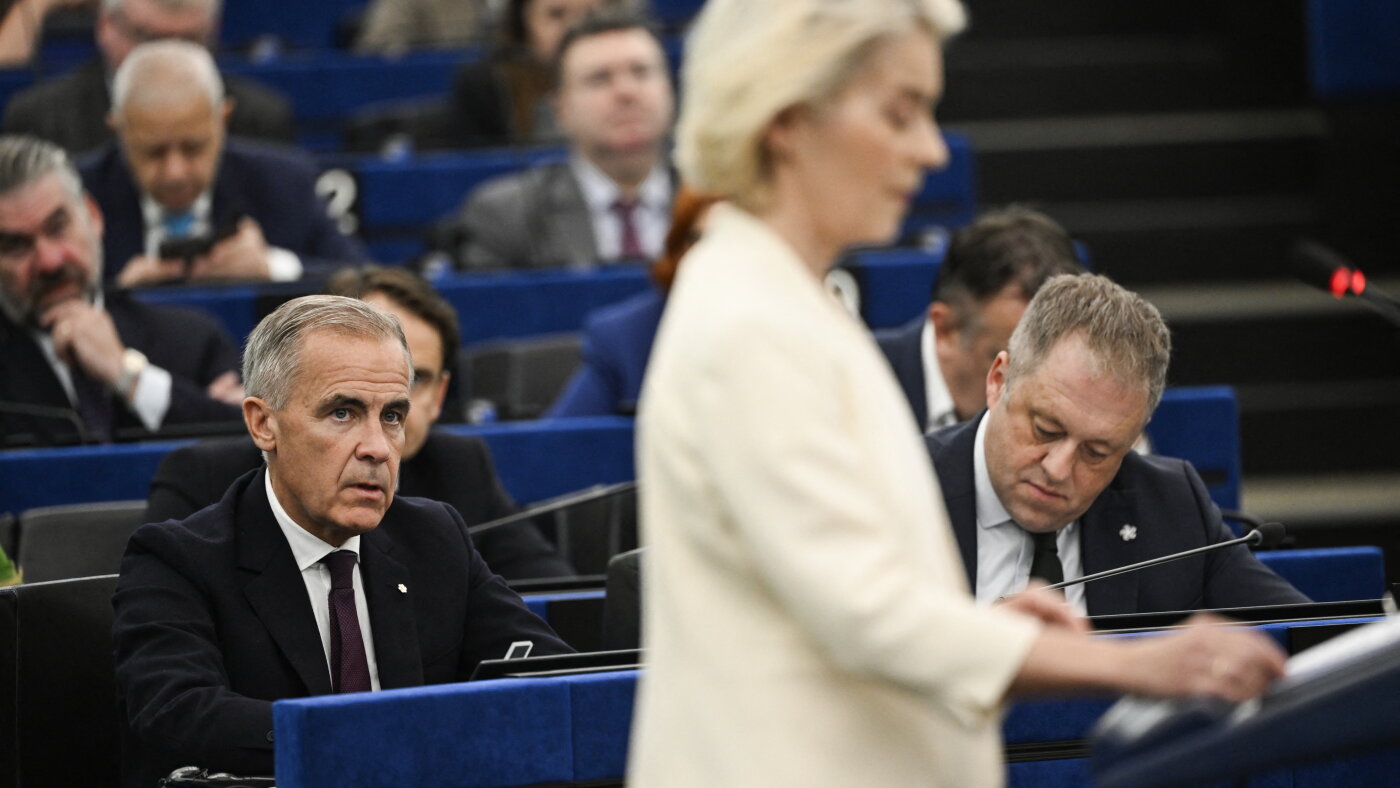
In his speech at the European Parliament on Thursday, Carney pitched the arrangement as being “about sovereignty; our ability to live as we wish.”
asserted
we → pitch → sovereignty
While we don’t know how the new Canada-EU partnership could work — and how Canadian laws would have to adapt — here’s what we know about what full members have had to give up in the past.
uncertain
members → know → past
What does it mean to become a full EU member?
asserted
it → mean → What
The EU requires free-flow of labour and open access to markets among its 27 member nations.
asserted
EU → require → nations
It also includes border-free travel between 29 European countries, known as the Schengen Area.
asserted
It → include → Area
The alliance entered a monetary union with the introduction of the euro in 1999, which 21 of the 27 EU nations use.
asserted
21 → enter → nations
Full members have access to a single, 18 trillion euro EU market, and have voting rights within the EU’s integrated decision-making body.
asserted
members → have → body
This grants the EU significant negotiating leverage with trading partners and multinationals.
asserted
This → grant → partners
However, this also significantly dilutes national interests of the member blocs.
asserted
this → dilute → blocs
How is the EU governed?
asserted
EU → govern → ?
The European Commission is the EU’s executive body, while the European Parliament functions as the lower house.
asserted
Parliament → function → house
Each member country elects a commissioner and minister to the governing bodies.
asserted
country → elect → bodies
The EU’s judicial courts, which also have a justice from each member, can overrule national courts where national interests come into conflict.
asserted
interests → have → conflict
The EU also requires a joint action on a host of matters, including climate change, energy, AI and migration.
asserted
EU → require → change
The bloc also shares an agricultural agreement and subsidizes low-income farmers by roughly 55 billion euros per year.
asserted
bloc → share → year
The EU’s patchwork of regulations have long been called burdensome, with its rulebook, known as the acquis communautaire, totalling tens of thousands of pages.
asserted
rulebook → call → pages
These regulations affect everything from security policy to taxation and social policy.
asserted
regulations → affect → taxation
A 2026 audit found that simplifying EU rules by 25 per cent for all businesses would save 37.5 billion euros per year.
asserted
simplifying → find → year
The member states accede power to the EU on all matters related to customs, currency (in the case of the euro), fisheries and internal and international trade.
asserted
states → accede → euro
This has kept countries like Switzerland and Norway from joining the EU, with Norway holding out due to the requirement that it grant EU members regulated fishing access to its waters.
asserted
it → keep → waters
How much do countries pay in?
asserted
countries → pay → much
EU countries pay approximately one per cent their gross national income to the European Union budget, which means larger nations pay out more than they receive in return.
asserted
they → pay → return
Net contributors Germany, Denmark, the Netherlands, Austria, Finland and Sweden have called for the EU to cut spending after it outlined a budget of €2 trillion for 2028 to 2034.
asserted
it → call → 2034
The EU’s annual GDP has grown at a relatively staid 1.65 per cent from 1996 until 2026, according to Trading Economics.
uncertain
GDP → grow → Economics
What are the requirements to become a member?
asserted
requirements → become → member
The entry criteria for becoming an EU member country includes a requirement that candidates must be a “European State,” according to Article 49 of Treaty of the European Union.
uncertain
candidates → become → Union
Additionally, the 1993 Copenhagen criteria states that the nation must respect democracy, free media, human rights, minority rights, rule of law and judicial independence.
asserted
nation → state → law
A country’s candidacy must be unanimously approved by the member countries.
asserted
candidacy → approve → countries
Morocco’s proposal to enter the EU failed because the country is located outside Europe, while Ukraine’s and Moldova’s entry into the alliance has been blocked by Hungary.
asserted
entry → enter → Hungary
In extending her offer of associate membership to Canada in the European Parliament in Strasbourg, France, on Wednesday, von der Leyen said the EU and Canada “see the world with the same eyes, from AI to climate change, from the Arctic to geopolitics, and we have stood together on Ukraine, on defence, on raw materials and supply chains.”
asserted
we → extend → materials
Carney also highlighted critical minerals, energy and security as other major aspects of the alliance.
asserted
Carney → highlight → alliance
 The Aporia