Photo via Times of India

Ohio court sends defamation case back; ruling remains undecided

Read the original at Times of India ↗
Cite

TOI World Desk. (2026, November 17). Ohio court sends defamation case back; ruling remains undecided. Times of India. https://timesofindia.indiatimes.com/world/us/after-a-fence-dispute-an-ohio-homeowner-publicly-criticised-the-city-council-president-who-sued-him-for-defamation-the-appeals-court-reversed-the-lower-courts-decision-and-sent-the-case-back-for-reconsideration/articleshow/135924720.cms

Dated from the outlet's own feed. Check the original for its byline.

Times of India · collected 2026-11-17 · by TOI World Desk

Quick Summary

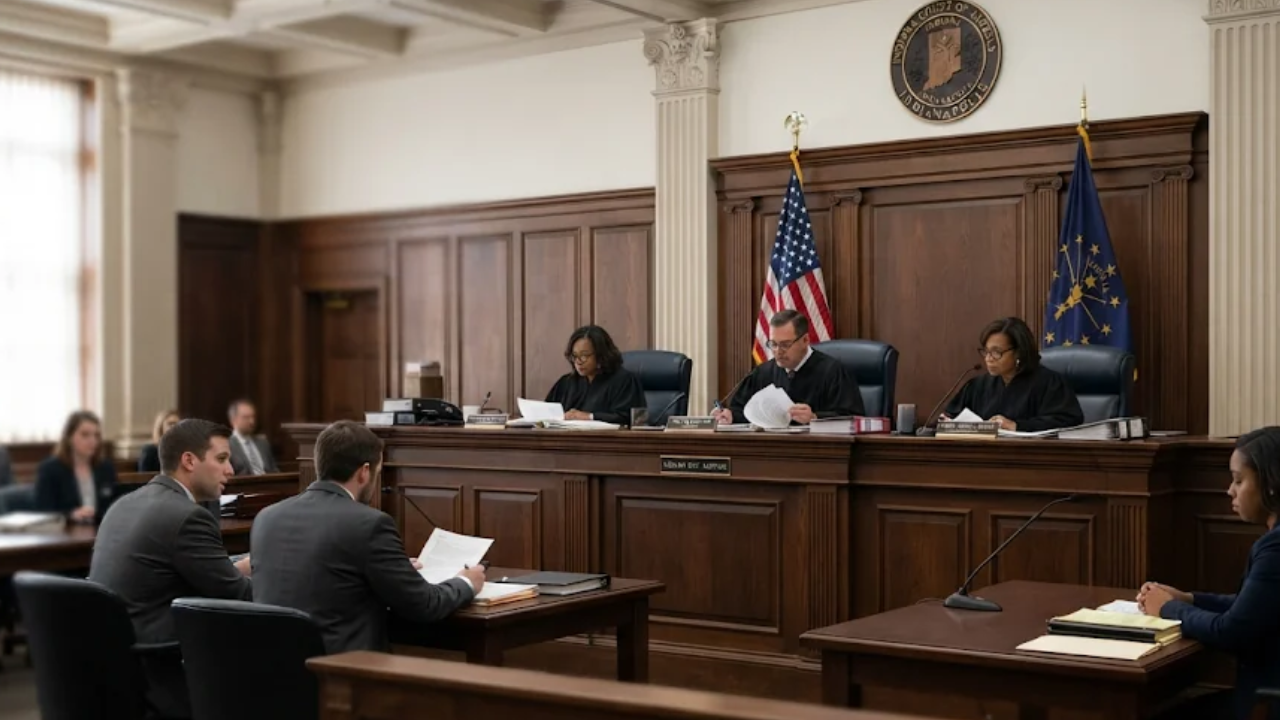
On November 12, 2023, the Ninth District Court of Appeals in Summit County, Ohio, overturned a lower court’s decision regarding a defamation case between Hudson homeowner Anthony Ravida and city council president Christopher Foster. Ravida had criticized Foster at public meetings, alleging corruption and calling for Foster’s suspension. Foster filed a defamation suit against Ravida in May 2025, which Ravida attempted to dismiss under Ohio’s Uniform Public Expression Protection Act. The appeals court sent the case back to the lower court for a more detailed decision.
Written by AI on 2026-11-17, from this article's own text only.

AI analysis

Why this leaning score
This article does not take a side on a contested political question, so it has no leaning score. That is an answer rather than a gap: a match report or a rescue can be warmly or critically written without being left or right, and scoring it anyway is how approval of a subject gets recorded as a political position.
No political leaning scored for article 160157 · logged 2026-11-17

Compared with similar articles

Nothing to compare against. No article is close enough to this one for the pipeline to have linked or judged the pair.
How this article was measured signals, leaning charts, publisher record, byline, topics and claims

Signals How these are calculated →

Claims extracted
35
sentences that state something as happening or true
Uncertain
11%
4 of 35 hedged ("reportedly", "may", "according to")
Leaning
not political
takes no side on a contested political question
Publisher signals
59/100
Times of India's corrections and hedging, across everything collected from it. Not a measure of accuracy.
Outlets on this story
unclustered
not grouped into a story yet
Same framing elsewhere
1
articles that frame the event the way this one does
Analyzed 2026-11-17 · how these are computed

How this is being covered How these are calculated →

Article leaning vs. publisher reliability
Source leaning vs. consistency

Publisher

Times of India · 5179 article(s) · 6 correction(s) detected
Running correction rate · 6 correction(s)

Who wrote this

TOI World Desk
1539 article(s) here · 1 carrying a prediction
By May, he was calling for Foster to be suspended, investigated by the state attorney general and possibly removed from office.
Clinical psychologist Dr Bart Ferraro carried out the evaluation between February and May 2022.
In May 2018, one of the boys told a school bus driver that food had been withheld from him over an entire weekend.
What began as an ambitious preservation idea backed by John D. Rockefeller Jr. eventually transformed Williamsburg, Virginia, into one of America's best-known living history museums.
The judge explained that once the site was excavated to the condition required under the contract, some landscaping might still be needed.
Shakira said the children of Tibú would be able to begin a new chapter in their lives, reflecting the foundation’s belief that education can change not only individual futures but entire communities.
A safe discovered on a wooded trail behind a fire station in Maine contained a mystery that investigators could not solve for four years: $55,737 in cash, with no clear explanation of who had left it there or why.
In his Thanksgiving letter, Buffett indicated that the pace of future giving would depend partly on the performance of Berkshire Hathaway shares.
Under a plea agreement, she is expected to be sentenced to five years in prison.
Buffett has reiterated that his entire Berkshire Hathaway stake will eventually go to the four foundations.
Wire or desk byline, not an individual reporter.
Also by TOI World Desk
Nothing else under this byline is closely related to this article, so these are simply their most recent.
All 1539 articles by TOI World Desk →

Topics

Hudson Ohio Summit County Uniform Public Expression Protection Act the Ninth District Court of Appeals

Subjects

Foster PERSON · 5× Ravida PERSON · 3× Hudson GPE · 2× Ohio GPE · 2× Anthony Ravida PERSON · 1× Christopher Foster PERSON · 1× Summit County GPE · 1× the Ninth District Court of Appeals ORG · 1×

Narrative

He also responded to the homeowner’s allegations: “Yeah, simple issues, blown into conspiracy theories about taking bribes, getting kickbacks from people for putting sidewalks around the community really is pretty sad but I appreciate you coming out here and straightening that out.”
framing: assertive · carried by 1 article(s) · first seen 2026-11-17
By May, he was calling for Foster to be suspended, investigated by the state attorney general and possibly removed from office.
2026-11-17 · Times of India
Ohio court sends defamation case back; ruling remains undecided · assertive framing

Claims (35 extracted, 4 hedged)

A Hudson homeowner spent months criticising the city’s council president, Christopher Foster, at public meetings. asserted
homeowner → spend → meetings
The council president sued him for defamation. asserted
president → sue → defamation
On Thursday, 12 November, the Ninth District Court of Appeals in Summit County overturned a lower court’s ruling on Ravida’s request to end the case early. asserted
Court → overturn → case
The lower court had not explained its reasoning clearly enough for the appeals court to review. asserted
court → explain → reasoning
The case now goes back for a more detailed decision, and the question of whether Ravida’s words were defamatory remains unanswered. asserted
words → go → decision
A fence dispute that started it all The dispute began in 2023, when Anthony Ravida, a Hudson homeowner, asked the city for permission to build a fence. asserted
Ravida → start → fence
The fence he built did not meet the city’s codes, and he refused to fix it. asserted
he → build → it
A jury later convicted him of a zoning violation, and he appealed. asserted
he → convict → violation
While the appeal was pending, he began attending council meetings and using the public comment period to talk about his case. asserted
he → pende → case
During meetings in early 2025, the homeowner stated that his conviction for violating the zoning code was based on a “false narrative” created by the city manager and council president. asserted
conviction → state → manager
The homeowner also claimed that Foster was “basically above the law”, as the council president had the city repair his driveway without a permit. asserted
city → claim → permit
By May, he was calling for Foster to be suspended, investigated by the state attorney general and possibly removed from office. uncertain
Foster → call → office
He also called him corrupt. asserted
He → call → him
The council president defended the city’s actions on the record. asserted
president → defend → record
Foster stated that Ravida’s fence plainly violated zoning rules. asserted
fence → state → rules
He also responded to the homeowner’s allegations: “Yeah, simple issues, blown into conspiracy theories about taking bribes, getting kickbacks from people for putting sidewalks around the community really is pretty sad but I appreciate you coming out here and straightening that out.” asserted
you → respond → that
The city manager said the driveway work was an emergency repair following a sinkhole in the public right of way. asserted
work → say → way
A construction company owner later told the council that a combination of personal circumstances and miscommunication had led to the permit being missed, and she denied any intentional wrongdoing. asserted
she → tell → wrongdoing
In May 2025, the council president filed a civil complaint against the homeowner, alleging defamation and false light invasion of privacy. uncertain
president → file → privacy
The homeowner asked a judge to dismiss the case under Ohio’s Uniform Public Expression Protection Act, a law that took effect on 9 April 2025. asserted
that → ask → April
The law is intended to protect people from expensive lawsuits over their speech on public matters. asserted
law → intend → matters
The trial court said the law applied only to statements made after the Act came into effect. asserted
Act → say → effect
It dismissed claims based on name-calling, such as calling Foster a liar or a thief, ruling that these were opinions. uncertain
these → dismiss → Foster
It retained claims based on accusations of bribery and fraud, finding that factual disputes remained to be resolved. uncertain
disputes → retain → bribery
For statements made before 9 April, the court did not apply the new law at all. asserted
court → make → law
Appeals court calls for reconsideration The appeals court reversed the lower court’s ruling, finding that it had not properly applied Ohio’s Uniform Public Expression Protection Act (UPEPA). asserted
it → call → Act
The trial court had applied the law only to statements the homeowner made after 9 April 2025, even though Foster had filed the lawsuit after that date. asserted
Foster → apply → date
The appeals court also said the lower court had not properly explained its decision or addressed the arguments made by both sides. asserted
court → say → sides
It sent the case back for “a sufficiently detailed judgment entry” that would allow meaningful review. asserted
that → send → review
The appeals court also said the trial court was wrong to exclude the earlier statements. asserted
court → say → statements
The lawsuit was filed after 9 April, and the law states that it applies to civil actions filed on or after that date. asserted
it → file → date
The appeals court did not decide whether the homeowner’s statements were defamatory. asserted
statements → decide → ?
That question still needs to be examined by the trial court. asserted
question → need → court
The appeals court’s ruling was supported by two judges, while the third agreed with the judgment but not the reasoning. asserted
third → support → judgment
The case now returns to the trial court. asserted
case → return → court

Give feedback · no sign-in needed

No sign-in needed for now. Your note is sent without a name, so it cannot be answered.

History Support