The Aporia
Xu, X. (2026, September 17). Von der Leyen’s ‘China shock’ speech aimed to send Beijing a message: analysts. South China Morning Post. https://www.scmp.com/economy/global-economy/article/3367891/von-der-leyens-china-shock-speech-aimed-send-beijing-message-analysts?utm_source=rss_feed
Xu, Xiaofei. “Von der Leyen’s ‘China shock’ speech aimed to send Beijing a message: analysts.” South China Morning Post, 17 Sept. 2026, https://www.scmp.com/economy/global-economy/article/3367891/von-der-leyens-china-shock-speech-aimed-send-beijing-message-analysts?utm_source=rss_feed.
Xu, Xiaofei. “Von der Leyen’s ‘China shock’ speech aimed to send Beijing a message: analysts.” South China Morning Post, September 17, 2026. https://www.scmp.com/economy/global-economy/article/3367891/von-der-leyens-china-shock-speech-aimed-send-beijing-message-analysts?utm_source=rss_feed.
Dated when The Aporia collected the article, usually within hours of publication. Check the original for its exact date and byline.
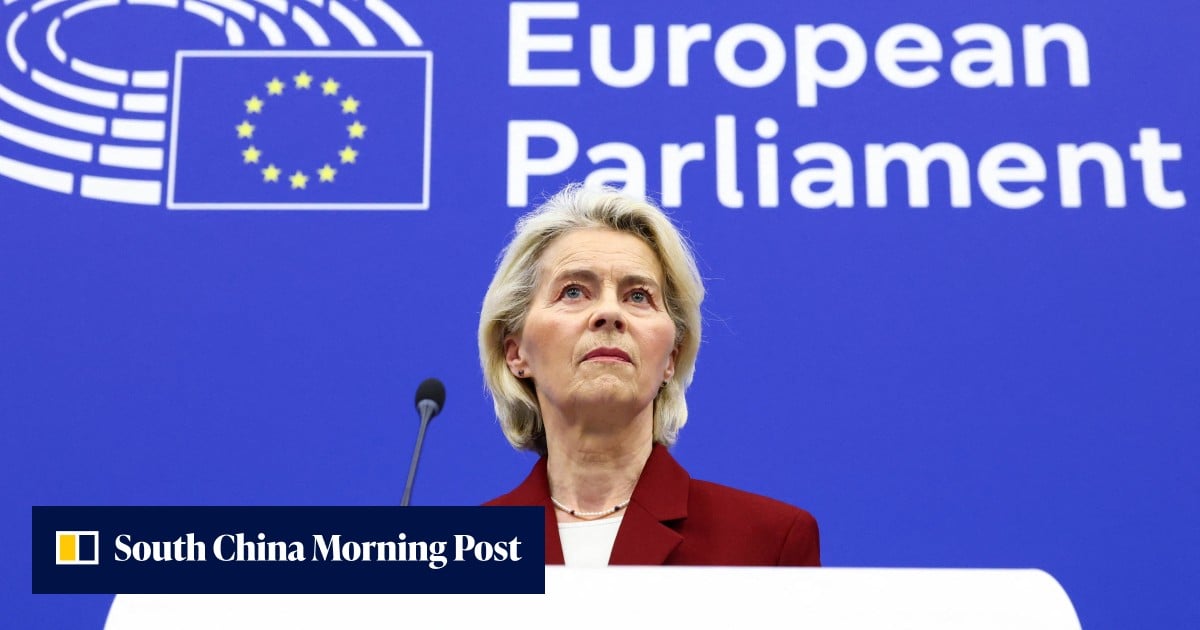
In her recent State of the Union address, Ursula von der Leyen, president of the European Commission, delivered what some are calling a "China shock" speech aimed at signaling a firm stance towards China ahead of upcoming trade negotiations between Brussels and Beijing. Despite offering few concrete details about new trade measures targeting China, her comments were characterized by a sharp tone intended to convey Europe's resolve to address concerns over Chinese trade practices. Analysts interpret von der Leyen’s remarks as an attempt to underscore the EU’s commitment to defending its interests in future discussions with China.