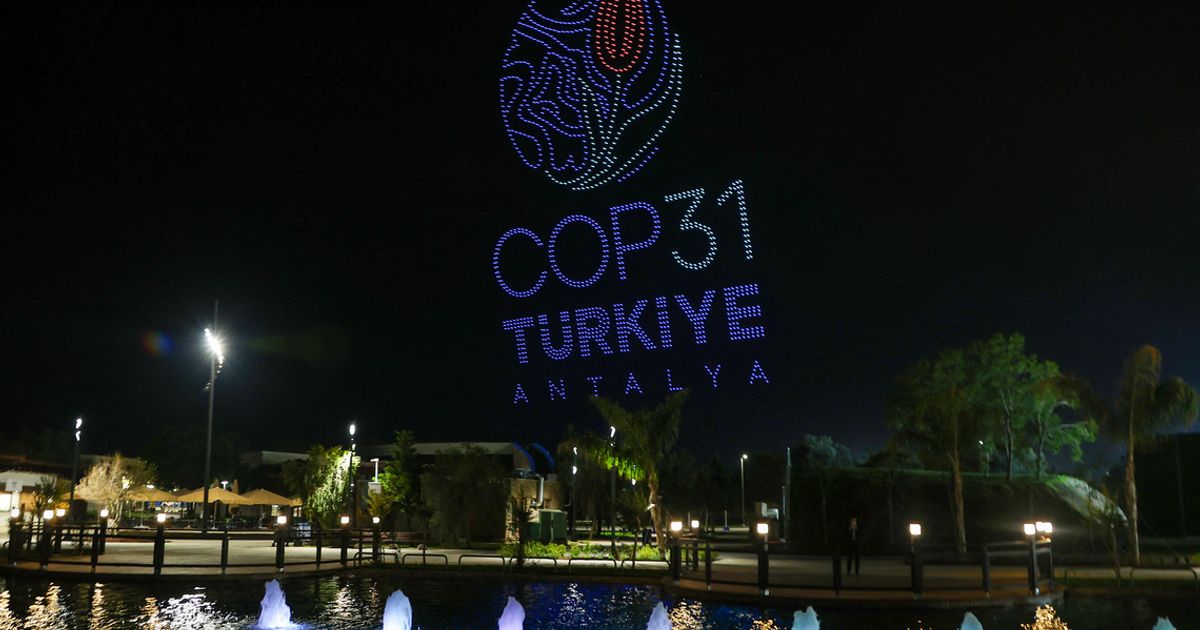
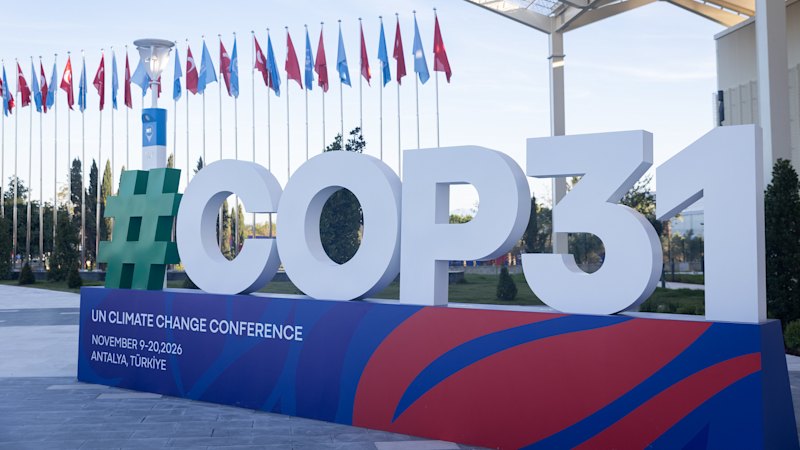
Australia and the Republic of Korea have signed a memorandum of understanding on the sidelines of international climate talks in Turkey which aims to accelerate both nations’ decarbonisation efforts, strengthen clean energy supply chains and unlock trade and investment opportunities.
asserted
which → sign → opportunities
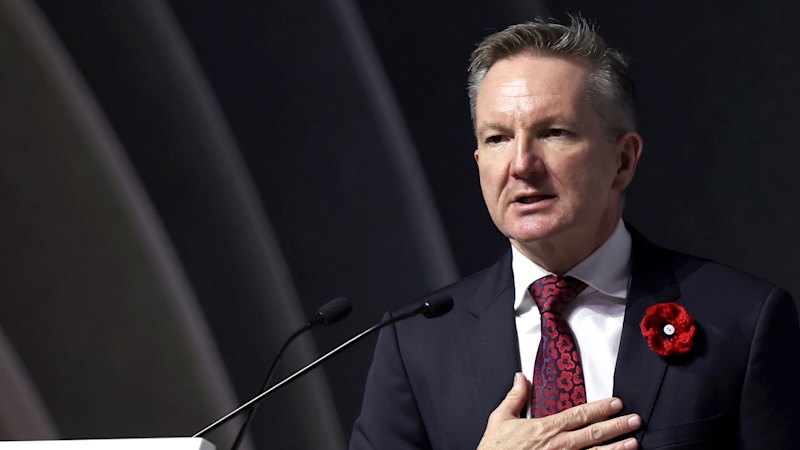
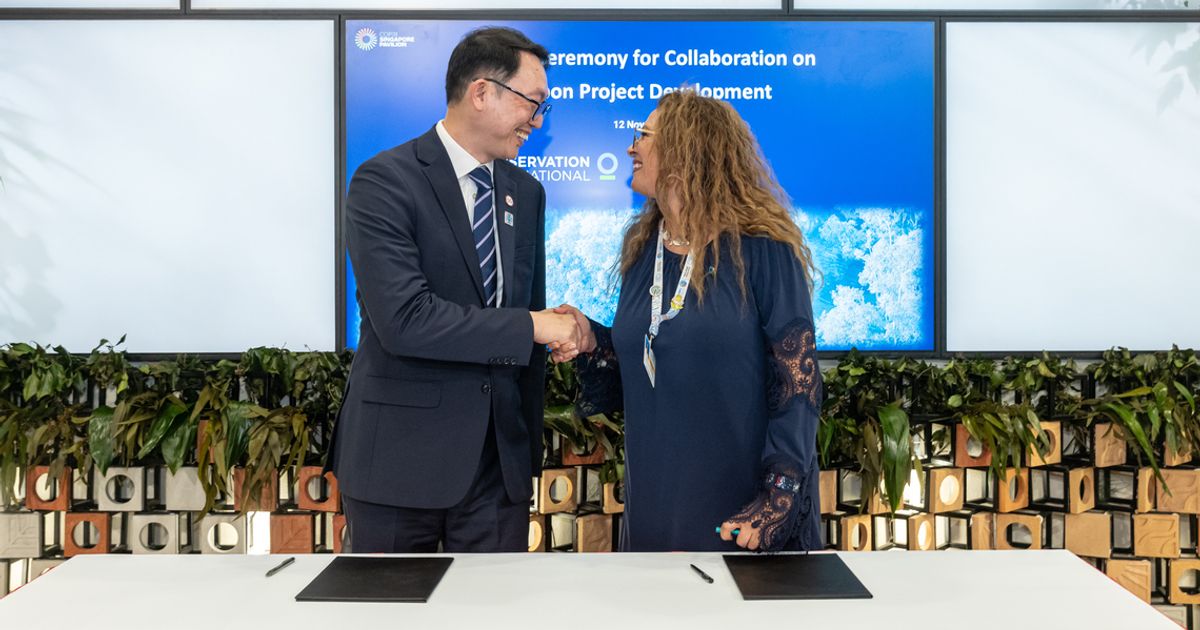
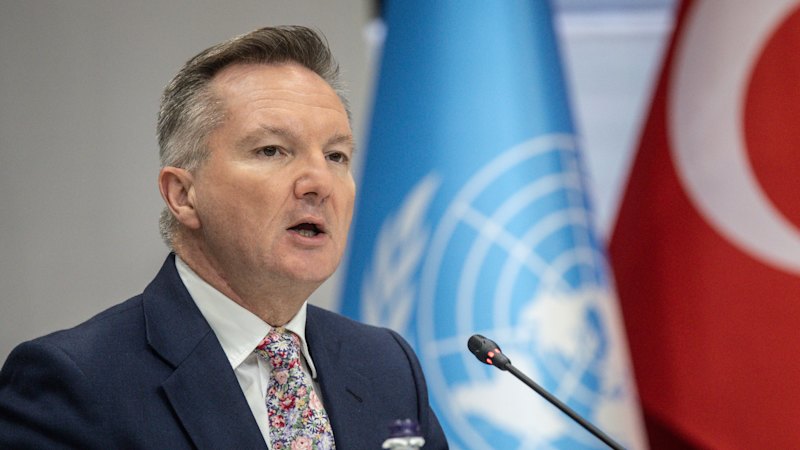
Signed by Climate Change Minister Chris Bowen and his South Korean counterpart, Kim Sungwhan, on the sidelines of the United Nations’ climate summit, COP31, the agreement will give Australia access to the $US1 trillion the South Korean government has pledged to spend decarbonising its economy in the years to 2035.
asserted
government → sign → 2035
“Korea’s clean energy transformation is a major economic opportunity for Australia, particularly for the regional communities that power our economy and produce the resources the world needs,” said Bowen, who is leading global negotiations at the summit.
asserted
who → power → summit
“This is our leadership at COP31: delivering for Australians, stronger industries, greater energy security and more opportunities for new, lasting jobs.”
asserted
This → deliver → jobs
South Korea is Australia’s fourth-largest two-way trading partner, with bilateral trade reaching $67.4 billion in 2025.
asserted
trade → reach → 2025
Energy analyst Tim Buckley, director of the pro-renewables think tank Climate Energy Finance, said the deal was a crucial step in developing the sort of massive infrastructure that would be needed for Australia to clean up export industries such as green iron ore for the South Korean market.
asserted
Australia → say → market
“Australia is only going to be really successful in building zero-emissions export industries of the future through bilateral agreements,” he said, noting that the massive North West Shelf gas project was created by agreements between state, federal and international governments along with the private sector.
asserted
project → go → sector
He said South Korea’s spending commitment was the largest in the world outside China and that Australia was well placed to seek to benefit from it.
asserted
Australia → say → it
Matt Kean, chair of Australia’s Climate Change Authority, said the memorandum presented huge opportunities for both nations.
asserted
memorandum → say → nations
“Korea needs lower-emissions materials to decarbonise its industries and remain internationally competitive,” he said.
asserted
he → need → industries
“Australia has the resources, renewable energy potential and industrial capability to produce them.
asserted
Australia → have → them
Both countries stand to benefit.”
asserted
countries → stand → ?
South Korea plans to develop a green steel industry, which would demand green iron ore, which Australia could only provide if massive shared renewable energy projects and export infrastructure were developed.
uncertain
projects → plan → which
Industry and Innovation Minister Tim Ayres emphasised the strategic industrial gains: “Working more closely with Korea will help Australia move further up the value chain, expand Australia’s industrial capability and make more of the clean energy technologies and materials the world increasingly needs.”
asserted
world → emphasise → technologies
Earlier on Tuesday, Bowen, serving as president of negotiations at the COP talks, released a draft text of the agreement that negotiators are working on.
asserted
negotiators → serve → that
The 18-page document has been described as a “Christmas list” of proposals, many of which are not expected to survive the negotiations.
asserted
many → describe → negotiations
The draft contains reference to ramping up electrification of the global economy, a key goal of Bowen and COP hosts Turkey, and acknowledges that the world will overshoot the Paris target of holding warming to 1.5 degrees.
asserted
world → contain → degrees
It also includes language calling on developed nations to “take the lead” on emission reductions by reaching net zero emissions by 2030 and net negative emissions by 2040.
asserted
It → include → 2040
A “presidency note” attached to the document explained that it was designed to “reflect the breadth of views expressed by parties” and prompt further negotiation, rather than to reflect consensus views.
asserted
it → attach → views
Now that the draft has been released, delegations will continue negotiating towards a document that might win consensus support by the end of the week.
uncertain
that → release → week
“The strategy is to put it out, let people provide their views, to take things out that don’t receive consensus support,” said Bowen in a press conference.
asserted
Bowen → put → conference
“If elements in here don’t get consensus support, they won’t be in the final.”
asserted
they → get → final
The draft text also contains calls for both a “phase out” and a “transition away from” fossil fuels – language likely to receive forceful pushback from Gulf states and Russia which object to direct references to any sectors or energy sources.
asserted
which → contain → sectors
Earlier in the week, Russia signalled a hard stance against calls for a phase-out of fossil fuels.
asserted
Russia → signal → fuels
“In the current conditions of excessive pressure on the energy market due to the well-known strait [issue] and other factors, it is absolutely inappropriate to talk about an accelerated phase-out of hydrocarbons, because it will additionally affect the price,” Russian Presidential Special Representative for Climate and Water Resources Ruslan Edelgeriyev told the Interfax news agency.
asserted
Edelgeriyev → know → agency
Bowen said negotiations so far were constructive.
asserted
negotiations → say → ?
Parties have come to me with strong views about various things, as you’d expect, and I welcome that.
asserted
I → come → that
Because there’s no point being unclear about things that parties have strong views on.
uncertain
parties → ’ → views
In the lead-up to the talks both COP hosts, Turkey and Bowen signalled support for including a target to reach 35 per cent electrification by 2035 both in the outcome of formal negotiations, and in the “action agenda” aspect of the talks.
asserted
hosts → signal → talks
By Saturday, only 30 nations had agreed to the target, though more are expected to sign.
asserted
more → agree → target
“It’s pretty clear in the draft text that we are interested in getting a strong statement on electrification into the final decision,” said Bowen in the press conference.
asserted
Bowen → ’ → conference
“That’s something that Australia supports and will continue to support.
asserted
Australia → ’ → that
But we’ll need to work with parties on what is acceptable,” said Bowen.
asserted
Bowen → need → parties
He argued for ambition as the negotiations continued.
asserted
negotiations → argue → ambition
“Frankly, if we only talk about what we all agree on, if we only put things in the broader statement that got everyone’s support at this point, so early in the process, it’ll be a pretty short document.”
asserted
it → talk → process
Cosima Cassel, who heads the climate diplomacy program for the international climate think tank E3G, said that while it was good the document included all key issues, at 144 paragraphs the text was very long.
asserted
text → head → paragraphs
“The approach looks to be putting it all in and letting parties fight for the trade-offs,” she said.
asserted
she → look → offs
“The test will be whether the final decision keeps the core elements once that process plays out: ambition on overshoot, defence of the science, clean electrification and forward progress on adaptation finance.”
Get to the heart of what’s happening with climate change and the environment.
asserted
what → keep → change
 The Aporia