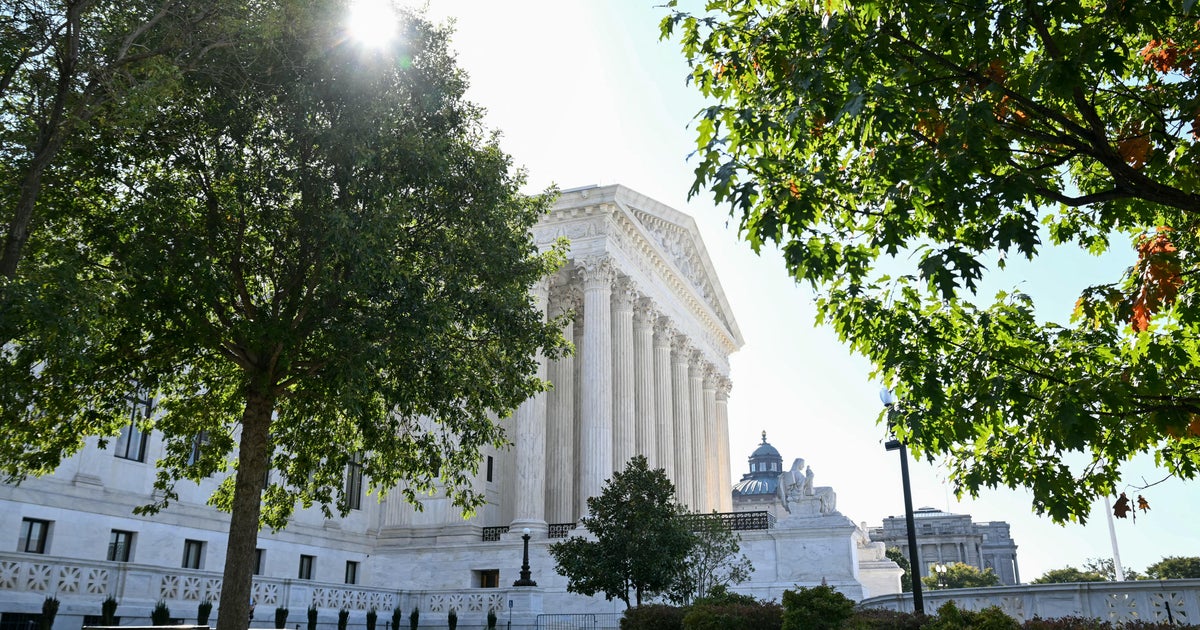
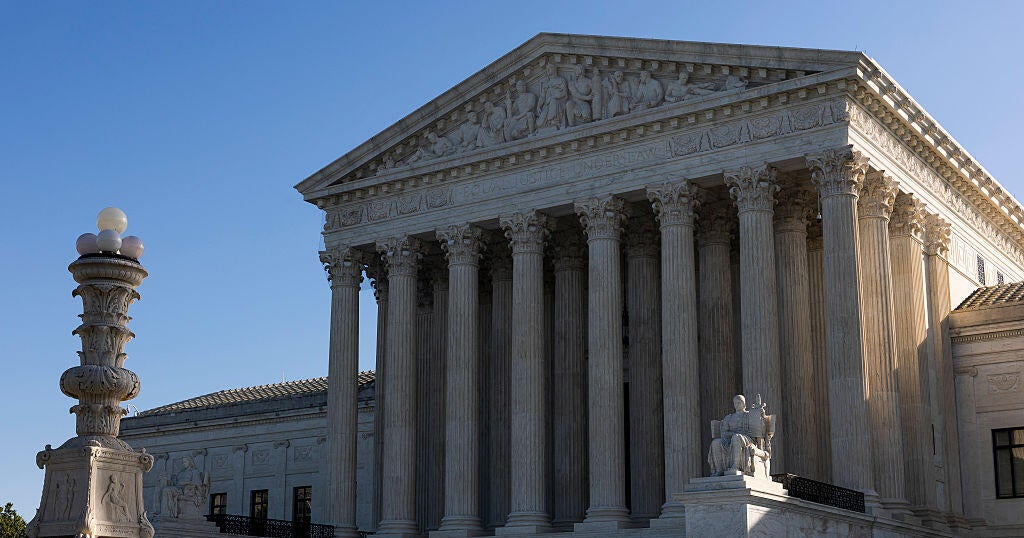
The Supreme Court on Monday turned away a challenge to Maryland laws that prohibit firearms in sensitive places like schools, parks and government buildings.
asserted
that → turn → schools
In rejecting the appeal from a group of Maryland residents and gun rights groups, the high court leaves in place a lower court decision that upheld the rules.
asserted
that → reject → rules
The Supreme Court last year
that required concealed-carry permit holders to receive permission before bringing their firearms onto private property open to the public.
asserted
that → require → public
At issue in the case were a set of Maryland laws that limit the places where guns can be carried in public.
asserted
guns → limit → public
The state prohibits firearms from being brought on school property, at public demonstrations and on public transit, as well as in parks, museums and casinos.
asserted
state → prohibit → parks
Another set of limits was enacted in 2023, in the wake of the Supreme Court's
that recognized for the first time that the Second Amendment protects the right to carry a gun outside the home.
asserted
Amendment → enact → home
Under the new restrictions, people are prohibited from carrying firearms at daycare and medical facilities, government buildings or other places where the public gathers for "entertainment, educational enrichment or other collective social pursuits.
asserted
public → prohibit → entertainment
"On the same day Maryland's latest restrictions were signed into law
asserted
restrictions → sign → law
, two sets of plaintiffs filed lawsuits arguing they violated the Second Amendment.
asserted
they → file → Amendment
The suits targeted 10 categories of places.
asserted
suits → target → places
The two cases were consolidated, and a federal district court declined to block the limits on museums, health care facilities, public transit, state parks, entertainment venues, school grounds and government buildings.
asserted
court → consolidate → museums
But the district court ruled in favor of the plaintiffs as to public demonstrations and places that sell alcohol for on-site consumption.
asserted
that → rule → consumption
The U.S. Court of Appeals for the 4th Circuit went on to rule that all of the challenged restrictions are consistent with the Second Amendment.
asserted
all → go → Amendment
The appeals court applied the Supreme Court's new test for evaluating the constitutionality of gun regulations, which it laid out in its 2022 decision.
asserted
it → apply → decision
Under that framework, the government must show that a firearms restriction is consistent with the nation's historical tradition.
asserted
restriction → show → tradition
In addition to pointing to historical analogues of some of Maryland's regulations, the 4th Circuit said the Supreme Court has twice, in decisions from 2008 and 2010, asserted that laws forbidding guns in government buildings and on school grounds are allowed.
asserted
laws → point → grounds
The Maryland residents and gun rights groups appealed to the Supreme Court and argued that its intervention is needed to help lower courts better define the historical limits on the right to have guns in public as more and more states are enacting location-specific limits.
asserted
states → appeal → limits
"The constitutionality of these so-called 'sensitive place' bans is among the most critical questions facing the judiciary in the wake of" the Supreme Court's 2022 decision, they wrote in their petition.
asserted
they → call → petition
"If, as Maryland maintains and the Fourth Circuit below held, the right to carry a firearm 'in public' does not include public locations that are owned by the government, or where First Amendment protected activity is being carried out, or where people go to eat and to drink or gather for amusement and recreation, then it is hard to know what the right to carry a firearm 'in public' actually protects.
asserted
right → maintain → public
But Maryland Attorney General Anthony Brown argued that the state's sensitive-place laws are consistent with the nation's historical tradition of firearms regulation, and therefore constitutional.
asserted
laws → argue → regulation
He noted that there is a "rich American tradition" of barring guns in certain locations, including those that are "confined and crowded.
asserted
that → note → those
"This Court endorsed such 'longstanding' bans in schools, legislative assemblies, polling places, and courthouses, while recognizing that this list was non-exhaustive," Brown wrote in a filing.
asserted
Brown → endorse → filing
In the years since the Supreme Court laid out its new test for determining the legality of gun regulations, it has been confronted with a number of challenges to longstanding firearms laws.
asserted
it → lay → laws
In 2024, the Supreme Court
that prohibits people subject to domestic violence restraining orders from having guns.
asserted
that → prohibit → guns
In an opinion authored by Chief Justice John Roberts, the eight-justice majority said the "appropriate analysis" under its new historical tradition standard "involves considering whether the challenged regulation is consistent with the principles that underpin our regulatory tradition."
asserted
that → author → tradition
Then, in its last term, a unanimous Supreme Court
the government to prosecute a person who is an occasional marijuana user.
asserted
who → prosecute → person
 The Aporia