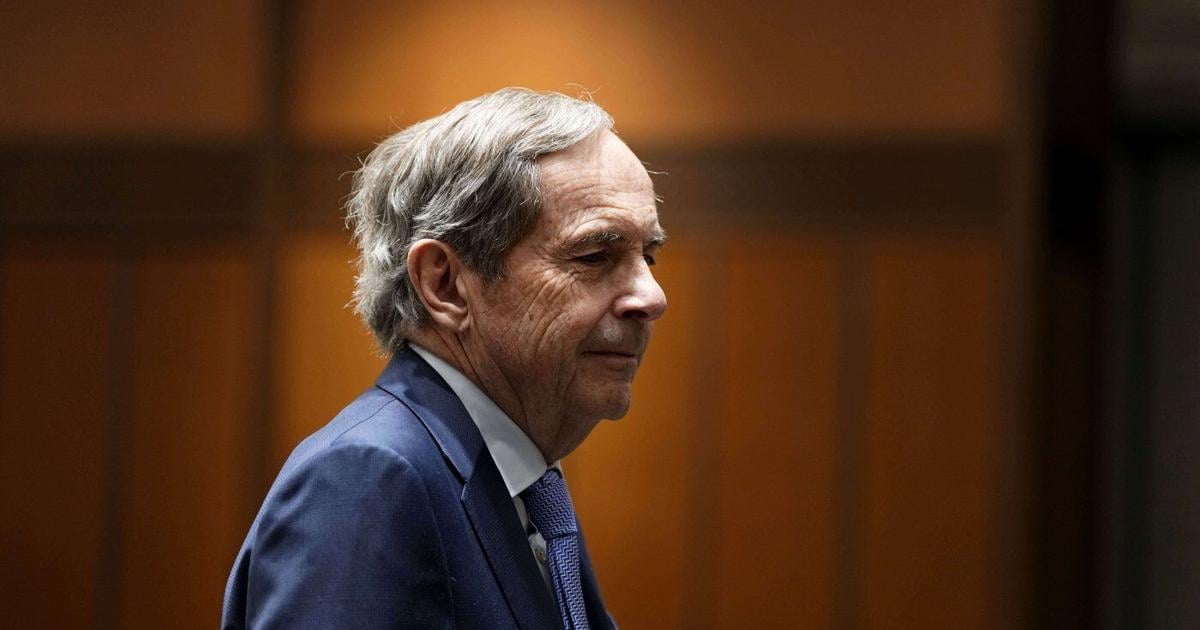
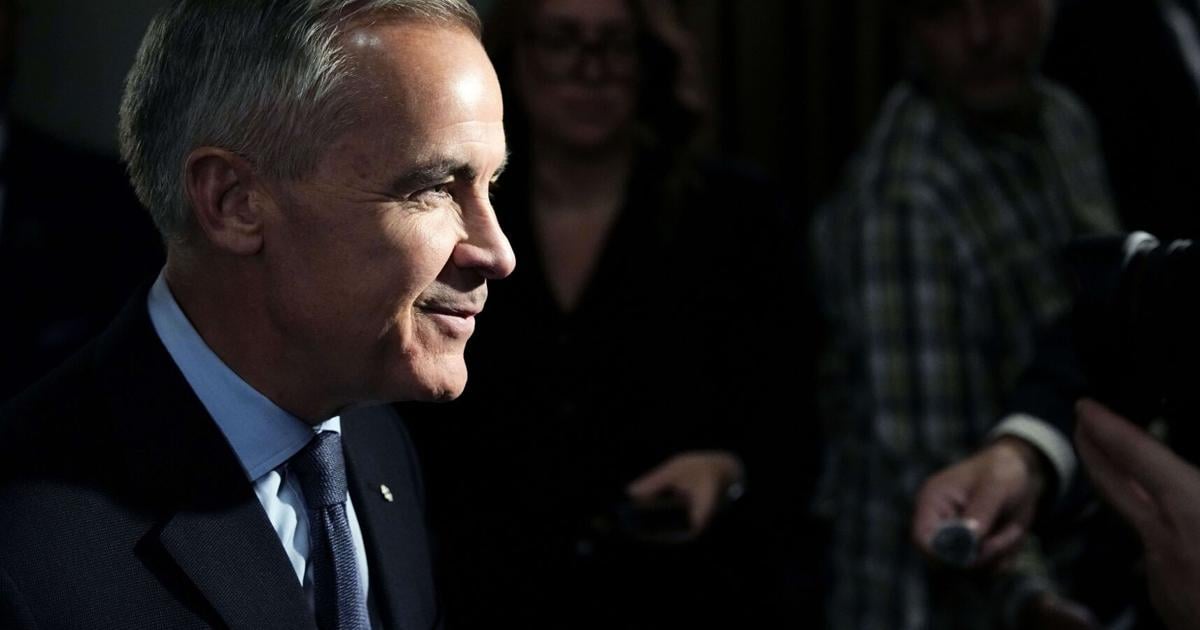
Photo via Toronto Star

Should Mark Carney push for a trade deal now — or wait Donald Trump out?

Read the original at Toronto Star ↗
Cite

Yaffe, B. (2026, November 16). Should Mark Carney push for a trade deal now — or wait Donald Trump out? Toronto Star. https://www.thestar.com/opinion/contributors/should-carney-push-for-a-trade-deal-now-or-wait-trump-out/article_2ed1a14c-3c55-4848-9f25-c87ebe2679a3.html

Dated from the outlet's own feed. Check the original for its byline.

Toronto Star · collected 2026-11-16 · by Barbara Yaffe

Quick Summary

The article discusses whether Mark Carney, the Governor of the Bank of Canada, should push for a trade deal with the United States now or wait until after the expected departure of President Donald Trump in 2028. It highlights the economic impact of tariffs on Americans and Canadians, noting that tariffs have not significantly affected U.S. factory employment but have imposed costs on Canadian industries. The piece also mentions that even if Democrats gain power in 2027, they might still be protectionist, and changing tariffs would require significant congressional majorities. Trade experts like Lawrence Herman and former MP James Moore suggest that waiting for a new U.S. administration could be more beneficial for Canada.
Written by AI on 2026-11-16, from this article's own text only (the story summary below draws on all the coverage).

AI analysis

Story summary

Mark Carney, the Governor of the Bank of Canada, is facing a critical decision on whether to pursue a trade deal with the United States now or wait until after the 2028 U.S. presidential election, when Donald Trump may no longer be in office. A group of academics, businesspeople, and politicians from the Norman Paterson Group on International Affairs at Carleton University and Canada’s Global Affairs Institute have advised caution, suggesting that pushing for a deal now might not be beneficial.

Recent midterm elections in the U.S. saw a shift towards the Democrats, partly due to voter anger over Trump's trade war with Canada, which has imposed significant tariffs. Americans, especially those in border states, view these tariffs as stealth taxes and are bearing the brunt of their costs during an affordability crisis. While Trump's immigration policies have been criticized as overly harsh, he has made no significant changes to his trade policies targeting Canada.

If Trump remains in office until 2028, Canada might face a prolonged period of uncertain trade relations. However, dealing with a new president who may be more amenable to free trade could offer better prospects for Canada. Nevertheless, delaying action comes with its own risks, as maintaining economic stability and job security under the current trade tensions is challenging.

Written for “Mark Carney Trade Deal Decision” on 2026-11-17, grounded in this article and the 0 other(s) covering the same event.

Compared with similar articles

This article reads unscored and hedges 6% of its claims. Each row says how that neighbour differs.
CBC News
Hedges 0 of 11 claims Outlet record 72/100
“The articles discuss different aspects of the trade negotiations and do not describe the same specific incident or occurrence.”
The Guardian
Hedges 3 of 23 claims Outlet record 65/100
“The articles discuss different aspects of Canada's trade situation with the US and potential cooperation with China, rather than the same specific incident or meeting.”
CBC News
Hedges 3 of 24 claims Outlet record 72/100
“Article A discusses Mark Carney's comments about turning to Chinese automakers if trade talks fail, while Article B discusses whether Canada should push for a trade deal or wait Trump out, focusing more on American public sentiment and the trade war with Canada.”
Toronto Star
Hedges 1 of 29 claims Outlet record 64/100
“The articles discuss different aspects of the Canada-U.S. trade relationship and do not describe the same specific incident or occurrence.”

Story

Mark Carney Trade Deal Decision
Politics · 1 article(s) covering the same event.
How this article was measured signals, leaning charts, publisher record, byline, topics and claims

Signals How these are calculated →

Claims extracted
33
sentences that state something as happening or true
Uncertain
6%
2 of 33 hedged ("reportedly", "may", "according to")
Leaning
withheld
no quote in the article backed the model's score
Publisher signals
64/100
Toronto Star's corrections and hedging, across everything collected from it. Not a measure of accuracy.
Outlets on this story
1
Politics
Same framing elsewhere
1
articles that frame the event the way this one does
Analyzed 2026-11-16 · how these are computed

How this is being covered How these are calculated →

Article leaning vs. publisher reliability
Source leaning vs. consistency

Publisher

Toronto Star · 15209 article(s) · 30 correction(s) detected
Running correction rate · 30 correction(s)
2026-11-17
Correction
2026-10-26
Correction
2026-10-24
Correction
2026-10-07
Correction
2026-09-24
Correction

Who wrote this

Barbara Yaffe
6 article(s) here · 1 carrying a prediction
Is this the time to push for a trade deal, or would Canada’s negotiating team be better off ragging the puck until January 2028 when, it is hoped, Trump will leave office?
It could get ugly.
The U.S. president insists Canada is now willing to give the U.S. whatever it wants.
Sands posits that Carney might even be moved soon to call an election in order to score a bigger majority government than he has now.
Trump has decided, the U.S. will sell Europe its weaponry, rather than donate it, as former president Joe Biden did.
2026-10-22 · assertive framing · What’s with Trump? Why would he hug the Russian bear?
Ontario is well positioned to insulate itself from potential geographical problems that would result from Alberta or Quebec opting to quit the federation; Canada’s most populous province does not have to fret about getting cut off from the rest of the country.
Also by Barbara Yaffe
Nothing else under this byline is closely related to this article, so these are simply their most recent.
All 6 articles by Barbara Yaffe →

Topics

Americans Canada Canadian Democrats U.S.

Subjects

Canada GPE · 10× Trump PERSON · 8× Canadian NORP · 3× Democrats NORP · 3× Americans NORP · 2× Carney PERSON · 2× U.S. GPE · 2× Democratic NORP · 1× House ORG · 1× Iran GPE · 1×

Narrative

In a paper last spring on trade talks, 10 academics, business people and politicians, writing for the Norman Paterson Group on International Affairs at Carleton University and Canada’s Global Affairs Institute, flipped on big yellow caution lights as they offered guidance to Mark Carney.
framing: assertive · carried by 1 article(s) · first seen 2026-11-16
Is this the time to push for a trade deal, or would Canada’s negotiating team be better off ragging the puck until January 2028 when, it is hoped, Trump will leave office?
2026-11-16 · Toronto Star
Should Mark Carney push for a trade deal now — or wait Donald Trump out? · assertive framing

Claims (33 extracted, 2 hedged)

Specifically, he now seems less inclined to renew a military attack on Iran. asserted
he → seem → Iran
And he admits his domestic immigration policy was “too tough.” asserted
policy → admit → ?
Americans, especially those in border states, are paying most of the cost of tariffs during an affordability crisis, and clearly are mad as hell. asserted
Americans → pay → hell
Americans see the tariffs as stealth taxes and chose to empower the Democrats last week. asserted
Americans → see → Democrats
So, does this give Canada greater leverage? asserted
this → give → leverage
Is this the time to push for a trade deal, or would Canada’s negotiating team be better off ragging the puck until January 2028 when, it is hoped, Trump will leave office? asserted
Trump → push → office
Dark money, gerrymandering and dirty tactics stained the midterms. asserted
money → stain → midterms
Dark money, gerrymandering and dirty tactics stained the midterms. asserted
money → stain → midterms
At that point, Carney could deal with a new, more reliable president who might be more open to free, or freer trade. uncertain
who → deal → trade
After all, the MAGA tariffs aimed at reshoring U.S. manufacturing jobs — basically by stealing Canadian jobs — have so far made no significant difference in U.S. factory-related employment numbers. asserted
tariffs → aim → numbers
But of course stalling by Canada would not be pain free. asserted
stalling → stall → Canada
Because, in the absence of a new deal, on Jan. 1 the Trump crowd is set to impose 50 per cent tariffs on Canadian-made cars, trucks, automobile parts, and steel. asserted
crowd → set → cars
And, even if the Democrats, the party of labour, snare the presidency in 2027, they tend to be protectionist as well. asserted
they → snare → 2027
Meanwhile, any Democratic effort to quash tariffs in the near term would be hard pressed to succeed. asserted
effort → quash → term
Trump has the power to levy tariffs and can veto any legislation aimed at reversing them. asserted
Trump → have → them
Democrats would need vast majorities in the House and Senate to effect change. asserted
Democrats → need → change
With all this in mind, Canadian trade experts and politicians have strong feelings about what lies ahead. asserted
what → have → feelings
Lawrence Herman, a longtime international trade and investment lawyer in Toronto, says “the Trump team will never be amenable to a balanced, mutually beneficial trade deal with Canada. asserted
team → say → Canada
That’s not how they view the trading world. asserted
they → ’ → world
“It’s unlikely that CUSMA can be refurbished … into a comprehensive, up-to-date trade arrangement. asserted
CUSMA → ’ → arrangement
“Maybe some short-term sectoral deals can be struck, lowering — though never eliminating — tariffs on steel, aluminum, maybe autos.” asserted
deals → strike → steel
But, says Herman, no comprehensive trade deal is possible under Trump. asserted
deal → say → Trump
Former Alberta Conservative MP and federal industry minister James Moore, has told CTV that Canada is better off waiting: ”There is no mandate to affirm tariffs, and there is no political constituency to cement a permanent tariff model that hurts Canada’s economic growth. asserted
that → tell → growth
“The Trump era is coming to a close. asserted
era → come → close
The Fraser Institute’s Steven Globerman agrees, Canada should “muddle through the remaining Trump years on the assumption that the next administration will be … more inclined to practice conventional diplomacy.” asserted
administration → agree → diplomacy
In a paper last spring on trade talks, 10 academics, business people and politicians, writing for the Norman Paterson Group on International Affairs at Carleton University and Canada’s Global Affairs Institute, flipped on big yellow caution lights as they offered guidance to Mark Carney. asserted
they → write → Carney
Their report advised the PM to never again give something up in trade talks without getting something in return, as happened earlier on in negotiations. asserted
report → advise → negotiations
The paper, titled ”Broken Trust; Managing an Unreliable Ally,” further warned, Trump’s signature on any trade deal is not worth much. asserted
signature → title → deal
And it repeated Carney’s phrase, originally uttered by the late prime minister Brian Mulroney, “no deal is better than a bad deal. asserted
deal → repeat → deal
All things considered, it would appear that Ontario Premier Doug Ford’s idea of doing cartwheels over the midterm results is premature. asserted
idea → consider → results
And financially, he badly needs the tariff revenue. asserted
he → need → revenue
Nor should Canada give up on its ultimate goal — securing a trade deal that reinstates free trade, one that would allow both sides to start repairing the badly ruptured Canada-U.S. relationship. asserted
sides → give → relationship
No matter how long that may take. uncertain
that → take → ?

Give feedback · no sign-in needed

No sign-in needed for now. Your note is sent without a name, so it cannot be answered.

History Support