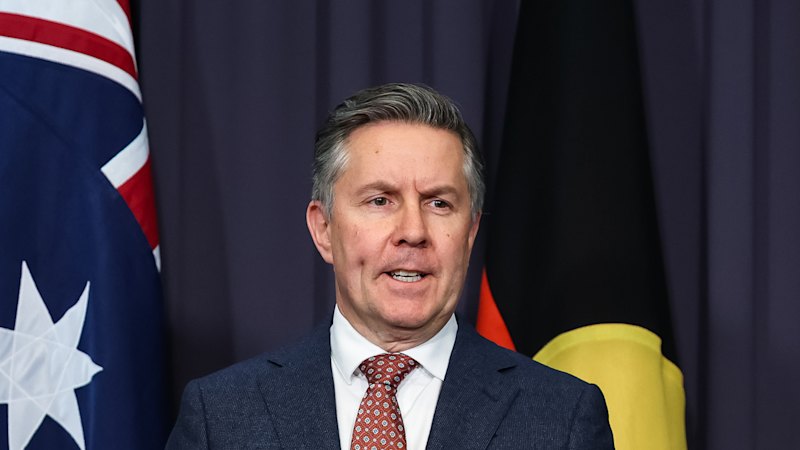
Photo via The Guardian

Australia’s national medical research body advises conditional use of puberty blockers for transgender children

Read the original at The Guardian ↗
Cite

Messenger, A. (2026, November 16). Australia’s national medical research body advises conditional use of puberty blockers for transgender children. The Guardian. https://www.theguardian.com/australia-news/2026/nov/16/australias-national-medical-research-body-advises-conditional-use-of-puberty-blockers-for-transgender-children

Dated from the outlet's own feed. Check the original for its byline.

The Guardian · collected 2026-11-16 · by Andrew Messenger

Quick Summary

Australia’s National Health and Medical Research Council (NHMRC) has released interim guidelines recommending the conditional use of puberty blockers for transgender children after a year-long review of international evidence. The council’s guidance was commissioned by the federal government following bans on puberty blockers in Queensland and the Northern Territory. The guidelines suggest that withholding gender-affirming care can negatively impact children’s physical and mental health and recommend a multi-disciplinary team approach to determine treatment on a case-by-case basis.
Written by AI on 2026-11-16, from this article's own text only (the story summary below draws on all the coverage).
See how they differ ↓

AI analysis

Story summary

The National Health and Medical Research Council (NHMRC) in Australia has released interim guidance recommending that puberty blockers can be considered as a treatment option for people under 18 who experience gender incongruence, despite ongoing debates and restrictions in other countries. This advice is now open for public consultation and will be finalized in 2028. The NHMRC's recommendation is conditional and requires that the decision to use puberty blockers be made jointly by the young person, their parents or carers, and clinicians, only after the young person has started puberty and been assessed as suitable for treatment. The guidance comes in response to bans on puberty blockers in Queensland and the Northern Territory, and it explicitly rejects alternative approaches such as the "wait and see" model as forms of withholding care that can negatively impact young people's physical and mental health.

Written for “Conditional Use of Puberty Blockers Advised” on 2026-11-17, grounded in this article and the 2 other(s) covering the same event.

How they differ

3 outlets covered “Conditional Use of Puberty Blockers Advised”.

What each outlet says

One AI summary per outlet of its latest article on this story, written from that article alone and checked against it. Open the article for the outlet's own words.

The GuardianThis outlet16 Nov

Australia’s National Health and Medical Research Council (NHMRC) has released interim guidelines recommending the conditional use of puberty blockers for transgender children after a year-long review of international evidence. The council’s guidance was commissioned by the federal government following bans on puberty blockers in Queensland and the Northern Territory. The guidelines suggest that withholding…

Australia’s national medical research body advises conditional use of puberty blockers for transgender children (this article)
ABC News (AU)16 Nov

New national advice from the National Health and Medical Research Council (NHMRC) recommends that puberty blockers remain a clinical option for certain trans and gender diverse children, despite limited evidence on their benefits and risks. The interim advice, now open for public consultation, could impact policies in Queensland and the Northern Territory, which have restricted or banned the use of puberty blockers…

Puberty blockers should remain an option for trans youth: national advice →
Daily Mail16 Nov

The National Health and Medical Research Council in Australia has issued interim guidance recommending puberty blockers as a treatment option for transgender and gender-diverse individuals under 18 who are experiencing gender incongruence. This recommendation comes with strict conditions including a thorough health assessment, multidisciplinary input, and ongoing monitoring. Despite limited evidence on the long-term…

Puberty blockers get interim green light for under 18s in Australia despite bans overseas →

Compared with similar articles

This article reads leans left and hedges 6% of its claims. Each row says how that neighbour differs.
Daily Mail
Leans right further right than this Hedges 4 of 27 claims Outlet record 70/100
ABC News (AU)
Hedges 8 of 44 claims Outlet record 67/100
The Sydney Morning Herald
Leans left Hedges 1 of 13 claims Outlet record 61/100
“While both articles discuss the same topic of guidelines for puberty blockers, they describe different aspects of the event—one focuses on the NHMRC advising conditional use, while the other emphasizes Health Minister Butler's challenge to states to comply with the new guidelines.”

Story

Conditional Use of Puberty Blockers Advised
Health · 3 article(s) covering the same event. See how they differ ↑
How this article was measured signals, leaning charts, publisher record, byline, topics and claims

Signals How these are calculated →

Claims extracted
18
sentences that state something as happening or true
Uncertain
6%
1 of 18 hedged ("reportedly", "may", "according to")
Leaning
Leans left
of the writing, not the subject · beta estimate
Publisher signals
65/100
The Guardian's corrections and hedging, across everything collected from it. Not a measure of accuracy.
Outlets on this story
3
Health
Same framing elsewhere
1
articles that frame the event the way this one does
Analyzed 2026-11-16 · how these are computed

How this is being covered How these are calculated →

Article leaning vs. publisher reliability
Source leaning vs. consistency

Publisher

The Guardian · 3553 article(s) · 7 correction(s) detected
Running correction rate · 7 correction(s)

Who wrote this

Andrew Messenger
13 article(s) here · 1 carrying a prediction
The New Zealand government later followed suit despite widespread opposition in the health sector and warnings that the bans would harm children.
The failed federal Liberal candidate Katherine Deves, who campaigned to exclude transgender women from women’s sport, will stand for One Nation at next year’s New South Wales election.
That officer told the court that she didn’t have access to the QP9 for Kerrie’s conviction – a file produced by prosecutors and the police that would have included details about her offence – or the judge’s sentencing remarks.
The Queensland coroner’s court also heard the case worker may have been “overly influenced” by the presentation of Struhs’ “upper class home”, putting cases believed to involve a more immediate risk ahead of Elizabeth’s.
Doctors were so concerned about the religious beliefs of Elizabeth Struhs’ mother they recommended she be subjected to an involuntary mental health assessment because she delusionally believed her daughter would be healed from type 1 diabetes, a coroner has heard.
The doctor said Kerrie continued to not believe in medicine and that it would be unsafe for her daughter to live with her until she changed her views, the inquest heard.
Child safety staff decided in 2019 that it would be “more detrimental” to not return Elizabeth, aged six at the time, to her Toowoomba home upon her discharge from hospital after suffering a coma due to diabetic ketoacidosis, a Queensland coroner heard.
A medical specialist at the Queensland Children’s hospital warned that Elizabeth Struhs would not be safe at home with her mother years before her parents allowed her to die by withdrawing lifesaving medicine, a coronial inquest has heard.
A driver whose car careered into a crowd of Newcastle Knights supporters – leaving children as young as five injured – will be kept in custody as the community rallies to support those hospitalised after the crash.
It recommended creating a new independent organisation – known as a police integrity unit – to investigate all complaints against police by May 2024, as one of its “four highest-priority recommendations”.
Also by Andrew Messenger
Nothing else under this byline is closely related to this article, so these are simply their most recent.
All 13 articles by Andrew Messenger →

Topics

Australia NHMRC National Health and Medical Research Council Northern Territory Queensland

Subjects

NHMRC ORG · 4× Australia GPE · 2× National Health and Medical Research Council ORG · 1× New Zealand GPE · 1× Northern Territory GPE · 1× Queensland GPE · 1× the Pharmaceutical Benefits Scheme ORG · 1×

Narrative

The council explicitly rejected alternative approaches to gender-affirming care proposed by opponents of the approach – such as the “wait and see” model – as a form of withholding care for children which it stated “can affect the young person’s physical and mental health, wellbeing, and ability to function”. Puberty blockers are a class of drugs used to stop the body producing oestrogen and testosterone. Hormone replacement therapy is a treatment that replaces hormones produced in the body with synthetic hormones for the treatment of ailments like hormonal cancers, such as breast and prostate cancer, endometriosis and gender incongruence. Both treatments are common, covered by the Pharmaceutical Benefits Scheme for cisgender patients, and have been used for decades.
framing: assertive · carried by 1 article(s) · first seen 2026-11-16
The New Zealand government later followed suit despite widespread opposition in the health sector and warnings that the bans would harm children.

Claims (18 extracted, 1 hedged)

Australia’s largest medical research organisation has advised puberty blockers are appropriate for the gender-affirming care of children in certain circumstances, after a year-long review of international evidence. asserted
blockers → advise → evidence
The federal government last year commissioned the commonwealth-funded National Health and Medical Research Council (NHMRC) to develop the advice in response to bans in Queensland and Northern Territory public hospitals imposed by their governments. asserted
government → commission → governments
The New Zealand government later followed suit despite widespread opposition in the health sector and warnings that the bans would harm children. asserted
bans → follow → children
The NHMRC’s interim national clinical practice guidelines released on Monday, which advise conditional use of puberty suppressants for children, could put pressure on state and territory governments to consider their positions. uncertain
which → release → positions
The council explicitly rejected alternative approaches to gender-affirming care proposed by opponents of the approach – such as the “wait and see” model – as a form of withholding care for children which it stated “can affect the young person’s physical and mental health, wellbeing, and ability to function”. Puberty blockers are a class of drugs used to stop the body producing oestrogen and testosterone. Hormone replacement therapy is a treatment that replaces hormones produced in the body with synthetic hormones for the treatment of ailments like hormonal cancers, such as breast and prostate cancer, endometriosis and gender incongruence. Both treatments are common, covered by the Pharmaceutical Benefits Scheme for cisgender patients, and have been used for decades. asserted
treatments → reject → decades
The new NHMRC guidelines do not require a child be distressed to be treated for gender incongruence and recommend a multi-disciplinary team “should be determined on a case-by-case basis”. asserted
team → require → basis
Doctors should “prioritise the best interest and wellbeing of the young person and provide care that respects their autonomy”, the advice reads. asserted
advice → prioritise → autonomy
The guidelines describe gender incongruence as the clinical term for a difference between a person’s gender and their sex recorded at birth. asserted
guidelines → describe → birth
“It is not a mental health disorder,” it states. asserted
it → state → ?
“Some young people with gender incongruence will also experience significant distress, known as gender dysphoria.” asserted
people → experience → dysphoria
Puberty blockers have been used to treat children for a variety of conditions, such as precocious puberty, since the 1970s. asserted
blockers → use → 1970s
They have been used in gender-affirming care since the 1990s. asserted
They → use → 1990s
The NHMRC advice largely aligns with the AusPATH Australian Standards of Care for Informed Consent Gender-Affirming Hormone Therapy, Australia’s only existing guidelines for doctors. asserted
advice → align → doctors
The council is an independent statutory agency funded by the commonwealth. asserted
council → fund → commonwealth
Its interim advice on puberty blocking drugs is based on advice from its multidisciplinary gender guideline development committee and “supported by a systematic review of the evidence”, the review said. asserted
review → block → evidence
“Trans and gender-diverse young people experience unjust and avoidable health disparities arising from stigma, discrimination, and barriers to accessing health care,” it said. asserted
it → experience → care
Public consultation on the interim advice, called “Advice on the use of puberty suppressants in the care of trans and gender-diverse people aged under 18”, is open until 18 January. asserted
consultation → call → January
The full guidelines will address other aspects of care, including the use of gender-affirming hormones, and are expected to be available in 2028. asserted
guidelines → address → 2028
Give feedback · no sign-in needed

No sign-in needed for now. Your note is sent without a name, so it cannot be answered.

History Support