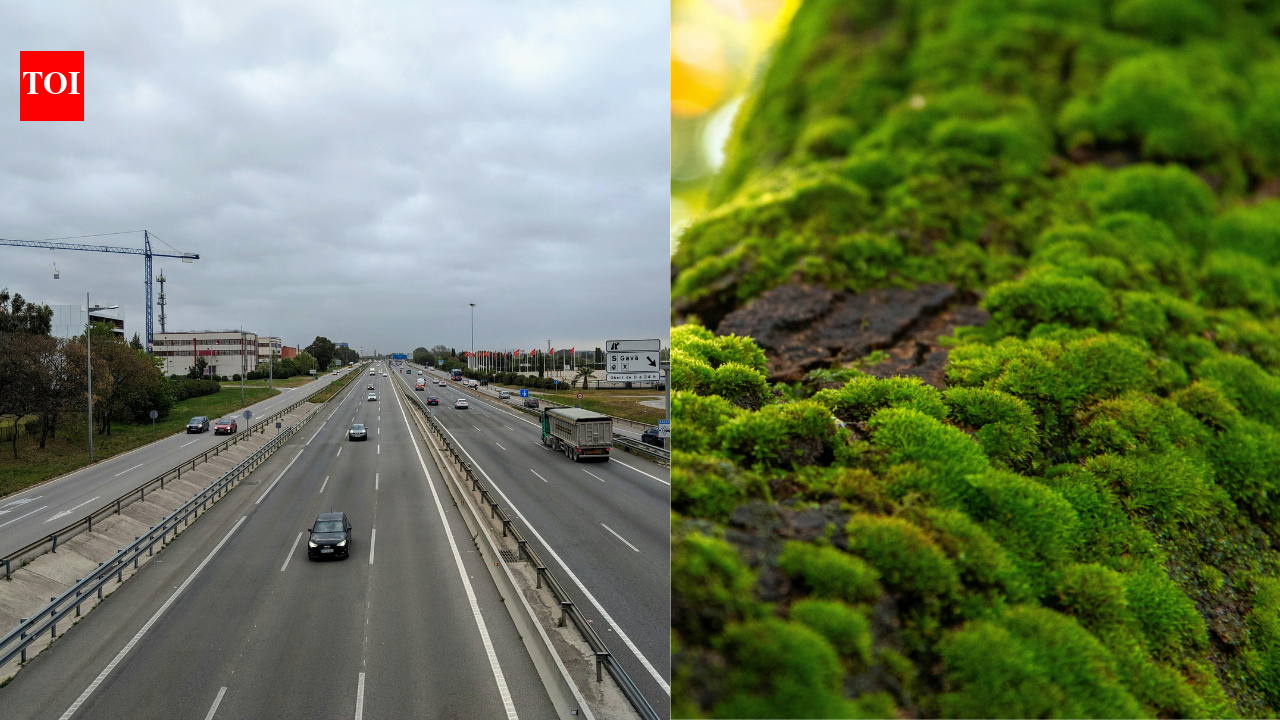
Russian scientists hung bags of clean moss beside three busy highways to measure traffic pollution. The study, published in the Journal of Hazardous Materials, used Sphagnum girgensohnii moss collected from a background site in May 2023 and exposed it to roadside air along Leningradskoye, Yaroslavskoye, and Dmitrovkoye highways. After analyzing for sixteen elements including lead, mercury, and zinc, the researchers found that pollution levels varied sharply between the roads, with the Leningradskoye highway showing the highest uptake of traffic-related metals due to its higher traffic density.
Written by the local model on 2026-09-17,
using this article's own text rather than the other coverage of the
same event (that is the story summary below).
Story summary
Researchers in Russia hung bags of Sphagnum girgensohnii moss beside three busy highways — Leningradskoye, Yaroslavskoye, and Dmitrovkoye — to measure traffic-related pollution. The study, published in the Journal of Hazardous Materials, aimed to isolate the impact of vehicle emissions on air quality by using clean moss from a background site in Russia's Tver region. After exposing the moss to roadside air for several months starting in May 2023, researchers analyzed it using advanced techniques like Inductively Coupled Plasma Optical Emission Spectroscopy and a direct mercury analyzer. They found that traffic-related metals such as Aluminum (Al), Barium (Ba), Cobalt (Co), Cadmium (Cd), Chromium (Cr), Copper (Cu), Iron (Fe), Manganese (Mn), Nickel (Ni), Phosphorus (P), Lead (Pb), Strontium (Sr), Sulphur (S), Vanadium (V), Zinc (Zn), and Mercury (Hg) had accumulated in the moss. The pollution levels varied significantly among the three highways, highlighting differences in traffic patterns and environmental conditions along each route.
Written for “Moss Cleans Traffic Pollution” on 2026-09-17,
grounded in this article and the 0 other(s) covering the same event.
Researchers in Russia hung bags of moss beside three busy highways to see how much traffic pollution the plants would soak up.
asserted
plants → hang → pollution
Published in the Journal of Hazardous Materials, the study exposed moss collected from a clean background site to roadside air along the Leningradskoye, Yaroslavskoye, and Dmitrovkoye highways in central Russia.
asserted
study → publish → Russia
After analysing the moss for sixteen elements, the researchers found that traffic-related metals had built up in the plants, with pollution levels varying sharply between the three roads.
asserted
levels → analyse → roads
Why scientists hung moss bags beside three Russian highways
The study, titled ‘
Impact of traffic-related emissions on air quality assessed via moss bags technique,’ used Sphagnum girgensohnii moss, a species widely recommended for air pollution biomonitoring.
asserted
Impact → hang → biomonitoring
Researchers collected clean moss from a background site in Russia's Tver region in May 2023, cleaned it, dried it, and packed it into bags before hanging the bags beside stretches of highway not exposed to any other major pollution sources.
uncertain
Researchers → collect → sources
The approach let the team isolate the effect of traffic alone on air quality, rather than the mix of industrial and vehicle sources found in most previous moss-bag studies conducted in urban settings.
asserted
team → let → settings
What metals the moss bags collected beside the highways
After exposure, the moss bags were analysed using Inductively Coupled Plasma Optical Emission Spectroscopy and a direct mercury analyser to measure sixteen elements, Al (Aluminium), Ba (Barium), Co (Cobalt), Cd (Cadmium), Cr (Chromium), Cu (Copper), Fe (Iron), Mn (Manganese), Ni (Nickel), P (Phosphorus), Pb (Lead), Sr (Strontium), S (Sulphur), V (Vanadium), Zn (Zinc) and Hg (Mercury).
asserted
bags → collect → elements
Except for phosphorus, the content of every element in the exposed moss matched or exceeded that of the unexposed samples, showing clear uptake of traffic-related pollutants.
asserted
content → match → pollutants
These elements typically originate from vehicle exhaust, tyre and brake wear, engine corrosion, and dust thrown up from the road surface, all of which the moss absorbed directly from the surrounding air over the exposure period.
asserted
moss → originate → period
metals came from vehicle exhaust, tyre and brake wear, engine corrosion, and dust thrown up from the road surface, all of which the moss absorbed directly from the surrounding air (Image: Canva)
Why the Leningradskoye highway showed the most pollution
Pollution levels differed sharply between the three highways.
asserted
levels → come → highways
The most pronounced uptake of elements was recorded at Leningradskoye highway, followed by Yaroslavskoye and then Dmitrovkoye, a ranking researchers linked to differences in traffic density.
asserted
researchers → record → density
Aluminium, cobalt, cadmium, manganese, and lead were significantly higher in moss exposed at Leningradskoye than at the other two roads.
asserted
Aluminium → expose → roads
Statistical analysis also showed that concentrations of aluminium, copper, cobalt, chromium, iron, nickel, and vanadium changed with distance from the road edge, generally falling off the further the moss bags were placed from passing traffic, underscoring how closely tied the contamination was to the highway itself.
asserted
contamination → show → highway
Moss bags prove an effective tool for tracking Russian highway pollution
The research was carried out by Inga Zinicovscaia, Omari Chaligava, Nikita Yushin, Dmitrii Grozdov, Konstantin Vergel, and Pavel Nekhoroshkov, based at the Department of Nuclear Physics at the Joint Institute for Nuclear Research in Dubna, Russia.
asserted
research → prove → Dubna
The team concluded that moss biomonitoring, already widely used across Europe and Asia, proved an effective and inexpensive tool for tracking traffic-related air pollution along stretches of highway free from other contamination sources.
asserted
biomonitoring → conclude → sources
Their findings point to vehicle emissions, tyre wear, and brake wear as key contributors to roadside metal pollution, with implications for how such contamination could be monitored more cheaply in the future.
uncertain
contamination → point → future
 The Aporia