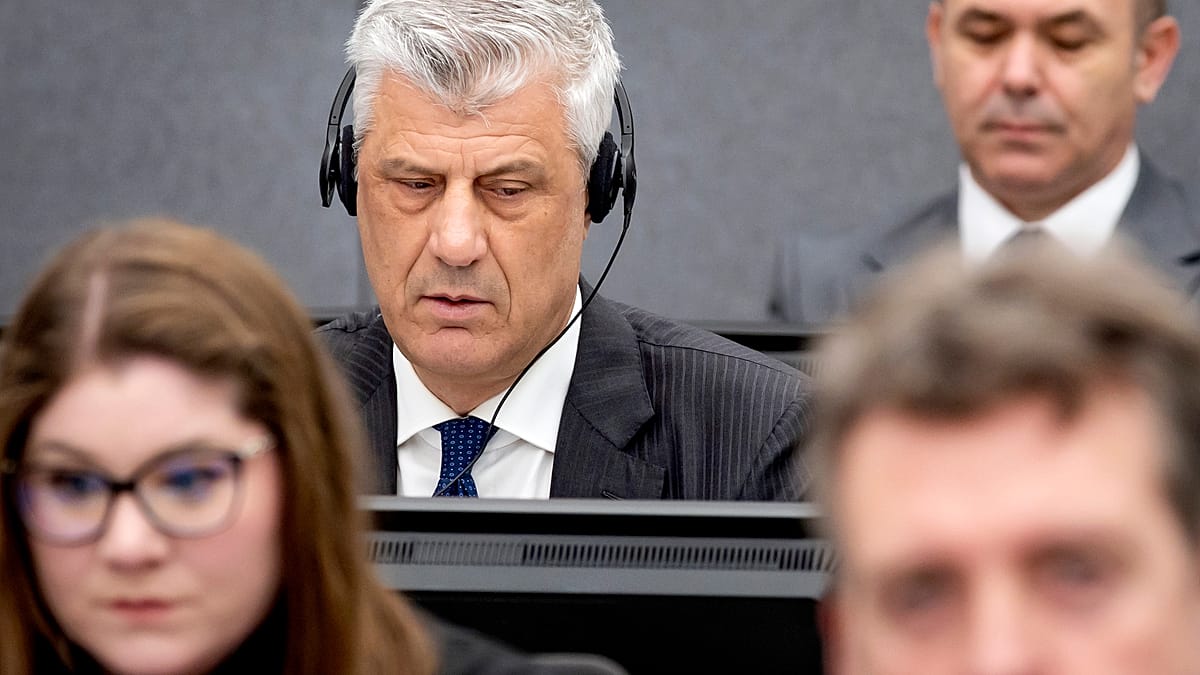
The story so far: Hashim Thaci, the former President of Kosovo, has been sentenced to 25 years in prison after being found guilty of war crimes by a special European Union-backed court at The Hague.
asserted
Thaci → sentence → Hague
The trial found him guilty of crimes including murder, arbitrary detention, illegal arrests, torture etc during the Kosovo war in the late 1990s as a senior commandant of the Kosovo Liberation Army (KLA).
asserted
him → find → Army
Three other former KLA commanders were also sentenced for several different charges.
asserted
commanders → sentence → charges
What happened?
asserted
What → happen → ?
Thaci was a former commandant of the KLA, a militant ethnic Albanian force, formed in the early 1990s, which strove for the independence of Kosovo, composed primarily of ethnic Albanians, from Yugoslavia and Serbia.
asserted
which → form → Yugoslavia
Post the Second World War, the Kingdom of Yugoslavia was reconstituted as the Socialist Federal Republic of Yugoslavia under the leadership of Josip Broz Tito.
asserted
Kingdom → reconstitute → Tito
While Tito was able to unify the multiple republics, which included Croatia, Montenegro, Serbia, Slovenia, Bosnia and Herzegovina, and Macedonia, and the autonomous provinces of Kosovo and and Vojvodina, under a centralised government, following his death, this centralised system started coming under pressure.
asserted
system → unify → pressure
Multiple factors such as divisions between the republics, rising nationalist movements, economic pressure, the disintegration of the Soviet Union all contributed to the eventual dissolution of Yugoslavia in 2003.
asserted
factors → rise → 2003
One of the primary nationalist trends which spearheaded the Yugoslavian dissolution was the Serbian nationalist movement led by Slobodan Milošević in the late 1980s.
asserted
which → spearhead → 1980s
Riding on Serbian nationalist tendencies, Milošević pushed through policies which stripped other Republics and provinces such as Kosovo of their autonomy.
asserted
which → rid → autonomy
He also brought in policies which were discriminatory in nature against Albanians.
asserted
which → bring → Albanians
The KLA was first formed in such an atmosphere, in order to fight for the independence of ethnic Albanians in Kosovo, then a province within Serbia.
asserted
KLA → form → Serbia
There was an insurgency against the Yugoslavian state within Kosovo, spearheaded by the KLA which attacked Serbian governmental buildings and police stations.
asserted
which → be → buildings
This eventually led to all-out war in 1998-1999 with the Serbian controlled federal republic brutally cracking down on the KLA.
asserted
republic → lead → KLA
The war led to the displacement of thousands of people and the death of nearly 13,000 people, mostly ethnic Albanians.
asserted
war → lead → people
The war finally ended with the intervention of NATO (the North Atlantic Treaty Organization) which carried out air raids and bombardments against Serbian targets which forced the federal republic to end hostilities and move out of Kosovo.
asserted
which → end → Kosovo
NATO subsequently deployed peacekeeping forces to the region.
asserted
NATO → deploy → region
Milošević eventually stood trial for his crimes against humanity, genocide, and war crimes committed during the Yugoslav Wars of the 1990s, in The Hague in 2002.
asserted
Milošević → stand → 2002
However, he died in prison before a judgment was reached.
asserted
judgment → die → prison
In 2008, Kosovo declared independence from Serbia and was recognised by the U.S., and several other European nations.
asserted
Kosovo → declare → U.S.
However, Serbia does not recognise Kosovo as an independent nation and still considers it a part of itself even though it has no administrative control over it.
asserted
it → recognise → it
India also does not recognise Kosovo as an independent nation.
asserted
India → recognise → nation
The trial was heard by the European Union-backed Kosovo Specialist Chambers, a special tribunal court constituted in The Hague in 2016, to hear the crimes committed by the KLA during the period of insurgency and subsequent war of the 1990s.
asserted
trial → hear → 1990s
The need for such a tribunal arose after Swiss politician Dick Marty authored a Council of Europe report, known as the Marty report, in 2010, which alleged that the KLA placed many Serbians in secret detention centres where they were subjected to inhuman and degrading treatment, before ultimately “disappearing”.
asserted
they → arise → treatment
Of particular note was the allegation that the KLA had harvested the organs of such prisoners in order to sell them in the international market.
asserted
KLA → harvest → market
The report, in effect, coloured the larger imagination of the KLA and the Kosovo independence movement.
asserted
report → colour → KLA
The narrative changed from the KLA being seen as a champion of self-determination to an inhumane militia which had committed human rights abuses against Serbian nationals.
asserted
which → change → nationals
At least 15 people have been charged by the Chambers, out of which Thaci is the most senior figure.
asserted
Thaci → charge → which
Charges were brought against him in 2020, when he was President of Kosovo, following which he had to resign from the position and stand trial as an ordinary citizen.
asserted
he → bring → citizen
The central question the court dealt with was to analyse the extent of control the commandants had over the KLA and whether the crimes amounted to a pattern of abuse.
asserted
crimes → deal → abuse
Finally, presiding judge Charles Smith stated that Thaçi had “actively participated in and encouraged crimes” adding that, “the scale and nature of the crimes committed were very serious”.
asserted
scale → preside → crimes
However, the judge insisted that the trial was “not about the legitimacy of the Kosovo Liberation Army” or its ultimate goal of securing independence for Kosovo.
asserted
trial → insist → Kosovo
The verdict is a significant fall for Thaci, who was once regarded by Western powers as central to Kosovo’s post-war future.
asserted
who → regard → future
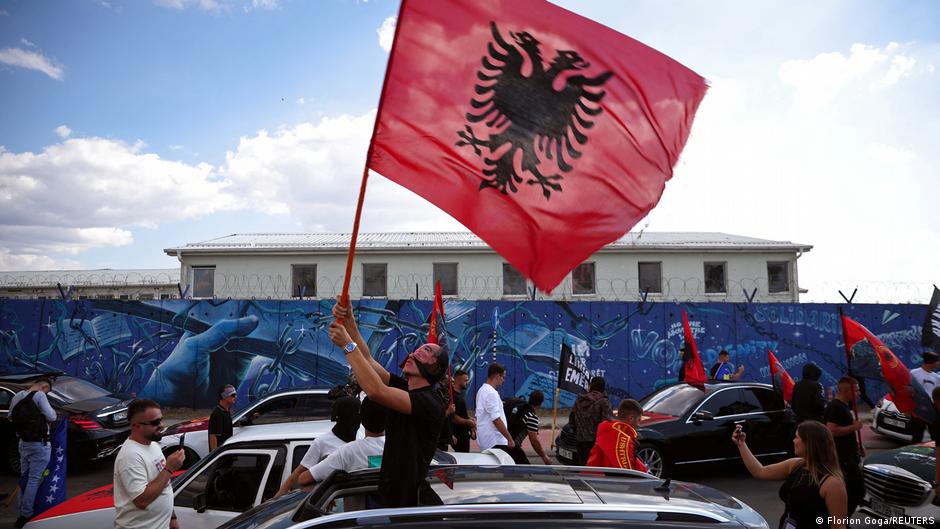
In Kosovo, where Thaci is still seen as a revolutionary and revered figure, the verdict was met with outrage and tears.
asserted
verdict → see → outrage
Kosovo’s Prime Minister Albin Kurit said the verdict was “a travesty of justice”.
asserted
verdict → say → justice
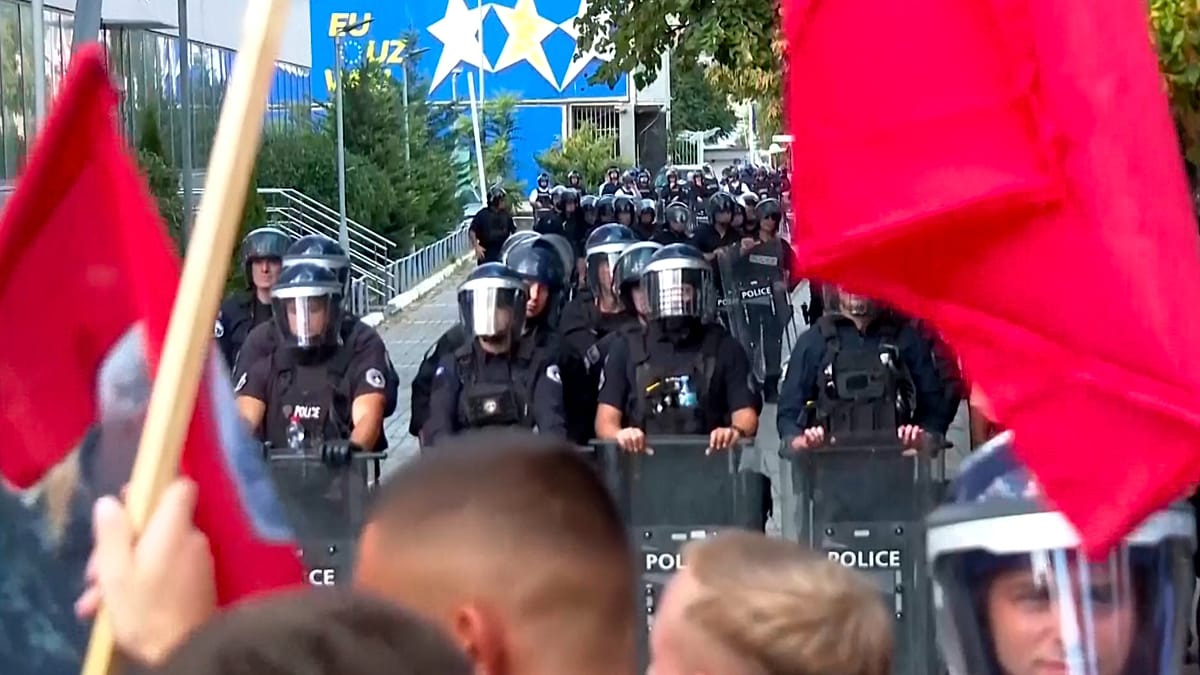
People who had poured into the streets of Pristina, the capital of Kosovo, to hear the verdict on a big screen were shocked and shouted slogans in support of the KLA and Thaci.
asserted
who → pour → KLA
However, the Serbian side has welcomed the judgement.
asserted
side → welcome → judgement
Serbia’s Deputy Prime Minister Ivica Dacic called the verdicts a “warning” to Pristina “that a fake state cannot be built on mass graves of murdered Serbs”.
asserted
state → call → Serbs
Thaci and the three other commandants have the right to appeal the decision.
asserted
Thaci → have → decision
 The Aporia