In short:
Labor is tightening visa rules for international students and backpackers, while increasing efforts to remove overstayers as it seeks greater control over migration.
asserted
it → tighten → migration
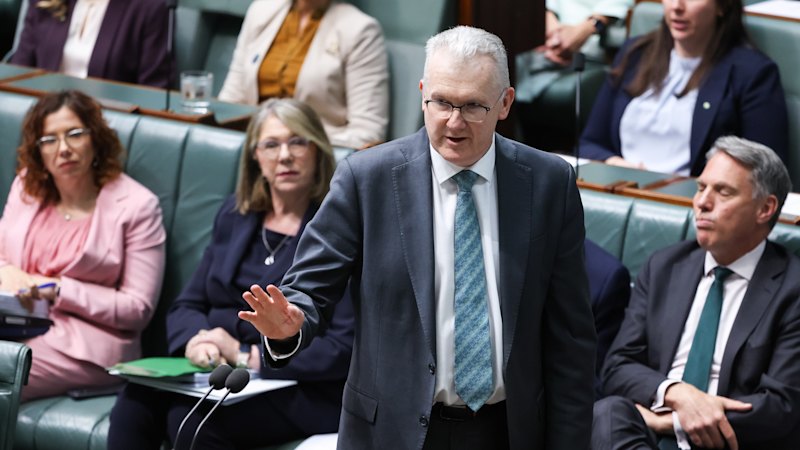
Home Affairs Minister Tony Burke said housing pressures mean net overseas migration forecasts are now considered a target that must be met.
asserted
that → say → ?
What’s next?
asserted
What → ’ → ?
Labor will implement changes that can be made under existing powers but still wants a parliamentary path for further reforms targeting student arrivals and weak protection visa claims.
uncertain
that → implement → arrivals
Australia will crack down on visa overstayers, stop international students from bringing family and limit the stay of backpackers under a series of changes to drive down migration.
Home Affairs Minister Tony Burke has outlined a raft of changes he said would restore the "integrity" of the migration program and give the federal government more "control" over the demand-driven components of the system.
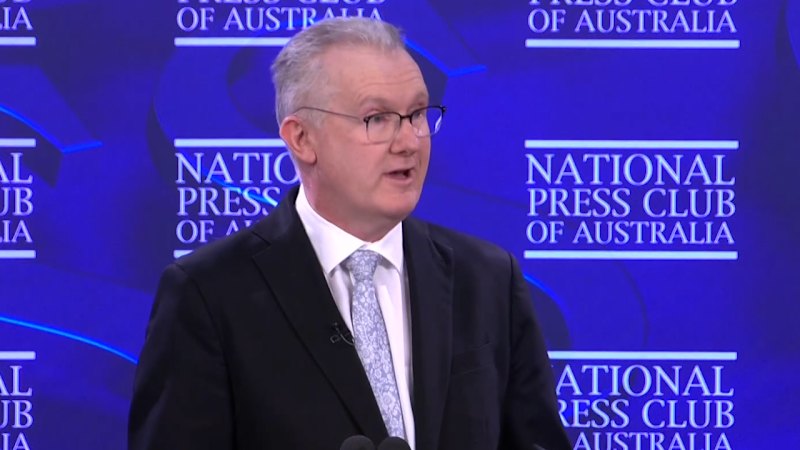
In a speech at the National Press Club (NPC) in Canberra on Thursday Mr Burke described the overhaul as the "next stage" of policies designed to deliver the net overseas migration (NOM) figures in the budget of 245,000 this year and 225,000 next financial year.
asserted
Burke → crack → 245,000
He confirmed the government now considered these forecasts a target to meet due to the "challenges" Australia was having with housing.
asserted
Australia → confirm → housing
Net overseas migration fell to 292,100 people in the year to March, according to new figures from the Australian Bureau of Statistics released today.
uncertain
migration → fall → Statistics
Mr Burke declared claims that Australia was a country of mass migration were "absurd" and warned deeper cuts to the NOM — as flagged by opposition parties — would destroy the economy.
uncertain
cuts → declare → economy
He said Labor's changes amounted to a "relatively simple proposition".
asserted
changes → say → proposition
"If you want to come on a temporary basis to Australia, apply for a temporary visa," he said.
asserted
he → want → visa
"If you want to come to Australia permanently, apply for a permanent visa.
"
asserted
you → want → visa
And if you no longer have a valid visa, you should leave Australia."
asserted
you → have → Australia
Labor's announcement comes as One Nation unveiled plans to push the country into negative NOM for three years and then 130,000 after that, while the Coalition is finalising plans for a policy expected to target between 150,000 to 170,000 people.
asserted
Coalition → come → people
Asked how he would win the case with the public that the government's higher target was the right thing to do, Mr Burke said because the "lower levels will trash Australian services and trash the Australian economy".
asserted
levels → ask → economy
In addition to immediate visa rule changes, Mr Burke flagged further areas Labor would like to legislate but could not do without the support of the parliament, including limiting unrealistic applications for asylum.
uncertain
Labor → flag → asylum
But he said he would not blame this limitation for any failure to achieve the government's NOM target because overshooting the number "won't happen".
asserted
overshooting → say → number
Mr Burke also criticised One Nation's policy of preventing skilled migrants from bringing their spouses and children to Australia, arguing about half of all doctors and construction workers and two thirds of nurses came to the country with family.
asserted
half → criticise → family
"Imagine half of the construction workers who we have to build the houses that we need, not coming," he said.
"Imagine two-thirds of the people who we rely on in aged care or nursing not coming."
Housing and lack of control among problems with current system
Mr Burke said a key problem with Australia's current migration program was that too much of it was demand driven.
He said Australians wanted the government to be able to take a "higher level of control" over different parts of the system.
asserted
government → imagine → system
Mr Burke also identified "visa hopping" as an issue related to individuals who would "never" meet the qualifications to become a permanent resident.
asserted
who → identify → qualifications
"(They) effectively jump from visa to visa, use the appeals process to be able to stay here as long as possible until it eventually becomes absurd to not just let them stay," he said.
asserted
he → jump → process
Mr Burke said migration needed to slow enough for housing supply to "catch up", but blamed falling household sizes and other issues for the shortage of homes in Australia.
asserted
supply → say → Australia
"The housing shortage we have is not caused by immigration," he said.
asserted
he → have → immigration
"But immigration needs to be part of the solution for the housing crisis."
Changes to skilled work visas
Among the changes flagged in Mr Burke's speech was a redesign of the points test to increase the economic value of skilled permanent migration, with housing construction trades to receive the same recognition as a university qualification.
asserted
trades → need → qualification
Mr Burke also announced Ministerial Direction 119 would be changed to give processing priority to construction, healthcare, agriculture, fisheries and teaching after business backlash to an earlier decision.
asserted
Direction → announce → decision
In July, he had issued a sweeping directive pushing skilled visa applications, lodged offshore, to the back of the queue.
asserted
he → issue → queue
The change meant visa processing times for visas blew out from a few days to more than a year in some cases.
asserted
times → mean → cases
Backpacker ballot for second and third year stays
Mr Burke unveiled a dramatic overhaul of the Working Holiday Maker program, also known as backpackers.
asserted
Burke → unveil → backpackers
After a months-long go slow on applications, processing will return to the previous faster pace for countries whose schemes require regional work to qualify for a second or third year of stay.
asserted
schemes → return → stay
However, a ballot system would be introduced to limit the number of backpackers who are able to stay in Australia beyond one year.
asserted
who → introduce → year
Eligibility for a second year stay will be capped at 45,000 places and applicants would still need to complete 88 days of regional work before entering the ballot.
asserted
applicants → cap → ballot
For the third year, the ballot would be restricted to just 5,000 places with a six-month regional work requirement to qualify.
asserted
ballot → restrict → requirement
Last year about 57,000 backpackers stayed in Australia for a second year and about 31,000 did a third year.
asserted
31,000 → stay → year
Mr Burke said not everybody would get to stay in Australia beyond the first-year because the government needed to have "some control and certainty of what those numbers are".
asserted
numbers → say → control
UK applications would be excluded from the faster processing because the scheme does not have a regional work requirement and is part of the UK, Australia free trade agreement.
asserted
scheme → exclude → agreement
The number of UK backpackers in Australia has risen sharply since the FTA took effect during the pandemic when there were about 17,000 people to now just under 80,000.
"It's a level of growth that means we are just, at the moment, going to continue to be processing that one slowly," Mr Burke said.
asserted
Burke → rise → one
Labor to tackle international student 'visa hopping'
asserted
Labor → tackle → hopping
Another major change impacts international students, who would largely no longer be able to attach family members to their visas.
asserted
who → impact → visas
Existing families already in Australia would not be separated, and exceptions would continue for Pacific and ASEAN nationals and certain courses, such as PhDs.
asserted
exceptions → exist → PhDs
To tackle "visa hopping" students who wanted to transfer courses would have to apply for a new visa.
asserted
who → tackle → visa
Meanwhile international students who complete from a course would only be able to move into a new course of a higher qualification level.
asserted
who → complete → level
…and 30 more, not listed.
 The Aporia