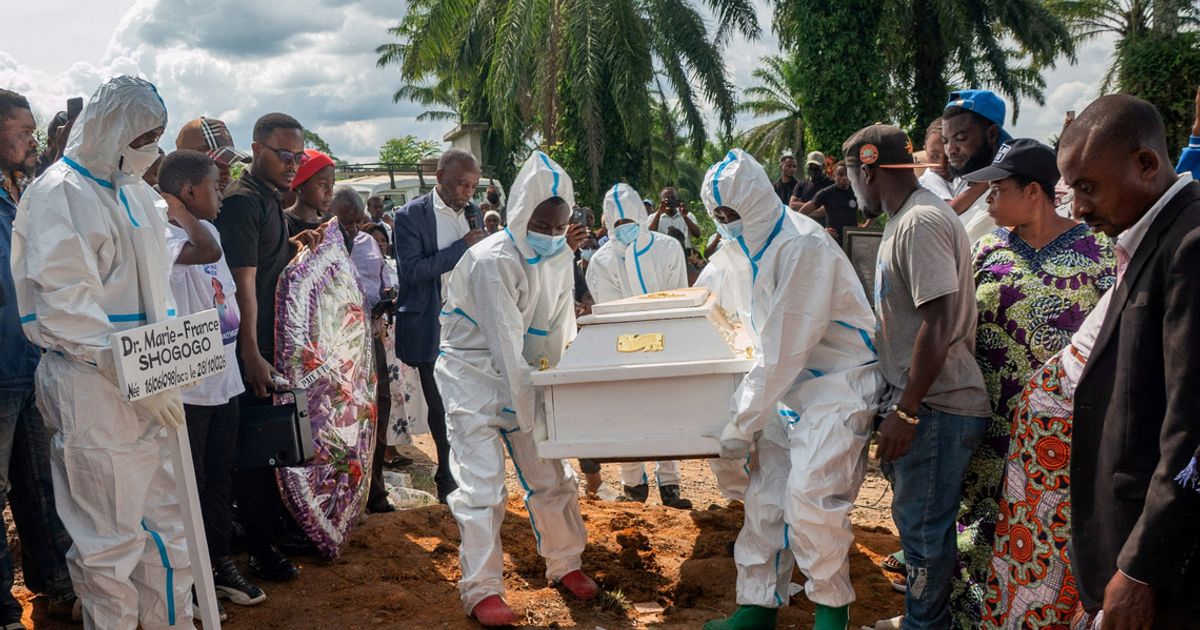
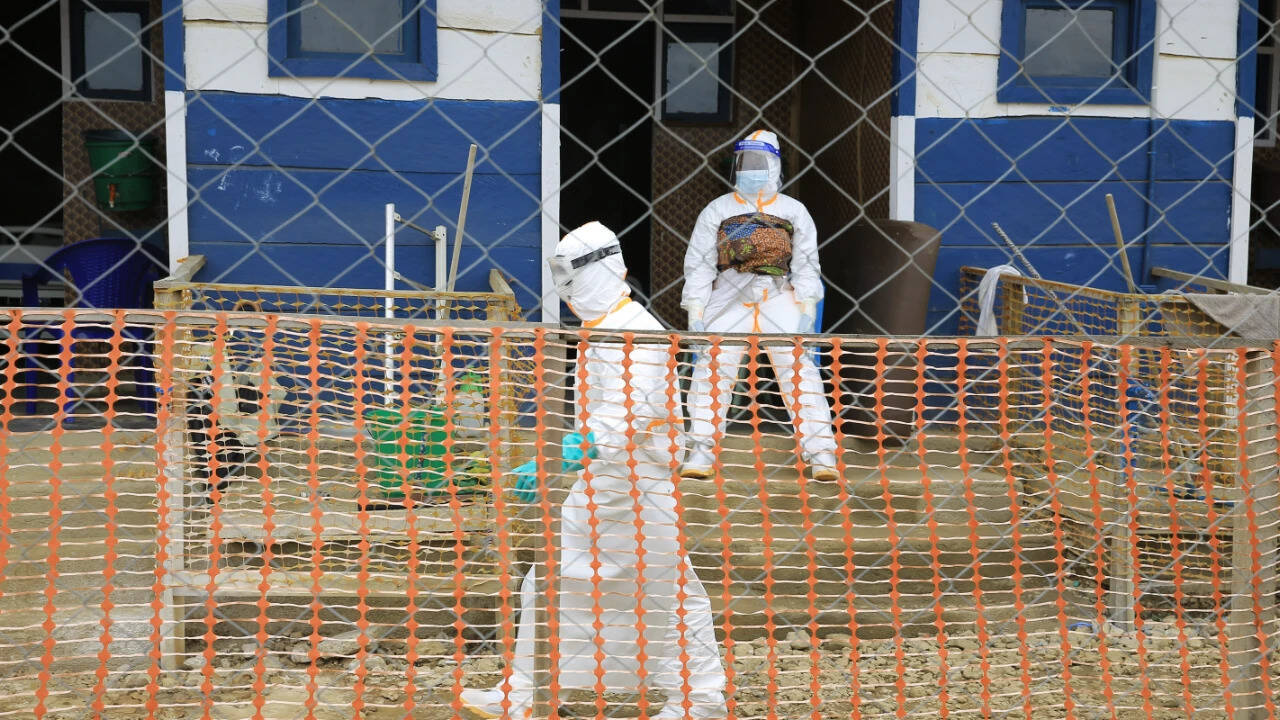
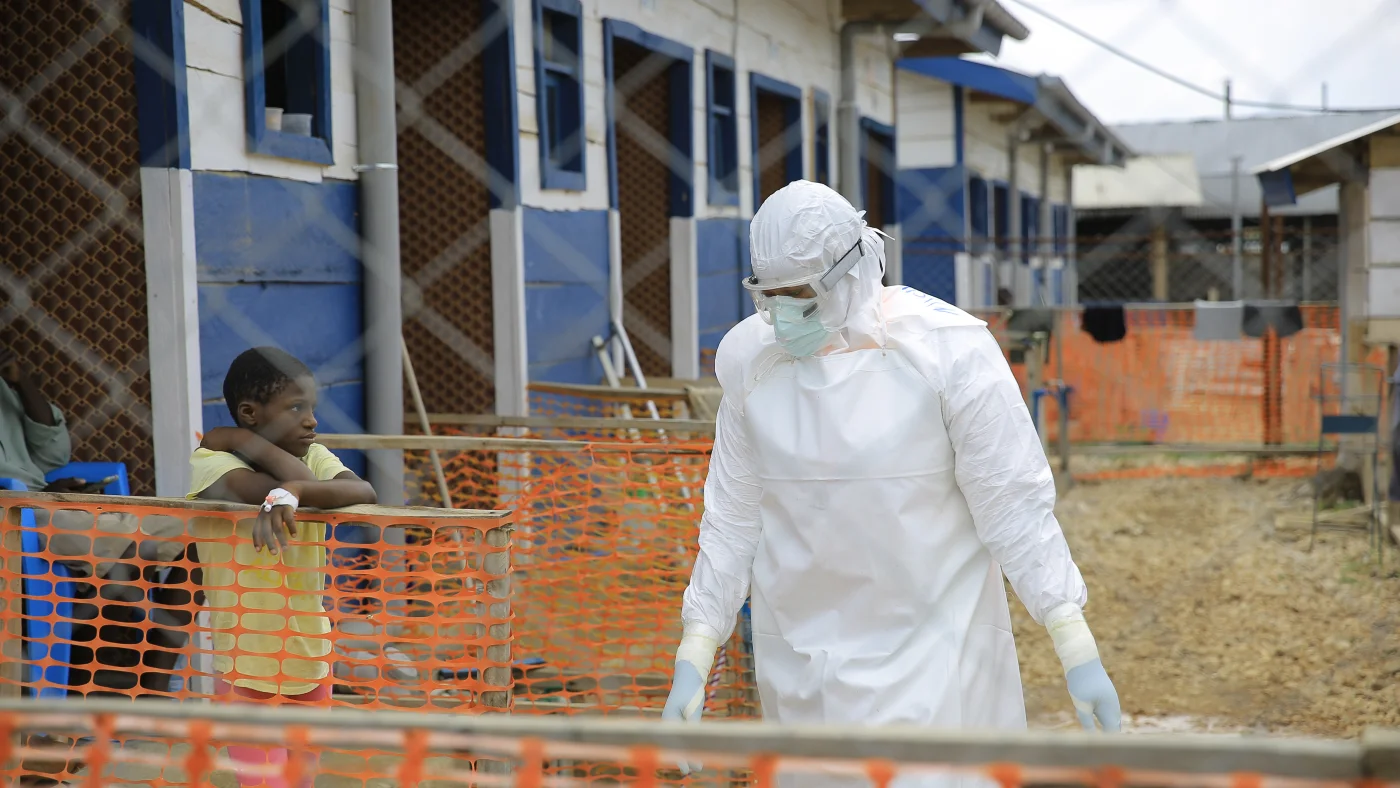
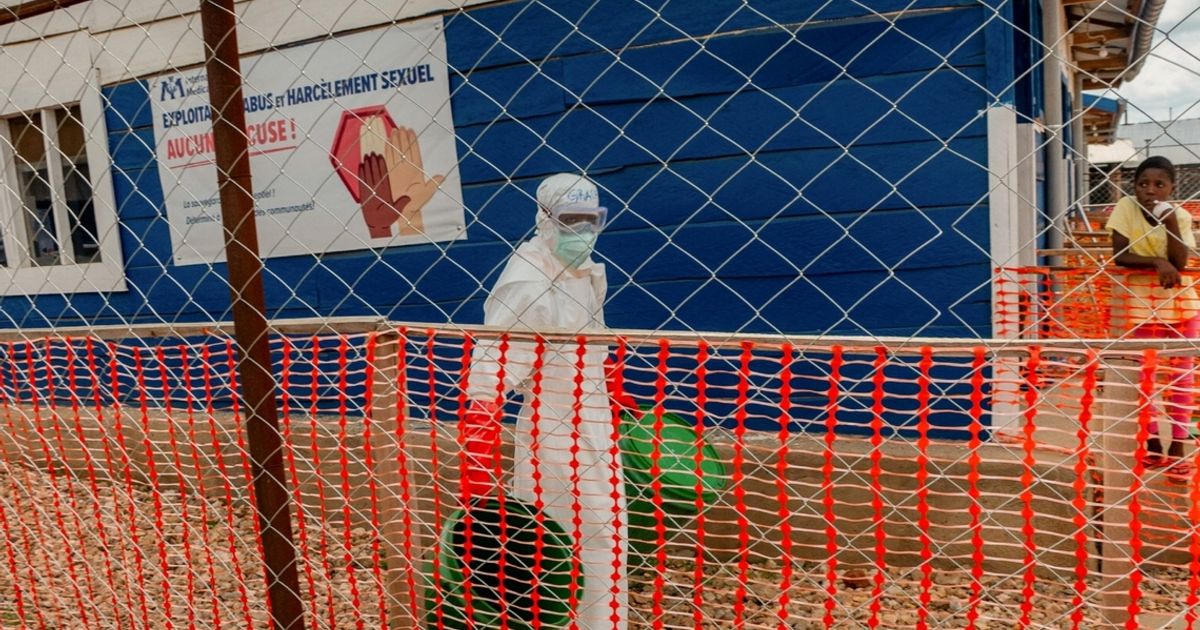
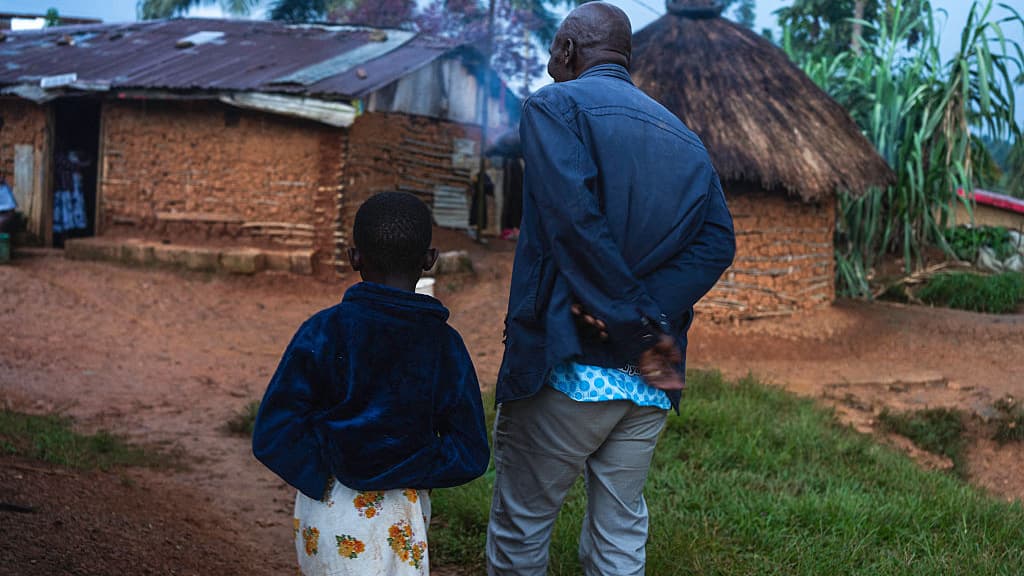
Photo via TIME

Trump Gutted USAID. Congo Pays the Price in an Ebola Epidemic

Read the original at TIME ↗
Cite

Gambino, A. W., & Nabunya, P. (2026, November 13). Trump Gutted USAID. Congo Pays the Price in an Ebola Epidemic. TIME. https://time.com/article/2026/11/13/ebola-congo-epidemic-usaid-trump/

Dated from the outlet's own feed. Check the original for its byline.

TIME · collected 2026-11-13 · by Anthony W. Gambino, Proscovia Nabunya

Quick Summary

This analysis argues that the Democratic Republic of the Congo's current Ebola epidemic, which has killed nearly 5,400 people and spread to neighboring countries, is exacerbated by a combination of systemic local corruption and U.S. policy shifts. The outbreak, caused by the Bundibugyo virus, has spread across eight provinces with 65% of new cases occurring in the community despite infrastructure hurdles and armed conflict. The author contends that the Trump Administration worsened the crisis by gutting USAID, cutting CDC staff, and withdrawing from the WHO, which dismantled the international surveillance and funding necessary for emergency response.
Written by AI on 2026-11-13, from this article's own text only (the story summary below draws on all the coverage).
See how they differ ↓

AI analysis

Story summary

As of November 15, 2026, the Ebola outbreak in the Democratic Republic of Congo (DRC) has surpassed 11,000 confirmed cases, with nearly 50% of those infected dying, according to government data. The outbreak, caused by the rare Bundibugyo strain of the virus, was first declared in mid-May and has since become the deadliest in Congo's history, surpassing previous outbreaks in scale and fatality. Despite significant resources mobilized for containment, the disease remains out of control, with ongoing violence in Ituri and North Kivu provinces hindering health workers' access to affected areas. Humanitarian organizations like Doctors Without Borders (MSF) have noted a "troubling disconnect" between the resources allocated and the actual assistance reaching patients and communities.

Written for “Congo Ebola Outbreak Exceeds 11,000 Cases” on 2026-11-15, grounded in this article and the 14 other(s) covering the same event.

How they differ

9 outlets covered “Congo Ebola Outbreak Exceeds 11,000 Cases”.

What each outlet says

One AI summary per outlet of its latest article on this story, written from that article alone and checked against it. Open the article for the outlet's own words.

TimeThis outlet13 Nov

This analysis argues that the Democratic Republic of the Congo's current Ebola epidemic, which has killed nearly 5,400 people and spread to neighboring countries, is exacerbated by a combination of systemic local corruption and U.S. policy shifts. The outbreak, caused by the Bundibugyo virus, has spread across eight provinces with 65% of new cases occurring in the community despite infrastructure hurdles and armed…

Trump Gutted USAID. Congo Pays the Price in an Ebola Epidemic (this article)
The Hindu15 Nov

The Ebola outbreak in Congo, declared six months ago, is worsening, with more than 11,000 cases recorded and nearly half of those infected dying. This makes it the deadliest outbreak in Congo's history and is on track to surpass the 2014-2016 West African outbreak's death toll of 11,000. Efforts to contain the virus, including contact tracing and isolation, are failing, and health workers face strikes over unpaid…

Ebola outbreak remains out of control in Congo six months into response →3 articles from The Hindu on this story
The Straits Times13 Nov

UN health officials reported progress in the Ebola response six months after the outbreak began, noting a decline in cases in former hotspots like Bunia. While the outbreak has surpassed 11,000 confirmed cases and is the second-worst on record, the WHO warns that rising insecurity and 80 documented attacks on health sites pose the biggest challenges to reaching remote areas. The report highlights a contrast in…

UN hails progress in Ebola response, cites insecurity as biggest challenge →3 articles from The Straits Times on this story
Toronto Star15 Nov

Six months after the Ebola outbreak was declared in Congo, the disease remains out of control, with over 11,000 cases recorded and nearly half of those infected dying. The outbreak, the deadliest in Congo’s history, is spreading rapidly across eight provinces, with 80% of new cases occurring outside health surveillance. Funding and management issues, including strikes by unpaid health workers, have hindered…

Ebola outbreak remains out of control in Congo 6 months into response →2 articles from Toronto Star on this story
CBC13 Nov

United Nations health officials report that the Bundibugyo strain of Ebola has surpassed 11,100 confirmed cases and 5,400 deaths in the Democratic Republic of Congo six months after the outbreak was declared. While officials noted falling cases in some hotspots, they highlighted that the disease is spreading into remote areas where children account for over one-third of the fatalities. The report specifically frames…

UN hails progress in Ebola response, cites insecurity as biggest challenge →2 articles from CBC on this story
Deutsche Welle8 Nov

In 1976, the first documented Ebola epidemic occurred near the Ebola River in what was then Zaire and is now the Democratic Republic of Congo. Recently, another major outbreak has emerged, this time involving the less common Bundibugyo variant of the virus. Despite previous outbreaks dating back to 2007 in Uganda and 2012 in the DRC providing ample opportunity for vaccine development, no licensed vaccine or…

Ebola: Why is there still no vaccine? →
Show 3 more outlets
Al Jazeera11 Nov

The Democratic Republic of Congo has recorded 11,042 confirmed cases of Ebola, resulting in at least 5,387 deaths as of Tuesday. This outbreak, caused by the rare Bundibugyo strain, is now the second-largest and deadliest on record globally, trailing only the 2014-2016 West African epidemic. The outbreak affects eight provinces within the DRC, with challenges including delayed detection, conflict, and limited health…

Ebola cases in DR Congo pass 11,000, with 5,387 deaths →
NPR11 Nov

Congo's Ebola outbreak surpassed 11,000 cases on Wednesday, making it the country’s deadliest outbreak to date. With nearly half of those infected—5,387 people—dead from the disease, health officials are facing significant challenges in controlling its spread due to armed conflicts and community mistrust. The virus has affected eight provinces and sparked international concern as it spreads beyond Congo's borders…

Ebola tops 11,000 cases in Congo's deadliest outbreak →
Times of India15 Nov

The Ebola outbreak in the Democratic Republic of Congo has led to more than 11,000 recorded cases, with nearly half of those infected dying. This outbreak, the deadliest in Congo’s history, is expected to surpass the 2014-2016 West African epidemic’s death toll of around 11,000. Despite efforts to contain the virus, basic public health measures are inadequate, and the virus has spread to eight provinces. Challenges…

Congo Ebola outbreak claims nearly half of infected as cases cross 11,000 →

Where they agree and split

The full story: what happened, how it changed, and all 15 articles →

Compared with similar articles

This article reads leans strongly left and hedges 7% of its claims. Each row says how that neighbour differs.
Toronto Star
Hedges 0 of 2 claims Outlet record 64/100
“Article A reports on the overall case count surpassing 11,000, while Article B discusses the origins and context of the outbreak in Mongbwalu and Bunia.”
CBC News
Hedges 2 of 9 claims Outlet record 72/100
Semafor
Hedges 1 of 7 claims Outlet record 66/100
“The articles discuss different aspects of the Ebola situation in the Democratic Republic of Congo, with Article A focusing on the call for wider vaccine access and Article B discussing the origins and scale of the outbreak.”
The Straits Times
Hedges 1 of 9 claims Outlet record 64/100
“The articles discuss different aspects of the Ebola outbreak in Congo, with Article A focusing on attacks on health workers and facilities, while Article B discusses the broader context and origins of the outbreak.”
CBC News
Hedges 5 of 31 claims Outlet record 60/100
Toronto Star
Hedges 4 of 28 claims Outlet record 64/100
The Hindu
Hedges 4 of 29 claims Outlet record 78/100
Times of India
Hedges 4 of 27 claims Outlet record 59/100
NPR
Hedges 2 of 11 claims Outlet record 60/100
“While both articles discuss Congo's Ebola outbreak, they focus on different aspects and timeframes: Article A reports the cumulative case count and fatalities, while Article B discusses the origins and initial detection of the outbreak.”
The Straits Times
Hedges 2 of 20 claims Outlet record 64/100
“While both articles discuss the Ebola outbreak in Congo, they describe different aspects of the outbreak over a period of time rather than a single specific incident.”

Story

Congo Ebola Outbreak Exceeds 11,000 Cases
Health · 15 article(s) covering the same event. Compare every outlet's account →
How this article was measured signals, leaning charts, publisher record, byline, topics and claims

Signals How these are calculated →

Claims extracted
68
sentences that state something as happening or true
Uncertain
7%
5 of 68 hedged ("reportedly", "may", "according to")
Leaning
Leans strongly left
of the writing, not the subject · beta estimate
Publisher signals
60/100
TIME's corrections and hedging, across everything collected from it. Not a measure of accuracy.
Outlets on this story
15
Health
Same framing elsewhere
1
articles that frame the event the way this one does
Analyzed 2026-11-13 · how these are computed

How this is being covered How these are calculated →

Article leaning vs. publisher reliability
Source leaning vs. consistency

Publisher

TIME · 968 article(s) · 2 correction(s) detected
Running correction rate · 2 correction(s)

Who wrote this

Anthony W. Gambino
1 article(s) here · 1 carrying a prediction
The outbreak was first detected in Mongbwalu, a gold-mining town of around 130,000 people in Ituri province in northeastern Congo, after the WHO was alerted on May 5 about an unusual cluster of illness and deaths.
The only article under this byline in the corpus.
Proscovia Nabunya
1 article(s) here · 1 carrying a prediction
The outbreak was first detected in Mongbwalu, a gold-mining town of around 130,000 people in Ituri province in northeastern Congo, after the WHO was alerted on May 5 about an unusual cluster of illness and deaths.
The only article under this byline in the corpus.

Topics

Congo DRC The Democratic Republic of the Congo The World Health Organization WHO

Subjects

Congo GPE · 9× WHO ORG · 5× Kisangani GPE · 2× Mobutu PERSON · 2× Bunia GPE · 1× DRC GPE · 1× Ituri GPE · 1× Mongbwalu GPE · 1× The Democratic Republic of the Congo GPE · 1× The World Health Organization ORG · 1×

Narrative

The WHO, the Africa Centers for Disease Control and Prevention (Africa CDC), and other public health experts have identified several obstacles to containing the outbreak: the lack of an effective vaccine against the Bundibugyo virus, armed conflict in eastern Congo, inadequate healthcare infrastructure, and cuts to international health assistance.
framing: assertive · carried by 1 article(s) · first seen 2026-11-13
The outbreak was first detected in Mongbwalu, a gold-mining town of around 130,000 people in Ituri province in northeastern Congo, after the WHO was alerted on May 5 about an unusual cluster of illness and deaths.
2026-11-13 · TIME
Trump Gutted USAID. Congo Pays the Price in an Ebola Epidemic · assertive framing

Claims (68 extracted, 5 hedged)

The Democratic Republic of the Congo (DRC) is reeling from an outbreak of Ebola that is estimated to have killed nearly 5,400 people. asserted
that → reel → people
The World Health Organization (WHO) has described it as “the largest Ebola outbreak ever reported” in the country. asserted
Organization → describe → country
The outbreak was first detected in Mongbwalu, a gold-mining town of around 130,000 people in Ituri province in northeastern Congo, after the WHO was alerted on May 5 about an unusual cluster of illness and deaths. uncertain
WHO → detect → illness
The earliest known suspected case was a healthcare worker who developed symptoms on Apr. 24 and later died at a medical facility in Bunia, the provincial capital. asserted
who → know → Bunia
On May 15, laboratory tests confirmed that the outbreak was caused by the Bundibugyo virus. uncertain
outbreak → confirm → virus
Since then, the epidemic has spread to the eight provinces, with about 65% of new cases occurring in the community, suggesting widespread undetected transmission. asserted
% → spread → transmission
The virus spreads primarily through direct contact with an infected person’s blood or other bodily fluids, or through contact with contaminated materials and surfaces. asserted
virus → spread → materials
As a zoonotic disease, Ebola can also pass from infected wildlife to humans. asserted
Ebola → pass → humans
The epidemic is now spreading fast and far beyond the borders of Congo, reaching Uganda, Kenya, and Nigeria. asserted
epidemic → spread → Uganda
The WHO, the Africa Centers for Disease Control and Prevention (Africa CDC), and other public health experts have identified several obstacles to containing the outbreak: the lack of an effective vaccine against the Bundibugyo virus, armed conflict in eastern Congo, inadequate healthcare infrastructure, and cuts to international health assistance. asserted
WHO → identify → assistance
What this list leaves out is a deeper problem: a decades-long crisis of governance. asserted
leaves → leave → governance
Ebola is particularly difficult to control in Congo because its ruling class has done little to care for the health and well-being of most Congolese. asserted
class → control → Congolese
The Trump Administration has compounded the problem by weakening the American and international institutions. asserted
Administration → compound → institutions
Dismantling the United States Agency for International Aid (USAID), ending foreign assistance programs, cutting staff at the U.S. Centers for Disease Control and Prevention (CDC), and withdrawing from the WHO have undermined disease surveillance, outbreak preparedness, and emergency response. asserted
Dismantling → dismantle → surveillance
Funding cuts have also weakened support for disease detection, community surveillance, medical supplies, and frontline health systems in Congo. asserted
cuts → weaken → Congo
The roots of endemic corruption and weak governance in Congo reach back decades. asserted
roots → reach → Congo
In 1965, five years after the country’s independence from Belgium, Mobutu Sese Seko, the army chief, seized power in a coup. asserted
Seko → seize → coup
He aligned himself with the U.S. during the Cold War and ruled with absolute power, using the machinery of government to enrich himself and his most senior officials while neglecting the basic functions of the state. asserted
He → align → state
During the final decades of Mobutu’s rule, civil servants across the country—soldiers, police officers, doctors and teachers—were paid a pittance. asserted
servants → pay → pittance
Even their meager salaries were routinely stolen by officials a rung or two above them. asserted
salaries → steal → them
This was the system Mobutu bequeathed to his successors. asserted
Mobutu → bequeath → successors
It endures today. asserted
It → endure → ?
Ebola is killing people not only in remote, rural communities but also in cities such as Kisangani, home to more than 1.5 million people and far from the conflict in eastern Congo. asserted
Ebola → kill → Congo
A substantial proportion of Ebola deaths have occurred outside healthcare facilities. asserted
proportion → occur → facilities
During a recent two-week reporting period, the WHO found that approximately 65% of deaths occurred in communities rather than treatment centers. asserted
% → find → centers
These deaths expose the failures in early detection, timely referral, and access to appropriate medical care. asserted
deaths → expose → care
The deaths in Kisangani suggest a near-total breakdown of the public health system in Congo beyond the conflict zone. asserted
deaths → suggest → zone
Congo’s health care system has been deteriorating since the 1990s, when economic collapse, political instability, and crumbling state institutions eroded the government’s ability to finance and deliver basic public services. asserted
collapse → deteriorate → services
The two successive Congo wars, which began in 1996 and 1998, destroyed health facilities, displaced communities, and disrupted essential services. asserted
which → begin → services
Dependence on foreign aid grew. asserted
Dependence → grow → aid
Meager government investment, weak accountability, fragmented donor support, and high cost of treatment continued to put access to essential services beyond the reach of most Congolese. asserted
investment → continue → Congolese
Successive governments have done little to repair it. asserted
governments → do → it
Health care workers go unpaid, and morale is low. asserted
morale → go → ?
In August, Roger Kamba, the health minister, acknowledged that 15% to 20% of the names added to payrolls for Ebola response belonged to “ghost workers,” fictitious employees invented by poorly paid officials to siphon off funds. asserted
Kamba → acknowledge → funds
Many frontline health workers fighting Ebola have not been paid for most of this year; in August, many of those workers went on strike while the epidemic surged. asserted
epidemic → fight → strike
It does not have to be this way. asserted
It → have → ?
Earlier this year, Ebola spread rapidly from Congo into neighboring Uganda. asserted
Ebola → spread → Uganda
While the epidemic raged on in Congo, Uganda contained it. asserted
Uganda → rag → it
According to The Lancet, Uganda’s Ministry of Health “announced the end of the outbreak on July 28, after 42 days without a new confirmed locally transmitted case.” uncertain
Ministry → accord → case
Congo is among the most corrupt and poorly governed countries in the world, according to Transparency International and Freedom House. uncertain
Congo → govern → International
…and 28 more, not listed.
Give feedback · no sign-in needed

No sign-in needed for now. Your note is sent without a name, so it cannot be answered.

History Support