Photo via NPR

Why even a fraction of a degree can escalate climate change impacts

Read the original at NPR ↗
Cite

Sommer, L. (2026, November 13). Why even a fraction of a degree can escalate climate change impacts. NPR. https://www.npr.org/2026/11/13/nx-s1-6035801/climate-goal-degrees-cop31-summit

Dated from the outlet's own feed. Check the original for its byline.

NPR · collected 2026-11-13 · by Lauren Sommer

Quick Summary

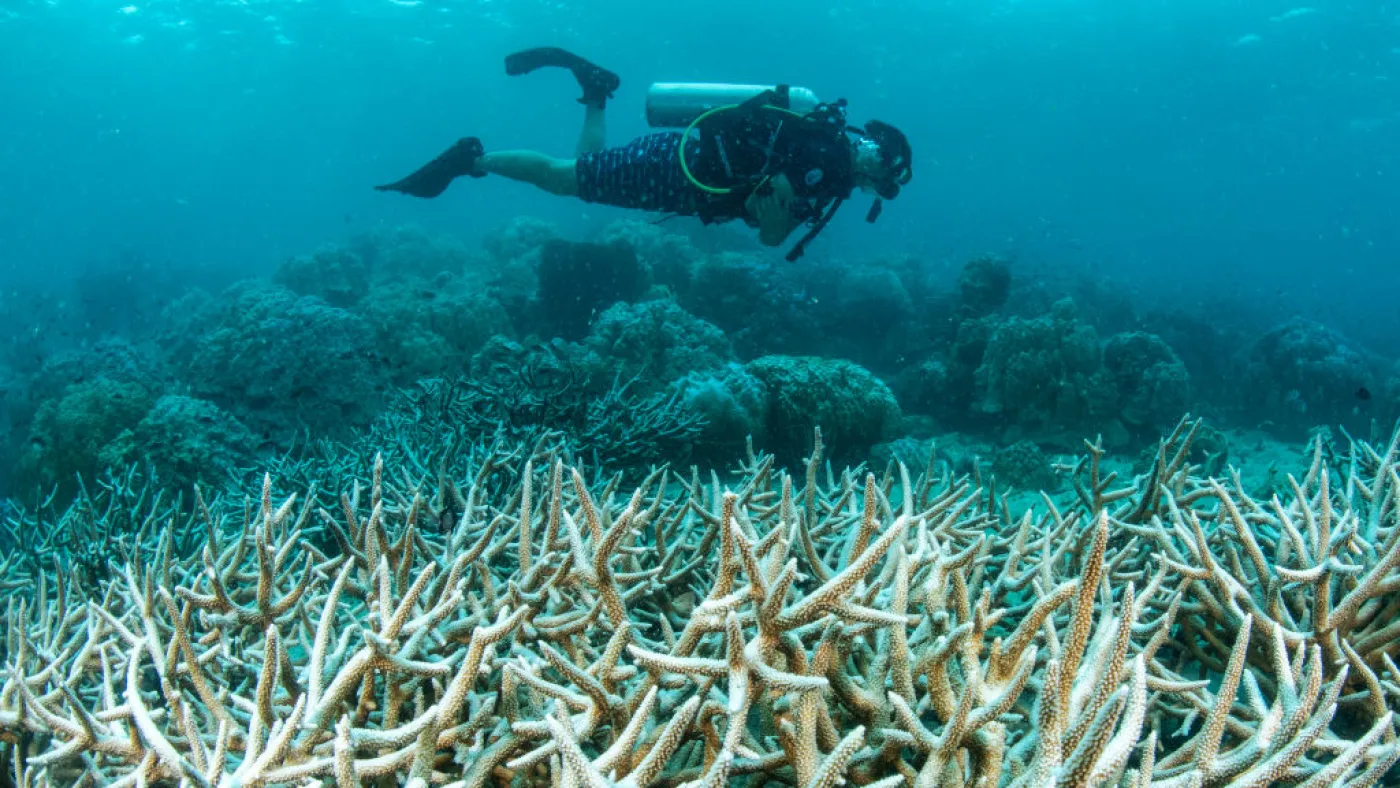
At the COP31 summit in Turkey, countries are discussing the unattainability of their 1.5 degrees Celsius warming limit goal, which has already been surpassed to nearly 1.7 degrees Celsius. The article emphasizes that even a small increase in temperature can have significant negative impacts, particularly on sensitive ecosystems like coral reefs, which face a 99% loss at 2 degrees Celsius warming according to the IPCC.
Written by AI on 2026-11-15, from this article's own text only (the story summary below draws on all the coverage).
See how they differ ↓

AI analysis

Story summary

World leaders, ministers, and officials from over 190 countries convened in Antalya, Turkey, from November 9 to 20, 2026, for the UN climate summit, Cop31. The summit aims to address global heating and extreme weather events, such as Europe's deadly heat waves and Nepal's devastating floods. Despite geopolitical tensions and financial constraints, the focus is on climate adaptation and reducing methane emissions. However, the 1.5°C target to limit global warming, declared by the UN in September, is now seen as unattainable, leaving nations uncertain about how to proceed. The conference also highlights the contradictions in Australia's climate politics, as Prime Minister Albanese seeks a balance between climate ambition and domestic political realities.

Written for “Climate Talks Struggle at COP31” on 2026-11-15, grounded in this article and the 75 other(s) covering the same event.

How they differ

19 outlets covered “Climate Talks Struggle at COP31”.

What each outlet says

One AI summary per outlet of its latest article on this story, written from that article alone and checked against it. Open the article for the outlet's own words.

NPRThis outlet13 Nov

At the COP31 summit in Turkey, countries are discussing the unattainability of their 1.5 degrees Celsius warming limit goal, which has already been surpassed to nearly 1.7 degrees Celsius. The article emphasizes that even a small increase in temperature can have significant negative impacts, particularly on sensitive ecosystems like coral reefs, which face a 99% loss at 2 degrees Celsius warming according to the…

Why even a fraction of a degree can escalate climate change impacts (this article)2 articles from NPR on this story
The Straits Times15 Nov

At the UN climate summit in Antalya, Turkey, nations are struggling with the reality that the 1.5 degrees Celsius global warming target will likely be missed. The world has already warmed 1.4 degrees Celsius above pre-industrial levels, and the UN declared in September that surpassing 1.5 degrees Celsius is imminent. Some countries, especially those most affected by climate change, are still advocating to keep the…

Nations grapple with loss of 1.5 deg C target at UN climate summit →14 articles from The Straits Times on this story
Dawn12 Nov

Prime Minister Shehbaz Sharif addressed COP31 in Antalya, Turkey, emphasizing the need for grant-based finance and increased resilience funding for climate-vulnerable nations. He called on global leaders to provide financial aid without adding debt, noting Pakistan's progress in clean energy with nearly 55% of its energy needs met by renewable sources. Sharif highlighted Pakistan’s target to reduce projected…

At COP31, PM Shehbaz calls for grant-based finance, resilience funding for climate-vulnerable countries →12 articles from Dawn on this story
The Hindu15 Nov

At the UN climate summit in Antalya, Turkey, nations are grappling with the reality that the world will soon exceed the 1.5°C warming threshold, which many see as crucial for avoiding the worst impacts of climate change. Despite this, some countries, especially vulnerable island nations like Palau, insist on maintaining the 1.5°C target, arguing it is essential for their survival. Meanwhile, some emerging economies…

Nations grapple with loss of 1.5°C target at UN climate summit →10 articles from The Hindu on this story
The Guardian12 Nov

John Kerry, former US Secretary of State, criticized Donald Trump at Cop31 in Turkey for being a "biggest loser" by withdrawing from international climate efforts and promoting fossil fuels over clean energy. Kerry pointed out that while Biden's administration is now focusing on competing with China in the green technology sector, Trump’s policies led to the elimination of much climate action support and imposed…

Trump the ‘biggest loser’ for scrapping climate action, John Kerry says at Cop31 →7 articles from The Guardian on this story
ABC News (AU)14 Nov

Prime Minister Anthony Albanese of Australia is attending COP31 in Antalya, Türkiye, aiming to position Australia as a leader in global climate efforts, especially in support of Pacific nations. However, his efforts face skepticism due to Australia's continued reliance on fossil fuels, despite Albanese's attempts to balance climate ambition with political pragmatism. UN Secretary-General António Guterres criticized…

Albanese is caught between climate ambition and political reality at COP31 →5 articles from ABC News (AU) on this story
Show 13 more outlets
South China Morning Post11 Nov

World leaders started arriving in Turkey on Wednesday for the United Nations climate change conference, known as COP31, amid concerns about slow progress on addressing global warming. Despite recent severe weather events like floods and heatwaves, there is skepticism about achieving concrete outcomes at the 11-day conference. The EU’s top climate official noted that expectations are not high due to past unfulfilled…

World leaders begin UN climate talks amid concerns action on global warming too slow →4 articles from South China Morning Post on this story
Sydney Morning Herald11 Nov

Prime Minister Anthony Albanese defended Australia's role as a leader on climate action against pressure from the UN chief to increase commitments, particularly regarding fossil fuels, ahead of COP31. The article also reports on potential cuts to tax breaks for electric vehicles and home batteries in Labor’s efforts to curb inflation following five interest rate hikes this year. Additionally, retail giant David…

Australia news LIVE: Albanese defends Australia as climate leader after UN boss pushes him to step up commitments; Russia and Ukraine talks end with no major breakthrough →4 articles from Sydney Morning Herald on this story
Semafor12 Nov

At the COP31 climate talks in Antalya, Türkiye, African countries are pushing for a plan to triple adaptation finance to help them cope with extreme weather events. Currently, developing economies receive around $30 billion annually, which falls far short of the estimated $305 billion needed by 2035. While wealthier nations have pledged little new climate finance, African negotiators emphasize the need for mandatory…

Africa to press for more adaptation finance at COP31 →4 articles from Semafor on this story
Al Jazeera11 Nov

Antonio Guterres, UN Secretary-General, addressed world leaders at COP31 in Antalya, Turkey, urging immediate action against climate change and criticising the fossil fuel industry for impeding progress. Guterres emphasized the urgency by stating that emissions reached all-time highs in 2025 and called for an end to coal, gas, and oil as energy sources to prevent global disaster. The summit saw attendance from…

‘Climate crisis is outrunning us,’ UN chief Guterres says at COP31 →3 articles from Al Jazeera on this story
Toronto Star10 Nov

Brazil will present a plan at the U.N. climate talks in Turkey to help countries transition from fossil fuels to renewable energy sources like wind and solar power. The document includes various strategies tailored to different nations' needs, aiming to provide practical solutions for reducing reliance on coal, oil, and gas. Ana Toni, CEO of last year’s talks, emphasized that the road map will show how transitioning…

Brazil to present plan for moving economies toward renewable energies at UN climate talks →2 articles from Toronto Star on this story
CBC13 Nov

Developing countries are advocating for faster, easier access to climate adaptation and disaster relief funds at the COP31 summit in Turkey following devastating floods in Nepal. A group of African nations successfully placed financial commitments on the agenda to address the inadequacy of current programs, specifically seeking a "debt pause clause" and streamlined processes for spending pledged billions. While the…

Countries vulnerable to climate disaster push for faster, easier access to finance at COP31 →2 articles from CBC on this story
Time9 Nov

Australia and Turkey are co-hosting the upcoming U.N. climate conference, COP31, scheduled for November. Murat Kurum of Turkey and Chris Bowen from Australia will lead the event, focusing on increasing global electricity usage to 35% by 2035 to address energy security and reduce emissions. Kurum emphasizes the importance of electrification in reducing dependency on imported fuels following recent disruptions like…

Murat Kurum and Chris Bowen →
The Independent9 Nov

At Cop31 in Antalya, Turkey, around 100,000 attendees face logistical challenges as the conference begins. UN climate change executive secretary Simon Stiell emphasized the urgent need for renewable energy solutions during his opening address, noting that global heating is already causing significant economic and health impacts worldwide. He highlighted savings of nearly half a trillion dollars from renewables last…

Cop31 opens with chaos and passion: ‘Global heating is already costing the Earth – urgency must drive us’ →
Euronews9 Nov

Delegates from around the world have begun arriving in Antalya, Turkey, for COP31 climate talks, which started this week and run until November 20. The summit focuses on reducing emissions, expanding electrification, and enhancing city resilience amid global energy market instability caused by conflicts like the one in Iran. With over 90,000 participants expected, including world leaders scheduled to meet on…

Turkey: Delegates arrive in Antalya as COP31 climate talks begin →
Mother Jones9 Nov

The world's largest climate conference, COP31, began today in Antalya, Turkey, with delegates from over 190 countries discussing their progress under the Paris Agreement to limit global warming. The event is marked by ongoing frustration over the avoidance of direct discussions about fossil fuels despite growing evidence of their impact on rising temperatures and extreme weather events. Notably absent is the United…

COP31 Is Here. Will Anyone Finally Say “Fossil Fuels”? →
Daily Mail10 Nov

Joseph Dinnage criticizes the UK Labour Party's shift on climate policies, particularly regarding gas boilers and electric vehicles (EVs), arguing that such changes reflect a broader ideological shift against state mandates. The article points out that these policies often harm business growth and innovation by forcing companies to adapt to unrealistic targets set without practical industry knowledge. Dinnage…

JOSEPH DINNAGE: Labour's climbdowns on gas boilers and EVs reveal a basic truth: State diktats are the enemy of growth and innovation →
Evening Standard11 Nov

The monarch issued a written statement on Wednesday to delegates attending Cop31 in Antalya, urging them to transform their ambitions into concrete actions for the environment. The message emphasized that future generations will judge not by promises made but by actions taken, highlighting the urgent need for collective action amid severe climate impacts worldwide. The monarch also referenced his long-standing…

King warns Cop31 delegates of need to turn ambition into action →
Washington Examiner11 Nov

Gavin Newsom, the outgoing governor of California, criticized President Donald Trump for not sending a delegation to the COP31 global climate summit in Antalya, Turkey. This marks the second consecutive year that Newsom has attended without representation from the federal government. Newsom sees his participation as an opportunity to strengthen California’s international climate partnerships and to highlight the…

Gavin Newsom turns his eye toward Turkey climate summit, slamming Trump for not attending →

Where they agree and split

Agreed

Reported by outlets on both sides of the middle

The United States, the world’s largest historical emitter, has skipped the talks for the second year in a row after President Donald Trump – who has called global warming a hoax – withdrew the US from climate cooperation following his return to office in 2025.

5 outlets
Show 3 more

The European Union has called for “clean” electrification, a term that could spark debate over the role of fossil fuels in the Turkish proposal.

4 outlets

African countries are pushing for the COP31 agenda to include discussions on the tripling of adaptation finance, which aims to help poorer nations pay for measures such as building sea walls or planting drought-resistant crops.

4 outlets

Turkey is presiding over COP31, with Australia leading negotiations under an unusual arrangement that settled a dispute over who would host the conference.

4 outlets

Framing

How the first headlines put it

Attributed to a source2
Stated as fact11
The headlines (13)

Cop31 must deliver climate progress that people can see is real, host says The Guardian · attributed to a source

Singapore minister says Cop31 has ‘enough to work on’ without new targets South China Morning Post · attributed to a source

Turkey’s COP31 message: Electrify, recycle and don’t mention coal The Straits Times · stated as fact

COP31 opens as climate and geopolitical pressures mount The Hindu · stated as fact

Leaders gather in Turkey for UN climate summit after a disastrous year of extreme weather Toronto Star · stated as fact

Antalya agenda Dawn · stated as fact

Turkiye pushes electrification top of climate agenda as COP31 set to open Al Jazeera · stated as fact

UN climate talks begin amid rapid warming and global fuel shock Sydney Morning Herald · stated as fact

Canada heads to UN climate summit in Turkey with finance, fossil fuel transition on the agenda CBC · stated as fact

U.N. climate talks begin today. Here are 3 things to know NPR · stated as fact

Hopes low as COP31 summit opens in Türkiye Semafor · stated as fact

Murat Kurum and Chris Bowen Time · stated as fact

COP31 summit targets major electrification push as 1.5C goal slips away ABC News (Australia) · stated as fact

Words to watch (5)

Ed Miliband says national security of all countries at risk from climate crisis The Guardian

Climate crisis is 'outrunning us', UN chief warns COP31 The Straits Times

COP31 opens amid energy crisis as activists demand climate action Al Jazeera

Countries vulnerable to climate disaster push for faster, easier access to finance at COP31 CBC

COP31 opens with leaders under pressure to tackle climate crisis Dawn

The full story: what happened, how it changed, and all 76 articles →

Compared with similar articles

This article reads leans left and hedges 15% of its claims. Each row says how that neighbour differs.
The Hindu
Hedges 3 of 23 claims Outlet record 78/100
The Straits Times
Hedges 3 of 24 claims Outlet record 64/100
The Hindu
Hedges 4 of 17 claims Outlet record 78/100
“While both articles discuss COP31, Article A reports the UN chief's warning on November 9, while Article B discusses the broader context and challenges of the summit days later on November 13.”

Story

Climate Talks Struggle at COP31
Environment · 76 article(s) covering the same event. Compare every outlet's account →
How this article was measured signals, leaning charts, publisher record, byline, topics and claims

Signals How these are calculated →

Claims extracted
40
sentences that state something as happening or true
Uncertain
15%
6 of 40 hedged ("reportedly", "may", "according to")
Leaning
Leans left
of the writing, not the subject · beta estimate
Publisher signals
60/100
NPR's corrections and hedging, across everything collected from it. Not a measure of accuracy.
Outlets on this story
76
Environment
Same framing elsewhere
1
articles that frame the event the way this one does
Analyzed 2026-11-15 · how these are computed

How this is being covered How these are calculated →

Article leaning vs. publisher reliability
Source leaning vs. consistency

Publisher

NPR · 1287 article(s) · 4 correction(s) detected
Running correction rate · 4 correction(s)

Who wrote this

Lauren Sommer
4 article(s) here · 1 carrying a prediction
If fossil fuel emissions stay on their current path, the world would be around 2.8 degrees Celsius (5 degrees Fahrenheit) hotter by the end of the century.
"If we can figure out ways to just stop the local threats to ecosystems, they will, in a lot of cases, find ways to repair themselves," says Alex Wegmann, lead scientist for The Nature Conservancy's island resilience strategy.
2026-10-13 · assertive framing · One way to protect coral reefs? Bring back seabirds
Studying this super El Niño could save lives.
Opening Pacific marine monument waters could give the fleet more opportunities, since foreign ships wouldn’t be permitted to fish there.
Also by Lauren Sommer
Nothing else under this byline is closely related to this article, so these are simply their most recent.

Topics

COP31 Turkey United Nations the Industrial Revolution the University of Exeter

Subjects

Obura PERSON · 2× CORDIO East Africa ORG · 1× David Obura PERSON · 1× The Intergovernmental Panel on Climate Change ORG · 1× Tim Lenton PERSON · 1× Turkey GPE · 1× United Nations ORG · 1× the University of Exeter ORG · 1×

Narrative

Even before the previous bleaching event from 2023 to 2025, researchers found that 44% of coral species globally are at risk of extinction. "These are incredibly worrying statistics, but they also emphasize that time matters," says David Obura, director of the coral research organization CORDIO East Africa, who worked on the study published last month in the journal Nature.
framing: assertive · carried by 1 article(s) · first seen 2026-11-15
If fossil fuel emissions stay on their current path, the world would be around 2.8 degrees Celsius (5 degrees Fahrenheit) hotter by the end of the century.

Claims (40 extracted, 6 hedged)

Why even a fraction of a degree can escalate climate change impacts asserted
fraction → escalate → impacts
Countries have gathered at the annual climate change negotiations at the COP31 summit in Turkey to discuss how to achieve a goal that is increasingly unachievable. asserted
that → gather → goal
A decade ago, countries agreed to limit climate warming to 1.5 degrees Celsius (2.7 degrees Fahrenheit). asserted
countries → agree → degrees
Heat-trapping emissions from burning fossil fuels are still rising in the atmosphere, and most countries are not on track to meet their climate pledges to cut emissions by transitioning to cleaner energy. asserted
countries → trap → energy
The best-case scenario for the planet is now 1.7 or 1.8 degrees Celsius of warming (roughly 3 degrees Fahrenheit), according to a recent United Nations study. uncertain
scenario → warm → study
If fossil fuel emissions stay on their current path, the world would be around 2.8 degrees Celsius (5 degrees Fahrenheit) hotter by the end of the century. asserted
world → stay → century
While the difference between 1.5 and 2 degrees Celsius may seem tiny, scientific research shows those increments can produce dramatically different outcomes for the planet. uncertain
increments → seem → planet
More warming raises the risk of extreme weather globally and could lead to the collapse of some of the planet's most sensitive ecosystems. uncertain
warming → raise → ecosystems
"The crucial point is that every fraction of a degree matters," says Tim Lenton, climate professor at the University of Exeter. asserted
Lenton → matter → Exeter
"Every fraction of a degree that we avoid is really able to do a huge amount of limiting harm. asserted
we → avoid → harm
As they grow, they create the framework that supports vast numbers of other species, making reefs biodiversity hotspots. asserted
reefs → grow → species
They're also vital to hundreds of millions of people who depend on them for food and livelihoods. asserted
who → depend → food
Prolonged marine heat waves cause corals to bleach, turning them white, which can eventually kill corals. asserted
which → cause → corals
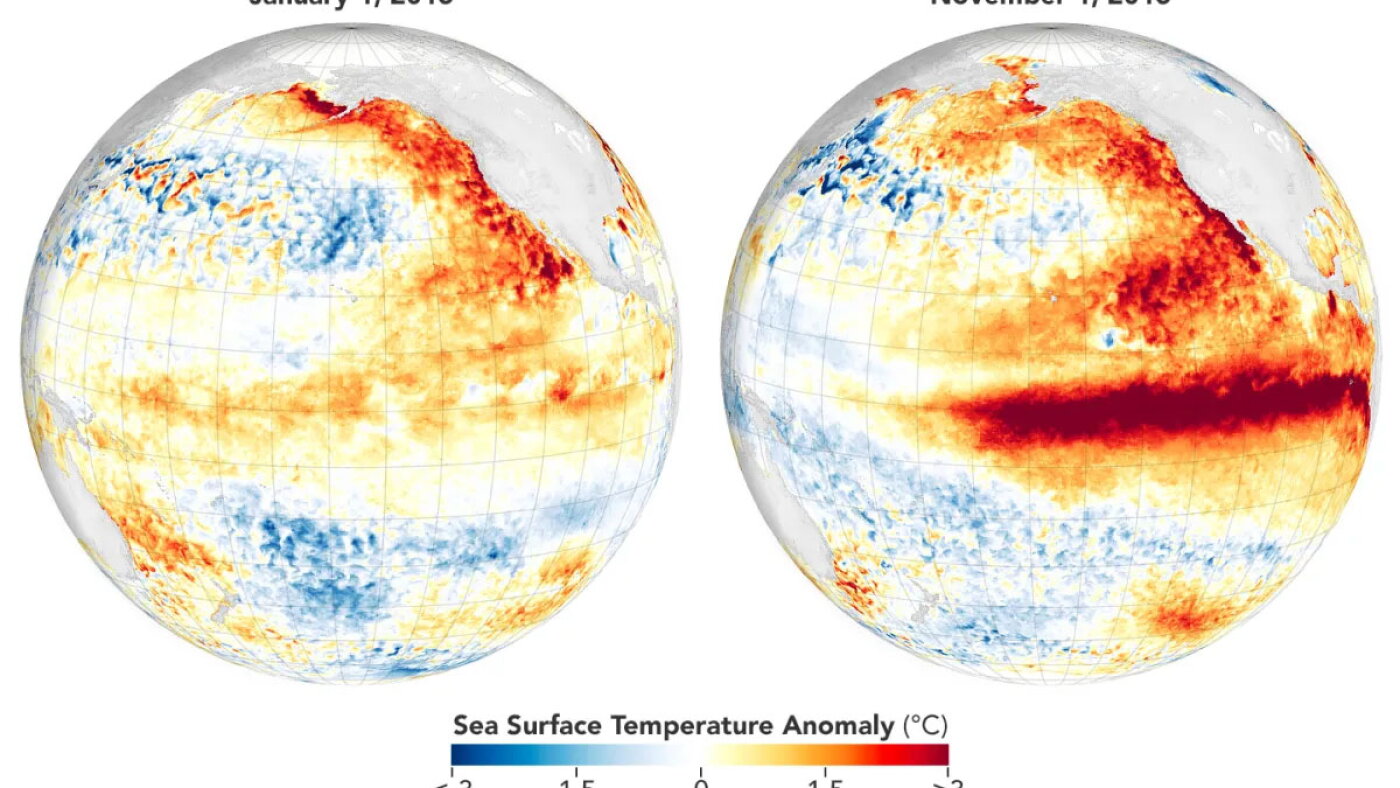
With a historically strong El Niño now raising water temperatures, scientists say the fifth global bleaching event is likely unfolding. asserted
event → raise → temperatures
Even before the previous bleaching event from 2023 to 2025, researchers found that 44% of coral species globally are at risk of extinction. "These are incredibly worrying statistics, but they also emphasize that time matters," says David Obura, director of the coral research organization CORDIO East Africa, who worked on the study published last month in the journal Nature. asserted
who → find → journal
"Every ten years, every five years counts. asserted
years → count → ?
Given their susceptibility to heat, the survival of most coral reefs depends on the difference between 1.5 and 2 degrees of warming. asserted
survival → give → warming
The Intergovernmental Panel on Climate Change found that beyond 2 degrees Celsius of warming, 99% of corals would be lost. asserted
% → find → corals
"At 2 degrees of warming, we anticipate most corals just won't survive, not in functional ways to build a reef ecosystem," Obura says. asserted
Obura → anticipate → ecosystem
"So you might still find some of the species, but many of them may be so rare or so compromised that they will have gone extinct by then." uncertain
they → find → them
With the dire forecasts for the future of coral, conservation groups and coastal communities are working to make reefs as healthy as possible in many areas so they can better withstand climate change. asserted
they → work → change
That includes restoring corals, reducing water pollution and even breeding more heat-tolerant corals. asserted
That → include → corals
"Most people around the world don't have the luxury of giving up on degraded ecosystems, because that's where they live," Obura says. asserted
they → have → ecosystems
"That's all they have. asserted
they → have → ?
So we have to work out how to make them function again. asserted
them → have → ?
Millions more exposed to extreme heat The goal of 1.5 degrees Celsius is an average temperature, measured across the planet. asserted
goal → expose → planet
What it masks is the increasingly extreme heat events that are raising the average. asserted
that → mask → average
Researchers have found that for every tenth of a degree of warming, an additional 140 million people are exposed to dangerous levels of heat. asserted
people → find → heat
Heat waves are already causing heavy death tolls, like in Europe, where an estimated 50,000 people died of heat-related causes this past summer. asserted
people → cause → causes
The real toll of heat waves is often hidden, since many heat-related deaths are undercounted. asserted
deaths → hide → waves
"You could think of it a bit like a tipping point for the human organism or body," Lenton says. uncertain
Lenton → think → organism
"At some point, our physiology kind of reaches a tipping point and the worst tipping point is death. asserted
point → reach → point
Every degree of climate change also affects the intensity of storms. asserted
degree → affect → storms
Warmer air can produce heavier downpours because it holds 7% more water vapor for every degree. asserted
it → produce → degree
Rainstorms are already getting more intense in most of the U.S. Scientific research also shows higher levels of warming could lead to other risky tipping points, like the collapse of Antarctic glaciers. uncertain
levels → get → glaciers
If they destabilize, the melt would add vast volumes of water to the ocean, raising sea levels globally. "We're never exactly sure where the tipping point is until we cross it, but we can be 100% confident that, for most of them, more warming is a bigger likelihood of crossing them," Lenton says. asserted
Lenton → destabilize → them
"Less warming is controlling that risk and that's why we should fight for every fraction of a degree that we can stave off. asserted
we → control → that
At the ongoing climate negotiations in Turkey, countries are not expected to make major new commitments to cut climate emissions. asserted
countries → expect → emissions
Discussions are focusing on a new goal for electrification, meaning more cars and homes would run on electricity instead of fossil fuels. asserted
cars → focus → electricity
That would help reduce overall emissions, since a growing share of the world's electricity comes from cleaner sources, like solar and wind. asserted
share → help → solar
Give feedback · no sign-in needed

No sign-in needed for now. Your note is sent without a name, so it cannot be answered.

History Support