The Guardian
· collected 2026-09-17 · by Patrick Commins Economics editor
The International Monetary Fund has advised Australia's government to reduce spending due to potential further interest rate hikes by the Reserve Bank aimed at controlling inflation. The IMF predicts Australian economic growth will be just 1.6% in 2027,下调了之前的预测,原因是担心全球能源价格上升会导致更强的通胀。该组织还支持了工党对投资者税收的变化,并敦促各州和联邦政府增加住房供应以应对房价问题。
Written by the local model on 2026-09-17,
using this article's own text rather than the other coverage of the
same event (that is the story summary below).
Story summary
In early 2023, the International Monetary Fund (IMF) urged the Australian government to cut spending, warning that Australia's Reserve Bank (RBA) may need to raise interest rates again to control inflation. The IMF highlighted that property tax settings, such as negative gearing policies, were encouraging excessive housing investment and driving up prices. In a recent report, the IMF forecasted that Australia’s economic growth would be just 1.6% in 2027, downgrading its previous prediction by 0.1 percentage points, due to an increased likelihood of another interest rate hike. The statement emphasized that inflation remains a critical issue and warned about potential second-round effects from rising global energy prices, suggesting further monetary policy tightening might be necessary.
Written for “IMF Warns Australia On Spending” on 2026-09-17,
grounded in this article and the 0 other(s) covering the same event.
The International Monetary Fund has called on Australia’s federal and state governments to cut spending as it warns the Reserve Bank may have to hike interest rates further to get price pressures back under control.
uncertain
pressures → call → control
More disciplined budgets would rein in rising debt burdens and help solve Australia’s long-running inflation problem, the IMF said in a new report, as it downgraded its forecast for Australia’s economic growth in 2027.
asserted
it → rein → 2027
In a “concluding statement” that followed annual consultations with Treasury, RBA and Australian Prudential Regulation Authority officials, the Washington-based institution predicted that the economy would grow by 1.9% this year.
asserted
economy → follow → %
But it shaved 0.1 percentage points off its forecast for real GDP growth to just 1.6% in 2027, flagging the downgrade was due to the higher likelihood of another RBA interest rate hike.
asserted
downgrade → shave → hike
“Inflation remains a central challenge, while weak productivity growth is weighing on the economy’s potential,” the statement said.
asserted
statement → remain → potential
“There is a risk that further large increases in global energy prices lead to stronger second-round effects and lift inflation expectations, warranting further tightening” in monetary policy.
asserted
increases → be → policy
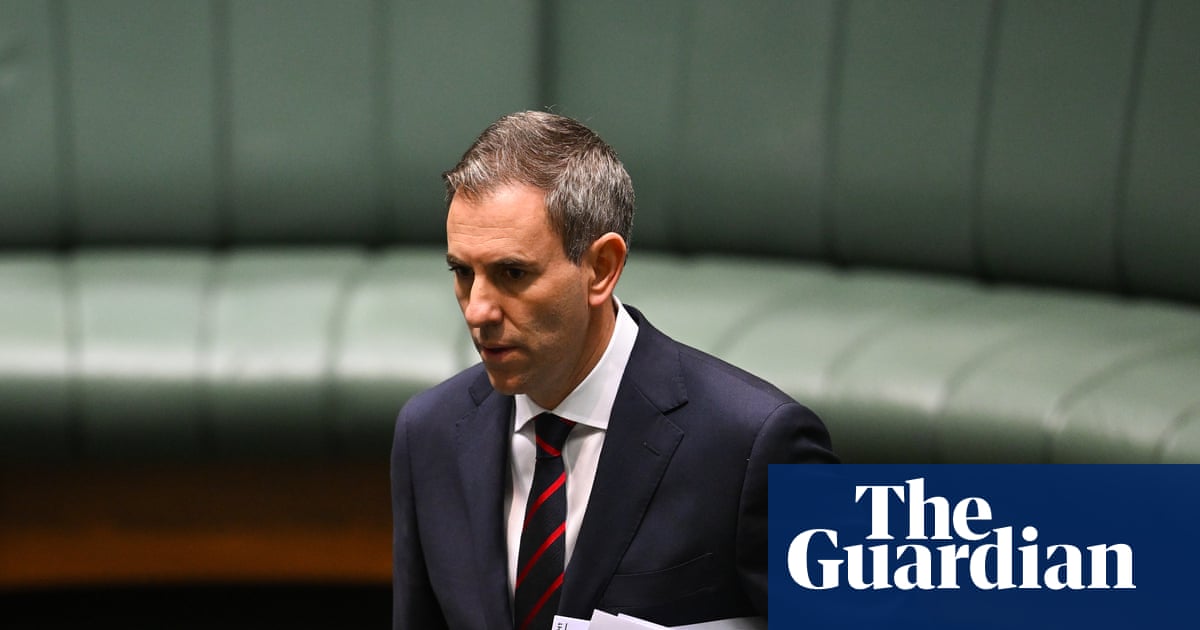
The new assessment will come as a blow to Jim Chalmers, the treasurer, who is already under pressure to present a convincing story of improving living standards and prosperity.
asserted
who → come → standards
Fuel prices in Australia are rising again after the worsening Middle East conflict pushed the global oil benchmark, Brent crude, above US$108 a barrel on Wednesday, marking a 35% surge since the start of August.
asserted
conflict → rise → August
As global energy costs climb and threaten to spill over into domestic inflation, financial markets are pricing in an 80% chance of a RBA rate hike on 29 September.
asserted
markets → climb → September
The US Federal Reserve on Wednesday night voted to increase rates for the first time since 2023, threatening to reignite Donald Trump’s political attacks on the central bank.
asserted
Reserve → vote → bank
The IMF largely backed Labor’s budget changes to investor taxes, although it noted concerns around unintended consequences.
asserted
it → back → consequences
Paulo Medas, the IMF’s mission chief, said previous consultations had identified that Australia’s property tax settings, including negative gearing, were “creating incentives for people to take more leverage and invest in housing” and adding to price pressures.
asserted
people → say → pressures
Medas told journalists on Thursday morning that the budget changes had created a more “balanced” set of incentives that could lead to more investment in other segments of the economy.
uncertain
that → tell → economy
“That’s where we think it’s a positive change to the tax system, and hopefully helps on this affordability issue in housing.
asserted
it → ’ → housing
”
House price falls had done little to address unaffordable housing, the IMF said.
asserted
IMF → do → housing
It welcomed the steps taken to boost housing supply, even as it urged states and the federal government to do more.
asserted
it → welcome → more
The report noted that the combined federal and state deficit had widened over the past two years as states spent big on infrastructure projects, along with higher social services costs, especially in healthcare and the national disability insurance scheme.
asserted
states → note → healthcare
New South Wales and Queensland spend more than twice as much on debt interest now than before the pandemic, according to Challenger.
uncertain
Wales → spend → Challenger
And while “Australia’s overall public debt remains relatively low compared to many other advanced economies”, the IMF officials pointed to rising debts and interest costs, especially in state governments.
“
asserted
officials → remain → governments
The ongoing efforts to restrain general government spending, amidst strong private demand, would also support disinflation efforts by the RBA.”
In the longer term, poor productivity growth was “Australia’s key structural challenge”, the IMF said.
asserted
IMF → restrain → term
“Reversing the slowdown in recent years will be crucial to improving living standards” and making our public and private debt obligations sustainable over the long run.
asserted
obligations → reverse → run
The comments come before Monday’s release of the government’s latest intergenerational report, which will paint a long-term and likely challenging picture of Australia’s economy and budget.
asserted
which → come → economy
 The Aporia