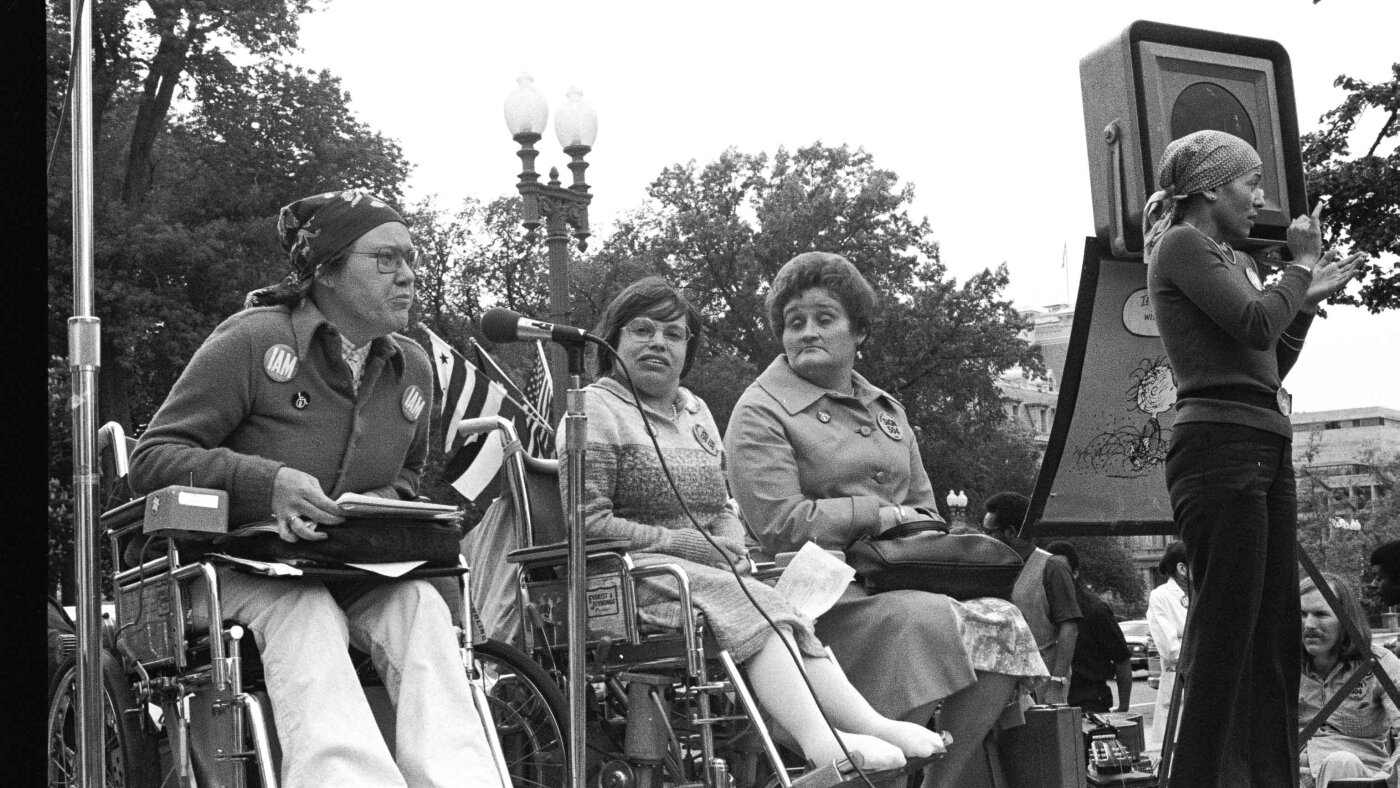
Disabled adults learn and work in their communities.
asserted
adults → learn → communities
That right is under threat
BRICK, N.J. — Cody and Kaleigh Brendle grew up near the Jersey Shore, going out on their grandfather's boat on weekends, learning to swim and riding bikes together.
"I was the annoying little sister — like, 'Wait for me, wait for me!'" said Kaleigh.
asserted
Kaleigh → grow → me
She remembered standing by in awe at summer camp as her fearless older brother scaled rock-climbing walls and went down waterslides.
asserted
brother → remember → waterslides
"I was like, 'Wow, he's doing all this — maybe I can try.'"
asserted
I → do → this
The siblings said they've always relied on each other for support navigating life as two blind kids, now adults.
asserted
they → say → kids
Cody, 27, lives at home with his parents, and Kaleigh, 23, is starting law school across the country.
asserted
Kaleigh → live → country
Both say there were, without question, many challenges growing up with disabilities.
asserted
Both → say → disabilities
But the two of them are also part of the "ADA generation" — people who came of age under the safeguards of the Americans with Disabilities Act of 1990.
asserted
who → come → 1990
And in 1999, the year Cody was born, the Supreme Court handed down the Olmstead decision.
asserted
Court → bear → decision
It reinforced the ADA's integration mandate, which says people with disabilities should get to learn, live and work in their communities rather than in institutions.
asserted
people → reinforce → institutions
The government made that promise after people with disabilities fought against segregation in institutions, which have a long history of abuse and neglect.
asserted
which → make → abuse
"That affects everything," said Kaleigh.
asserted
Kaleigh → affect → everything
"The integrated setting affects school.
asserted
setting → affect → school
It affects where you can work.
asserted
you → affect → ?
It affects community-based programs like what my brother uses."
asserted
brother → affect → what
Now, the integration mandate — and an entire system of community-based disability services that more than 8 million Americans rely on — are being challenged.
asserted
Americans → base → that
Kaleigh says the right to integration has shaped her life and her brother's life in countless ways.
asserted
right → say → ways
"The integration mandate is why I'm here at all and why I get to go to law school."
asserted
I → get → school
When the time comes for her to become a parent, she said, it will "make sure that my kid's not taken because I'm disabled."
asserted
I → come → ?
In practice, the integration mandate requires that states provide people with disabilities the services they need to thrive in their homes or communities — in other words, in the most integrated setting possible.
asserted
they → require → setting
For someone with intellectual or developmental disabilities, that could mean a personal care worker helping them to get dressed or eat, or a case manager helping them find a job or housing, among other services.
uncertain
them → mean → services
Now, a lawsuit brought by several Republican-led states, Texas v. Kennedy, is working its way through the courts.
asserted
lawsuit → bring → courts
The plaintiffs argue that the federal government cannot require states to provide disability services in the community rather than in institutions.
asserted
government → argue → institutions
Then, in June, the Department of Justice (DOJ), which enforces the integration mandate, issued a legal opinion taking a similar position — essentially aligning itself with the plaintiffs in the case.
asserted
which → enforce → case
"Congress has not imposed an integration mandate on states," the memo reads.
asserted
Congress → impose → states
It goes on to say the Olmstead decision "held only that a state cannot institutionalize such patients without justification. …
asserted
state → go → justification
What counts as adequate justification remains an open question."
asserted
counts → count → justification
In July, the DOJ also clarified that it would no longer enforce Olmstead in the same way it had in the past.
asserted
it → clarify → past
The law itself hasn't changed, but these actions worry Kaleigh and other disability rights activists like her.
asserted
actions → change → her
"Because laws are great, but laws have to have systems in place that make sure they're enforced," she said.
asserted
she → have → place
"Now the DOJ has essentially said, 'We're not gonna do that anymore.'
asserted
We → say → that
And that matters quite a bit."
asserted
that → matter → ?
The Justice Department did not respond to multiple requests from NPR asking that it explain why it is changing course after decades of legal and bipartisan support for community-based services.
asserted
it → respond → services
"I can't really overstate how significant this change in position is," said Alison Barkoff, a health law and policy professor at George Washington University who worked on Olmstead enforcement in the Justice Department during the Obama administration.
asserted
who → overstate → administration
"It is now the position of the United States government that people with disabilities don't have a right to be part of their communities."
asserted
people → have → communities
The June DOJ memo acknowledges that the agency's legal opinion is a departure: "We recognize that this view of Olmstead's import is out of step with the common understanding of that decision within the federal courts."
asserted
view → acknowledge → courts
Barkoff noted that it took disabled Americans decades of activism and advocacy to win the civil rights protections that the Trump administration is now challenging.
asserted
administration → note → that
"Olmstead is really about this huge cultural and societal change that has happened over the years," she said.
asserted
she → happen → years
"We now have people with all types of disabilities who are living in our communities, who grow up with their families, who are side by side in classrooms with students without disabilities, who are in our workplaces.
asserted
who → have → workplaces
Being a part of the community rather than living in an institution means having the ability to make choices — from when you want to eat or go outside, to where you work.
asserted
you → live → choices
…and 49 more, not listed.
 The Aporia